- Company Articles
- Products and Technology
- Solution
- All Direction Roller Track with Lean Workbenches: Workbench E Integration

All Direction Roller Track with Lean Workbenches: Workbench E Integration
Related Product
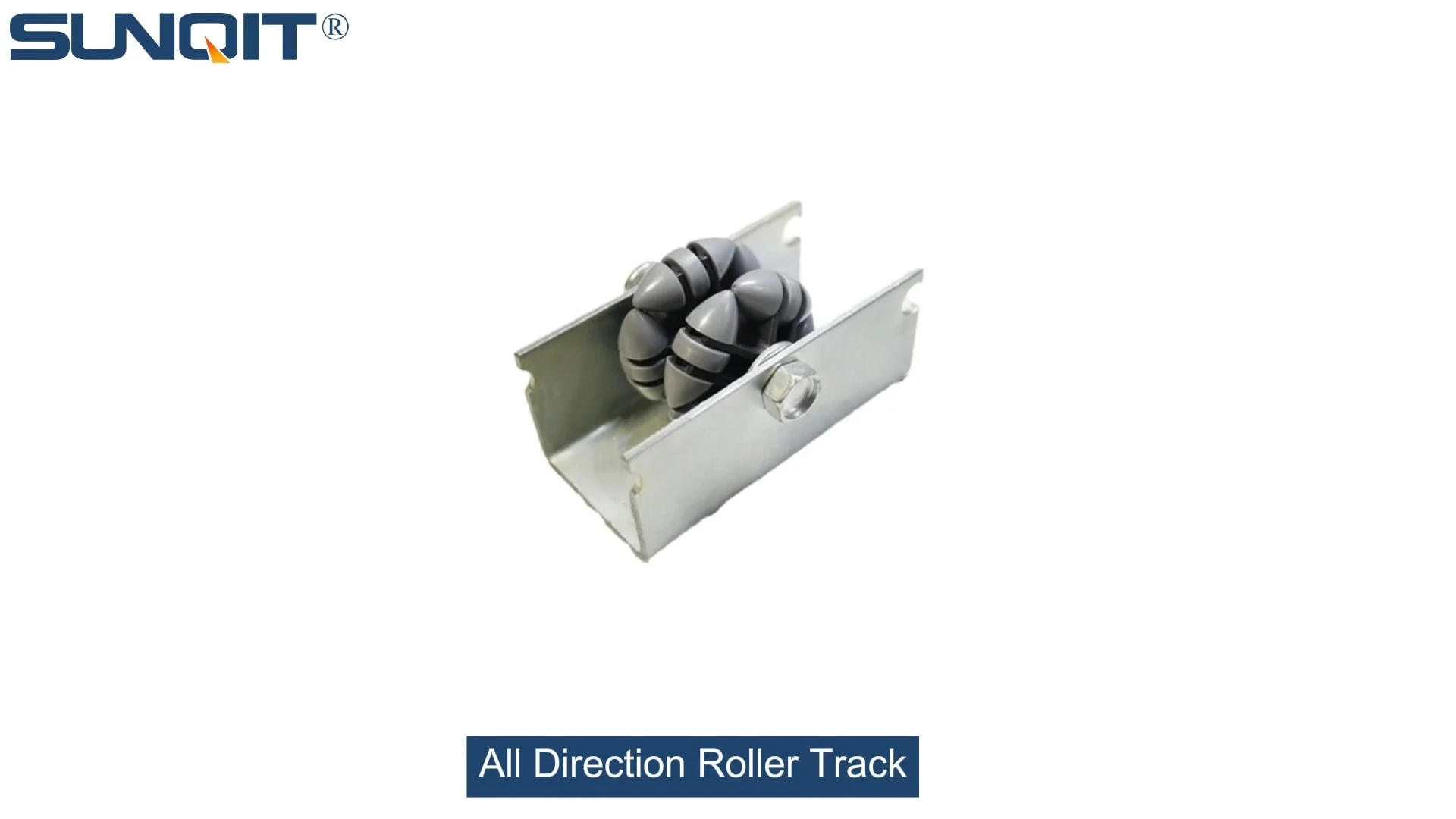
All Direction Roller Track
All direction roller track made of steel frame and multiple direction move wheel which will make boxes are always in contact with the rollers, reducing jams and enhancing flow reliability.
How Combining Flexible Material Flow with Ergonomic Workstations Transforms Manufacturing Efficiency
The Hidden Cost of Clunky Workflows in Modern Factories
In the fast-paced world of manufacturing, every second counts. Yet walk through many production facilities today, and you'll notice a common problem: workflows that feel stuck in the past. Workers bend over to reach parts from bins on the floor, twist their bodies to pass components to the next station, or wait around as materials slowly make their way through the line. These small inefficiencies add up—wasting time, increasing fatigue, and quietly eating into profit margins.
Consider a typical electronics assembly line. A technician assembling circuit boards might spend 20% of their shift just moving materials: grabbing screws from a box on the left, reaching for a motherboard from a shelf above, or pushing a heavy cart of finished products to the next area. Multiply that by dozens of workers across an 8-hour shift, and suddenly you're looking at thousands of lost hours every month. Worse, repetitive motions like bending and twisting can lead to workplace injuries, which cost even more in downtime and workers' compensation.
This is where lean manufacturing isn't just a buzzword—it's a lifeline. At its core, lean is about creating systems that work with people, not against them. It's about designing workspaces that reduce waste, minimize effort, and let teams focus on what they do best: building high-quality products. And two of the most powerful tools in this toolbox? Lean pipe workbenches and all direction roller tracks. When integrated properly—like pairing the versatile Workbench E with smooth-rolling material tracks—they don't just improve efficiency; they transform how factories operate.
Workbench E: More Than Just a Table—A Foundation for Lean Work
Let's start with the workbench itself. Not all workbenches are created equal. Traditional wooden or metal benches might get the job done, but they're static, hard to modify, and often don't account for the unique needs of modern production lines. Enter Workbench E—a single-deck, caster-free lean pipe workstation designed with one goal in mind: to make every second at the bench count.
What sets Workbench E apart? It starts with the materials. Built from basic aluminum tubes and internal rotary aluminum joints, this isn't a flimsy setup that wears out after a few months. Aluminum brings two key benefits: it's lightweight enough to reconfigure when needs change, but strong enough to handle the daily grind of manufacturing. The internal rotary joints are a game-changer too—unlike fixed connectors, they let you adjust the bench's structure without having to disassemble everything. Need to add a shelf for tools? Tighten a joint. Want to lower the work surface for a shorter operator? Rotate the connector. It's flexibility built into the DNA of the workstation.
Then there's the "lean" in lean pipe workbench. Workbench E embodies the principle of "reusable, sustainable improvement." Unlike welded or permanently fixed workstations, its modular design means you can take it apart, rearrange components, and repurpose it for new tasks as your production needs evolve. A bench used for smartphone assembly today can be reconfigured next year to build medical devices—no need to buy a brand-new setup. That's not just good for the bottom line; it's good for the planet, too, cutting down on waste and reducing the need for raw materials.
Why "No Casters" Matters: You might wonder why Workbench E skips the casters common on many mobile workstations. The answer is stability. In high-precision tasks like 3C assembly (think: fitting tiny smartphone components) or medical device production, even the smallest wobble can lead to errors. By anchoring Workbench E to the floor, it provides a rock-solid surface for detailed work—while still allowing for easy material flow via connected roller tracks (more on that later).
But what really makes Workbench E shine is how it adapts to people . Ergonomics isn't an afterthought here. The height is adjustable to match different operators, reducing strain on shoulders and backs. The single-deck design keeps work surfaces uncluttered, with tools and materials placed exactly where workers need them. And because it's built with lean pipe (or aluminum lean pipe, to be precise), you can customize accessories like tool holders, bin racks, or monitor mounts to fit the task at hand. It's a workstation that feels like it was designed for the person using it—not the other way around.

All Direction Roller Tracks: The "Flow" in Lean Material Handling
Now, a great workstation is only half the equation. Even the most ergonomic bench won't help if materials are stuck in a corner, forcing workers to stop what they're doing and fetch them. That's where all direction roller tracks come in. These aren't your average conveyor belts—they're flexible, multi-directional systems that let materials glide smoothly to where they're needed, when they're needed.
Picture this: a section of track mounted along the edge of Workbench E, lined with small, free-spinning roller balls (1 inch, 0.5 inch—whatever size fits the job). A bin of screws or a tray of circuit boards is placed on one end, and with a gentle push, it slides right to the operator's fingertips. No bending, no stretching, no wasted steps. That's the power of all direction roller tracks—they turn static workbenches into dynamic hubs where materials flow as easily as water.
What makes these tracks so versatile? Let's break down the details. First, the rollers themselves. Made from durable materials like stainless steel or high-quality plastic, they're designed to handle repeated use without jamming or wearing out. Options like stainless steel swivel roller balls (1 inch) are perfect for heavier loads, while smaller 0.5 inch balls work well for lightweight components. And with color-coded guide rails (yellow for high-traffic areas, grey for secondary paths), it's easy to organize material flow and keep lines running smoothly.
Then there's the installation flexibility. These tracks aren't limited to straight lines. Thanks to a range of connectors and mounts—like roller track placon mounts for aluminum profiles (high, flat, or center support brackets)—you can curve them around corners, drop them to different heights, or even create multi-level flow paths. Need to connect Workbench E to a flow rack across the aisle? Use a 40 steel roller track with yellow wheels to bridge the gap. Want to feed materials from above? Mount an aluminum guide rail A or B to channel items down to the work surface. The possibilities are nearly endless, which is why they're a staple in lean solution setups.
Another key advantage? They play well with others. All direction roller tracks aren't standalone systems—they integrate seamlessly with other lean equipment. Pair them with flow racks to create gravity-fed material stations, connect them to conveyors for longer-distance transport, or link multiple Workbench E setups into a continuous production line. In a 3C assembly plant, for example, you might see a row of Workbench E stations, each linked by roller tracks to a central flow rack holding screens, batteries, and housings. As one operator finishes assembling a phone front, they slide it along the track to the next station for back assembly—no carts, no waiting, no delays.
| Feature | Traditional Material Handling | All Direction Roller Tracks |
|---|---|---|
| Material Retrieval Time | 30-60 seconds per trip (walking to bins) | 5-10 seconds (materials glide to operator) |
| Worker Movement | Frequent bending, stretching, walking | Minimal movement (materials come to the worker) |
| Flexibility | Fixed paths (carts, static shelves) | Multi-directional, reconfigurable paths |
| Maintenance | High (carts need wheels replaced, shelves wear) | Low (replaceable rollers, simple cleaning) |
| Cost Over Time | Higher (labor + replacement parts) | Lower (reduced labor + reusable components) |
And let's not forget about ESD safety. In industries like electronics manufacturing, static electricity can ruin sensitive components. That's why many roller tracks (and Workbench E itself) are available with ESD (Electrostatic Discharge) features—like black ESD wheels or anti-static guide rails. These prevent static buildup, keeping both products and workers safe. It's a small detail, but in high-stakes environments, it's a lifesaver.

Workbench E + Roller Tracks: A Match Made in Lean Heaven
Individually, Workbench E and all direction roller tracks are powerful tools. But when you combine them? That's when magic happens. The integration of these two systems creates a workstation that's not just efficient, but intelligent —one that adapts to your workflow, reduces waste, and empowers workers to do their best.
Let's walk through how this integration works in practice. Imagine a medical device assembly line, where precision and cleanliness are critical. Each Workbench E is set up with an ESD workbench top to protect sensitive electronics, and along the back edge, a 38 aluminum roller track with black ESD wheel flanges runs the length of the bench. Above the track, a flow rack B (3 row, 3 floor) holds sterilized components—screws, sensors, wiring harnesses—each in labeled bins. When an operator needs a sensor, they simply pull a bin from the flow rack, set it on the roller track, and slide it to their work area. No reaching, no balancing bins on the edge of the bench, no risk of dropping parts. Once the sensor is installed, the empty bin slides back along the track to a collection point at the end of the line—ready to be refilled and reused.
In a busy 3C factory, the setup might look a bit different. Here, speed is key, so Workbench E stations are arranged in a U-shape, connected by 40 steel roller tracks with black wheels. As operators assemble smartphone motherboards, completed boards slide along the track to the next station for testing, while new motherboards arrive from the previous station—all without anyone leaving their seat. Nearby, a conveyor belt feeds in fresh batches of components from the warehouse, depositing them onto a flow rack that feeds into the roller tracks. It's a closed-loop system where materials move continuously, and workers stay focused on assembly, not logistics.
Case Study: A 3C Manufacturer Cuts Waste by 35% with Integrated Workstations
A mid-sized electronics company producing smart home devices was struggling with bottlenecks in their assembly line. Workers were spending 25% of their time retrieving parts, and product defects were rising due to fatigue from repetitive motion. After consulting with a lean solution provider, they replaced their old wooden benches with Workbench E stations and added all direction roller tracks linked to flow racks.
The results were striking: Material retrieval time dropped by 70%, freeing up workers to focus on assembly. Defect rates fell by 18% as operators reported less strain and more focus. And because the roller tracks and Workbench E components were made from aluminum pipe and reusable joints, the company saved 40% on equipment costs compared to buying new fixed workstations. Within six months, the investment had paid for itself in increased productivity and reduced waste.
What makes this integration so effective? It's all about reducing "non-value-added" activities—the stuff that doesn't directly contribute to building the product. In lean terms, these are the 7 wastes: overproduction, waiting, transport, processing, inventory, motion, and defects. By combining Workbench E's ergonomic design (cutting down on "motion" waste) with roller tracks' smooth material flow (eliminating "transport" and "waiting" waste), you attack multiple wastes at once. The result? A workflow that feels effortless, where workers spend less time moving and more time creating.
And let's not overlook the human element. When workers no longer have to struggle with clunky material handling, morale improves. They feel valued, knowing their employer cares about their comfort and efficiency. Happier workers are more engaged, more productive, and less likely to leave—reducing turnover and the costs of hiring and training new staff. It's a ripple effect that goes beyond the production line, strengthening the entire company culture.

Beyond the Bench: Custom Lean Solutions for Every Industry
While Workbench E and all direction roller tracks are stars in the lean toolkit, they're just part of a larger ecosystem. The best lean systems are tailored to the unique needs of each industry, and that's where custom solutions come into play. After all, a medical device plant has very different requirements than an automotive parts manufacturer—and a one-size-fits-all approach rarely works.
Take the 3C assembly industry, for example. Here, products are small, precise, and often require ESD protection to avoid static damage. A custom lean solution might include ESD workbench tops on Workbench E, paired with anti-static roller tracks and flow racks designed to hold tiny components like microchips and connectors. Aluminum pipe accessories like conductive tool holders and grounding clips ensure everything stays static-free, while adjustable shelving keeps frequently used parts within arm's reach.
In the automotive sector, on the other hand, durability and heavy lifting are priorities. Workbench E might be reinforced with thicker aluminum profile and paired with 85 staggered roller tracks to handle heavier parts like engine components. Conveyors with steel wheels could link workstations to paint booths or testing areas, while turnover trolleys (easily built from lean pipe and casters) transport finished parts to shipping. The focus here is on strength and reliability—systems that can stand up to the daily wear and tear of a busy auto plant.
Medical device manufacturing brings its own set of challenges: strict cleanliness standards, traceability, and compliance with regulations like FDA guidelines. Custom solutions here might include stainless steel pipe series for workbenches (easier to sanitize than aluminum), roller tracks with smooth, crevice-free designs to prevent dust buildup, and flow racks with clear, labeled bins for batch tracking. Workbench E stations could be fitted with integrated lighting and magnifying glasses for detailed assembly work, ensuring every component meets the highest quality standards.
Even within the same industry, every factory is different. That's why the most effective lean solution providers don't just sell products—they partner with clients to design systems from the ground up. They start by observing workflows, talking to workers, and identifying pain points. Then, they combine standard components (like Workbench E, roller tracks, and flow racks) with custom touches (specialized brackets, unique track layouts, or industry-specific accessories) to create a setup that fits exactly what the client needs. And because they use modular aluminum pipe and reusable joints, these systems can evolve as the business grows—adding new workstations, reconfiguring tracks, or repurposing components for new product lines.
One of the biggest advantages of this approach is sustainability. In a world where businesses are under increasing pressure to reduce their environmental footprint, lean systems built from reusable aluminum and steel components are a win-win. They cut down on waste by eliminating the need for disposable packaging or single-use tools, and they reduce energy use by streamlining workflows (less movement means less energy spent on lighting, heating, and cooling work areas). Plus, when a factory needs to retool for a new product, they can disassemble and reuse 80% or more of their lean equipment—unlike traditional fixed systems, which often end up in landfills.
Why Material Matters: The Case for Aluminum Lean Pipe
At this point, we've talked a lot about Workbench E, roller tracks, and integration—but there's one underlying element that makes all of this possible: the materials themselves. Specifically, aluminum lean pipe. While you might see lean systems made from steel or plastic, aluminum has emerged as the gold standard for modern lean manufacturing—and for good reason.
First, aluminum is lightweight but strong. A 1.2mm or 1.5mm aluminum pipe might not look like much, but it can support significant weight when paired with sturdy joints. This makes it easy to assemble and reconfigure workbenches or tracks without heavy machinery—two workers can often move a disassembled Workbench E or reposition a section of roller track in minutes. Compare that to steel pipes, which are heavy and require tools or even forklifts to move, and it's clear why aluminum is the top choice for flexible systems.
Durability is another key factor. Aluminum resists rust and corrosion, making it ideal for factories with strict cleanliness standards (like food processing or medical device plants) or those in humid environments. It also holds up well to daily wear and tear—scratches or dents are rare, and even if they do happen, they don't compromise the pipe's structural integrity. This longevity means aluminum lean pipe systems last for years, often outliving traditional wooden or steel workbenches by a decade or more.
Then there's the environmental angle. Aluminum is 100% recyclable, and recycling it uses just 5% of the energy needed to produce new aluminum. When a factory decides to reconfigure their lean system, old aluminum pipes and joints can be melted down and turned into new components—no waste, no guilt. Contrast that with plastic lean pipes, which degrade over time and often end up in landfills, or steel, which is recyclable but requires more energy to process. For companies looking to meet sustainability goals, aluminum is a no-brainer.
Finally, aluminum's versatility shines through in its compatibility with accessories. From internal rotary aluminum joints that allow 360-degree rotation to aluminum profile accessories like end caps, rubber strips, and mounting brackets, there's a huge ecosystem of parts designed to work seamlessly with aluminum lean pipe. Want to add a tool hook to Workbench E? Just slide on a clamp. Need to connect two roller tracks at a 45-degree angle? Use a 45° aluminum pipe joint inside connection. This compatibility makes it easy to customize systems without having to invent new parts from scratch.
The Bottom Line: Aluminum lean pipe isn't just a material choice—it's a strategic one. It balances strength, flexibility, and sustainability in a way that no other material can, making it the backbone of modern lean manufacturing systems. Whether you're building a single Workbench E or an entire factory's worth of integrated workstations, choosing aluminum means investing in a system that will grow with your business, reduce your environmental impact, and keep workers productive for years to come.
The Future of Manufacturing: Lean Systems That Grow With You
As manufacturing continues to evolve—with trends like automation, IoT, and mass customization reshaping the industry—one thing remains constant: the need for flexibility. Factories can't afford to be locked into rigid systems that can't adapt to new products, changing demand, or emerging technologies. That's why lean systems built around Workbench E, all direction roller tracks, and modular aluminum components are more relevant than ever.
Imagine a future where a factory can retool its production line for a new product in hours, not weeks. Where workers use tablets to adjust roller track speeds or reconfigure workbench layouts with the touch of a button. Where sensors in the roller tracks monitor material flow in real time, alerting managers to bottlenecks before they become problems. This isn't science fiction—it's the direction lean manufacturing is heading, and it's built on the same modular, adaptable foundation we've been discussing.
Take, for example, the rise of collaborative robots (cobots). These small, flexible robots work alongside human workers, handling repetitive tasks like loading materials onto roller tracks or moving finished products to conveyors. Workbench E, with its sturdy aluminum frame and open design, is the perfect partner for cobots—providing a stable platform for the robot to operate from, while roller tracks ensure materials flow smoothly between human and robot workstations. It's a human-machine collaboration that's only possible with lean, modular systems.
Or consider the growth of on-demand manufacturing. As more companies shift to producing smaller batches of customized products, they need systems that can switch between product lines quickly. A lean solution built with Workbench E and roller tracks can do just that—swap out a few brackets, reposition the tracks, and suddenly you're assembling smartwatches instead of smartphones. No need to tear down walls or buy new equipment; just reconfigure what you already have.
At the end of the day, lean manufacturing isn't just about tools and systems—it's about mindset. It's about seeing every process as an opportunity to improve, every waste as a problem to solve, and every worker as a partner in innovation. When you invest in Workbench E and all direction roller tracks, you're not just buying equipment—you're embracing that mindset. You're saying, "We value efficiency, but we also value our people. We want to build great products, but we want to do it in a way that's sustainable, flexible, and empowering."
So whether you're running a small 3C assembly shop or a large automotive plant, the message is clear: the future of manufacturing belongs to those who build systems that work with their teams, not against them. And there's no better way to start than by integrating the power of lean pipe workbenches like Workbench E with the smooth flow of all direction roller tracks. It's a combination that doesn't just improve today's workflows—it lays the groundwork for a smarter, more efficient, and more human-centered factory tomorrow.