- Company Articles
- Products and Technology
- Product knowledge
- Aluminum Alloy Heavy Duty Split Foot Seats: Lightweight Yet Strong

Aluminum Alloy Heavy Duty Split Foot Seats: Lightweight Yet Strong
Related Product
Heavy Duty Split Foot Seat
M10 aluminum heavy duty split foot deat with foot adjuster for workbench and flow rack.
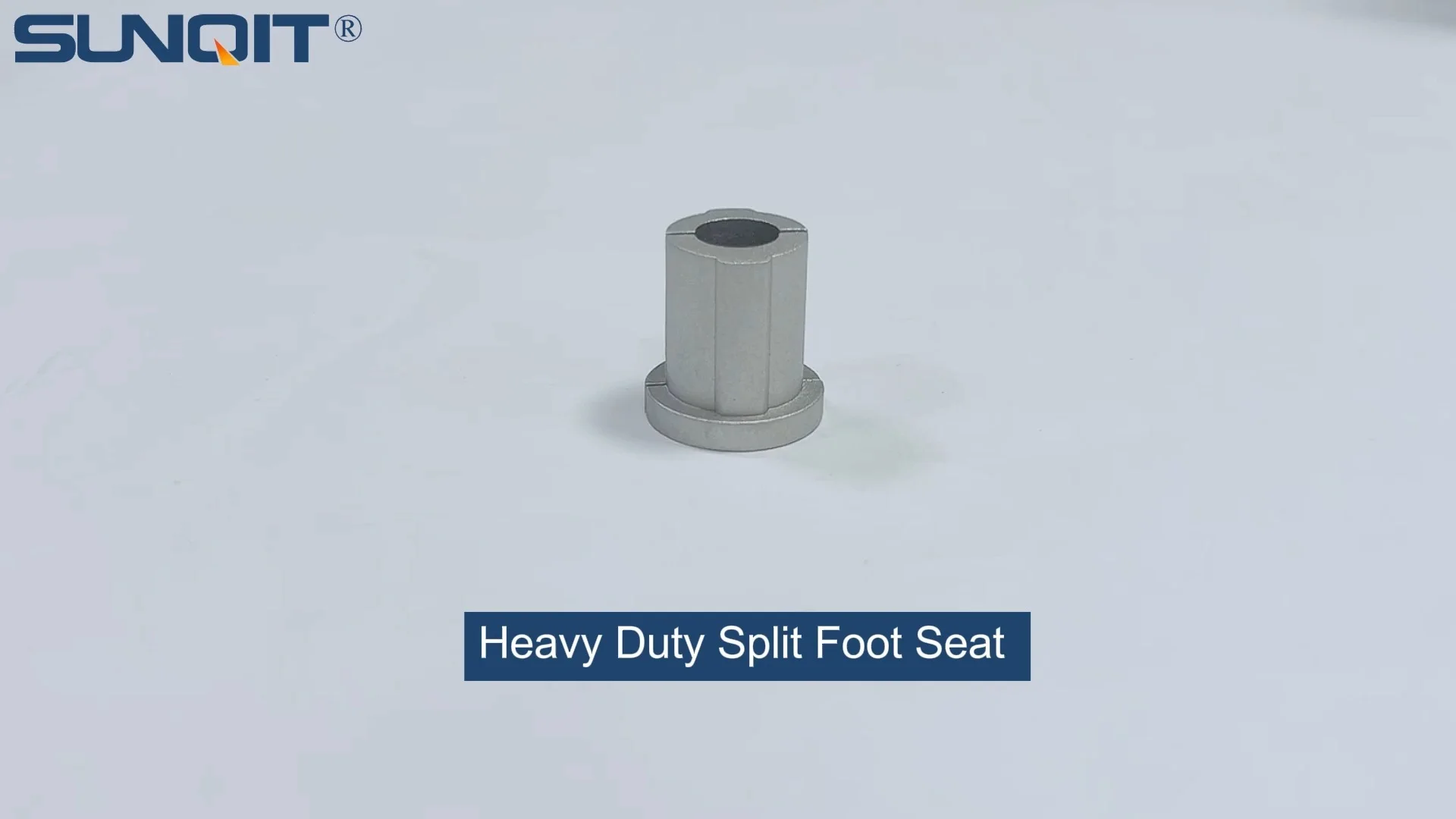
Walk into any modern manufacturing facility, warehouse, or workshop, and you'll notice a silent hero holding everything together: the humble foot seat. These unassuming components might not grab headlines, but they're the backbone of stability for workbenches, material racks, and conveyor systems. Yet for years, many operations have struggled with a trade-off: heavy steel foot seats that offer strength but are a nightmare to move and prone to rust, or flimsy plastic ones that save weight but buckle under pressure. Enter aluminum alloy heavy duty split foot seats—a game-changer that flips the script. Lightweight enough to simplify installation and reconfiguration, yet tough enough to handle the rigors of industrial use, these foot seats are redefining what's possible in lean manufacturing and facility design. Let's dive into what makes them tick, why they're becoming a staple in smart factories, and how they might just be the upgrade your workspace has been waiting for.
What Are Aluminum Alloy Heavy Duty Split Foot Seats?
At their core, aluminum alloy heavy duty split foot seats are support components designed to anchor structures like workbenches, material racks, and assembly lines to the ground. Unlike solid, one-piece foot seats, their "split" design allows for easy adjustment and installation—think of them as the adjustable foundation that keeps your equipment level, stable, and secure. Made from high-grade aluminum alloys, they blend the best of both worlds: the structural integrity needed for heavy loads and the lightweight properties that make setup and repositioning a breeze.
But don't let the "lightweight" label fool you. These aren't your average aluminum parts. Manufacturers engineer them using advanced alloy blends—often mixing aluminum with magnesium, silicon, or copper—to boost tensile strength and durability. The result? A foot seat that can support hundreds of pounds without bending, yet weighs a fraction of its steel counterpart. And because they're split, they can accommodate slight variations in floor unevenness, ensuring your workbench or conveyor stays steady even in older facilities where floors might not be perfectly level.
Another key feature is their compatibility with modular systems. If your facility uses aluminum extrusion profile or lean pipe systems (common in lean manufacturing setups), these foot seats integrate seamlessly. They're designed to work with standard aluminum profile accessories, from T-slot nuts to lean pipe joints, making them a versatile addition to any modular workspace. Whether you're building a custom workbench, a mobile material cart, or a fixed conveyor line, these foot seats adapt to your needs—no custom fabrication required.
Key Features: Why "Lightweight Yet Strong" Isn't Just a Slogan
What truly sets aluminum alloy heavy duty split foot seats apart are their standout features. Let's break down the ones that matter most for industrial and commercial users:
Lightweight by Design: Aluminum's natural density is about one-third that of steel, which means these foot seats are significantly easier to handle. A typical 4-inch split foot seat made of aluminum might weigh just 1.5 pounds, compared to 4.5 pounds for a steel equivalent. For workers installing or reconfiguring equipment, that difference adds up fast—less strain, fewer injuries, and faster setup times. Imagine a team of two moving a workbench with aluminum foot seats versus wrestling with steel ones; the aluminum option cuts the effort in half, letting your team focus on more critical tasks.
Strength That Doesn't Quit: Thanks to heat-treated aluminum alloys, these foot seats punch above their weight class. Most can handle static loads of 500–1,000 pounds per seat, depending on size and design. That's enough to support a fully loaded workbench with tools, parts bins, and even a heavy-duty vise. How do they achieve this? The extrusion process used to shape the aluminum (more on that later) aligns the metal's grains, creating a structure that resists bending and warping. Add in reinforced ribbing on the base, and you've got a foot seat that stands up to daily abuse in high-traffic areas.
Corrosion Resistance: Steel foot seats rust—plain and simple. Even with coatings, they'll eventually corrode in humid warehouses, near cleaning stations, or in outdoor loading areas. Aluminum, on the other hand, forms a natural oxide layer when exposed to air, acting as a built-in barrier against rust and corrosion. For facilities that deal with liquids, chemicals, or high moisture (like food processing plants or automotive workshops), this is a game-changer. No more replacing rusted foot seats every few years, and no more unsightly stains on concrete floors from corroded metal.
Split Design for Adjustability: The "split" in their name is more than a design quirk—it's a problem-solver. Traditional solid foot seats often require precise alignment during installation; if the floor is uneven, you're stuck shimming with washers or worse, risking instability. Split foot seats, however, have two separable halves that can be adjusted independently. Tighten or loosen the bolts connecting the halves, and you can fine-tune the height by a few millimeters, ensuring perfect leveling even on tricky surfaces. This adjustability also comes in handy during reconfigurations—no need to replace the entire foot seat if you move a workbench to a new spot with different floor conditions.

Materials & Manufacturing: The Secret to Their Strength
The magic of these foot seats starts with the material: aluminum alloy. Not all aluminum is created equal, though. Manufacturers opt for alloys like 6061 or 6082—known for their excellent strength-to-weight ratio and weldability. 6061, for example, contains magnesium and silicon, which form compounds that strengthen the metal when heat-treated. This process, called precipitation hardening, involves heating the alloy to a specific temperature, quenching it in water, and then aging it at room temperature or in an oven. The result is an alloy that's 20–30% stronger than untreated aluminum, without sacrificing ductility.
Once the alloy is ready, it's shaped using aluminum extrusion profile techniques. Extrusion involves forcing heated aluminum billets through a die (a custom-shaped opening), which forms the metal into the desired cross-section—think of it like squeezing toothpaste through a tube, but with extreme precision. This method creates a uniform structure with consistent wall thickness, ensuring no weak spots. For split foot seats, the die is designed to include features like bolt holes, ribbing, and the split line, so little post-extrusion machining is needed. This not only speeds up production but also reduces waste, making extrusion a cost-effective and eco-friendly choice.
After extrusion, the foot seats undergo surface treatment to enhance durability and appearance. Anodizing is a common step: an electrochemical process that thickens the natural oxide layer on the aluminum, making it more resistant to scratches and corrosion. Anodized foot seats come in a range of colors (though silver and black are most common in industrial settings) and have a matte finish that hides fingerprints and scuffs—ideal for busy workspaces. Some manufacturers also offer powder coating as an option, adding an extra layer of protection for environments with heavy wear or chemical exposure.
Finally, the split halves are precision-machined to ensure a tight fit. The bolt holes are tapped to accept standard hardware (often M8 or M10 bolts), and the mating surfaces of the split are smoothed to prevent binding during adjustment. Quality control checks—including load testing and dimensional inspections—ensure each foot seat meets strict standards before leaving the factory. It's this attention to material science and manufacturing detail that makes these foot seats reliable enough for critical applications.

Applications: Where They Shine in the Real World
Aluminum alloy heavy duty split foot seats aren't just a theoretical improvement—they're making waves in real-world settings. Let's look at a few key applications where they're proving their worth:
Workbenches: From electronics assembly to automotive repair, workbenches are the heart of any workshop. A wobbly workbench isn't just annoying—it's a safety hazard and a productivity killer. Aluminum split foot seats shine here, providing a stable base that keeps tools, parts, and equipment steady. Pair them with an aluminum extrusion profile workbench (like the popular "Workbench E (Single Deck-Without Caster)" model), and you get a setup that's both lightweight and rock-solid. Need to reposition the workbench for a new project? The foot seats' low weight makes moving it a two-person job instead of a four-person hassle. Plus, their corrosion resistance means they'll hold up even in garages or labs where spills are common.
Material Racks & Storage Systems: Material racks, like the "Material Rack B (3 Row and 3 Floor)" often found in warehouses, need to support heavy loads of parts, boxes, or raw materials. Steel foot seats would add unnecessary weight, making the rack hard to relocate if inventory needs change. Aluminum split foot seats, however, keep the rack stable under hundreds of pounds of weight while keeping the overall structure light enough to move with a pallet jack or forklift. Their adjustability also ensures the rack stays level, preventing items from sliding off shelves—a critical feature for fragile components or liquids.
Conveyor Systems & Lean Manufacturing Lines: In lean manufacturing, flexibility is key. Conveyor systems, roller tracks, and assembly lines need to be reconfigured quickly to adapt to new products or processes. Heavy steel foot seats can turn a simple conveyor repositioning into a full-day project. Aluminum split foot seats change that. Lightweight and easy to disconnect, they let teams adjust conveyor layouts in hours instead of days. And because they're compatible with lean pipe joint and roller track accessories, they integrate seamlessly with existing lean systems, reducing the need for custom parts.
Mobile Equipment Bases: Even stationary equipment sometimes needs to move—think of a testing station that's wheeled out for maintenance or a packing table that shifts with seasonal demand. Pair aluminum split foot seats with caster accessories (like swivel casters with brakes), and you get a mobile base that's stable when locked and easy to roll when unlocked. The foot seats add rigidity to the base, preventing the equipment from wobbling while in use, and their light weight makes rolling the setup across the factory floor smooth and effortless.

How Do They Compare to Traditional Foot Seats? A Side-by-Side Look
Still on the fence? Let's put aluminum alloy split foot seats head-to-head with their steel and plastic counterparts. The table below breaks down the key differences:
| Feature | Aluminum Alloy Split Foot Seats | Steel Foot Seats | Plastic Foot Seats |
|---|---|---|---|
| Weight | Light (1–2 lbs per seat) | Heavy (4–6 lbs per seat) | Very Light (0.5–1 lb per seat) |
| Max Load Capacity | 500–1,000 lbs per seat | 1,000+ lbs per seat | 100–300 lbs per seat |
| Corrosion Resistance | Excellent (natural oxide layer + anodizing) | Poor (prone to rust without coating) | Good (resistant to most chemicals) |
| Adjustability | High (split design allows height fine-tuning) | Low (solid design; requires shims for leveling) | Medium (some flexibility, but limited by material strength) |
| Installation/Repositioning Ease | Easy (lightweight, split design simplifies setup) | Hard (heavy, requires tools and multiple people) | Easy (lightweight, but may crack during installation) |
| Cost | Moderate (higher than plastic, lower than stainless steel) | High (steel + coating costs) | Low (but requires frequent replacement) |
| Best For | Workbenches, material racks, conveyor systems, mobile bases | Heavy machinery, permanent structures | Light-duty shelving, temporary setups |
Installation & Maintenance: Keeping It Simple
One of the biggest advantages of aluminum alloy split foot seats is how easy they are to install and maintain. Unlike steel foot seats that require welding or heavy tools, these foot seats are designed for "bolt-and-go" setup. Here's a quick overview of the process:
Installation Steps: Start by positioning your structure (workbench, rack, etc.) in the desired location. Place the split foot seats at each corner, ensuring the split halves are aligned with the structure's legs. insert bolts through the foot seat's pre-drilled holes and into the leg or frame—most use standard hex bolts or T-slot bolts that work with aluminum extrusion profile. Once loosely attached, adjust the split halves to level the structure using a spirit level. Tighten the bolts connecting the split halves to lock in the adjustment, then fully tighten the bolts securing the foot seat to the structure. That's it—no welding, no special tools, just a wrench and a level.
Maintenance Tips: Aluminum split foot seats are low-maintenance, but a little care goes a long way. Wipe them down periodically with a damp cloth to remove dust and debris—this prevents buildup that could affect adjustability. If you're using them in a particularly dirty environment (like a woodworking shop), lubricate the adjustment bolts with a light machine oil to keep them turning smoothly. For anodized models, avoid using abrasive cleaners, as they can scratch the finish. And if you need to readjust the height later, simply loosen the split bolts, tweak the position, and retighten—no need to replace any parts.
Case Study: How One Factory Cut Setup Time by 40% with Aluminum Split Foot Seats
To see the real impact of these foot seats, let's look at a case study from a mid-sized electronics manufacturer in the Midwest. The factory produced printed circuit boards (PCBs) and had a recurring problem: their assembly lines were built with steel foot seats, making reconfigurations slow and labor-intensive. When they introduced a new PCB model, the team needed to rearrange three workbenches and a conveyor system to accommodate the new workflow. The old steel foot seats turned what should have been a one-day project into a three-day ordeal, requiring overtime and delaying production.
Fed up, the plant manager decided to test aluminum alloy split foot seats on a trial basis. They replaced the steel foot seats on two workbenches and a material rack with aluminum versions. The results were immediate: reconfiguring the workbenches took just two hours instead of eight, and the material rack, once requiring a forklift to move, could be shifted by two workers with a hand truck. Encouraged, the factory rolled out the foot seats across all assembly lines. Within six months, setup time for new production runs dropped by 40%, and workers reported fewer strains from moving heavy equipment. Plus, the foot seats' corrosion resistance meant less time spent sanding and repainting rusted steel—freeing up maintenance crews for more critical tasks.
Conclusion: The Future of Workspace Stability
Aluminum alloy heavy duty split foot seats might not be the flashiest innovation in manufacturing, but they're a quiet revolution. By solving the age-old trade-off between strength and weight, they're making facilities more flexible, efficient, and safe. Whether you're running a small workshop or a large-scale factory, these foot seats offer a simple upgrade with big returns: faster reconfigurations, lower labor costs, and equipment that stands the test of time. As lean manufacturing and modular workspaces continue to grow, expect to see aluminum split foot seats become a standard—because in the world of industrial design, the best solutions are often the ones that make hard things look easy. So next time you walk through your facility, take a look at the foot seats holding up your workbenches and racks. If they're steel or plastic, maybe it's time to make the switch.