- Company Articles
- Products and Technology
- Solution
- Aluminum Castor Install Base: Lightweight Solution for Lean Workbench Mobility

Aluminum Castor Install Base: Lightweight Solution for Lean Workbench Mobility
Related Product
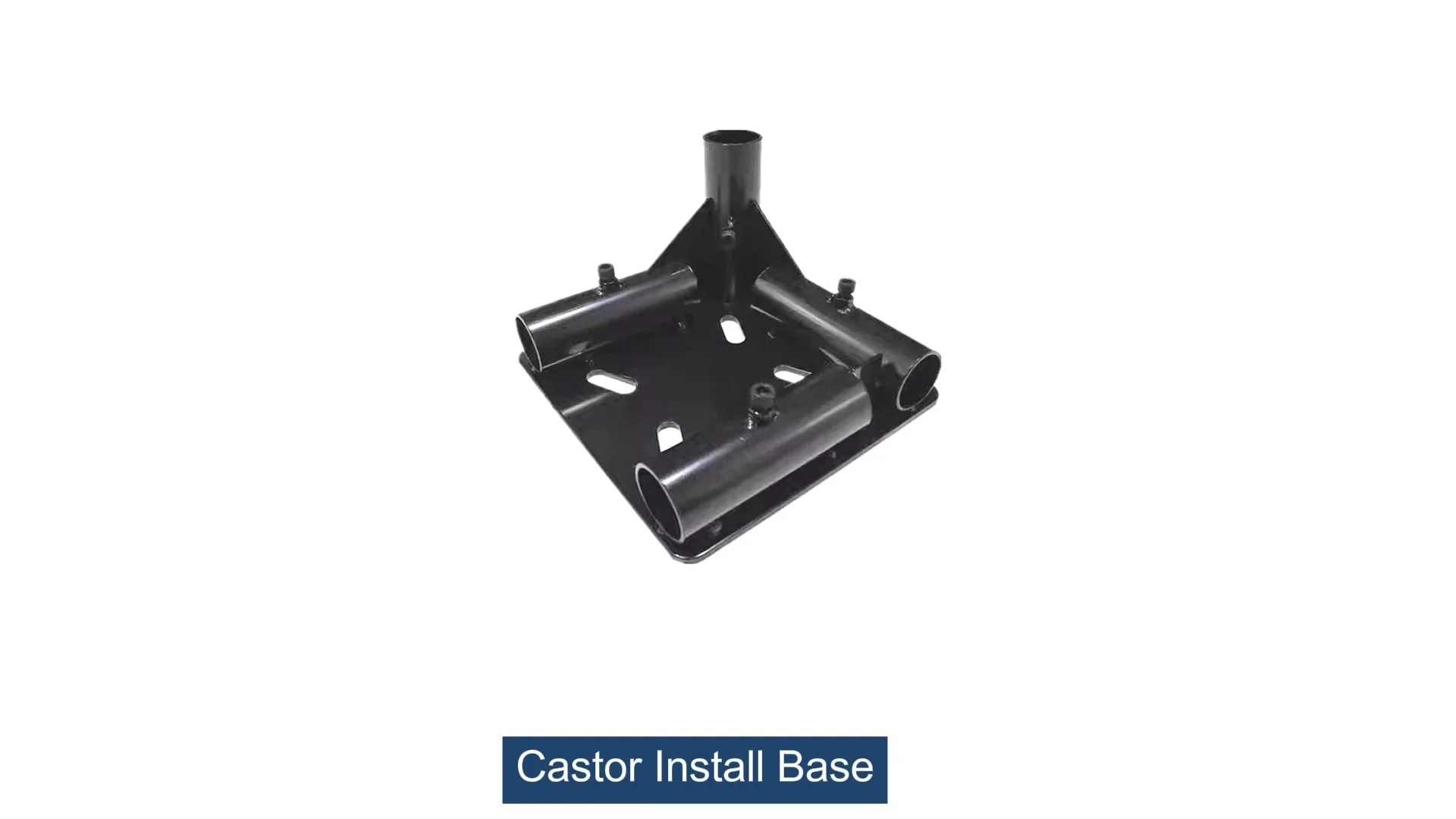
Castor Install Base
Castor install base, used for connection between pipe and castor, it can connect 4 pcs pipe by 1 pcs castor base, to make the structure strong and stable.
In the fast-paced world of manufacturing and assembly, every second counts. Picture this: a team of workers in a electronics plant, rushing to meet a tight production deadline. One of their workbenches—loaded with sensitive components and tools—needs to be shifted from the assembly line to the testing area. Two people strain to push it, the steel base scraping against the floor, wheels sticking halfway. By the time they get it there, precious minutes have slipped away, and frustration hangs in the air. This isn't just a hypothetical scenario; it's a daily reality for many facilities still relying on outdated, heavy mobility solutions for their workbenches. But what if there was a way to make this process smoother, lighter, and less of a hassle? Enter the aluminum castor install base—a small but mighty component that's quietly revolutionizing how lean workbenches move.
The Hidden Cost of Heavy Mobility: Why Traditional Bases Fall Short
For years, workbenches have been anchored by bulky steel bases or fixed legs, designed more for stability than flexibility. While steel is undeniably strong, its weight becomes a liability when mobility is needed. A standard steel castor base, for example, can add 30-40 pounds to a workbench's total weight—meaning even a moderately sized bench might require two people to move. This isn't just about physical strain; it's about efficiency. In lean manufacturing, where the goal is to eliminate waste (including wasted time and effort), every instance of struggling with a heavy bench is a bottleneck waiting to be fixed.
Then there's the issue of corrosion. Steel bases, especially in humid or industrial environments, are prone to rust, which not only looks unprofessional but can compromise the integrity of the casters over time. Rusty wheels stick, wobble, or even lock up, turning a simple "roll and go" task into a frustrating battle. And let's not forget adjustability: many traditional bases lack the fine-tuning needed to keep workbenches level on uneven floors, leading to wobbly surfaces that risk damaging tools or products.
These problems might seem small in isolation, but they add up. A recent survey of manufacturing plant managers found that "difficulty moving workbenches" was cited as a top 5 daily inefficiency, costing an average of 2-3 hours per week in lost productivity per team. That's time that could be spent assembling products, troubleshooting issues, or training staff—all of which directly impact the bottom line.
Aluminum Castor Install Base: The Lightweight Game-Changer
So, what makes the aluminum castor install base different? Let's start with the obvious: weight. Aluminum is significantly lighter than steel—about 1/3 the density—meaning an aluminum base can weigh as little as 8-12 pounds, compared to 30+ pounds for steel. This isn't just a numbers game; it's a practical one. A single worker can easily move a fully loaded lean workbench equipped with an aluminum base, freeing up teammates to focus on other tasks. Imagine the difference in a busy shift: instead of yelling across the floor, "Can someone help me move this bench?", a worker can simply unlock the casters and glide it into place—quick, quiet, and independent.
But aluminum isn't just lightweight; it's also surprisingly durable. Modern aluminum alloys, like those used in industrial-grade bases, are treated to resist corrosion, scratches, and wear. Unlike steel, they won't rust when exposed to moisture or chemicals, making them ideal for environments like food processing plants, electronics assembly lines, or cleanrooms where hygiene and longevity matter. And because aluminum is naturally malleable, manufacturers can design bases with sleek, ergonomic shapes that hug the workbench frame tightly, reducing bulk and improving stability.
Another standout feature is adjustability. Most aluminum castor install bases come with pre-drilled holes and slots that align with standard caster wheels and adjustable leveling feet, making it easy to customize the setup to your needs. Need a bench that stays put during assembly but rolls smoothly during cleaning? Just lock the casters. Working on a slightly uneven floor? Twist the leveling feet to stabilize the bench in seconds. This versatility means the same base can adapt to different tasks, shifts, or even departments—no need to buy separate bases for different workbench configurations.

Aluminum Profile: The Backbone of Durability
At the heart of every high-quality aluminum castor install base is aluminum profile—a material that's been a staple in industrial design for decades, thanks to its unique blend of strength and flexibility. Aluminum profiles are extruded into precise shapes (think T-slots, channels, or hollow tubes) that provide structural support while keeping weight low. For castor bases, manufacturers often use T-slot aluminum profile, which features grooves along the length that allow for easy attachment of casters, leveling feet, or other accessories without welding or drilling new holes.
Why does this matter? T-slot profiles make the base modular. If a caster wears out, you don't need to replace the entire base—just unscrew the old one and bolt on a new. If you want to add a brake to a caster, the T-slot provides a secure mounting point. This modularity reduces maintenance costs and extends the life of the base, as components can be swapped out individually. It also future-proofs your setup: as your needs change (e.g., switching from light-duty to heavy-duty casters), the base can adapt without requiring a complete overhaul.
Aluminum profile also offers consistent quality. Unlike steel, which can have inconsistencies in thickness or finish, extruded aluminum profiles are uniform, ensuring that the base distributes weight evenly across all four casters. This even distribution prevents wobbling and reduces stress on the casters, their lifespan. And because aluminum is a good conductor of heat, the base won't retain cold or heat in extreme environments, making it safer to handle in warehouses with temperature fluctuations.

Pairing with Caster Wheels: Smooth Movement, Every Time
A base is only as good as the casters it supports, and the aluminum castor install base is designed to work seamlessly with a wide range of caster wheels. Whether you need soft rubber wheels for quiet movement on concrete, hard plastic wheels for durability on smooth floors, or locking casters for stability during use, the base's pre-drilled mounting holes and T-slot design ensure a secure fit.
One of the most popular combinations is the aluminum base paired with 360° swivel stem casters with brakes. These casters allow the workbench to rotate 360 degrees, making it easy to maneuver around tight corners or obstacles in the workshop. The brakes, typically a simple foot pedal, lock both the wheel and the swivel, ensuring the bench stays firmly in place when you need it to—no more sliding mid-assembly. For heavier workbenches (e.g., those loaded with tools or machinery), heavy-duty caster wheels with ball bearings can be used, as the aluminum base's strength ensures it won't bend or warp under the load.
What about noise? Traditional steel bases with metal casters can be surprisingly loud, echoing through a quiet workshop and contributing to a stressful environment. Aluminum bases, paired with rubber or polyurethane caster wheels, significantly reduce noise. Imagine rolling a workbench across the floor and barely hearing it—that's the difference soft wheels and a lightweight base can make. It's a small detail, but anyone who's worked in a noisy factory knows how much quieter surroundings improve focus and morale.

Adjustable Leveling Feet: Stability Meets Flexibility
Mobility is important, but so is stability. A workbench that rolls smoothly is great, but if it wobbles when you're using it, it's more of a liability than an asset. That's where adjustable leveling feet come in—and the aluminum castor install base is designed to integrate with them flawlessly.
Most aluminum bases feature threaded holes or slots that allow leveling feet to be attached alongside casters. When you need to move the bench, you raise the leveling feet (using a wrench or by hand, depending on the design) so the casters touch the floor. When you're in place, you lower the feet to the floor, lifting the casters slightly and stabilizing the bench. This dual functionality—casters for movement, feet for stability—means the bench can transition from "mobile" to "fixed" in seconds, without any tools or complicated adjustments.
Adjustable leveling feet are especially useful on uneven floors, which are common in older factories or warehouses. A few twists of the foot can compensate for small dips or bumps, ensuring the workbench stays level and steady. This is critical for tasks that require precision, like electronics assembly or quality inspection, where a wobbly surface could lead to errors or damaged components. It also protects the casters: by lifting them off the floor when not in use, you reduce wear and tear, extending their lifespan.
Real-World Impact: How One Factory Cut Downtime by 40%
Case Study: Precision Electronics Inc.
Precision Electronics Inc., a mid-sized manufacturer of circuit boards, was struggling with workbench mobility. Their assembly line required frequent reconfigurations to accommodate different product models, and each reconfiguration involved moving 8-10 workbenches. With traditional steel bases, this process took 2-3 hours per reconfiguration, as two workers were needed per bench, and casters often stuck on the factory's slightly uneven concrete floor.
In 2023, the plant manager decided to test aluminum castor install bases on 5 workbenches. The results were immediate: a single worker could now move each bench in under 5 minutes, and the lighter bases glided over the floor without sticking. The adjustable leveling feet ensured the benches stayed steady during assembly, and the T-slot aluminum profile made it easy to add accessories like tool holders or bin rails later.
After six months, Precision Electronics rolled out the aluminum bases to all 30 workbenches. Reconfiguration time dropped from 3 hours to 45 minutes—a 75% improvement. Workers reported less physical strain, and the plant saw a 15% reduction in tool damage (attributed to steadier work surfaces). "It's amazing how something so small could make such a big difference," said the plant manager. "We used to dread reconfigurations; now, it's just another part of the day."
Traditional vs. Aluminum: A Side-by-Side Comparison
| Feature | Traditional Steel Castor Base | Aluminum Castor Install Base |
|---|---|---|
| Weight (per base) | 30-40 lbs | 8-12 lbs |
| Mobility | Requires 2+ people to move; casters prone to sticking | Single-person movement; smooth-rolling with compatible casters |
| Durability | Prone to rust and corrosion; heavy weight strains casters | Corrosion-resistant; lightweight design reduces stress on components |
| Adjustability | Limited; often requires welding or drilling for modifications | Modular (T-slot profile); easy to add/swap casters, feet, or accessories |
| Noise Level | High (metal-on-metal contact) | Low (especially with rubber/polyurethane casters) |
| Maintenance | Frequent cleaning to prevent rust; caster replacement often requires tools | Minimal maintenance; modular components easy to replace |
| Cost (Long-Term) | Lower upfront cost, but higher maintenance and replacement costs | Slightly higher upfront cost, but lower long-term costs due to durability and adaptability |
Beyond the Base: Accessories That Enhance Functionality
The aluminum castor install base is just the starting point. Thanks to its modular design (often built with T-slot aluminum profile), it can be paired with a range of accessories to tailor the workbench to your specific needs. Need to add a tool rack? The T-slots allow you to bolt on aluminum profile accessories like hooks or bins. Want to secure the bench to the floor during heavy use? Floor anchors can be attached to the base's mounting holes. Even small touches, like cable management clips or label holders, can be added without modifying the base itself.
One popular accessory is the swivel roller ball, which can be mounted on the workbench surface to make sliding materials easier. While not directly part of the base, the stability provided by the aluminum base ensures the roller balls work smoothly, without the bench shifting. Another useful addition is the plastic roller track guide rail, which can be attached to the base or the workbench to create a mini-conveyor for moving parts from one station to the next. These accessories turn a simple workbench into a fully integrated lean system, designed to minimize waste and maximize efficiency.
Conclusion: Small Change, Big Results
In the world of lean manufacturing, success often lies in the details—the small, incremental improvements that add up to significant change. The aluminum castor install base is one such detail. It's not flashy or high-tech, but it addresses a fundamental pain point: making workbenches easier to move, more stable to use, and cheaper to maintain. By replacing heavy, clunky steel bases with lightweight, durable aluminum ones, factories and workshops can reduce downtime, ease physical strain on workers, and create a more adaptable, efficient environment.
So, the next time you struggle to move a workbench, take a look at its base. Is it holding you back? Maybe it's time to make the switch to aluminum. After all, in lean manufacturing, every pound saved, every minute gained, and every frustration avoided is a step toward a better, more productive workplace. And isn't that what we're all striving for?