- Company Articles
- Products and Technology
- Product knowledge
- Aluminum Castor Install Base vs. Plastic: Which is More Cost-Effective?

Aluminum Castor Install Base vs. Plastic: Which is More Cost-Effective?
Related Product
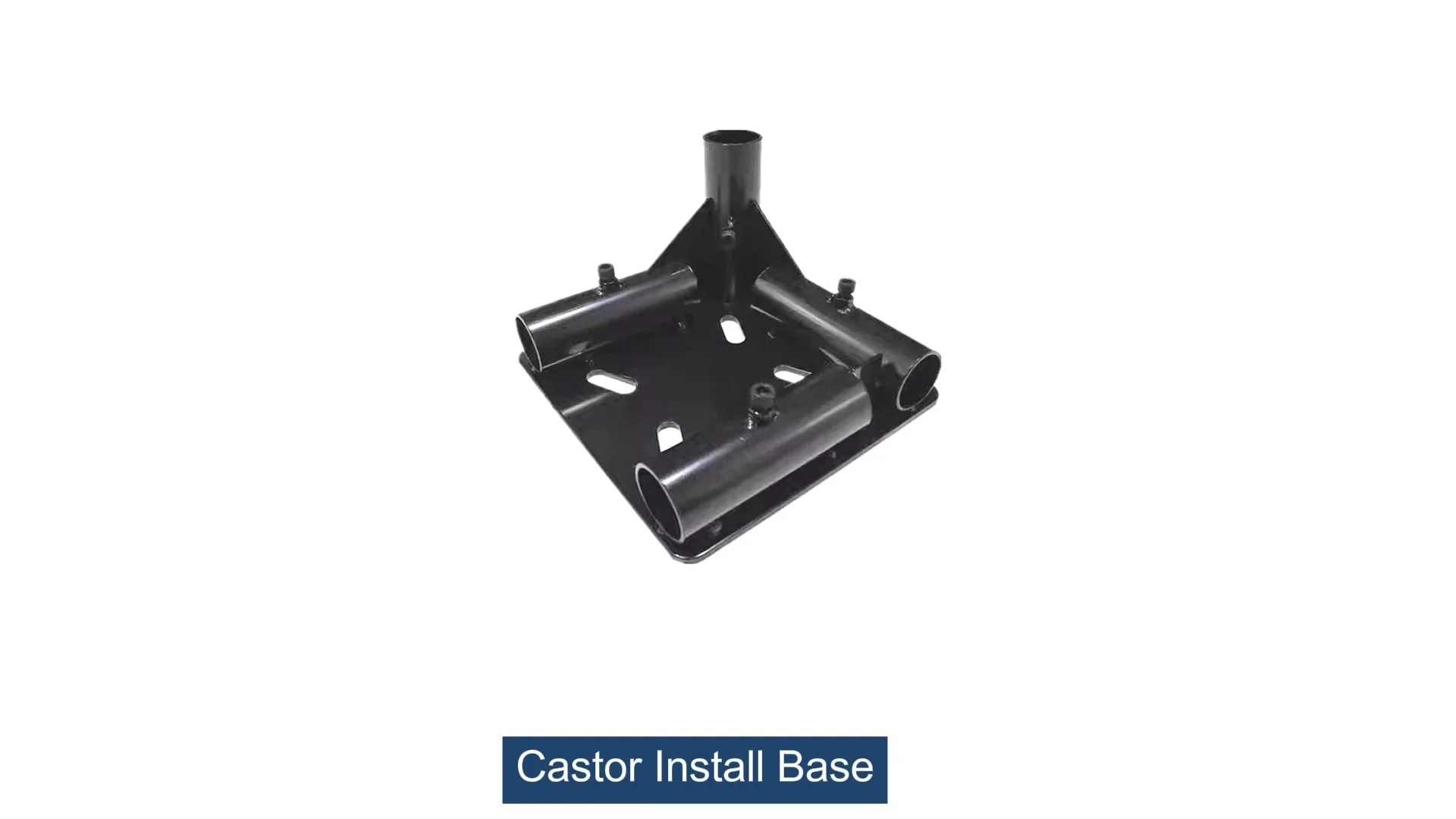
Castor Install Base
Castor install base, used for connection between pipe and castor, it can connect 4 pcs pipe by 1 pcs castor base, to make the structure strong and stable.
Beyond the price tag: Why the right choice today saves you money tomorrow
The Unsung Hero of Your Workflow: Why Castor Install Bases Matter
If you've ever spent a morning troubleshooting a wobbly trolley in your warehouse, or watched a production line grind to a halt because a cart's wheel came loose, you know the frustration of overlooked details. In the world of material handling—whether you're running a small workshop, a bustling factory, or a busy retail stockroom—the smallest components often have the biggest impact. Today, we're zooming in on one such component: the castor install base. It's not flashy, it's rarely noticed, but it's the silent foundation that keeps your carts rolling, your workbenches stable, and your operations moving forward.
When it comes to castor install bases, two materials dominate the market: aluminum and plastic. Walk into any industrial supply store, and you'll find shelves lined with both, each promising durability, affordability, and reliability. But here's the catch: "affordable" doesn't always mean "cost-effective." A $5 plastic base might seem like a steal compared to a $15 aluminum one—until that plastic base cracks six months later, forcing you to replace it, repair the cart, and lose hours of productivity. On the flip side, splurging on aluminum might feel unnecessary if you're only using the cart to move lightweight boxes around a dry, climate-controlled room.
So, which is really more cost-effective? The answer isn't as simple as "aluminum is better" or "plastic is cheaper." It depends on your workflow, your environment, your budget, and your long-term goals. In this article, we'll break down the pros and cons of each material, compare their true costs (beyond the initial price tag), and help you decide which one deserves a spot in your operation.
First Things First: What Even Is a Castor Install Base?
Before we dive into the aluminum vs. plastic debate, let's make sure we're all on the same page. A castor install base is the metal or plastic plate (or bracket) that connects a caster wheel to the bottom of a cart, trolley, workbench, or rack. Think of it as the bridge between the wheel and the equipment—it distributes weight, absorbs shocks, and ensures the caster stays securely attached, even when you're moving heavy loads over uneven floors.
Without a sturdy install base, your caster wheel is just a loose part. A weak base can bend under pressure, crack from vibration, or corrode in damp environments—all of which lead to wobbly carts, stuck wheels, and, worst-case, accidents. That's why choosing the right base isn't just about saving a few dollars upfront; it's about protecting your team, your equipment, and your bottom line.

Aluminum Castor Install Bases: The Heavyweight Contender
What Makes Aluminum Stand Out?
Aluminum has been a staple in industrial settings for decades, and for good reason. It's lightweight yet surprisingly strong, resistant to rust, and easy to mold into precise shapes—all qualities that make it ideal for castor install bases. Let's break down its key advantages:
Strength-to-Weight Ratio: Aluminum is about one-third the weight of steel but offers comparable strength, making it perfect for applications where you need durability without adding extra heft to your carts. This is especially important if your team is manually pushing trolleys around—lighter equipment reduces fatigue and lowers the risk of strain injuries.
Corrosion Resistance: Unlike steel, aluminum doesn't rust. When exposed to moisture, it forms a thin oxide layer that acts as a protective barrier, keeping the base intact even in humid warehouses, outdoor loading docks, or environments with frequent spills (we're looking at you, food processing plants).
Precision Engineering: Aluminum is easy to machine and extrude into complex shapes, which means manufacturers can design bases with reinforced edges, pre-drilled holes for easy installation, and custom fits for specific caster models. If you're using specialized caster accessories—like locking mechanisms or heavy-duty wheels—an aluminum base can often accommodate them more securely than plastic.
Compatibility with Aluminum Profiles: Here's where it ties into your broader setup: if your facility already uses aluminum profile workbenches, racks, or trolleys, an aluminum castor install base will integrate seamlessly. Aluminum profiles are known for their modularity, and pairing them with aluminum bases creates a cohesive system that's easy to repair and upgrade. No more mixing materials that might wear differently over time!
The Downside of Aluminum: Upfront Costs
Let's get real: aluminum isn't cheap. Depending on the size, thickness, and design, an aluminum castor install base can cost 2–3 times more than a plastic one. For a small business with a tight budget, that sticker shock can be hard to swallow. If you're only buying a handful of bases, the difference might seem negligible, but scale up to 50 or 100 carts, and suddenly you're looking at hundreds (or thousands) of dollars more upfront.

Plastic Castor Install Bases: The Budget-Friendly Option
Why Plastic Tempts So Many Buyers
Plastic castor install bases are the new kid on the block, but they've quickly gained popularity—especially among small businesses and startups. Made from materials like polypropylene (PP), nylon, or reinforced ABS, they're marketed as "affordable," "lightweight," and "easy to replace." Let's see why they appeal:
Rock-Bottom Prices: There's no getting around it: plastic bases are cheap. A basic plastic base can cost as little as $3–$5, compared to $10–$20 for aluminum. If you're outfitting a new workshop on a shoestring budget, this can be a huge draw. Why spend more when "it works" right now?
Lightweight and Quiet: Plastic is even lighter than aluminum, and it doesn't conduct noise the way metal does. If you're moving carts in a quiet office or a retail space where customers might be nearby, plastic bases can help keep the peace (no more clanging metal on concrete floors).
Chemical Resistance: Some plastics—like polypropylene—are resistant to oils, solvents, and mild acids, making them a solid choice for labs, cleaning supply storage, or auto repair shops where spills are common. They won't corrode or degrade when exposed to these substances, which is a big plus over untreated metal.
Color-Coding Potential: Plastic bases come in a rainbow of colors, which might seem trivial until you realize how useful color-coding can be. Assign red bases to carts for hazardous materials, blue for cleanroom supplies, and yellow for general use—suddenly, your team can identify cart purposes at a glance, reducing mix-ups and improving efficiency.
The Hidden Costs of Plastic
Plastic's low upfront cost is tempting, but it often comes with hidden expenses that add up over time. Here's where the "budget-friendly" label starts to fade:
Durability Issues: Plastic is prone to cracking, warping, and breaking under stress. drop a heavy load on a plastic-based cart, or leave it out in the sun for months, and you'll likely end up with a base that's bent out of shape or split at the seams. Even minor impacts—like bumping into a wall or another cart—can weaken the material, leading to premature failure.
Weight Limits: Most plastic bases have strict weight capacities (often 100–200 pounds per base), which means they're not suitable for heavy-duty applications. If you try to overload them, the base can deform, causing the caster to tilt or detach—putting your team and your materials at risk.
Frequent Replacements: A plastic base might last 6–12 months in a busy environment, while an aluminum one can last 5–10 years. Let's do the math: if you pay $5 for a plastic base that needs replacing every year, over a decade you'll spend $50. An aluminum base costing $15 might last the entire 10 years—saving you $35 in the long run. Multiply that by 50 carts, and you're looking at $1,750 in savings. Ouch.
Limited Compatibility: Plastic bases are often designed for generic caster sizes, which can be a problem if you need to upgrade to larger wheels or specialized caster accessories (like swivel locks). Trying to force a heavy-duty caster into a plastic base can strip the threads or crack the material, rendering both the base and the caster useless.

Aluminum vs. Plastic: A Head-to-Head Comparison
To make this decision easier, let's put aluminum and plastic castor install bases side by side. The table below compares key factors that impact cost-effectiveness—beyond just the initial price tag:
| Factor | Aluminum Castor Install Base | Plastic Castor Install Base |
|---|---|---|
| Initial Cost | Higher ($10–$25 per base) | Lower ($3–$8 per base) |
| Expected Lifespan | 5–10 years (heavy use) | 6–12 months (heavy use); up to 3 years (light use) |
| Weight Capacity | 200–500+ pounds per base | 100–200 pounds per base (varies by material) |
| Environmental Resistance | Resists rust, moisture, and moderate heat; may corrode in extreme chemicals | Resists some chemicals; warps in high heat, cracks in cold, degrades in UV light |
| Maintenance Needs | Minimal (occasional cleaning; no rust treatment needed) | Frequent inspections for cracks/warping; may need replacement due to wear |
| Compatibility with Caster Accessories | High (supports locking mechanisms, heavy-duty wheels, custom mounts) | Low (limited to standard caster sizes; risk of damage with upgrades) |
| Total Cost Over 10 Years* | $10–$25 (one-time purchase) | $30–$80 (replaced 6–10 times) |
*Based on heavy use in a typical warehouse environment. Light use (e.g., office carts) may extend plastic lifespan to 2–3 years, reducing total cost to $15–$25 over 10 years.
Real-World Scenarios: When to Choose Aluminum (and When to Stick with Plastic)
Cost-effectiveness isn't one-size-fits-all. What works for a automotive plant might not make sense for a small bakery. Let's walk through common scenarios to help you decide:
Scenario 1: Heavy-Duty Manufacturing
Imagine you run a factory where steel parts weighing 300–400 pounds are moved between assembly stations 50+ times a day. Your carts take constant abuse—they're loaded with heavy parts, pushed over uneven concrete, and left outside overnight during loading dock transfers. In this case, aluminum is the clear winner. A plastic base would crack under the weight, warp in the rain, and need replacement every few months. Aluminum's strength, corrosion resistance, and long lifespan will save you from constant repairs and downtime.
Scenario 2: Small Retail Stockroom
Now, picture a boutique clothing store with a small stockroom. Your carts carry lightweight boxes of clothes (20–30 pounds max), and they're used 5–10 times a day on smooth tile floors. The environment is climate-controlled, with little moisture or UV exposure. Here, plastic might be the smarter choice. The low upfront cost won't strain your budget, and since the carts aren't under heavy stress, the plastic bases could last 2–3 years before needing replacement. You'll save money upfront without sacrificing performance.
Scenario 3: Food Processing Facility
Food processing environments are tough: high humidity, frequent washdowns with hot water and sanitizers, and strict hygiene standards. Aluminum is resistant to moisture and most sanitizing chemicals, making it a safe bet here. Plastic can work too, but you'll need to invest in food-grade, chemical-resistant plastic (which costs more than standard plastic) and replace it more often. Aluminum's durability gives it the edge in the long run, even with the higher initial cost.
Scenario 4: Laboratory or Cleanroom
In labs or cleanrooms, precision and contamination control are key. You need carts that are easy to sanitize, lightweight (to avoid damaging sensitive equipment), and non-reactive. Here, plastic might have the upper hand—certain medical-grade plastics are non-porous, resist bacteria growth, and won't scratch delicate surfaces. Aluminum can work, but it may require anodizing to prevent particle shedding, which adds to the cost. If your carts are used lightly and replaced every 2–3 years, plastic could be more cost-effective.
The X-Factor: Aluminum Pipe and Profile Integration
We've touched on this earlier, but it's worth emphasizing: if your facility already uses aluminum pipe or aluminum profile systems, choosing an aluminum castor install base is a no-brainer. Aluminum pipe and profiles are designed to work together—they share the same mounting standards, compatible accessories, and modular design. This integration offers two big advantages:
Easier Repairs and Upgrades: If a castor base gets damaged, you can swap it out with a new aluminum base without having to replace the entire cart or rack. Aluminum profiles have standardized T-slots, so you can easily adjust the base position, add new caster accessories, or upgrade to larger wheels—no drilling or welding required. With plastic, you're often stuck with a one-and-done design; if the base fails, the whole cart might need to be replaced.
Consistent Weight Distribution: Aluminum pipe and profiles are lightweight but rigid, which means they distribute weight evenly across the castor bases. This reduces stress on individual bases, extending their lifespan even further. Plastic bases paired with metal frames, on the other hand, can create weak points—metal is heavier, and plastic may not handle the uneven weight distribution as well, leading to cracks or warping.
For example, let's say you have an aluminum profile workbench with a mobile cart. The workbench uses aluminum legs and brackets, and the cart uses aluminum pipe for the frame. Adding an aluminum castor install base to the cart ensures that the entire system—from bench to cart—is balanced, durable, and designed to last. Mixing in a plastic base would create a mismatch, like putting a bicycle tire on a truck—it might work for a while, but it won't hold up.
The Verdict: Which Is More Cost-Effective?
After weighing the pros and cons, comparing costs, and looking at real-world scenarios, the answer is clear: aluminum castor install bases are more cost-effective for most industrial and heavy-use applications, while plastic is better for light-duty, budget-sensitive environments.
Aluminum's higher upfront cost is offset by its long lifespan, durability, and compatibility with existing systems. Over 5–10 years, it will save you money on replacements, repairs, and downtime. It's the better choice if you're moving heavy loads, working in harsh environments, or using aluminum pipe or profile systems.
Plastic shines in light-duty, low-stress settings—think small offices, retail stockrooms, or labs with specialized needs. If your carts carry light loads, are used infrequently, and you're on a tight budget, plastic can be a smart, temporary solution. Just be prepared to replace it more often.
Final Tip: Don't Skimp on Quality
Whether you choose aluminum or plastic, invest in the highest quality you can afford. A cheap aluminum base with thin walls or poor welding will fail just as quickly as a low-grade plastic one. Look for bases with reinforced corners, pre-drilled holes that match your caster bolts, and a manufacturer's warranty. Remember: the goal is to minimize total cost of ownership, not just initial spending.
Wrapping Up: Your Base, Your Budget, Your Success
At the end of the day, the "right" castor install base depends on your unique needs. Take a step back and evaluate your workflow: How heavy are your loads? How often do you use your carts? What's your environment like? Do you already use aluminum pipe or profiles? Answering these questions will guide you to the choice that's truly cost-effective for your operation.
And remember: the next time you're pushing a cart through your facility, take a second to glance at the base holding those wheels in place. It might not be glamorous, but it's a small investment that keeps your business rolling—literally and figuratively. Choose wisely, and it will pay off for years to come.