- Company Articles
- Products and Technology
- Installation And Maintenance
- Aluminum Castor Installation Base: Lightweight Solution for 3C Assembly Workbenches

Aluminum Castor Installation Base: Lightweight Solution for 3C Assembly Workbenches
Related Product
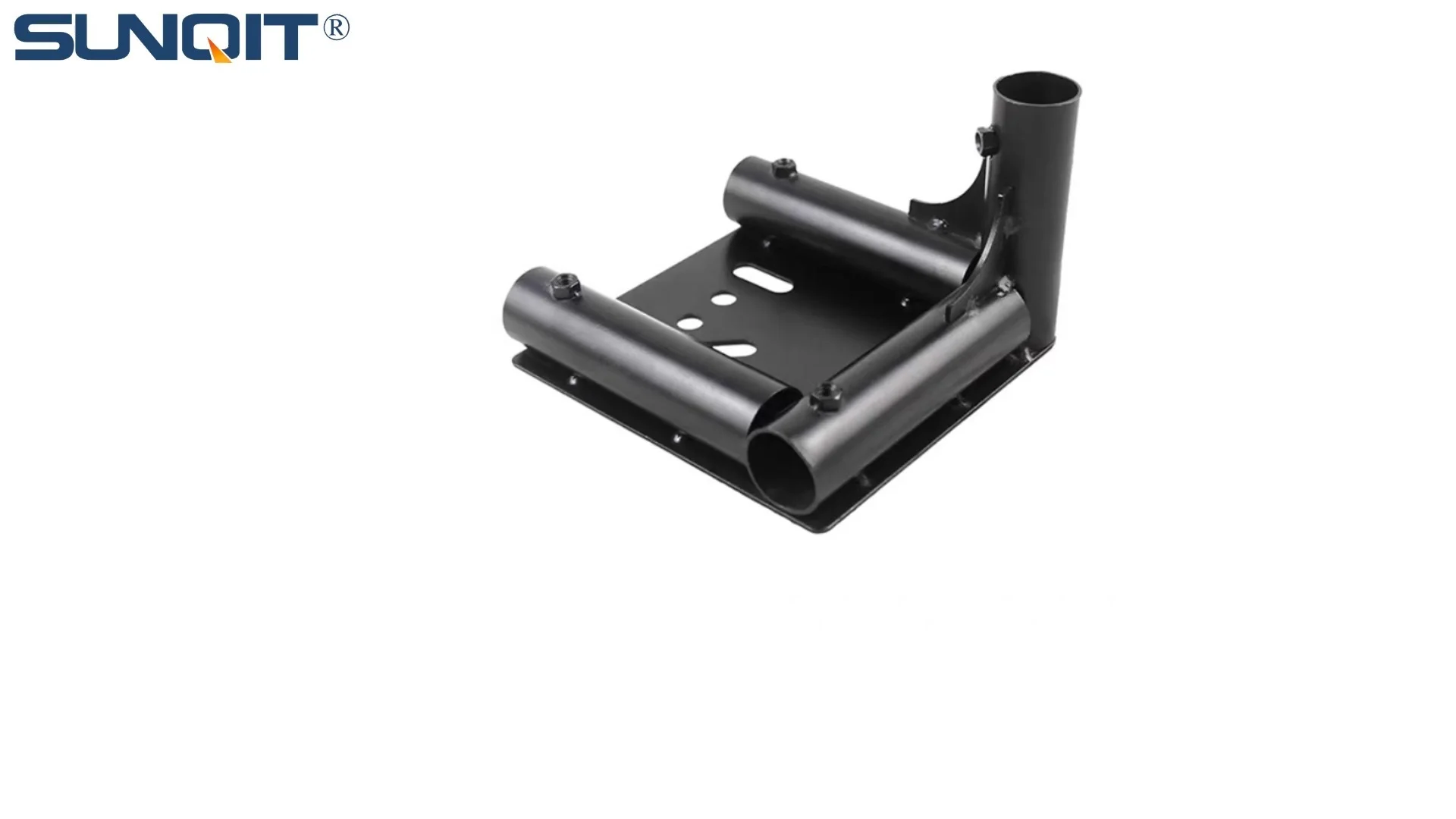
Castor Installation Base
Pipe fitting castor installation base,Well made, precise and strong. Made of high quality of steel,black painting surface treatment for greater resistance to corrosion. It is used for castor or foot lever connection with lean pipe.
Walk into any modern 3C manufacturing facility—where smartphones, laptops, and smartwatches take shape—and you'll immediately sense the rhythm of precision. Workers in blue smocks huddle over workbenches, hands moving in practiced unison as they place tiny capacitors, solder delicate wires, or test circuit boards. In this world, every second counts, and every tool, every surface, every piece of equipment must work in harmony to keep pace with demand. At the center of this orchestration? The humble workbench. But not just any workbench—one that's mobile, stable, and adaptable enough to keep up with the ever-shifting needs of 3C assembly lines. Today, we're diving into a component that's quietly revolutionizing these workbenches: the aluminum castor installation base. Lightweight yet robust, it's the unsung hero that's making 3C manufacturing floors more efficient, worker-friendly, and aligned with lean principles than ever before.
The 3C Assembly Challenge: Why Workbench Mobility Matters
3C assembly isn't for the faint of heart. Unlike automotive or heavy machinery production, where parts are large and processes are often linear, 3C manufacturing deals with components smaller than a fingernail. A single smartphone might contain over 1,000 individual parts, each requiring careful handling. Add to that the pressure of rapid product cycles—new models launching every 6–12 months—and you've got an environment where flexibility isn't just a nice-to-have; it's a survival skill.
Traditional workbenches, often made of steel or wood, were built for stability, not speed. Bolted to the floor or weighing hundreds of pounds, they're great for keeping tools in one place but terrible when a production line needs to reconfigure overnight to accommodate a new model. Imagine a team of workers spending two hours disassembling and moving a steel workbench just to shift the assembly line by three feet—that's two hours of lost productivity, not to mention the physical strain of maneuvering heavy equipment. For lean system managers, this kind of waste—known as "motion waste" in lean terminology—is a red flag.
Then there's the human factor. Heavy workbenches aren't just slow; they're hard on workers. A 2023 study by the Manufacturing Ergonomics Institute found that 42% of assembly line injuries in 3C facilities are related to manual handling of equipment, including pushing or pulling immobile workbenches. When a workbench weighs 300 pounds, even with casters, it takes two people to move it—and that's if the floor is smooth. In reality, factory floors are often uneven, dotted with cables or small obstacles, making the task even riskier.
The solution? Workbenches that are lightweight enough to move solo but stable enough to support precision work . Enter the aluminum castor installation base—a component that's changing the game by combining the best of both worlds.
What Is an Aluminum Castor Installation Base, Anyway?
At its core, an aluminum castor installation base is exactly what it sounds like: a foundation built from aluminum profiles, designed to attach casters (wheels) to the bottom of a workbench. But it's more than just a "wheel holder." Think of it as a modular platform that connects the workbench's frame to its mobility system, ensuring that the entire setup is strong, adaptable, and easy to customize.
Most aluminum castor installation bases are made from extruded aluminum profiles—hollow, T-slot structures that are lightweight but incredibly strong. The T-slot design is key: it allows for easy attachment of accessories like caster brakes, height adjusters, or even side guards, without the need for drilling or welding. This modularity means manufacturers can tweak the base to fit their specific needs, whether they're building a small aluminum workbench for a manual assembly station or a larger material rack for storing components.
But the real star here is the aluminum itself. Unlike steel, which is dense and prone to rust, aluminum is corrosion-resistant, making it ideal for factory environments where humidity or cleaning chemicals might otherwise damage equipment. It's also about 30% lighter than steel, which is why a workbench with an aluminum base can weigh half as much as its steel counterpart—without sacrificing stability.

Why Aluminum? Breaking Down the Benefits for 3C Workbenches
Let's get specific: why is aluminum the material of choice for castor installation bases in 3C assembly? It comes down to five key advantages that directly address the pain points of modern manufacturing floors.
1. Lightweight Design = Easier Mobility (and Happier Workers)
We've touched on this, but it's worth emphasizing: weight matters. A standard 6-foot aluminum workbench with an aluminum castor installation base might weigh around 150 pounds, compared to 300+ pounds for a steel version. That difference is huge. A single worker can now move the workbench across the factory floor without help, using just a gentle push. No more waiting for a colleague to lend a hand, no more straining muscles, and no more risk of back injuries.
Maria, a production supervisor at a 3C facility in Shenzhen, put it best: "Before we switched to aluminum bases, moving a workbench took two people and 20 minutes. Now, one person can do it in 5 minutes. That might not sound like much, but when you're reconfiguring a line for a new phone model, those minutes add up to hours of saved time."
2. Corrosion Resistance: Built to Last in Factory Environments
3C factories are busy places, and spills happen. Whether it's cleaning fluid, lubricant, or even just condensation from air conditioning, workbenches are exposed to moisture daily. Steel bases, if not properly coated, can rust over time, weakening the structure and leaving unsightly stains. Aluminum, on the other hand, forms a natural oxide layer when exposed to air, which acts as a barrier against corrosion. This means the base will look and perform like new for years, even in humid environments.
3. Modularity: Adapt to Changing Needs Overnight
Remember those T-slot aluminum profiles we mentioned? They're a game-changer for customization. Let's say a manufacturer needs to add a second shelf to their workbench to hold more tools. With a steel base, that might require welding or drilling new holes. With an aluminum castor installation base, they can simply slide a bracket into the T-slot and bolt on the shelf—done in 10 minutes. Need to adjust the height of the workbench to accommodate a taller worker? Swap out the casters for height-adjustable ones using the same T-slot system. This kind of flexibility is critical in 3C manufacturing, where assembly processes change as often as product designs.
4. Compatibility with Lean Systems: Reduce Waste, Boost Flow
Lean system principles—like minimizing waste and optimizing workflow—are the backbone of modern manufacturing, and aluminum castor installation bases fit right in. In a lean setup, every tool and workbench should be positioned to minimize worker movement. If a component feeder is 10 feet away from the assembly station, that's 10 feet of unnecessary walking per part. With a mobile workbench, workers can position their stations exactly where they need them, reducing motion waste.
What's more, aluminum bases make it easy to implement "cellular manufacturing"—a lean approach where small teams work in self-contained cells, each handling a specific part of the assembly process. If demand for a certain component spikes, a cell can quickly expand by adding another mobile workbench. If demand drops, the bench can be moved to another cell. No more idle equipment taking up space—that's lean in action.
5. Low Maintenance: Spend Less Time Fixing, More Time Producing
Steel workbenches need regular maintenance: sanding rust, repainting, tightening loose bolts. Aluminum? Not so much. The oxide layer we mentioned earlier prevents rust, so a quick wipe with a damp cloth is usually all it takes to keep the base clean. The casters themselves—often paired with caster accessories like sealed bearings—require minimal upkeep, too. A drop of lubricant every few months, and they're good to go. For busy 3C facilities, this means less downtime and more focus on what matters: building products.

Traditional vs. Aluminum: A Head-to-Head Comparison
Still not convinced? Let's put traditional steel castor bases and aluminum castor installation bases side by side. The table below breaks down their performance across key metrics for 3C assembly workbenches:
| Feature | Traditional Steel Castor Base | Aluminum Castor Installation Base |
|---|---|---|
| Weight (per 4-foot bench base) | 120–150 lbs | 40–60 lbs |
| Corrosion Resistance | Poor (prone to rust without coating) | Excellent (natural oxide layer protection) |
| Floor Protection | Fair (steel wheels may scratch floors; rubber casters help but add weight) | Excellent (lightweight + soft rubber caster wheels = minimal floor wear) |
| Customization Options | Limited (requires welding/drilling for modifications) | Extensive (T-slot profiles accept caster accessories, brakes, and adjusters) |
| Lean System Compatibility | Low (heavy, hard to reposition; leads to motion waste) | High (lightweight, easy to reconfigure; supports cellular manufacturing) |
| Maintenance Needs | High (rust removal, repainting, frequent bolt tightening) | Low (occasional cleaning, minimal lubrication for casters) |
| Worker Ergonomics | Poor (requires 2+ people to move; risk of strain injuries) | Excellent (1-person mobility; reduces physical stress) |
The verdict? For 3C assembly, aluminum castor installation bases outperform steel in nearly every category that matters—from weight and mobility to customization and lean compatibility. The only area where steel might have an edge is initial cost, but aluminum's longer lifespan and lower maintenance costs often make it the more economical choice in the long run.

Beyond the Base: How Aluminum Castor Installation Bases Work with Other Components
An aluminum castor installation base doesn't work alone. To build a fully functional mobile workbench, it needs to pair with other components—like aluminum profiles, casters, and caster accessories. Let's break down the key players in this ecosystem:
Aluminum Profiles: The Backbone of the Workbench
The base itself is made from aluminum profiles—typically 20×40mm or 30×30mm extrusions, though sizes vary. These profiles form the frame of the workbench, with the castor installation base connecting to the bottom rails. The T-slot design of the profiles allows for easy attachment of the base, as well as other accessories like shelves, tool holders, or LED lights. For 3C assembly, where workbenches often need to support small tools and delicate components, the profiles' rigidity ensures that the surface stays stable—even when the bench is moved.
Casters and Caster Accessories: The Mobility Workhorses
No castor base is complete without casters, and aluminum bases pair best with high-quality, lightweight caster wheels. Most 3C facilities opt for rubber or polyurethane wheels, which are soft enough to protect factory floors but durable enough to handle daily use. Caster accessories like brakes are a must, too—imagine trying to solder a tiny circuit while the workbench rolls away! Brake options range from simple foot locks to dual-locking casters that lock both the wheel and the swivel joint for maximum stability.
Other caster accessories include height adjusters (to level the bench on uneven floors), swivel stops (to keep the bench moving in a straight line), and even shock-absorbing casters for extra stability during precision work. The beauty of the aluminum base is that it can accommodate all these accessories, thanks to its modular design.
Aluminum Workbench Tops: The Final Touch
The base and casters handle mobility, but the workbench top is where the magic happens. For 3C assembly, tops are often made from materials like anti-static melamine (to protect sensitive electronics) or aluminum honeycomb panels (for lightweight rigidity). The aluminum base provides a strong foundation for these tops, ensuring that even when the bench is loaded with tools and components, it doesn't flex or wobble.
Real-World Impact: How One 3C Facility Cut Waste with Aluminum Bases
Let's zoom in on a real example. In 2024, a mid-sized 3C manufacturer in Guangzhou—let's call them "TechPro"—specialized in assembling smartwatch components. They were struggling with two main issues: slow line reconfigurations and high worker fatigue from moving heavy workbenches. Their lean system manager, Li Wei, decided to pilot aluminum castor installation bases on 10 of their workbenches.
The results were striking. Before the switch, reconfiguring a line for a new watch model took 4 hours and required 6 workers. After installing aluminum bases, the same task took 1 hour and 2 workers— 75% faster . Worker-reported fatigue dropped by 35%, according to a post-pilot survey, and there were zero manual handling injuries in the six months following the rollout. TechPro was so impressed that they've since converted all 50 of their assembly workbenches to aluminum bases, estimating annual savings of $120,000 in labor and downtime costs.
Li Wei summed it up: "We used to think heavy meant stable. Now we know better. The aluminum bases are just as stable, but they let us move at the speed of our industry. It's not just about saving time—it's about keeping up with the competition."
Choosing the Right Aluminum Castor Installation Base for Your Facility
Ready to make the switch? Here are a few tips to help you choose the right aluminum castor installation base for your 3C assembly workbenches:
- Consider the load capacity: How much weight will the workbench need to support? Most aluminum bases can handle 200–500 lbs, but if you're using heavy tools, opt for a reinforced base.
- Think about floor conditions: Smooth concrete floors work with almost any caster, but if your floor is uneven, look for casters with larger wheels or height adjusters.
- Don't skimp on casters: Invest in high-quality casters with sealed bearings and brakes—they'll last longer and require less maintenance.
- Check compatibility with your aluminum profiles: Make sure the base's mounting holes or T-slot spacing matches your existing profiles (or the profiles you plan to use).
- Ask about customization: Some suppliers offer made-to-order bases for unique workbench sizes or configurations—perfect for 3C facilities with specialized needs.
The Future of Mobile Workbenches: Where Aluminum is Headed
As 3C manufacturing continues to evolve—with trends like automation, AI-driven quality control, and smaller, more complex components—aluminum castor installation bases are poised to play an even bigger role. We're already seeing innovations like integrated IoT sensors in bases, which track usage patterns and alert managers when casters need maintenance. There's also a push toward even lighter aluminum alloys, which could make workbenches even more mobile without sacrificing strength.
Perhaps most exciting is the potential for aluminum bases to support collaborative robots, or "cobots." Cobots are smaller, more flexible than traditional industrial robots, and they often work alongside human workers. A mobile workbench with an aluminum base could allow a cobot to move from station to station, assisting with tasks like component feeding or quality checks. That's the future of lean manufacturing: humans and machines, moving in harmony, powered by lightweight, adaptable tools.
Final Thoughts: Lightweight, Mobile, and Ready for What's Next
In the fast-paced world of 3C assembly, every advantage counts. Aluminum castor installation bases might seem like a small component, but they're a big step toward building workbenches that are lightweight, mobile, and aligned with lean system principles. By reducing motion waste, improving worker ergonomics, and cutting maintenance costs, they're helping manufacturers stay competitive in an industry where speed and flexibility are everything.
So the next time you pick up a smartphone or smartwatch, take a moment to appreciate the unsung heroes behind its creation—like the aluminum castor installation base that helped build it. It may not be the flashiest part of the assembly line, but it's proof that sometimes, the smallest innovations make the biggest difference.
Ready to transform your 3C assembly line? Start with the base—your workers (and your bottom line) will thank you.