- Company Articles
- Products and Technology
- Installation And Maintenance
- Aluminum Castor Installation Base vs Steel: Which Boosts Reusability in Lean Systems?

Aluminum Castor Installation Base vs Steel: Which Boosts Reusability in Lean Systems?
Related Product
Castor Installation Base
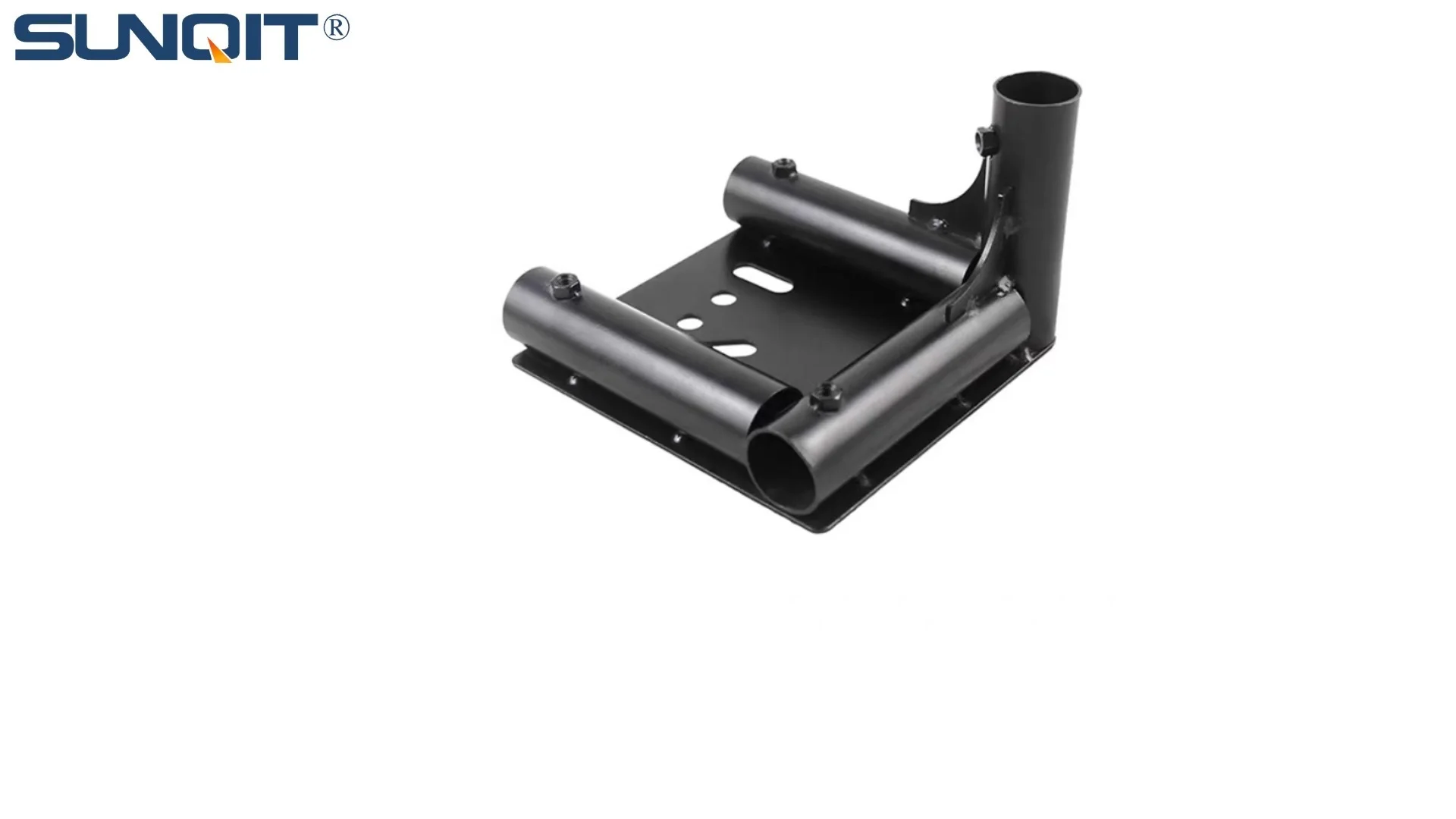
Pipe fitting castor installation base,Well made, precise and strong. Made of high quality of steel,black painting surface treatment for greater resistance to corrosion. It is used for castor or foot lever connection with lean pipe.
Walk into any manufacturing facility that's embraced lean principles, and you'll notice something immediately: every tool, every workstation, every cart seems to have a purpose. There's no excess, no waste—just a seamless flow of materials and processes designed to adapt as needs change. At the heart of this adaptability are the unsung heroes of lean systems: the components that hold everything together. Today, we're zeroing in on one such component that quietly shapes efficiency: the castor installation base. When it comes to building mobile workbenches, turnover trolleys, or flow racks, the choice between aluminum and steel castor bases isn't just about cost or strength—it's about reusability. And in lean, reusability isn't a nice-to-have; it's the cornerstone of reducing waste and maximizing value.
Think about it: a lean system thrives on being able to reconfigure workflows, repurpose equipment, and scale operations without overhauling entire setups. A castor base that can't keep up with these changes becomes a liability—something that gets replaced instead of reused, adding to costs and clutter. So, which material truly supports this ethos: aluminum, with its lightweight agility, or steel, with its reputation for ruggedness? Let's unpack the factors that matter most.
The Fundamentals: Aluminum and Steel in Lean Environments
Before diving into reusability, let's ground ourselves in what makes aluminum and steel distinct. Steel, an alloy of iron and carbon, has long been the go-to for heavy-duty applications. It's strong, dense, and familiar—many manufacturers default to it out of habit. Aluminum, by contrast, is a lighter, silvery metal known for its versatility and resistance to corrosion. At first glance, steel might seem like the "tougher" choice, but lean systems demand more than toughness. They demand balance: durability without rigidity, strength without bulk, and longevity without waste.
A lean pipe supplier will often emphasize that the best components are those that grow with your system. Aluminum, with its modern design and compatibility with aluminum pipe, aluminum profile, and lean accessories, is engineered for this growth. Steel, while reliable in static settings, can become a bottleneck when flexibility is needed. To understand why, let's explore the key drivers of reusability in lean systems and how each material stacks up.
Reusability Driver 1: Weight and Maneuverability—The Hidden Cost of Heaviness
Weight isn't just a matter of physical effort; it's a silent killer of reusability. A steel castor base, while strong, is significantly heavier than an aluminum equivalent. For example, a standard 4-inch steel base might weigh 3.5 pounds, while an aluminum base of the same size tips the scales at just 1.8 pounds. Multiply that by four bases per trolley, and you're looking at a difference of nearly 7 pounds per unit. Over time, that extra weight takes a toll—on equipment, on operators, and on the base itself.
Heavier bases strain casters, leading to faster wear on wheels and bearings. When casters fail, the base often gets blamed and replaced, even if it's structurally sound. Aluminum bases, being lighter, reduce this strain, extending the life of both the base and the casters. Operators notice the difference too: a lighter trolley is easier to push, reducing fatigue and the risk of accidents. A tired operator is more likely to mishandle a heavy trolley, bending the base or damaging its connections—rendering it useless for future reconfigurations.
But the real reusability win with aluminum is in adaptability. When your production line shifts from assembling small parts to larger components, you might need to repurpose old trolleys. With aluminum bases, a single person can detach the base from an old workbench and reattach it to a new aluminum profile frame in minutes. Steel bases, however, often require two people to move, increasing the chance of dropping or warping the base. A bent steel base isn't just unsightly—it's unsafe, and in lean systems, unsafe parts get discarded, not reused.

Reusability Driver 2: Corrosion Resistance—Fighting the Elements for Longevity
Manufacturing floors are harsh environments. Oils, coolants, humidity, and even cleaning chemicals can attack metal surfaces, leading to rust and degradation. For a component to be reusable, it must withstand these elements year after year. Here, aluminum's natural properties give it a decisive edge.
Aluminum forms a thin, protective oxide layer when exposed to air, which self-repairs if scratched. This layer acts as a barrier against corrosion, meaning aluminum bases stay intact even in damp or chemically active spaces—think food processing plants, pharmaceutical labs, or automotive facilities where spills are common. Steel, unless treated with coatings or stainless steel variants, isn't so lucky. Rust doesn't just eat away at the surface; it weakens the metal from the inside, creating cracks and instability. A rusted steel base can't safely support a trolley or workbench, so it gets thrown out, cutting short its potential for reuse.
Stainless steel is sometimes offered as a middle ground, but it comes with trade-offs. It's more corrosion-resistant than regular steel but still heavier than aluminum and pricier. For lean systems focused on cost efficiency, aluminum delivers better corrosion protection at a lower weight and cost. Consider a facility that washes down workstations daily: an aluminum castor base will still look and function like new after three years, while a steel base (even coated) might show signs of rust within 12 months, destined for the scrap pile instead of a new project.

Reusability Driver 3: Modularity and Compatibility—Fitting Into the Lean Ecosystem
Lean systems are built on modularity—the ability to mix, match, and modify components to create custom solutions. A castor base that works with only one type of trolley or requires special tools to adjust limits its reusability. Aluminum excels here, thanks to its design philosophy of standardization and compatibility with lean pipe and accessories.
Most aluminum castor bases feature T-slot designs or pre-drilled holes that align with common aluminum pipe and aluminum profile systems. This means a base from an old aluminum workbench can be unbolted and attached to a new aluminum guide rail or material rack without adapters. For example, if you need to adjust the height of a turnover trolley, an aluminum base with slotted connections lets you slide it into place and secure it with a simple clamp. Steel bases, by contrast, are often welded or have fixed, non-standard holes. To repurpose a steel base, you might need to drill new holes (weakening the metal) or cut and reweld it—both of which compromise its structural integrity and make future reuse unlikely.
A lean system supplier will confirm: the best components are those that speak the same "language." Aluminum systems, from pipes to joints to bases, are designed to work together across product lines. A castor base that fits an aluminum workbench E (single deck-without caster) can just as easily fit a material rack B (3 row and 3 floor) because the hole patterns, sizes, and attachment methods are standardized. Steel systems, especially older ones, often lack this uniformity. A steel base from a 10-year-old trolley might not align with a new steel roller track, leaving you with a part that's useless once its original setup is retired.

Reusability Driver 4: Sustainability and Lifecycle Cost—Beyond the Initial Purchase
Reusability isn't just about how many times you can use a part; it's about the total cost of ownership. A steel base might cost less upfront, but if it needs to be replaced every 2-3 years, its lifecycle cost dwarfs that of an aluminum base that lasts 5-7 years and can be repurposed multiple times. Aluminum's sustainability profile amplifies this advantage.
Aluminum is 100% recyclable, and recycling it uses just 5% of the energy required to produce new aluminum. Even when an aluminum base finally reaches the end of its useful life, it can be melted down and transformed into new components, keeping it in the circular economy. Steel is also recyclable, but the process is more energy-intensive, and recycled steel often has lower strength than virgin steel, limiting its use in structural parts like castor bases. In lean terms, this means aluminum bases contribute less to waste and more to long-term cost savings.
Consider a facility that replaces 100 castor bases annually. With steel, they might spend $50 per base (total $5,000) and discard all 100 at year-end. With aluminum, they might spend $70 per base (total $7,000) but reuse 80% of them the next year, only needing to buy 20 new ones ($1,400). Over five years, the steel approach costs $25,000, while aluminum costs $13,600—a 45% savings. That's the power of reusability.
Real-World Impact: How Aluminum Bases Transform Lean Operations
Let's look at a tangible example. A mid-sized electronics manufacturer specializing in circuit board assembly was struggling with frequent line reconfigurations. Their old steel castor bases were heavy, rusting in their climate-controlled (but humid) facility, and incompatible with new aluminum profile workstations. Every time they shifted production, 30% of their steel bases were either too rusted to reuse or didn't fit the new setups, leading to $12,000 in annual replacement costs and wasted labor hours.
After partnering with a lean pipe supplier, they switched to aluminum castor bases. Within a year, the changes were dramatic: reconfiguration time dropped by 50% because the lighter bases were easier to handle. Rust-related replacements fell to 5%, and they reused 90% of their aluminum bases across new workbenches and trolleys. One production supervisor noted, "We used to treat steel bases as disposable—bend them, rust them, toss them. Now, we take care of our aluminum bases because we know we'll need them again. It's changed how we think about our tools—they're investments, not expenses."
Another example comes from a automotive parts distributor using turnover trolleys to move components between warehouses. Their steel-based trolleys were so heavy that operators avoided repositioning them, leading to inefficient storage and bottlenecks. Switching to aluminum bases reduced trolley weight by 35%, making them easy to maneuver. Within six months, they'd repurposed 70% of their original aluminum bases to build new, taller trolleys for bulkier parts—something they never could have done with steel without buying all-new components.
Aluminum vs. Steel Castor Bases: A Head-to-Head Comparison
| Factor | Aluminum Castor Installation Base | Steel Castor Installation Base |
|---|---|---|
| Weight (Standard 4-inch base) | 1.8–2.2 lbs (Easy to handle, reduces operator fatigue) | 3.2–3.8 lbs (Heavy, increases strain on casters and operators) |
| Corrosion Resistance | High (Natural oxide layer prevents rust; ideal for humid/damp environments) | Low (Prone to rust without coatings; stainless steel is better but heavier/costlier) |
| Modularity | High (T-slot and standardized holes for easy attachment to aluminum pipe/profiles) | Low (Often welded or non-standard; modification requires drilling/welding, weakening the base) |
| Compatibility with Lean Components | Seamless (Works with aluminum workbenches, roller tracks, and material racks) | Limited (May not fit new steel or aluminum systems due to non-standard sizing) |
| Typical Lifespan (with Reuse) | 5–7 years (Can be repurposed across multiple setups) | 2–3 years (Often replaced due to rust, bending, or incompatibility) |
| End-of-Life Sustainability | 100% recyclable; low energy to repurpose | Recyclable but energy-heavy; recycled steel may have reduced strength |
The table tells a clear story: aluminum outperforms steel in every category that drives reusability. From weight to compatibility, it's engineered to adapt, endure, and contribute to a lean system's long-term success.
The Bottom Line: Aluminum as the Reusability Champion
In the quest to build lean systems that minimize waste and maximize value, the choice between aluminum and steel castor bases is decisive. Steel, while strong, is held back by its weight, corrosion vulnerability, and lack of modularity—traits that make it more likely to be replaced than reused. Aluminum, by contrast, is a reusability powerhouse: lightweight enough to handle easily, durable enough to withstand harsh environments, and modular enough to fit into evolving setups.
Reusability in lean isn't just about saving money (though that's a big perk). It's about building a system that's resilient, adaptable, and sustainable. It's about creating a workplace where every component has a purpose today, tomorrow, and beyond. Aluminum castor bases don't just support this vision—they embody it. They're not just parts; they're partners in the ongoing journey of lean excellence.
So, the next time you're specifying components for your lean system, remember: the best choice isn't the one that's strongest on day one. It's the one that's still adding value on day 1,000—reused, repurposed, and ready for whatever your operation throws at it. For that, aluminum is the clear winner.