- Company Articles
- Products and Technology
- Product knowledge
- Aluminum Five Way Straight Lean Pipe Joint: Advantages Over Traditional Steel Joints

Aluminum Five Way Straight Lean Pipe Joint: Advantages Over Traditional Steel Joints
Related Product
Five Way Straight Lean Pipe Joint
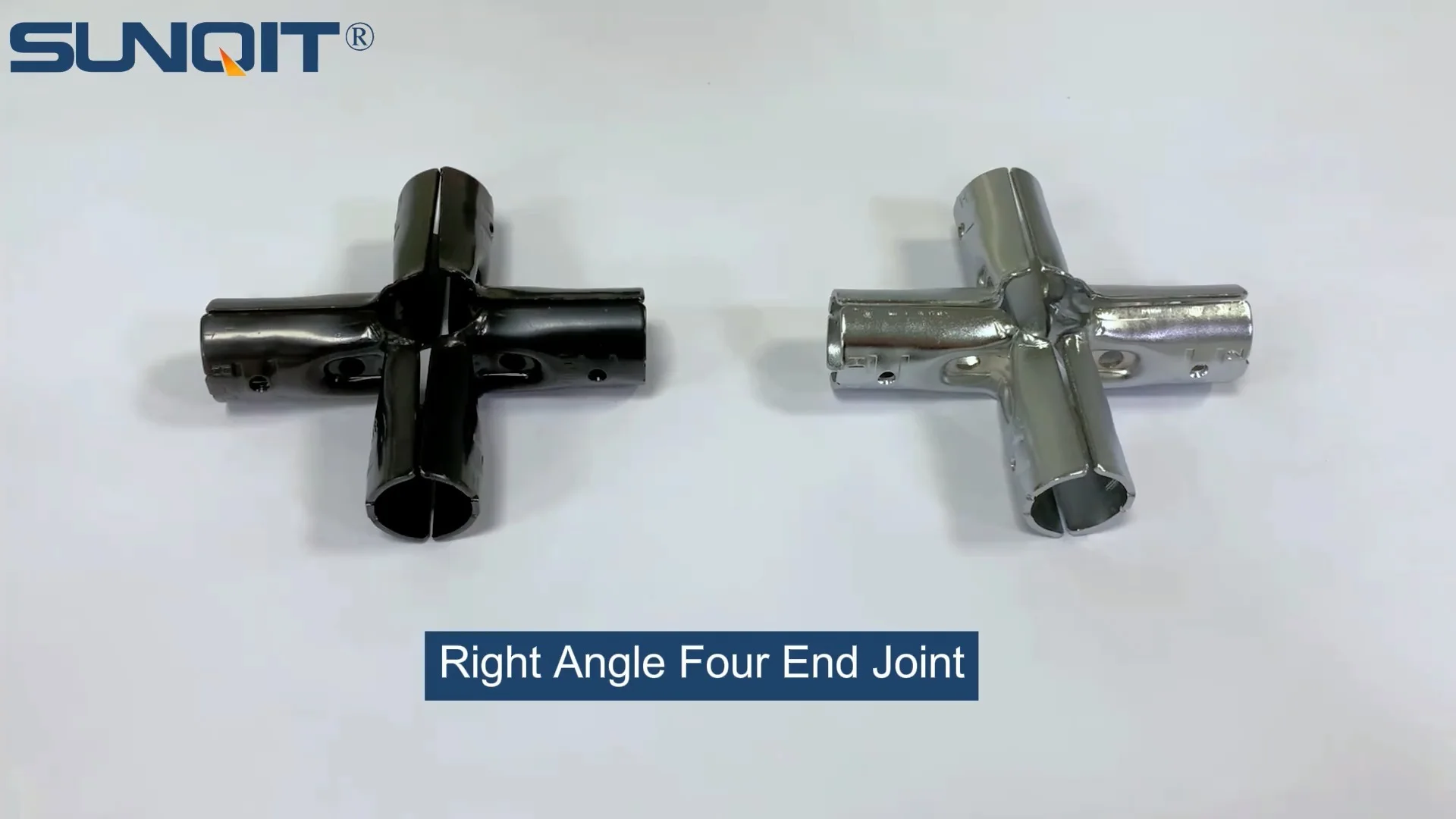
Five way straight lean pipe joint, for 5 pcs 28mm lean pipe connect in straight angle,which used widely in workbench, flow rack, hand trolley frame connection.
How a simple switch in materials is revolutionizing lean manufacturing flexibility, durability, and worker efficiency
The Unsung Hero of Lean Manufacturing: The Lean Pipe Joint
Walk into any modern manufacturing facility, and you'll likely see the fruits of lean thinking: streamlined assembly lines, organized workbenches, and material racks that keep tools and parts exactly where they're needed. But behind these efficient setups lies a critical component that often goes unnoticed—the lean pipe joint. These small connectors are the backbone of modular lean systems, holding together pipes, racks, and workbenches to create the flexible structures that define lean manufacturing.
For decades, the industry standard has been steel lean pipe joints. Sturdy, familiar, and affordable, they've served manufacturers well. But as production demands evolve—with shorter product cycles, frequent reconfigurations, and a growing focus on worker safety and sustainability—steel joints are starting to show their limitations. Enter the aluminum five way straight lean pipe joint: a lightweight, corrosion-resistant, and highly adaptable alternative that's quietly transforming how factories build and rebuild their workspaces.
In this article, we'll dive into why the aluminum five way straight lean pipe joint is becoming a go-to choice for manufacturers worldwide. We'll explore the pain points of traditional steel joints, break down the key advantages of aluminum, and look at real-world applications where this switch has led to tangible improvements in efficiency, safety, and cost savings. Whether you're setting up a new production line or upgrading an existing one, understanding the benefits of aluminum lean pipe joints could be the first step toward a more agile and resilient manufacturing operation.
What Is a Five Way Straight Lean Pipe Joint, Anyway?
Before we compare materials, let's clarify what a five way straight lean pipe joint actually does. At its core, this component is a connector designed to join multiple lean pipes at a single point, enabling the creation of complex, multi-directional structures. Unlike simpler two-way or three-way joints, a five way joint allows for up to five pipes to intersect—think of it as the "hub" of a lean system, supporting horizontal, vertical, and diagonal pipes all at once.
This versatility makes it ideal for building everything from multi-tiered material racks to custom workbenches with integrated tool holders, or even conveyor systems that need to branch off in multiple directions. Traditional steel versions of these joints are typically made from cast iron or carbon steel, with threaded holes or bolts to secure pipes in place. They're built to be strong, but that strength often comes with trade-offs in weight and flexibility.
Aluminum five way straight lean pipe joints, by contrast, are crafted from high-grade aluminum alloys—materials known for their impressive strength-to-weight ratio. They use a similar modular design (often with friction-fit or quick-lock mechanisms) but replace the heft of steel with the lightness of aluminum. This seemingly small change in material has a ripple effect across nearly every aspect of how lean systems are built, used, and maintained.

The Hidden Costs of Sticking with Steel: Pain Points Manufacturers Face
Steel lean pipe joints have been a staple in manufacturing for so long that many teams don't even question their limitations. But talk to plant managers, maintenance crews, or line workers, and a pattern of frustrations emerges. Let's break down the most common pain points:
1. Weight: A Burden on Workers and Flexibility
Steel is heavy—about three times denser than aluminum. A single steel five way joint can weigh 2-3 pounds, and when you multiply that by dozens (or hundreds) of joints in a single structure, the total weight adds up fast. A basic workbench frame with steel joints might weigh 150-200 pounds, while a larger material rack could tip the scales at 500 pounds or more. Moving or reconfiguring these structures often requires multiple workers or even forklifts, eating up time and increasing the risk of workplace injuries (think strained backs or dropped equipment).
2. Corrosion: A Silent Enemy in Humid or Harsh Environments
Steel and moisture don't mix well. In factories with high humidity, frequent cleaning (like food processing or pharmaceutical plants), or exposure to oils and chemicals (common in automotive or machinery shops), steel joints are prone to rust and corrosion. Over time, this rust can weaken the joint's grip on pipes, leading to wobbly structures or even equipment failure. To combat this, manufacturers often have to paint or coat steel joints, adding extra cost and maintenance work—or replace corroded parts entirely, which eats into budgets.
3. Assembly Time: Bolts, Wrenches, and Wasted Hours
Setting up a steel lean system is rarely a quick task. Traditional steel joints often require bolts, nuts, and wrenches to secure pipes, and in some cases, welding for extra stability. Even with pre-threaded holes, aligning pipes and tightening bolts across dozens of joints can take hours (or days) for a single production line. And if you need to reconfigure the system later? You're back to loosening bolts, potentially damaging threads, and repeating the process all over again.
4. Rigidity: Stuck in a "Set It and Forget It" Mindset
Lean manufacturing thrives on adaptability. A production line that works for one product might need to be completely rearranged for the next. But steel joints, with their heavy weight and bolted connections, aren't designed for frequent changes. Once a steel structure is built, it's often easier to leave it in place—even if it's no longer the most efficient layout—because the effort to move it outweighs the benefits of reconfiguring. This rigidity can turn lean systems into "lean in name only," trapping manufacturers in outdated workflows.

5 Key Advantages of Aluminum Five Way Straight Lean Pipe Joints
Now that we've covered the limitations of steel, let's explore how aluminum five way straight lean pipe joints address these issues—often exceeding expectations in ways manufacturers didn't realize they needed. Here are the top five advantages:
1. Lightweight Design: Easier to Handle, Safer to Move
Aluminum's biggest selling point is its weight—or lack thereof. An aluminum five way joint weighs roughly 1/3 of its steel counterpart, meaning a typical workbench frame that once weighed 200 pounds with steel joints might now weigh just 60-70 pounds with aluminum. This isn't just about convenience; it's about safety and efficiency. A single worker can now reposition a small workbench or material rack without help, reducing reliance on forklifts and cutting down on setup time.
Consider a scenario where a manufacturer needs to shift a production line from one side of the factory to another to accommodate a new machine. With steel joints, this might take a team of four workers half a day. With aluminum, two workers could have it done in an hour. Less time moving equipment means more time producing goods—and fewer workers at risk of injury from heavy lifting.
2. Corrosion Resistance: Built to Last in Any Environment
Aluminum naturally forms a thin oxide layer when exposed to air, which acts as a protective barrier against rust and corrosion. Unlike steel, it doesn't require painting, coating, or regular maintenance to stay looking and performing like new. This is a game-changer for manufacturers in humid climates, food and beverage facilities (where washdowns are frequent), or chemical plants (where spills are a risk).
Take a electronics manufacturer, for example, that operates in a cleanroom with strict humidity controls. Steel joints in this environment might start to show rust within a year, requiring replacement. An aluminum joint, however, can withstand the same conditions for 5-10 years with minimal upkeep—slashing long-term replacement costs and reducing downtime from maintenance.
3. Tool-Free Assembly: Snap, Lock, and Go
Many aluminum five way joints are designed with quick-connect mechanisms, eliminating the need for bolts, wrenches, or welding. Instead of spending 10 minutes tightening bolts on a single joint, workers can simply slide pipes into the joint and twist a locking collar, or press a lever to secure them in place. This "tool-free" assembly cuts setup time by up to 60% compared to steel joints, according to industry studies.
Even better, reconfiguration is just as easy. Need to add a shelf to a material rack? Pop open the joint, insert a new pipe, and lock it down—no need to hunt for tools or worry about stripped threads. This speed and simplicity make it possible to prototype new layouts in hours, not days, letting manufacturers test and refine their processes faster than ever.
4. Unmatched Flexibility: Adapt to Change on the Fly
Aluminum's light weight and quick assembly work together to create a system that's truly "lean" in the adaptive sense. With aluminum joints, manufacturers can:
- Rearrange workbenches daily to accommodate different shift requirements or product runs.
- Scale up material racks by adding new tiers or branches as inventory needs grow.
- Repurpose conveyor sections to route materials around bottlenecks or new machinery.
One automotive parts supplier we spoke with shared a story: They used to keep extra steel material racks in storage "just in case" they needed to expand production. Now, with aluminum joints, they can reconfigure existing racks in minutes, eliminating the need for storage space and reducing waste. "We used to have a whole corner of the warehouse filled with unused steel racks," said their plant manager. "Now that corner is used for finished goods, and we're shipping 15% more products per week."
5. Aesthetic and Ergonomic Benefits: More Than Just Functionality
While not always top of mind, the look and feel of a workspace matter. Aluminum joints have a clean, modern finish (often anodized or powder-coated) that brightens up factory floors, making them more visually appealing than rust-prone steel. This might seem trivial, but studies show that well-lit, organized workspaces can boost worker morale and reduce errors by up to 12%.
Ergonomics also play a role. Lighter structures mean workers can adjust workbench heights or material rack positions to fit their needs, reducing strain on shoulders, backs, and knees. For example, a assembly line worker who previously had to reach up to a high steel shelf (because moving the shelf was too hard) can now lower the shelf to waist height with aluminum joints, cutting down on repetitive motion injuries.

Steel vs. Aluminum: A Side-by-Side Comparison
To put these advantages into perspective, let's compare steel and aluminum five way straight lean pipe joints across key metrics:
| Metric | Traditional Steel Joint | Aluminum Five Way Straight Joint |
|---|---|---|
| Weight (per joint) | 2.5–3 lbs | 0.8–1 lb |
| Corrosion Resistance | Low (prone to rust; requires coating) | High (natural oxide layer; no coating needed) |
| Assembly Time (per joint) | 5–10 minutes (with bolts/wrenches) | 1–2 minutes (tool-free, quick-lock) |
| Reconfiguration Ease | Low (requires tools; risk of stripped threads) | High (tool-free; quick adjustments) |
| Worker Safety Risk | Higher (heavy lifting, sharp edges from rust) | Lower (lightweight, smooth finish) |
| Longevity (in humid environments) | 2–3 years (before rust affects performance) | 7–10 years (minimal degradation) |
| Initial Cost | Lower (≈$5–$8 per joint) | Higher (≈$10–$15 per joint) |
| Total Cost of Ownership (5-year span) | Higher (replacement, maintenance, labor) | Lower (fewer replacements, less labor, no maintenance) |
As the table shows, aluminum joints have a higher upfront cost, but their lower maintenance needs, faster assembly, and longer lifespan often make them more cost-effective over time. For manufacturers that reconfigure their lines frequently or operate in harsh environments, the ROI can kick in within the first year.
Real-World Impact: Case Studies from the Factory Floor
Numbers and metrics tell part of the story, but real-world examples show the difference aluminum five way straight lean pipe joints can make. Let's look at two manufacturers that made the switch and the results they saw.
Case Study 1: Electronics Manufacturer Reduces Setup Time by 40%
A mid-sized electronics company in Malaysia produces circuit boards for smartphones, with production lines that need to be reconfigured every 2–3 months to accommodate new phone models. Previously, their material racks and workbenches used steel five way joints, which took 8 workers 2 full days to disassemble and rebuild. The process was so time-consuming that they often delayed reconfigurations, leading to inefficient layouts and missed production targets.
In 2023, they switched to aluminum five way straight lean pipe joints. The results were immediate: The same 8 workers now complete reconfigurations in just 1 day, thanks to the lightweight joints and tool-free assembly. "We used to have to schedule reconfigurations over weekends to avoid disrupting production," said their operations director. "Now we can do it during a single shift, and we're hitting our production goals 95% of the time, up from 78% before."
They also reported a 30% drop in worker complaints about back pain, and a 25% reduction in the number of damaged parts (since aluminum racks are gentler on delicate circuit boards than steel).
Case Study 2: Food Packaging Plant Eliminates Corrosion-Related Downtime
A food packaging facility in Brazil produces frozen meals, operating in a cold, humid environment with daily washdowns using high-pressure hoses and sanitizers. Their steel conveyor systems, which used steel five way joints to route packages to different freezing tunnels, were constantly rusting. Every 6 months, they had to shut down production for a week to replace corroded joints, costing them an estimated $50,000 in lost revenue each time.
After switching to aluminum five way joints (paired with aluminum lean pipe and stainless steel roller track), they've gone 2 years without a single joint replacement. "We were skeptical at first—aluminum seemed 'too soft' for our heavy-duty conveyors," admitted their maintenance manager. "But the joints have held up perfectly. We wash them daily, and they still look brand new. We've saved over $200,000 in downtime and replacement parts, and we're now using the extra production time to expand into new product lines."
Beyond the Joint: Building a Complete Aluminum Lean Ecosystem
While the five way straight joint is a star player, its full potential shines when paired with other aluminum lean components. Manufacturers don't have to stop at joints—they can build entire systems using aluminum lean pipe, aluminum profile, and compatible accessories like caster wheels, roller track, and workbench surfaces. This ecosystem approach ensures seamless integration and maximum flexibility.
For example, an aluminum workbench built with five way joints can be outfitted with adjustable height legs, ESD (electrostatic discharge) surfaces for electronics assembly, and integrated roller track to feed parts directly to the worker. Add caster wheels (another lightweight aluminum component), and the workbench becomes mobile—easily moved to where it's needed most. When production changes, you can swap out the roller track for a tool rack, or add a second tier using additional five way joints—all without buying a whole new workbench.
Aluminum profile, which is often used for framing larger structures like machine guards or inspection stations, also pairs well with five way joints. Its T-slot design allows for quick attachment of accessories (like lights, monitors, or bins), creating truly custom workspaces that adapt to specific tasks. And because aluminum profile is lightweight like the joints, even large structures can be reconfigured with minimal effort.
Is It Time to Make the Switch to Aluminum?
Deciding whether to switch from steel to aluminum five way straight lean pipe joints depends on your specific needs, but there are a few key signs that aluminum might be right for you:
- You reconfigure production lines or workspaces frequently (monthly or quarterly).
- Your facility has high humidity, frequent washdowns, or exposure to chemicals (leading to steel corrosion).
- Worker safety incidents related to lifting or moving heavy equipment are a concern.
- Setup or reconfiguration time is eating into production hours.
- You're looking to reduce long-term maintenance costs or waste from replacing corroded parts.
If any of these sound familiar, aluminum five way joints are worth exploring. Start small—maybe with a single workbench or material rack—and measure the impact. Chances are, you'll quickly see the benefits in faster setup, fewer headaches, and a more adaptable workspace.
At the end of the day, lean manufacturing is about eliminating waste—whether it's time, effort, or resources. Aluminum five way straight lean pipe joints embody this principle, turning rigid, heavy systems into lightweight, flexible tools that grow with your business. They're not just a replacement for steel; they're a step forward in building manufacturing operations that are agile, sustainable, and ready for whatever the future brings.