- Company Articles
- Products and Technology
- Product knowledge
- Aluminum Five Way Straight Lean Pipe Joint Corrosion Resistance: Industrial Insights

Aluminum Five Way Straight Lean Pipe Joint Corrosion Resistance: Industrial Insights
Related Product
Five Way Straight Lean Pipe Joint
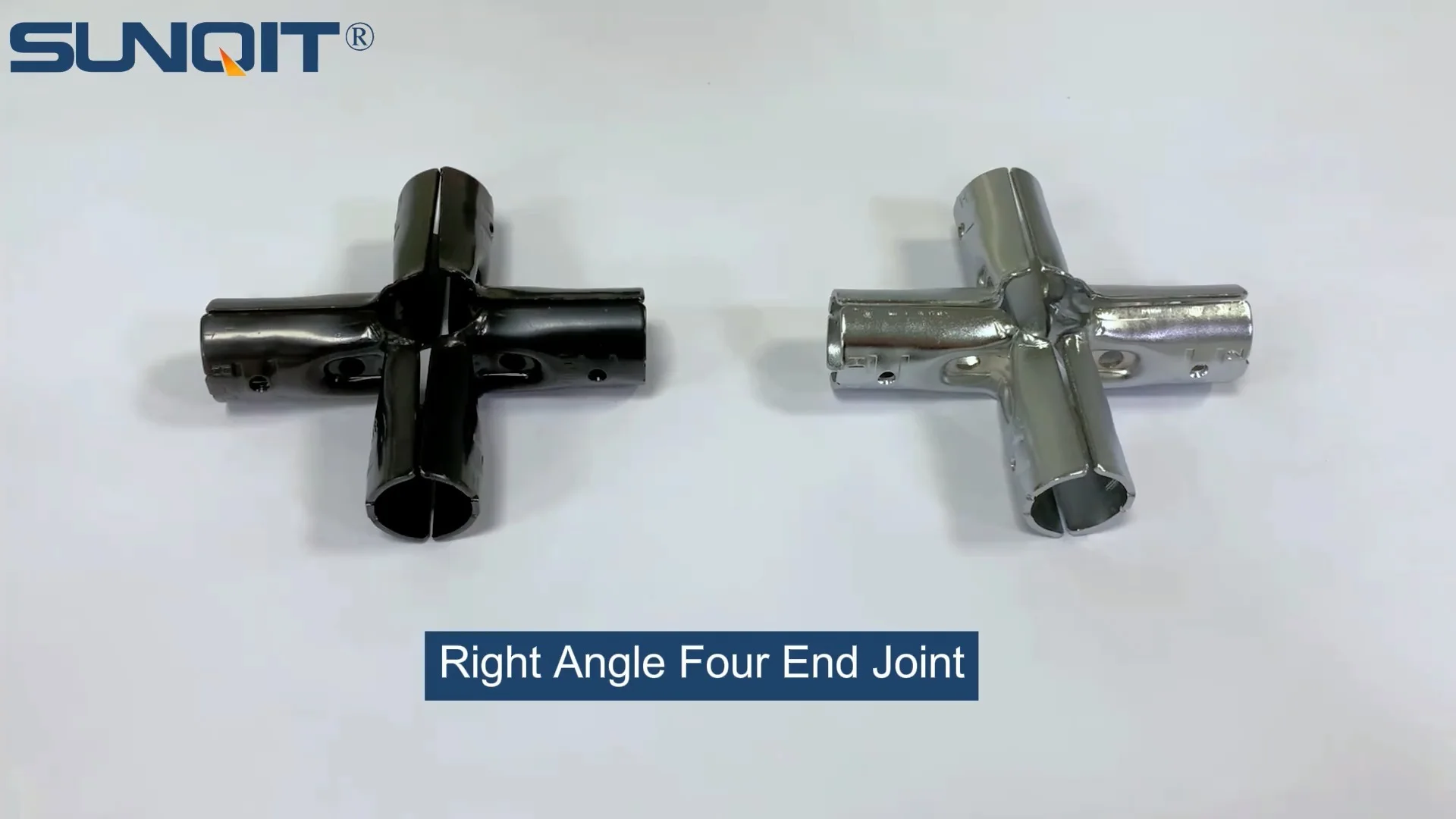
Five way straight lean pipe joint, for 5 pcs 28mm lean pipe connect in straight angle,which used widely in workbench, flow rack, hand trolley frame connection.
Walk into any modern manufacturing facility, and you'll likely be struck by the rhythm of efficiency: assembly lines moving with precision, workbenches organized to minimize waste, and material racks that keep components within arm's reach. Behind this seamless flow lies a network of unseen heroes—components so integral to operations that their absence would bring the entire system to a halt. Among these unsung champions is the aluminum five way straight lean pipe joint, a small but mighty connector that holds together the backbone of lean manufacturing systems. Today, we're diving deep into one of its most critical attributes: corrosion resistance. In an industry where moisture, chemicals, and wear are constant threats, how does this unassuming joint stand up to the test? And why does it matter for businesses striving to build resilient, long-lasting production environments?
The Corrosion Challenge in Industrial Settings: Why It Can't Be Ignored
Corrosion is the silent enemy of industrial equipment. It starts as a tiny spot of rust on a steel bracket, a hairline crack in a plastic connector, or a dulling of metal surfaces—and before you know it, it's compromising structural integrity, slowing down operations, and eating into budgets. For manufacturers, the cost of corrosion isn't just about replacing parts; it's about downtime. When a joint fails because of rust, an entire assembly line might pause. When a material rack sags due to corroded supports, worker safety is put at risk. In sectors like automotive, electronics, or food processing—where precision and hygiene are non-negotiable—corrosion can even lead to product defects or regulatory violations.
Consider a typical scenario: a busy factory using steel lean pipe joints to construct flow racks. Over time, exposure to condensation from HVAC systems, cleaning chemicals, or even humidity in the air causes the steel to corrode. The joints weaken, the racks become unstable, and workers start to notice the wobble. Maintenance teams are forced to inspect, repair, or replace the joints—taking time away from other tasks and adding unexpected costs. Multiply this across an entire facility, and the impact becomes significant. It's no wonder that plant managers and operations directors are increasingly seeking materials that can stand up to these challenges without constant intervention.
Aluminum: Nature's Defense Against Corrosion
To understand why the aluminum five way straight lean pipe joint excels at resisting corrosion, we first need to look at the science of aluminum itself. Unlike steel, which relies on external coatings (like paint or galvanization) to fend off rust, aluminum has a built-in defense mechanism: passivation. When aluminum is exposed to oxygen, it forms a thin, invisible layer of aluminum oxide (Al₂O₃) on its surface. This layer is just 0.00001 millimeters thick—thinner than a human hair—but it's incredibly dense and tightly bonded to the metal below. It acts as a barrier, preventing water, oxygen, and other corrosive agents from reaching the underlying aluminum.
What makes this layer even more remarkable is its ability to self-repair. If the surface is scratched or damaged, the exposed aluminum immediately reacts with oxygen in the air to reform the protective oxide layer. This "self-healing" property means that even minor abrasions during installation or daily use don't leave the joint vulnerable to long-term corrosion. Compare this to steel, where a scratch can expose bare metal, leading to rust that spreads under the remaining coating—a process known as "underfilm corrosion." For plastic joints, while they don't rust, they can degrade over time due to UV exposure, chemical reactions, or temperature fluctuations, becoming brittle and prone to cracking.
But not all aluminum is created equal. The aluminum used in lean pipe joints is typically an alloy—blended with other metals like magnesium, silicon, or manganese—to enhance strength and durability. For example, 6061 aluminum, a common choice in industrial applications, contains magnesium and silicon, which not only boost its mechanical properties but also improve its corrosion resistance. This alloy is particularly resistant to general corrosion, pitting, and stress corrosion cracking, making it ideal for environments where moisture or chemicals are present.

Designing for Resistance: How the Five Way Joint Fights Corrosion
While aluminum's natural properties provide a strong foundation, the design of the five way straight lean pipe joint takes corrosion resistance a step further. Let's break down its key features:
1. Seamless Connections to Minimize Moisture Traps
A poorly designed joint can create tiny gaps where moisture, dirt, or chemicals accumulate—prime conditions for corrosion. The aluminum five way joint, however, is engineered for a tight, precise fit with aluminum lean pipe and aluminum profile components. Its ports (the openings where pipes or profiles insert) are machined to exact tolerances, ensuring that when a pipe is inserted and secured (often with set screws or compression fittings), there's minimal space for debris or liquid to collect. This not only prevents corrosion but also reduces the risk of bacterial growth in food processing or pharmaceutical facilities, where hygiene is critical.
2. Smooth, Anodized Surfaces
Many aluminum five way joints undergo anodization—a process that the natural oxide layer on the surface, making it even more resistant to corrosion, scratches, and wear. Anodization involves immersing the aluminum in an electrolyte solution and passing an electric current through it, which stimulates the growth of a thicker, more durable oxide film. This layer is porous, allowing it to absorb dyes (resulting in a range of color options) while retaining its protective properties. For industrial joints, clear anodization is common, preserving the aluminum's natural silver finish while adding a hard, corrosion-resistant barrier.
3. Rounded Edges and No Sharp Corners
Sharp corners or edges on a joint can act as stress concentrators, where corrosion is more likely to start. The five way joint features rounded edges and smooth contours, reducing these vulnerable points. Additionally, rounded surfaces are easier to clean—an important factor in environments where regular sanitation is required, such as automotive plants (where oils and coolants are present) or electronics manufacturing (where dust and static control are priorities).
4. Compatibility with Corrosion-Resistant Accessories
The joint is designed to work seamlessly with other corrosion-resistant components, creating a system that's greater than the sum of its parts. For example, when paired with aluminum lean pipe (which is also anodized or coated for extra protection) and aluminum profile accessories like brackets or end caps, the entire structure becomes a unified defense against corrosion. Even the fasteners used to secure the joint—often stainless steel or coated steel—are chosen to avoid galvanic corrosion, a process where two dissimilar metals in contact react electrically, accelerating corrosion of the less noble metal.

Real-World Performance: Case Study in Flow Racks
To put this into context, let's consider a practical application: flow racks in a distribution center. Flow racks (also known as gravity-fed racks) use inclined roller tracks to allow materials to slide forward as items are removed from the front, ensuring first-in, first-out (FIFO) inventory management. These racks are typically constructed using aluminum lean pipe, aluminum profile, and connectors like the five way joint. They're often located in warehouses where temperature and humidity can fluctuate, and forklift traffic or manual handling can lead to occasional spills of water, oil, or cleaning agents.
A mid-sized automotive parts distributor in the Midwest recently replaced its steel flow racks with aluminum-based systems, citing corrosion issues. The previous steel racks, installed just five years earlier, had begun to show significant rust on their joints and support beams, particularly in areas near loading docks where rain and snow were tracked in. The rust had weakened the connections, causing some shelves to sag and requiring frequent repairs. The maintenance team was spending 8–10 hours per month sanding, priming, and repainting corroded parts—a cost of nearly $2,000 monthly in labor and materials.
After switching to aluminum flow racks with five way joints, the results were striking. Six months later, there was no visible corrosion on the joints or pipes, even in the dockside area. The anodized finish had held up to regular cleaning with industrial detergents, and the smooth surfaces were easier to wipe down, reducing dust buildup. Maintenance hours dropped to less than 2 hours per month, focused on tightening set screws (a routine check) rather than corrosion repair. The distributor estimates that the switch will pay for itself in under two years, not including the added benefit of reduced downtime and improved safety (no more sagging shelves).

Beyond Corrosion: Why Aluminum Joints Make Sense for Lean Systems
While corrosion resistance is a standout feature, the aluminum five way joint offers a host of other benefits that align with lean manufacturing principles:
Lightweight and Easy to Install
Aluminum is significantly lighter than steel—about one-third the weight—making the five way joint easier to handle during installation or reconfiguration. This is a game-changer for lean systems, which often require frequent adjustments as production needs change. A team of two workers can quickly disassemble and reassemble a flow rack or workbench with aluminum joints, whereas steel components might require additional labor or equipment. The reduced weight also puts less stress on the overall structure, extending its lifespan.
Modularity and Compatibility
Lean manufacturing thrives on flexibility, and the aluminum five way joint delivers. It's designed to work with standard aluminum lean pipe and aluminum profile sizes, allowing businesses to mix and match components to create custom solutions. Need to add a shelf to a workbench? Simply insert an aluminum profile into one of the joint's ports. Want to reconfigure a flow rack to accommodate larger parts? Disconnect the joints, adjust the pipe lengths, and reconnect—no welding or specialized tools required. This modularity reduces waste by allowing components to be repurposed rather than replaced when needs change.
Sustainability
In an era where sustainability is a priority for businesses and consumers alike, aluminum's recyclability is a major plus. Unlike plastic, which can take centuries to decompose, or steel, which requires significant energy to recycle, aluminum can be recycled repeatedly without losing its properties. In fact, recycling aluminum uses just 5% of the energy required to produce new aluminum from bauxite ore. For companies aiming to reduce their carbon footprint, choosing aluminum components like the five way joint is a tangible step toward more sustainable operations.
The Role of the Lean System Supplier: Ensuring Quality and Performance
A high-quality aluminum five way joint is only as good as the lean system supplier behind it. Reputable suppliers understand that corrosion resistance isn't just a feature—it's a promise of reliability, and they back it up with rigorous testing and quality control. Here's what to look for when choosing a supplier:
1. Material Sourcing and Testing
Top suppliers source aluminum from certified mills, ensuring that alloys meet industry standards for corrosion resistance (such as ASTM B209 for aluminum sheet and plate). They also conduct material testing, including chemical analysis to verify alloy composition and mechanical testing to check strength and hardness. For corrosion resistance specifically, many suppliers perform salt spray tests (per ASTM B117), where samples are exposed to a mist of saltwater for extended periods (often 500+ hours) to simulate harsh environments. A joint that passes this test with minimal corrosion is a good indicator of long-term performance.
2. Precision Manufacturing
The machining process directly impacts the joint's fit and finish. Suppliers with advanced CNC machining capabilities can produce joints with tight tolerances, ensuring a snug fit with pipes and profiles. Look for suppliers that invest in quality control during production, such as automated inspections to check for dimensional accuracy and surface defects. A joint with rough edges or misaligned ports is more likely to trap moisture, undermining its corrosion resistance.
3. Customization for Specific Environments
Not all facilities face the same corrosion risks. A supplier that offers customization—such as specialized coatings (like powder coating over anodization for extra protection) or modified port sizes for unique pipe diameters—can help tailor solutions to your needs. For example, in marine manufacturing or coastal facilities, where salt air is a concern, a supplier might recommend a thicker anodized layer or a marine-grade aluminum alloy.
Comparing Joint Materials: How Aluminum Stacks Up
To better understand why aluminum five way joints are a smart choice, let's compare them to common alternatives using real-world data. The table below looks at three popular joint materials: carbon steel (zinc-plated), plastic (nylon), and aluminum (anodized 6061 alloy).
| Material | Corrosion Resistance | Expected Lifespan (Industrial Use) | Weight (Per Joint, Approx.) | Cost (Relative to Aluminum) | Best For |
|---|---|---|---|---|---|
| Carbon Steel (Zinc-Plated) | Low-Medium: Zinc coating offers temporary protection; rusts if scratched. | 3–5 years (with regular maintenance) | 0.5 kg | 70% of aluminum | Indoor, dry environments with minimal moisture. |
| Plastic (Nylon) | Medium: Resists rust but prone to UV degradation and chemical brittleness. | 5–7 years (indoor); 3–4 years (outdoor/UV exposure) | 0.2 kg | 50% of aluminum | Light-duty applications, low-temperature environments, non-chemical exposure. |
| Aluminum Five Way Joint (Anodized 6061) | High: Self-healing oxide layer; resistant to moisture, chemicals, and UV. | 10–15 years (minimal maintenance) | 0.3 kg | 100% (baseline) | Wet/damp environments, chemical exposure, outdoor use, heavy-duty applications. |
As the table shows, while aluminum joints have a higher upfront cost than steel or plastic, their longer lifespan and lower maintenance requirements make them the most cost-effective choice over time—especially in harsh environments.
Overcoming Challenges: When Aluminum Needs a Little Help
While aluminum five way joints are highly corrosion-resistant, there are extreme environments where additional protection may be needed. Here are common scenarios and solutions:
Highly Acidic or Alkaline Environments
In industries like chemical processing or wastewater treatment, where pH levels are extreme, aluminum's oxide layer can be dissolved. In these cases, suppliers may offer joints with specialized coatings, such as PTFE (Teflon) or epoxy, which act as a barrier against harsh chemicals. Alternatively, components in critical areas can be made from stainless steel, which is more resistant to strong acids and bases, while aluminum is used elsewhere to keep costs and weight down.
Saltwater or Marine Environments
Coastal facilities or shipyards face constant exposure to salt spray, which can accelerate corrosion even on anodized aluminum. Here, a thicker anodization (Type III, hard anodization) can provide extra protection, as it creates a denser, more wear-resistant layer. Some suppliers also offer joints with a chromate conversion coating (per MIL-C-5541), which enhances corrosion resistance and improves paint adhesion if additional coating is needed.
High-Temperature Environments
While aluminum handles moderate heat well, prolonged exposure to temperatures above 150°C (302°F) can weaken its mechanical properties. In foundries or glass manufacturing, where heat is intense, joints may be paired with heat-resistant insulators or made from heat-tolerant alloys like 5052 aluminum, which retains strength at higher temperatures.
Future Trends: Innovations in Aluminum Lean Pipe Technology
As manufacturing evolves, so too does the technology behind lean systems. Here are three trends shaping the future of aluminum five way joints and corrosion resistance:
1. Smart Coatings with Self-Healing Properties
Researchers are developing nanotechnology-based coatings that can repair themselves when scratched. These coatings contain microcapsules filled with healing agents; when the coating is damaged, the capsules rupture, releasing the agent to seal the scratch and prevent corrosion. While still in the early stages, this technology could extend the lifespan of aluminum joints even further.
2. IoT-Enabled Condition Monitoring
Imagine a joint with built-in sensors that monitor temperature, humidity, and vibration—alerting maintenance teams to potential corrosion risks before they cause failure. This is becoming reality with the rise of Industry 4.0. Some forward-thinking lean system suppliers are experimenting with embedded sensors in aluminum components, allowing real-time data collection and predictive maintenance. For example, a sensor detecting increased moisture in a joint could trigger a cleaning alert, preventing corrosion before it starts.
3. 3D-Printed Custom Joints
3D printing (additive manufacturing) is revolutionizing industrial component production, and aluminum joints are no exception. While traditional machining is still faster for high-volume production, 3D printing allows for complex, custom joint designs that optimize flow (reducing moisture traps) and use material more efficiently. For low-volume, specialized applications—such as joints for cleanrooms or aerospace manufacturing—3D printing could offer corrosion-resistant designs that weren't possible with traditional methods.
Conclusion: Building a Leaner, More Resilient Future
The aluminum five way straight lean pipe joint may be small in size, but its impact on industrial efficiency and durability is enormous. By combining aluminum's natural corrosion resistance with thoughtful design and precision manufacturing, it addresses one of the biggest challenges in manufacturing: building systems that stand the test of time. For businesses, this translates to lower maintenance costs, reduced downtime, and a more sustainable approach to production—all key pillars of lean manufacturing.
As we've explored, corrosion resistance isn't just a technical specification; it's a strategic advantage. In a world where competition is fierce and every minute of downtime counts, choosing components that can withstand the elements isn't just smart—it's essential. And when paired with a trusted lean system supplier that prioritizes quality and innovation, the aluminum five way joint becomes more than a connector; it's a foundation for building resilient, future-ready manufacturing operations.
So the next time you walk through a factory and admire the efficiency of the lean system, take a moment to appreciate the small components holding it all together. The aluminum five way joint may not grab headlines, but in the quiet, steady work of keeping production flowing, it's nothing short of indispensable.