- Company Articles
- Products and Technology
- Product knowledge
- Aluminum Five Way Straight Lean Pipe Joint: Lightweight Design Benefits

Aluminum Five Way Straight Lean Pipe Joint: Lightweight Design Benefits
Related Product
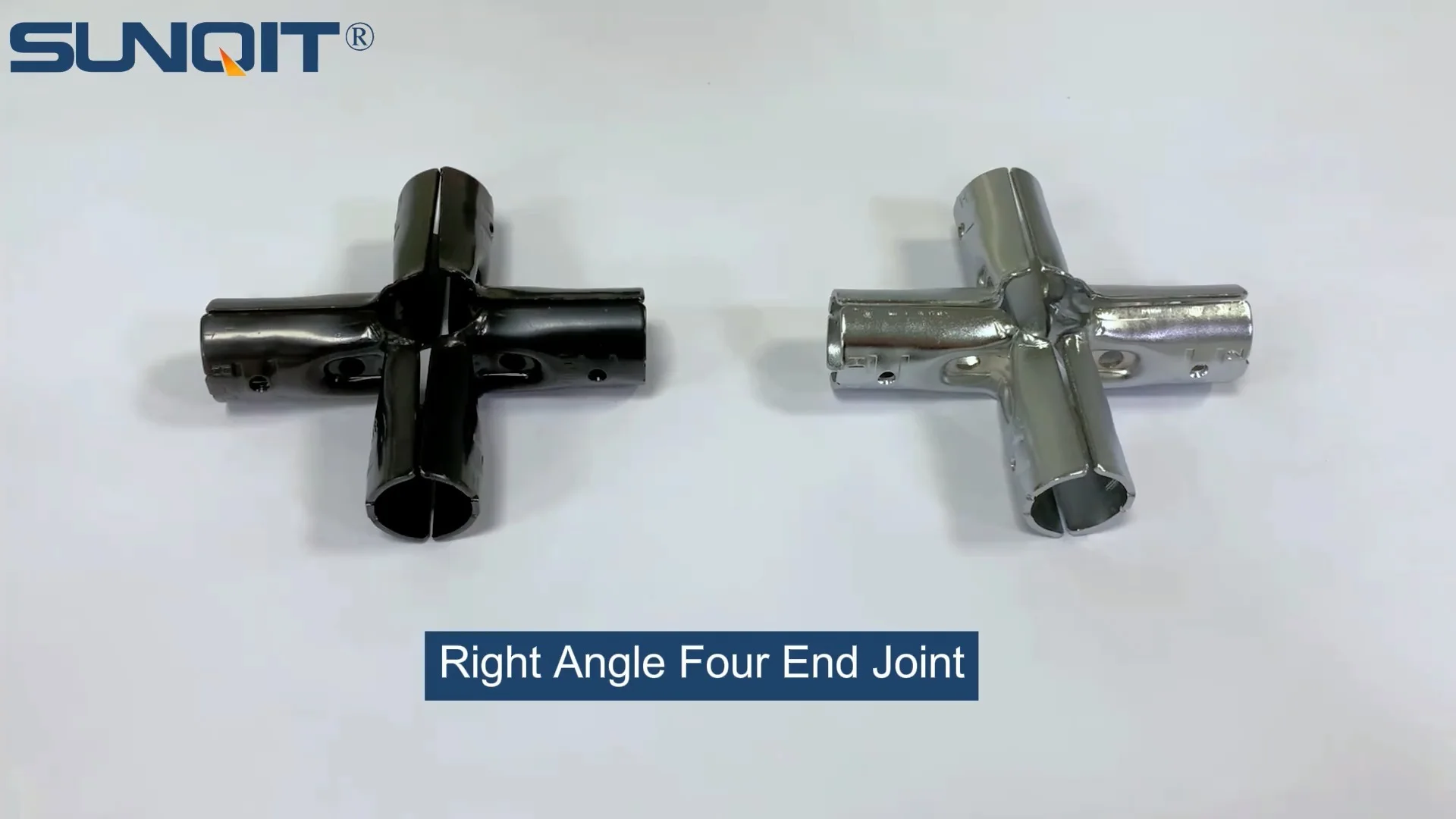
Five Way Straight Lean Pipe Joint
Five way straight lean pipe joint, for 5 pcs 28mm lean pipe connect in straight angle,which used widely in workbench, flow rack, hand trolley frame connection.
Lean Manufacturing and the Unsung Hero of Efficiency
In the fast-paced world of manufacturing, where every second counts and waste is the enemy, lean principles have become the backbone of successful operations. At its core, lean manufacturing is about creating more value with less resources—streamlining processes, reducing downtime, and adapting quickly to changing demands. But here's the thing: none of this happens in a vacuum. The physical infrastructure of a factory—the workbenches where products take shape, the flow racks that keep materials moving, the trolleys that transport goods—plays a silent but critical role in making lean a reality. And at the heart of that infrastructure? Components like the aluminum five way straight lean pipe joint.
If you've ever walked through a well-oiled production floor, you've probably seen them without realizing it: sleek, modular structures built from pipes and joints, customized to fit the exact needs of the task at hand. These aren't just random pieces of metal; they're the building blocks of a lean system. And among all these components, the five way straight lean pipe joint stands out as a quiet game-changer—especially when it's crafted from aluminum. Why aluminum? Because in manufacturing, weight matters. A lot.
Let's start with the basics. A lean pipe joint is the connector that holds lean pipes together, turning simple tubes into complex, functional structures like workbenches, flow racks, or material handling systems. Traditional joints, often made of steel, do the job, but they come with a catch: they're heavy. And heavy means harder to move, harder to assemble, and harder to reconfigure when your production line needs to shift gears. Enter the aluminum five way straight lean pipe joint—a lightweight alternative that doesn't just lighten the load physically, but also lightens the load on your team, your budget, and your ability to stay agile.
If you've ever walked through a well-oiled production floor, you've probably seen them without realizing it: sleek, modular structures built from pipes and joints, customized to fit the exact needs of the task at hand. These aren't just random pieces of metal; they're the building blocks of a lean system. And among all these components, the five way straight lean pipe joint stands out as a quiet game-changer—especially when it's crafted from aluminum. Why aluminum? Because in manufacturing, weight matters. A lot.
Let's start with the basics. A lean pipe joint is the connector that holds lean pipes together, turning simple tubes into complex, functional structures like workbenches, flow racks, or material handling systems. Traditional joints, often made of steel, do the job, but they come with a catch: they're heavy. And heavy means harder to move, harder to assemble, and harder to reconfigure when your production line needs to shift gears. Enter the aluminum five way straight lean pipe joint—a lightweight alternative that doesn't just lighten the load physically, but also lightens the load on your team, your budget, and your ability to stay agile.
What Exactly Is an Aluminum Five Way Straight Lean Pipe Joint?
Before we dive into the benefits, let's get clear on what this component is. The "five way straight" part tells you its function: it connects five lean pipes in a straight line, allowing for multi-directional builds. Imagine a central hub with five openings, each designed to snugly fit an aluminum lean pipe, creating a stable base for structures that need to branch out—think a flow rack with multiple levels, or a workbench with integrated material storage on all sides.
But what truly sets it apart is the "aluminum" part. Unlike steel, aluminum is naturally lightweight, yet surprisingly strong. Manufacturers often use high-grade aluminum alloys, which combine the best of both worlds: low density for easy handling and high tensile strength to support heavy loads. This isn't just any aluminum, though. It's precision-engineered to fit seamlessly with aluminum lean pipes and aluminum profile accessories, ensuring a tight, wobble-free connection that can withstand the daily grind of a busy factory.
Here's a quick breakdown of its design: the joint features threaded holes or clamping mechanisms that secure the pipes in place, eliminating the need for welding or heavy tools. Most models are also coated with a corrosion-resistant finish, making them suitable for environments where moisture or chemicals might be present. And because aluminum is malleable, these joints can be designed with intricate details—like rounded edges to prevent snags or ergonomic grips for easier handling during assembly.
But what truly sets it apart is the "aluminum" part. Unlike steel, aluminum is naturally lightweight, yet surprisingly strong. Manufacturers often use high-grade aluminum alloys, which combine the best of both worlds: low density for easy handling and high tensile strength to support heavy loads. This isn't just any aluminum, though. It's precision-engineered to fit seamlessly with aluminum lean pipes and aluminum profile accessories, ensuring a tight, wobble-free connection that can withstand the daily grind of a busy factory.
Here's a quick breakdown of its design: the joint features threaded holes or clamping mechanisms that secure the pipes in place, eliminating the need for welding or heavy tools. Most models are also coated with a corrosion-resistant finish, making them suitable for environments where moisture or chemicals might be present. And because aluminum is malleable, these joints can be designed with intricate details—like rounded edges to prevent snags or ergonomic grips for easier handling during assembly.

Why Lightweight Matters: The Core of the Advantage
Let's cut to the chase: why does "lightweight" make such a big difference? For anyone who's ever tried to assemble a steel-framed workbench, the answer is obvious. Steel joints are heavy—so heavy that moving them requires two people, and adjusting their position mid-assembly is a workout. Aluminum changes the game. A typical aluminum five way straight joint weighs 30-50% less than its steel counterpart, and that difference adds up fast when you're building an entire system.
But the benefits go beyond just "easier to carry." Lightweight design directly impacts three key areas of lean manufacturing: flexibility, safety, and cost. Let's break them down.
But the benefits go beyond just "easier to carry." Lightweight design directly impacts three key areas of lean manufacturing: flexibility, safety, and cost. Let's break them down.

Benefit 1: Flexibility That Keeps Up With Your Needs
One of the golden rules of lean manufacturing is "adapt or fall behind." Production lines aren't static—new products get introduced, demand spikes for certain items, or floor layouts need to shift to accommodate a new machine. When your infrastructure is built with heavy steel joints, reconfiguring it feels like trying to rearrange furniture with concrete legs: time-consuming, labor-intensive, and often requiring specialized tools.
Aluminum five way straight joints flip that script. Because they're lightweight, a single worker can easily disassemble a section of a flow rack, move the joints to a new location, and reassemble them in minutes. No need for a crane, no need to shut down the entire line for hours. This agility is a game-changer for small-batch production or industries with seasonal demand swings.
And it's not just about big reconfigurations. Even small adjustments—like raising a workbench by a few inches to improve ergonomics or adding an extra shelf to a material rack—become quick, painless tasks. This kind of flexibility turns your factory floor into a living, breathing space that evolves with your business, rather than a fixed setup that holds you back.
Aluminum five way straight joints flip that script. Because they're lightweight, a single worker can easily disassemble a section of a flow rack, move the joints to a new location, and reassemble them in minutes. No need for a crane, no need to shut down the entire line for hours. This agility is a game-changer for small-batch production or industries with seasonal demand swings.
Real-Life Example:
A electronics manufacturer in Texas recently switched to aluminum lean pipe systems, including five way joints, for their assembly lines. When they launched a new smartphone model, they needed to reconfigure 12 workbenches to accommodate the new component layout. With steel joints, this would have taken a full day and a team of four. With aluminum, two workers finished the job in under three hours—minimizing downtime and allowing them to start production a day earlier than planned.
And it's not just about big reconfigurations. Even small adjustments—like raising a workbench by a few inches to improve ergonomics or adding an extra shelf to a material rack—become quick, painless tasks. This kind of flexibility turns your factory floor into a living, breathing space that evolves with your business, rather than a fixed setup that holds you back.

Benefit 2: Safety That Protects Your Team
Manufacturing floors are busy, and accidents happen. But many workplace injuries—like strained backs or crushed fingers—stem from handling heavy objects. Steel joints are a common culprit here: dropping a steel five way joint (which can weigh 5-7 pounds) on a foot is painful at best, dangerous at worst. Aluminum joints, by contrast, weigh in at 1.5-3 pounds, drastically reducing the risk of injury if they're mishandled.
But safety isn't just about weight. The precision fit of aluminum joints also plays a role. Loose or wobbly connections (common with poorly made steel joints) can cause structures to shift, leading to materials falling off flow racks or workbenches collapsing under load. Aluminum five way joints, when paired with quality aluminum lean pipes, create a rigid, stable frame that stays put. Many models also feature locking mechanisms that prevent accidental disassembly, giving workers peace of mind that their workspace is secure.
Another safety perk? Aluminum doesn't rust. Steel joints, especially in humid environments, can develop sharp rust flakes that cut hands during handling. Aluminum's corrosion-resistant finish eliminates that risk, keeping both the joints and your team in better shape.
But safety isn't just about weight. The precision fit of aluminum joints also plays a role. Loose or wobbly connections (common with poorly made steel joints) can cause structures to shift, leading to materials falling off flow racks or workbenches collapsing under load. Aluminum five way joints, when paired with quality aluminum lean pipes, create a rigid, stable frame that stays put. Many models also feature locking mechanisms that prevent accidental disassembly, giving workers peace of mind that their workspace is secure.
Another safety perk? Aluminum doesn't rust. Steel joints, especially in humid environments, can develop sharp rust flakes that cut hands during handling. Aluminum's corrosion-resistant finish eliminates that risk, keeping both the joints and your team in better shape.
Benefit 3: Cost Savings That Add Up Over Time
Let's talk numbers. At first glance, aluminum joints might have a slightly higher upfront cost than basic steel ones. But lean manufacturing is about the long game, and when you factor in all the hidden costs of steel, aluminum becomes the smarter investment.
Shipping Costs: Aluminum's lighter weight means lower freight bills. A pallet of steel joints might cost $200 to ship; the same number of aluminum joints could cost $80. Multiply that by dozens of pallets a year, and you're looking at thousands in savings.
Labor Costs: Assembling with aluminum joints takes less time and fewer people. If a steel-based workbench takes two workers two hours to build, an aluminum one might take one worker one hour. Over a year of building 50 workbenches, that's 150 fewer labor hours—time that can be redirected to more valuable tasks.
Maintenance Costs: Steel joints need regular upkeep. They rust, so you have to paint them. Threads wear down, so you have to replace them sooner. Aluminum joints? They're low-maintenance. No rust, no painting, and their precision engineering means they hold up longer under repeated assembly/disassembly cycles.
Energy Costs: Even moving materials around the factory floor gets cheaper. Trolleys built with aluminum joints are lighter, so they require less force to push, reducing fatigue and even cutting down on energy use if they're motorized.
When you add it all up, the ROI on aluminum five way straight joints typically comes within 6-12 months—and that's before considering the intangible benefits, like happier workers who aren't stuck wrestling with heavy equipment.
Shipping Costs: Aluminum's lighter weight means lower freight bills. A pallet of steel joints might cost $200 to ship; the same number of aluminum joints could cost $80. Multiply that by dozens of pallets a year, and you're looking at thousands in savings.
Labor Costs: Assembling with aluminum joints takes less time and fewer people. If a steel-based workbench takes two workers two hours to build, an aluminum one might take one worker one hour. Over a year of building 50 workbenches, that's 150 fewer labor hours—time that can be redirected to more valuable tasks.
Maintenance Costs: Steel joints need regular upkeep. They rust, so you have to paint them. Threads wear down, so you have to replace them sooner. Aluminum joints? They're low-maintenance. No rust, no painting, and their precision engineering means they hold up longer under repeated assembly/disassembly cycles.
Energy Costs: Even moving materials around the factory floor gets cheaper. Trolleys built with aluminum joints are lighter, so they require less force to push, reducing fatigue and even cutting down on energy use if they're motorized.
When you add it all up, the ROI on aluminum five way straight joints typically comes within 6-12 months—and that's before considering the intangible benefits, like happier workers who aren't stuck wrestling with heavy equipment.
Benefit 4: Durability That Doesn't Compromise on Strength
Skeptics might wonder: "If it's lighter, is it weaker?" It's a fair question. After all, workbenches and flow racks need to support heavy loads—think 500+ pounds of materials or equipment. But here's the truth: aluminum alloys are surprisingly strong. Modern aluminum five way joints are designed to handle loads comparable to steel, thanks to advancements in material science.
For example, 6061-T6 aluminum, a common alloy used in these joints, has a tensile strength of 45,000 psi—strong enough to support the weight of a small car (not that you'd need to, but it's a reassuring benchmark). When paired with aluminum lean pipes (which are often reinforced with internal ribs), the system can easily handle the daily demands of manufacturing.
Another advantage? Aluminum's natural resistance to corrosion. In factories where liquids (like coolants or cleaning agents) are present, steel joints rust from the inside out, weakening their structure over time. Aluminum joints, with their oxide layer (which forms naturally when exposed to air), resist rust and corrosion, ensuring they stay strong for years.
For example, 6061-T6 aluminum, a common alloy used in these joints, has a tensile strength of 45,000 psi—strong enough to support the weight of a small car (not that you'd need to, but it's a reassuring benchmark). When paired with aluminum lean pipes (which are often reinforced with internal ribs), the system can easily handle the daily demands of manufacturing.
Another advantage? Aluminum's natural resistance to corrosion. In factories where liquids (like coolants or cleaning agents) are present, steel joints rust from the inside out, weakening their structure over time. Aluminum joints, with their oxide layer (which forms naturally when exposed to air), resist rust and corrosion, ensuring they stay strong for years.
Test Case:
A automotive parts supplier in Michigan ran a side-by-side test: two identical flow racks, one built with steel five way joints and one with aluminum. After two years of daily use—exposed to oil, water, and temperature fluctuations—the steel joints showed signs of rust and required replacement of 30% of the connections. The aluminum joints? Still in perfect condition, with no visible wear.
Benefit 5: Compatibility with a Lean Ecosystem
A lean system is only as good as its parts working together. Aluminum five way straight joints aren't standalone components—they're part of a larger ecosystem of aluminum profile accessories, from caster wheels to roller tracks, that make building a cohesive system a breeze.
For example, if you're building a workbench, you can pair the five way joint with aluminum profile accessories like adjustable feet (to level the bench on uneven floors), tool hooks (to keep equipment within reach), or a honeycomb panel top (for a smooth, durable workspace). If you need a flow rack, add roller tracks to the aluminum pipes, and suddenly materials glide from one station to the next with minimal effort.
This compatibility eliminates the frustration of mismatched parts. No more forcing a steel joint onto an aluminum pipe, or dealing with loose connections because the threads don't align. Everything is designed to work together, which speeds up assembly and reduces errors. It also future-proofs your investment: as your needs grow, you can easily add new components (like extra shelves or casters) without overhauling the entire system.
For example, if you're building a workbench, you can pair the five way joint with aluminum profile accessories like adjustable feet (to level the bench on uneven floors), tool hooks (to keep equipment within reach), or a honeycomb panel top (for a smooth, durable workspace). If you need a flow rack, add roller tracks to the aluminum pipes, and suddenly materials glide from one station to the next with minimal effort.
This compatibility eliminates the frustration of mismatched parts. No more forcing a steel joint onto an aluminum pipe, or dealing with loose connections because the threads don't align. Everything is designed to work together, which speeds up assembly and reduces errors. It also future-proofs your investment: as your needs grow, you can easily add new components (like extra shelves or casters) without overhauling the entire system.
How It Stacks Up: Aluminum vs. Steel Joints
| Feature | Traditional Steel Five Way Joint | Aluminum Five Way Straight Lean Pipe Joint |
|---|---|---|
| Weight (per joint) | 1.5–2.5 lbs | 0.5–1.0 lbs (30–50% lighter) |
| Assembly Time (per joint) | 5–7 minutes (requires tools/2 people) | 2–3 minutes (hand-tightenable/1 person) |
| Corrosion Resistance | Low (prone to rust; needs painting) | High (natural oxide layer; no painting needed) |
| Load Capacity | 500–800 lbs (system-level) | 450–750 lbs (comparable, with lighter overall system weight) |
| Reconfiguration Ease | Difficult (heavy, requires tools) | Easy (lightweight, tool-free adjustment) |
| Long-Term Maintenance Cost | High (rust treatment, part replacement) | Low (no rust, minimal wear) |
| Safety Risk (Handling) | Higher (risk of strains, dropped-joint injuries) | Lower (lighter weight reduces injury risk) |
Applications: Where It Shines Brightest
Aluminum five way straight lean pipe joints aren't a one-trick pony. They excel in a variety of applications across different industries. Here are a few where they make the biggest impact:
Workbenches: Whether it's a single-deck workbench for electronics assembly or a multi-tiered station for heavy machinery, aluminum joints make customization easy. Add shelves, tool rails, or lighting by simply connecting more pipes—no welding required.
Flow Racks: In warehouses or distribution centers, flow racks keep materials moving from receiving to shipping. Aluminum joints allow for quick adjustments to rack height or width, ensuring products of all sizes (from small parts to large boxes) glide smoothly.
Turnover Trolleys: Trolleys need to be sturdy but maneuverable. Aluminum joints reduce the trolley's overall weight, making it easier to push around tight factory corners—even when fully loaded.
Material Racks: For storing raw materials or finished goods, aluminum five way joints let you build multi-row, multi-floor racks that are easy to reconfigure as inventory levels change. No more empty shelves gathering dust or overcrowded sections slowing down access.
Clean Rooms: In industries like pharmaceuticals or semiconductors, where cleanliness is critical, aluminum's corrosion resistance and smooth surfaces (which don't trap dust) make it ideal. Unlike steel, it doesn't shed rust particles that could contaminate products.
Workbenches: Whether it's a single-deck workbench for electronics assembly or a multi-tiered station for heavy machinery, aluminum joints make customization easy. Add shelves, tool rails, or lighting by simply connecting more pipes—no welding required.
Flow Racks: In warehouses or distribution centers, flow racks keep materials moving from receiving to shipping. Aluminum joints allow for quick adjustments to rack height or width, ensuring products of all sizes (from small parts to large boxes) glide smoothly.
Turnover Trolleys: Trolleys need to be sturdy but maneuverable. Aluminum joints reduce the trolley's overall weight, making it easier to push around tight factory corners—even when fully loaded.
Material Racks: For storing raw materials or finished goods, aluminum five way joints let you build multi-row, multi-floor racks that are easy to reconfigure as inventory levels change. No more empty shelves gathering dust or overcrowded sections slowing down access.
Clean Rooms: In industries like pharmaceuticals or semiconductors, where cleanliness is critical, aluminum's corrosion resistance and smooth surfaces (which don't trap dust) make it ideal. Unlike steel, it doesn't shed rust particles that could contaminate products.
Choosing the Right Supplier: What to Look For
Not all aluminum five way joints are created equal. To get the most out of your investment, you need a supplier who prioritizes quality, precision, and customer support. Here's what to keep in mind:
Material Quality: Ask about the aluminum alloy used. 6061-T6 or 6082-T6 are industry standards for strength and durability. Avoid suppliers who use generic "aluminum" without specifying the alloy—it's a red flag for subpar materials.
Manufacturing Precision: The joint should fit snugly with your aluminum lean pipes. Look for suppliers who use CNC machining to ensure consistent threading and hole alignment—loose fits lead to wobbly structures and safety risks.
Testing and Certifications: Reputable suppliers test their joints for load capacity, corrosion resistance, and fatigue (how well they hold up to repeated use). Ask for test reports or certifications—if they can't provide them, move on.
Accessory Compatibility: Make sure the joint works with your existing aluminum profile accessories. A good supplier will offer a range of compatible parts, from casters to roller tracks, so you can build a fully integrated system.
Customer Service: Even the best products need support. Look for suppliers who offer technical assistance—whether it's helping you design a custom setup or troubleshooting assembly issues. Fast response times and clear communication go a long way.
Material Quality: Ask about the aluminum alloy used. 6061-T6 or 6082-T6 are industry standards for strength and durability. Avoid suppliers who use generic "aluminum" without specifying the alloy—it's a red flag for subpar materials.
Manufacturing Precision: The joint should fit snugly with your aluminum lean pipes. Look for suppliers who use CNC machining to ensure consistent threading and hole alignment—loose fits lead to wobbly structures and safety risks.
Testing and Certifications: Reputable suppliers test their joints for load capacity, corrosion resistance, and fatigue (how well they hold up to repeated use). Ask for test reports or certifications—if they can't provide them, move on.
Accessory Compatibility: Make sure the joint works with your existing aluminum profile accessories. A good supplier will offer a range of compatible parts, from casters to roller tracks, so you can build a fully integrated system.
Customer Service: Even the best products need support. Look for suppliers who offer technical assistance—whether it's helping you design a custom setup or troubleshooting assembly issues. Fast response times and clear communication go a long way.
The Future of Lean: Lightweight, Sustainable, and Smart
As manufacturing continues to evolve, the demand for lightweight, sustainable solutions will only grow. Aluminum five way straight lean pipe joints are already at the forefront of this shift, but their potential doesn't stop there. Innovations like recycled aluminum alloys (reducing environmental impact) and smart joints with built-in sensors (to monitor load levels or alert teams to loose connections) are on the horizon.
Additionally, as more factories adopt Industry 4.0 technologies—like IoT-connected machines and automated guided vehicles (AGVs)—the flexibility of aluminum systems will become even more valuable. AGVs need clear pathways, and aluminum structures can be quickly moved to make space, ensuring your smart factory stays smart and efficient.
At the end of the day, lean manufacturing is about people as much as it is about processes. Aluminum five way straight lean pipe joints don't just make factories more efficient—they make them better places to work. When workers aren't struggling with heavy tools or stuck in endless reconfiguration projects, they're free to focus on what matters: building quality products and driving innovation. And that, more than any cost savings or efficiency metric, is the true power of lightweight design.
Additionally, as more factories adopt Industry 4.0 technologies—like IoT-connected machines and automated guided vehicles (AGVs)—the flexibility of aluminum systems will become even more valuable. AGVs need clear pathways, and aluminum structures can be quickly moved to make space, ensuring your smart factory stays smart and efficient.
At the end of the day, lean manufacturing is about people as much as it is about processes. Aluminum five way straight lean pipe joints don't just make factories more efficient—they make them better places to work. When workers aren't struggling with heavy tools or stuck in endless reconfiguration projects, they're free to focus on what matters: building quality products and driving innovation. And that, more than any cost savings or efficiency metric, is the true power of lightweight design.
Final Thoughts: Lightweight Design, Heavyweight Results
The aluminum five way straight lean pipe joint might not be the most glamorous component on the factory floor, but it's a workhorse that delivers measurable results. By combining lightweight design with strength, flexibility, and durability, it solves some of the biggest pain points in lean manufacturing—from slow reconfigurations to high labor costs.
Whether you're building a new production line from scratch or upgrading an existing one, making the switch to aluminum joints is an investment in your factory's future. It's a small change that leads to big outcomes: happier workers, faster processes, and a bottom line that's healthier for years to come.
So the next time you walk through your factory, take a closer look at those joints holding everything together. They might just be the key to unlocking the full potential of your lean system.
Whether you're building a new production line from scratch or upgrading an existing one, making the switch to aluminum joints is an investment in your factory's future. It's a small change that leads to big outcomes: happier workers, faster processes, and a bottom line that's healthier for years to come.
So the next time you walk through your factory, take a closer look at those joints holding everything together. They might just be the key to unlocking the full potential of your lean system.