- Company Articles
- Products and Technology
- Product knowledge
- Aluminum Foot Base Corrosion Resistance: Why It Outperforms Steel in Humid Environments

Aluminum Foot Base Corrosion Resistance: Why It Outperforms Steel in Humid Environments
Related Product
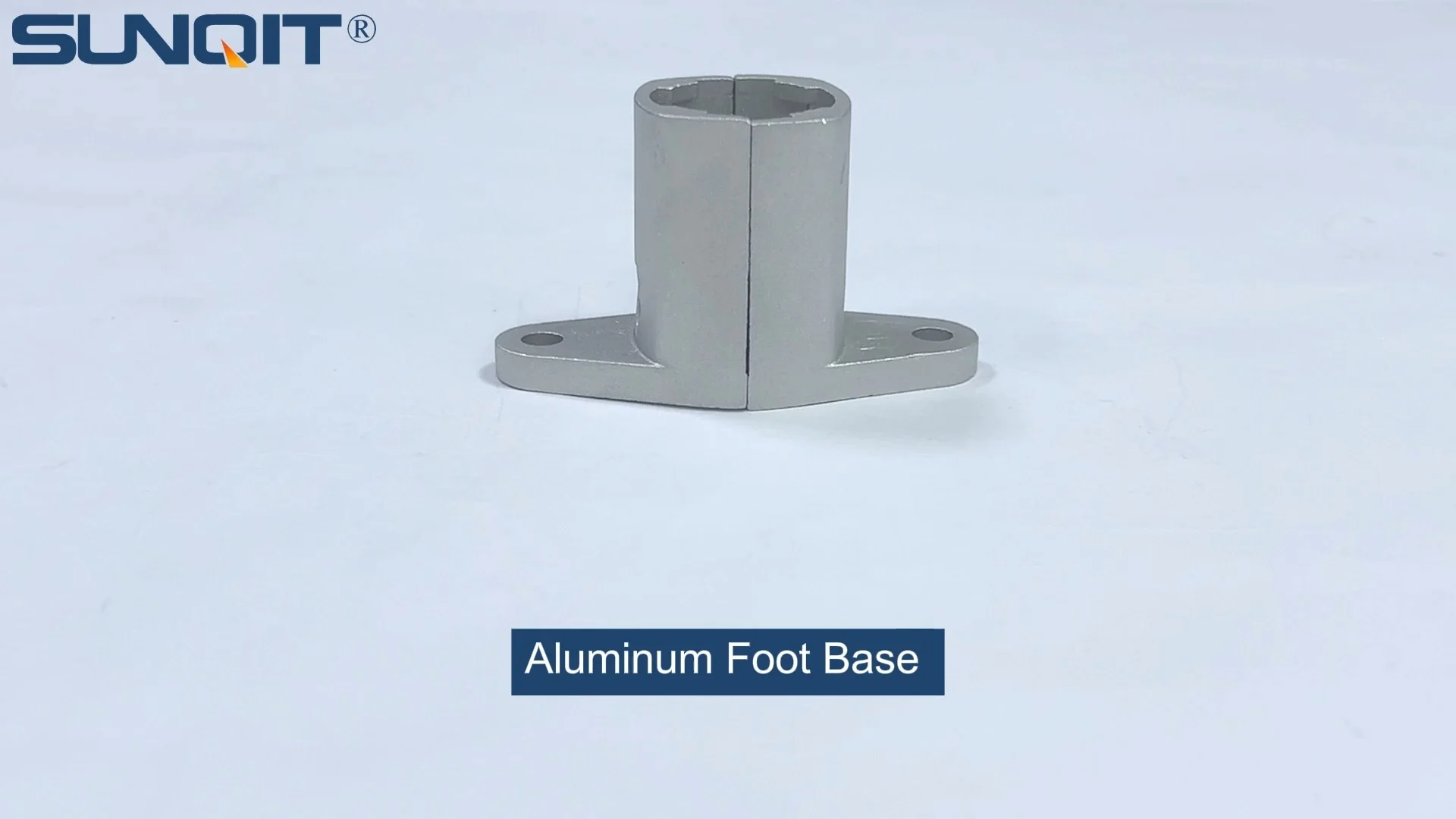
Aluminum Foot Base
Aluminum foot base to connect 28mm aluminum pipe and fixed it on the ground and prevent pipe fall and move.
Walk into any manufacturing plant, warehouse, or food processing facility in a humid climate, and you'll likely spot a silent enemy: corrosion. It creeps into metal surfaces, eats away at equipment legs, and turns sturdy steel foot bases into flaky, unstable liabilities. For operations managers, maintenance teams, and facility owners, this isn't just a cosmetic issue—it's a threat to safety, efficiency, and the bottom line. Rusty foot bases under workbenches wobble, conveyor supports weaken, and what starts as a small patch of orange can lead to costly downtime or even accidents. But what if there was a material that didn't just resist corrosion, but actually fought back against it? Enter the aluminum foot base—a humble component that's quietly revolutionizing how industries handle humid environments. In this article, we'll explore why aluminum foot bases outshine steel in damp conditions, the science behind their durability, and how they're becoming a cornerstone for lean system suppliers and manufacturers aiming to build resilient, long-lasting workspaces.
What Exactly Is an Aluminum Foot Base?
Before diving into its corrosion-fighting superpowers, let's clarify what an aluminum foot base is—and why it matters. Simply put, it's the foundational component that anchors equipment like workbenches, flow racks, conveyors, and material trolleys to the ground. Think of it as the "feet" of your industrial setup: it bears weight, absorbs vibrations, and keeps everything stable. But unlike generic steel plates or concrete blocks, aluminum foot bases are engineered for precision, often crafted from aluminum extrusion profile—a process where aluminum is pushed through a die to create custom cross-sections, ensuring a perfect fit for specific equipment.
What makes them stand out? Aluminum foot bases are typically paired with aluminum profile accessories like brackets, gussets, or leveling feet, allowing them to integrate seamlessly into broader lean systems. A lean system supplier might recommend them not just for their stability, but for how they complement modular setups—easy to adjust, reconfigure, or expand as production needs change. And because they're part of the aluminum pipe and profile family, they share the same lightweight yet robust properties that make aluminum a favorite in modern manufacturing.
Aluminum vs. Steel Foot Bases: A Head-to-Head in Humid Environments
To understand why aluminum foot bases dominate in humidity, let's put them side by side with their steel counterparts. The table below breaks down key factors that matter most to facility managers:
| Factor | Aluminum Foot Base | Steel Foot Base |
|---|---|---|
| Corrosion Resistance | Forms a self-healing oxide layer; resistant to moisture, salt, and chemicals | Prone to rust (iron oxide) when exposed to water; rust spreads and weakens the material |
| Weight | ~30% lighter than steel (easier to install, reduces structural load) | Heavier; requires more labor/equipment to move and install |
| Maintenance Needs | Minimal: occasional wiping with water or mild detergent | High: regular painting, coating, or galvanizing to prevent rust; frequent inspections for corrosion |
| Expected Lifespan (Humid Environment) | 15–20+ years (often outlasts the equipment it supports) | 5–8 years (even with maintenance; rust eventually compromises integrity) |
| Long-Term Cost | Higher upfront cost, but 30–50% lower total cost of ownership (TCO) due to minimal maintenance and longer life | Lower upfront cost, but TCO spikes due to repainting, replacements, and downtime from repairs |
At first glance, steel might seem like the budget-friendly choice. But as the table shows, the true cost of steel reveals itself over time—especially in humid settings. Let's dig deeper into why aluminum's corrosion resistance is a game-changer.

The Science Behind Aluminum's "Self-Defense" Mechanism
Aluminum's ability to resist corrosion isn't magic—it's chemistry. When aluminum is exposed to oxygen (even in humid air), it forms a thin, invisible layer of aluminum oxide (Al₂O₃) on its surface. This layer is just 0.00001 inches thick—about 1/100th the width of a human hair—but it's incredibly dense and tightly bonded to the metal below. Think of it as a suit of armor that forms automatically, without any human intervention.
What makes this armor special? Unlike steel's rust, which flakes off and exposes fresh metal to corrosion, aluminum oxide is self-healing. If the layer gets scratched or damaged (say, from a dropped tool or a scuff during installation), the exposed aluminum immediately reacts with oxygen and moisture to reform the oxide layer. It's like having a material that bandages itself. In humid environments, where water molecules are abundant, this process accelerates—meaning the armor gets stronger, not weaker, over time.
Steel, on the other hand, has no such defense. When iron in steel reacts with water and oxygen, it forms iron oxide (rust), a porous, flaky substance that peels away. Each time rust flakes off, more steel is exposed, creating a vicious cycle of deterioration. In high humidity, this cycle speeds up: a steel foot base in a coastal factory (where salt air amplifies corrosion) might start showing rust within months, even with a protective paint coating.

Real-World Wins: Where Aluminum Foot Bases Shine
Theory is one thing, but real-world results tell the true story. Let's look at three industries where humidity is a constant battle—and where aluminum foot bases have made a measurable difference.
1. Food Processing Plants: Humidity + Sanitation = Corrosion Nightmare
Food processing facilities are humid by design. Steam kettles, washing stations, and refrigeration units fill the air with moisture, while daily washdowns with caustic cleaners (think bleach, high-pressure hoses) create the perfect storm for steel corrosion. A mid-sized bakery in Florida learned this the hard way: their steel workbench foot bases began rusting within a year, leaving orange streaks on the floor and compromising the stability of dough-mixing stations. After switching to aluminum foot bases (paired with aluminum extrusion profile workbenches from a local lean system supplier), they reported zero corrosion after three years. "We used to repaint the steel bases every six months—now we just wipe the aluminum ones with a damp cloth during our nightly cleanup," said the plant manager. "It's saved us at least 12 hours of maintenance per month."
2. Coastal Manufacturing: Salt Air vs. Aluminum's Armor
Coastal factories face a double whammy: high humidity and salt-laden air. Salt acts as a catalyst for corrosion, making steel rust faster than in inland environments. A marine parts manufacturer in Charleston, South Carolina, once replaced steel conveyor supports every 2–3 years due to salt corrosion. Today, their conveyors rest on aluminum foot bases, and after five years, the bases still look brand-new. "We were skeptical at first—aluminum feels lighter, so we worried about stability," admitted the operations director. "But the aluminum extrusion profile is reinforced with internal ribs, and the foot bases lock into the floor with stainless steel bolts. They've held up through hurricanes and daily salt spray. We haven't replaced a single one."
3. Pharmaceutical Labs: Moisture Control + Cleanliness = No Room for Rust
Pharmaceutical labs require strict humidity control (often 40–60% relative humidity) to protect sensitive ingredients. But even controlled moisture can corrode steel, and rust particles are a contamination risk for sterile products. A biotech firm in California switched to aluminum foot bases for their lab workbenches and flow racks, not just for corrosion resistance, but for cleanliness. "Steel rust can flake off into samples—that's a compliance violation waiting to happen," explained the lab manager. "Aluminum doesn't shed, and it's non-porous, so it doesn't harbor bacteria. It's a small change, but it's made our audits a lot smoother."

Maintenance Made Simple: Aluminum vs. Steel
If you ask any maintenance technician about steel foot bases, they'll likely sigh and mention "the rust routine": sanding off flakes, applying primer, repainting, and crossing fingers that the new coat lasts six months. For steel in humid environments, this isn't optional—it's survival. Miss a spot, and corrosion takes hold, weakening the base until it needs replacement.
Aluminum foot bases, by contrast, laugh off humidity. Their maintenance checklist is short: wipe with a mild soap and water solution if they get dirty (say, from oil spills or dust), and check the leveling feet occasionally to ensure stability. No sanding, no painting, no expensive anti-corrosion coatings. This isn't just a time-saver—it's a cost-cutter. A 2023 study by the Manufacturing Efficiency Institute found that facilities using aluminum foot bases reduced annual maintenance costs for equipment supports by an average of $2,400 per 1,000 square feet compared to those using steel.
Consider this: a steel foot base might cost $20 upfront, but with annual maintenance (paint, labor, replacement parts) adding $15 per year, its 5-year total cost is $95. An aluminum foot base might cost $40 upfront, but with $2 per year in maintenance, its 15-year total cost is $70. Over time, aluminum isn't just better—it's cheaper.
Design Freedom: Aluminum Extrusion Profile and Custom Solutions
Humidity resistance is aluminum's star feature, but it's not the only one. Aluminum extrusion profile gives foot bases (and the systems they support) unmatched design flexibility. Unlike steel, which is often limited to standard shapes (square tubes, flat plates), aluminum can be extruded into custom cross-sections—think T-slots, channels, or hollow cores—to fit specific equipment needs. This means a foot base can be tailored to support a heavy-duty conveyor, a lightweight workbench, or a mobile trolley, all while maintaining corrosion resistance.
Aluminum profile accessories take this flexibility further. Need to adjust the height of a workbench? Add leveling feet. Want to attach a side rail to prevent tools from rolling off? Slide a bracket into the T-slot of the aluminum extrusion profile. A lean system supplier can even combine aluminum foot bases with aluminum pipe frames, flow racks, and conveyors to create a fully modular workspace that adapts as production demands change. "We redesigned our assembly line last year, and the aluminum foot bases made it easy," said a production supervisor at an electronics plant. "We just unbolted them, moved the workbenches, and reattached—no cutting or welding like we would have needed with steel."
Busting the Myths: "Aluminum Isn't Strong Enough!"
Skeptics often ask: "If aluminum is so lightweight, isn't it weaker than steel?" It's a fair question—but the answer depends on the aluminum. Pure aluminum is soft, but the aluminum used in foot bases is almost always alloyed with other metals (like magnesium, silicon, or copper) to boost strength. For example, 6061-T6 aluminum (common in extrusion profiles) has a tensile strength of 45,000 psi—strong enough to support the weight of a small car. When paired with the right design (thick walls, reinforced ribs in the extrusion), aluminum foot bases easily handle the loads of industrial equipment.
Another myth: "Aluminum is too expensive." While it's true that aluminum foot bases often cost more upfront than steel, the long-term savings (lower maintenance, longer lifespan) erase that gap. A lean system supplier can help crunch the numbers: for a facility with 50 workbenches, the upfront cost difference might be $1,000, but the 10-year maintenance savings could exceed $5,000. "We looked at the ROI before switching," said a CFO at a packaging company. "Aluminum paid for itself in under two years."
The Bottom Line: Aluminum Foot Bases Are a Humidity-Proof Investment
In humid environments, corrosion isn't just a problem—it's a drain on time, money, and peace of mind. Steel foot bases fight a losing battle against moisture, requiring constant maintenance and frequent replacement. Aluminum foot bases, with their self-healing oxide layer, minimal upkeep, and design flexibility, offer a better way. They're not just a component—they're an investment in reliability, efficiency, and long-term savings.
Whether you're running a food processing plant, a coastal factory, or a pharmaceutical lab, the message is clear: when humidity is your enemy, aluminum is your ally. And with the support of a knowledgeable lean system supplier, you can integrate aluminum foot bases, aluminum extrusion profile, and aluminum profile accessories into a workspace that's built to last. After all, in manufacturing, the strongest foundations aren't just about holding weight—they're about standing up to whatever the environment throws their way. Aluminum foot bases do exactly that.