- Company Articles
- Products and Technology
- Product knowledge
- Aluminum Foot Base Cost Analysis: Long-Term Savings for Manufacturers

Aluminum Foot Base Cost Analysis: Long-Term Savings for Manufacturers
Related Product
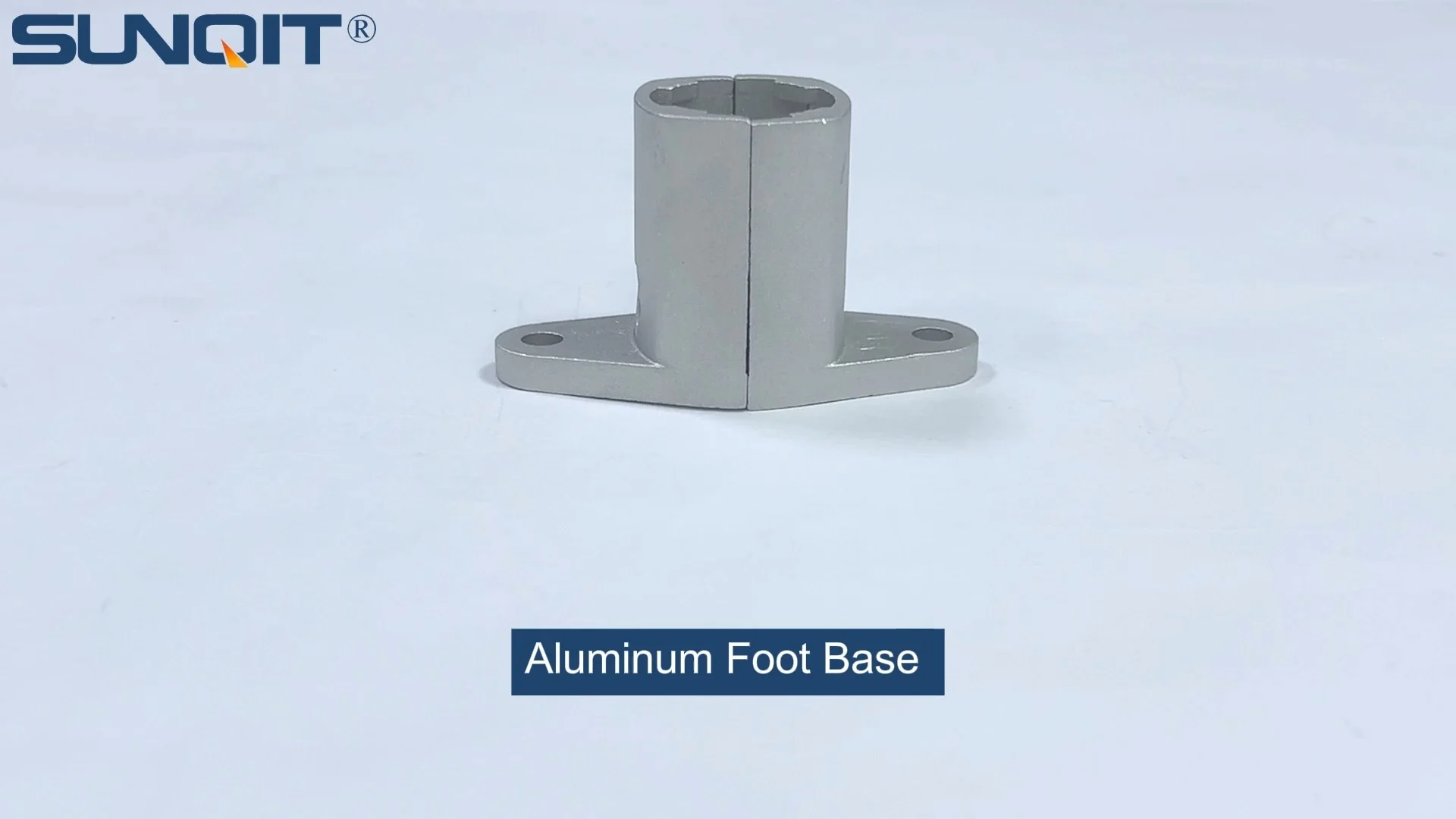
Aluminum Foot Base
Aluminum foot base to connect 28mm aluminum pipe and fixed it on the ground and prevent pipe fall and move.
For manufacturers, every decision—from production line layout to equipment selection—boils down to one critical question: Will this investment pay off? In the fast-paced world of manufacturing, where profit margins are tight and efficiency is king, choosing the right components for your workspace isn't just about immediate functionality. It's about long-term sustainability, adaptability, and, ultimately, cost savings. One often-overlooked component that plays a surprisingly large role in this equation? The humble foot base. Today, we're diving deep into aluminum foot bases—specifically those built with aluminum extrusion profiles —and why they're more than just a support structure. They're a strategic investment that can slash costs, reduce downtime, and boost productivity over time.
What Is an Aluminum Foot Base, Anyway?
Before we crunch numbers, let's get clear on what we're talking about. An aluminum foot base is the foundational support structure for equipment like workbenches, conveyor systems, material racks, and turnover trolleys. Unlike generic steel or plastic bases, these foot bases are typically crafted from aluminum extrusion profiles —hollow, lightweight metal shapes formed by pushing molten aluminum through a die. This process creates consistent, customizable profiles that can be cut, joined, and modified with aluminum profile accessories like brackets, joints, and leveling feet to fit almost any need.
Think of it like building with advanced Lego blocks, but for industrial use. A manufacturer might use an aluminum foot base to support a workbench on the assembly line, anchor a flow rack in a warehouse, or stabilize a conveyor system transporting delicate components. The key here is that these bases aren't one-size-fits-all; they're designed to evolve with your operations.
The Upfront Cost Myth: Why "Cheap" Often Costs More
Let's address the elephant in the room: Aluminum extrusion profiles and their accessories can carry a higher upfront price tag than, say, basic steel or plastic foot bases. It's easy to look at a quote for an aluminum setup and think, "We can save money now with steel." But here's the problem: Manufacturing isn't a short-term game. Equipment and structures need to last through years of heavy use, shifting production demands, and even facility relocations. What looks like a "bargain" today can become a money pit tomorrow.
Consider a mid-sized electronics manufacturer we worked with last year. They initially opted for steel foot bases for their assembly workbenches to cut costs. Within 18 months, two issues emerged: First, the steel bases began rusting in their humidity-controlled facility (despite painting), requiring expensive refinishing. Second, when they launched a new product line, the fixed steel bases couldn't be reconfigured to accommodate taller workbenches, forcing them to buy entirely new structures. The total cost? 30% higher than if they'd invested in aluminum from the start.

Durability: The Silent Savings Driver
Aluminum's greatest strength (pun intended) lies in its durability. Unlike steel, aluminum naturally resists corrosion and rust, even in damp or chemical-exposed environments. This isn't just about aesthetics; it's about avoiding costly replacements. A steel foot base might last 3–5 years in a typical factory before showing signs of wear. An aluminum extrusion profile base? 10–15 years, and often longer with basic care.
Let's break it down numerically. Suppose a steel foot base costs $150 and lasts 4 years. An aluminum base costs $250 but lasts 12 years. Over 12 years, you'd need to replace the steel base three times, totaling $450—60% more than the single aluminum investment. And that's before factoring in labor costs for replacement, downtime during installation, and the hassle of disposing of old steel structures.
Another durability win: Aluminum's lightweight nature doesn't compromise its strength. It can support heavy loads—think 500+ pounds per linear foot for thick-walled profiles—without bending or warping. This means fewer accidents, less equipment damage, and fewer workers compensation claims from strained backs when moving or adjusting bases.

Customization with Aluminum Profile Accessories: Adapt or Die
In manufacturing, flexibility isn't a luxury—it's survival. Product lines change, order volumes fluctuate, and new technologies (like automation) demand reconfigured workspaces. This is where aluminum profile accessories shine. Unlike fixed steel or plastic bases, aluminum foot bases are modular. Need to raise a workbench by 6 inches? Swap out the leveling feet. Want to add a side shelf for tools? Attach brackets to the extrusion's T-slots. Relocating to a smaller facility? Disassemble the base, move it, and rebuild it in hours.
Take a automotive parts manufacturer that recently adopted a lean system to reduce waste. Their old steel material racks had fixed shelves, meaning they often stored half-empty pallets to avoid rearranging. By switching to aluminum foot bases with adjustable shelf heights (using aluminum profile accessories like slide brackets and locking pins), they reorganized their racks to fit parts more efficiently. The result? A 22% reduction in warehouse space usage and a 15% faster picking time—all without buying new racks.
Aluminum's T-slot design is the secret here. Every extrusion profile has grooves that let you attach accessories without welding or drilling. It's like having a built-in upgrade path. Steel, by contrast, often requires cutting and rewelding to modify—costly, time-consuming, and imprecise.

Maintenance Costs: Time Is Money
Manufacturing managers know the hidden cost of maintenance: labor hours. Every minute a technician spends sanding rust off a steel base or tightening loose plastic joints is a minute they're not fixing production machines or optimizing workflows. Aluminum foot bases slash maintenance time because they're low-maintenance by design.
- No rust, no paint, no hassle: Aluminum's oxide layer acts as a natural barrier against corrosion. Even in wet or chemical-heavy environments, a quick wipe with a damp cloth keeps it clean.
- Loose joints? Tighten in seconds: Aluminum profile accessories like internal rotary joints or parallel fixation brackets use simple screws or levers. No need for specialized tools—any worker can tighten a loose connection in 2 minutes.
- Easy part replacement: If an accessory (like a caster wheel or leveling foot) wears out, it's a plug-and-play swap. No need to replace the entire base.
A food packaging plant we consulted reported saving 120+ labor hours annually after switching to aluminum foot bases. Their old plastic bases required monthly checks for cracks, and steel supports needed quarterly rust treatments. With aluminum, maintenance dropped to quarterly inspections—mostly just visual checks and occasional tightening.
Aluminum vs. Alternatives: A 5-Year Cost Breakdown
To put the savings in perspective, let's compare a standard 4-foot workbench foot base across three materials: aluminum extrusion profiles, steel, and plastic. We'll track costs over 5 years, including initial purchase, maintenance, replacement, and customization.
| Cost Category | Aluminum Extrusion Profile | Steel | Plastic |
|---|---|---|---|
| Initial Purchase | $320 | $180 | $120 |
| Maintenance (5 years) | $40 (occasional tightening, cleaning) | $220 (rust treatment, repainting, welding) | $150 (crack repairs, joint replacements) |
| Replacement | $0 (lasts 10+ years) | $180 (replaced at 5 years due to rust/wear) | $240 (replaced twice: 2.5 and 5 years) |
| Customization (2 adjustments) | $60 (aluminum profile accessories) | $150 (welding, new parts) | $120 (new sections, adhesives) |
| Total 5-Year Cost | $420 | $730 | $650 |
*Costs based on average U.S. manufacturer data, 2024. Includes labor for maintenance/customization.
The numbers speak for themselves: Aluminum costs 42% less than steel and 35% less than plastic over 5 years. And remember, this is for a single workbench. Multiply this by dozens (or hundreds) of bases across a facility, and the savings become transformative.
Case Study: How a Lean System with Aluminum Foot Bases Transformed a Facility
Let's zoom out to a full-facility example. A medical device manufacturer with 100,000 sq. ft. of production space recently retooled their assembly lines using a lean system focused on reducing waste and improving flow. Central to this was replacing all steel and plastic foot bases with aluminum extrusion profile bases for workbenches, conveyor systems, and material racks.
Previously, their facility had a hodgepodge of fixed structures. Workers wasted 15% of their shifts walking between stations, and reconfiguring lines for new products took weeks (and tens of thousands of dollars in welding and new steel parts). By switching to aluminum, they gained:
- Modular workstations: Using aluminum foot bases with adjustable heights and T-slot accessories, they reconfigured 12 assembly lines in 3 days instead of 3 weeks.
- Mobile material delivery: Aluminum foot bases with caster wheels (added via profile accessories) turned static racks into movable carts, cutting worker travel time by 22%.
- Longevity: After 3 years, none of the aluminum bases required replacement or major repairs, despite daily use in a cleanroom environment.
The total investment in aluminum foot bases and accessories was $120,000. The annual savings? $95,000 in labor (reduced travel time, faster reconfigurations) and $30,000 in maintenance/replacement costs. ROI? Just 14 months.
Choosing the Right Aluminum Foot Base: Key Considerations
Not all aluminum foot bases are created equal. To maximize savings, manufacturers should focus on three factors:
1. Load Capacity
Aluminum extrusion profiles come in various wall thicknesses and sizes. A base supporting a lightweight conveyor needs different specs than one holding a 1,000-pound assembly machine. Work with suppliers to calculate load requirements—overestimating adds unnecessary cost, while underestimating leads to failure.
2. Environment
Humid, chemical-heavy, or cleanroom environments demand specific profiles. For example, anodized aluminum resists chemicals better than standard finishes. In food-grade facilities, look for profiles with smooth surfaces to avoid bacteria buildup.
3. Future Growth
Buy with tomorrow in mind. Choose profiles with extra T-slots for future accessories, and opt for adjustable feet and joints. A base that can't grow with your needs is just a slightly more durable version of the steel bases you're replacing.
The Bottom Line: Invest in Savings
Aluminum foot bases built with aluminum extrusion profiles and aluminum profile accessories aren't just another equipment cost—they're a strategic investment in your facility's efficiency, durability, and adaptability. While the upfront price may be higher than steel or plastic, the long-term savings—from reduced maintenance, fewer replacements, and seamless customization—make them the clear choice for manufacturers focused on growth.
In an industry where every dollar counts, the question isn't whether you can afford aluminum foot bases. It's whether you can afford not to. The manufacturers who thrive aren't just building products—they're building resilient, cost-effective operations. And aluminum foot bases? They're the quiet foundation of that success.