- Company Articles
- Products and Technology
- Solution
- Aluminum Foot Base Custom Solutions for Aerospace Manufacturing: High-Strength Requirements

Aluminum Foot Base Custom Solutions for Aerospace Manufacturing: High-Strength Requirements
Related Product
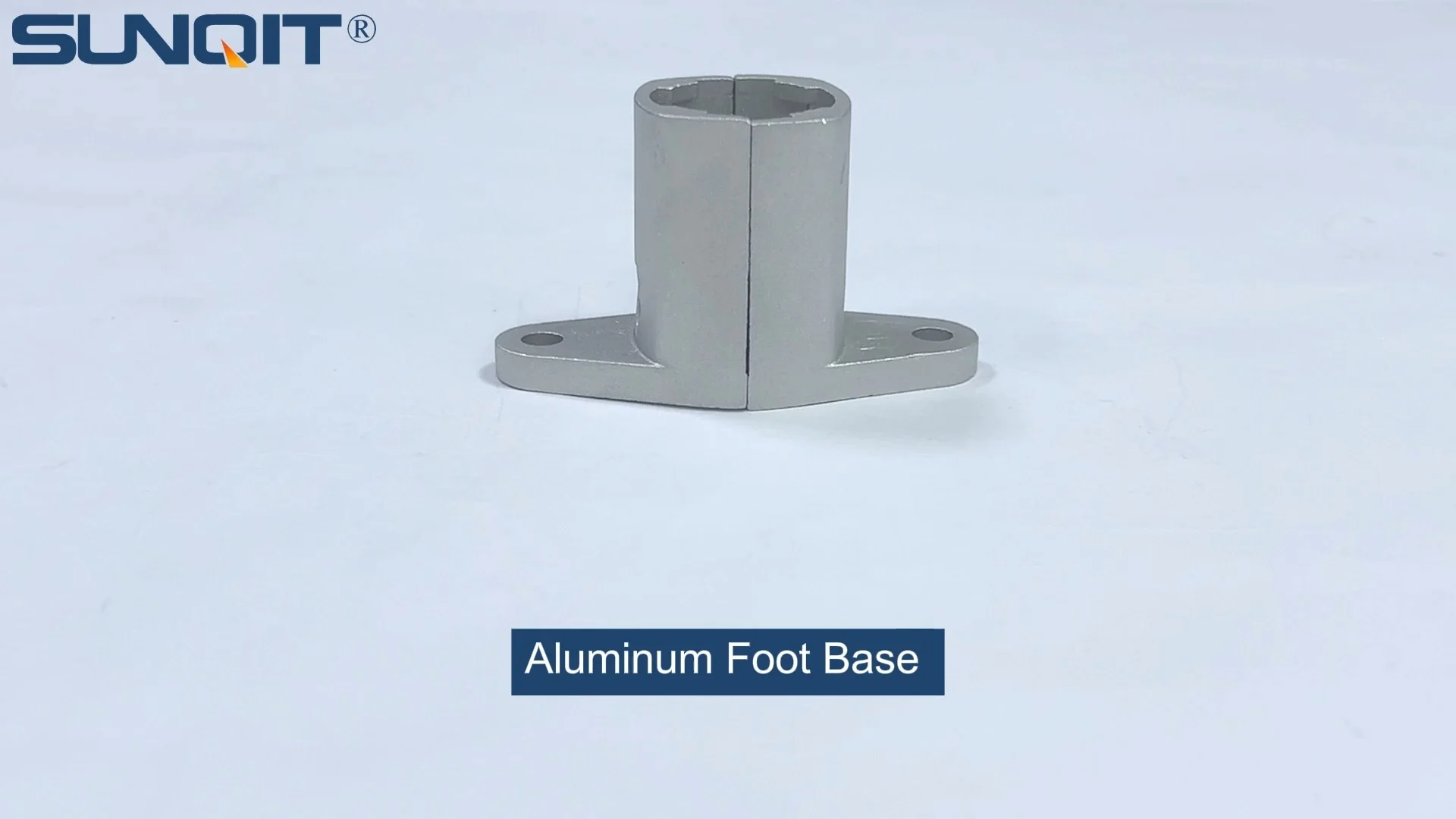
Aluminum Foot Base
Aluminum foot base to connect 28mm aluminum pipe and fixed it on the ground and prevent pipe fall and move.
Aerospace manufacturing is a world where "close enough" doesn't exist. Every nut, bolt, and bracket must meet standards so strict they're often measured in microns. But amid the focus on complex avionics and precision-engineered components, there's an unsung hero working behind the scenes: the aluminum foot base. These unassuming structures form the foundation of workbenches, material racks, and assembly stations, silently supporting the weight of aerospace innovation. In an industry where a single miscalculation can have catastrophic consequences, the demand for high-strength, reliable aluminum foot bases isn't just a preference—it's a necessity. Let's dive into why these components matter, the unique challenges they solve, and how custom solutions are reshaping aerospace production floors.
The Unique Demands of Aerospace Manufacturing: Why "Standard" Just Won't Cut It
Walk into any aerospace facility, and you'll immediately sense the pressure of perfection. Workers in cleanroom suits handle components worth millions, while automated systems hum with the precision of a Swiss watch. But what keeps this orchestration from collapsing? Stability. From the moment raw materials arrive to the final testing of a turbine blade, every step relies on structures that stay steady, even under extreme conditions. That's where aluminum foot bases come in—and why aerospace's demands are unlike any other industry.
First, there's the issue of load capacity. Aerospace components aren't light. A single aircraft wing panel can weigh hundreds of pounds, and assembling it requires workbenches that don't so much as flex under the strain. Then there's vibration. Precision machining centers and testing equipment generate constant movement; a wobbly base could throw off measurements by fractions of a millimeter, rendering a part useless. Corrosion is another concern. Aerospace facilities use harsh cleaning agents and coolants to maintain sterility, and exposure to these chemicals can degrade lesser materials over time. Add in ergonomic needs—workers spend hours at stations, so adjustability and height customization are critical—and it's clear: off-the-shelf foot bases simply aren't built for this environment.
Aluminum Foot Bases: The Unsung Heroes of Stability
So why aluminum? For starters, it's a material that balances strength and weight like no other. Steel might be stronger, but its heft makes it hard to reconfigure—something lean manufacturing principles (more on that later) frown upon. Aluminum, on the other hand, offers a tensile strength of up to 450 MPa (depending on the alloy) while remaining lightweight enough to move and adjust as production needs change. Its natural resistance to corrosion is another win; unlike steel, it doesn't rust, even when exposed to coolants or humidity. But perhaps most importantly, aluminum is infinitely customizable, thanks to a process called extrusion.
Aluminum extrusion profile is the secret sauce here. Imagine pushing a soft clay through a mold—extrusion works similarly, forcing heated aluminum through a die to create complex cross-sections. This means manufacturers can design foot bases with built-in features: T-slots for attaching accessories, hollow cores to reduce weight without sacrificing strength, or reinforced edges for extra stability. For aerospace, this level of customization is game-changing. Need a foot base with integrated cable management to keep workbenches clutter-free? Extrusion can do that. Want a design that locks into place to prevent shifting during assembly? Extrusion makes it possible. It's not just about making a "base"—it's about creating a foundation that adapts to the unique needs of each workstation.

High-Strength Requirements: What Makes Aerospace-Grade Aluminum Foot Bases Different
Strength in aerospace isn't measured in vague terms like "tough" or "sturdy"—it's quantified, tested, and certified. Let's break down the key metrics that set aerospace-grade aluminum foot bases apart from standard industrial versions.
Tensile Strength and Fatigue Resistance
Tensile strength—the maximum stress a material can withstand before breaking—is non-negotiable. Most standard aluminum foot bases use 6061-T6 alloy, which offers a tensile strength of around 310 MPa. But aerospace often demands more. Alloys like 7075-T6, with a tensile strength of 503 MPa, are common for critical applications. Why? Because aerospace components aren't just heavy—they're often subjected to repeated loading and unloading. A foot base that holds 500 pounds once might fail after 100 uses if it lacks fatigue resistance. Custom solutions address this by optimizing the extrusion design: thicker walls in high-stress areas, rounded corners to reduce stress concentration, and heat treatment processes that enhance durability over time.
Precision Tolerances
In aerospace, a 1mm error can be the difference between a part passing inspection and being scrapped. That's why aluminum foot bases must meet tight dimensional tolerances. Custom manufacturers use advanced extrusion dies and post-processing (like CNC machining) to ensure every base is identical, down to the millimeter. This consistency matters when building modular workstations; if one foot base is slightly shorter than the others, the entire assembly tilts, throwing off alignment for workers and machines alike.
Corrosion and Chemical Resistance
Aerospace facilities are harsh environments. Cleaning agents, hydraulic fluids, and even humidity can eat away at unprotected metal. Standard aluminum resists corrosion naturally, but aerospace takes it further. Custom foot bases often include anodized coatings—electrochemical treatments that thicken the metal's oxide layer, making it impervious to chemicals and wear. Some even add specialized finishes for cleanroom compatibility, ensuring no particles flake off into sensitive components.
| Feature | Standard Industrial Aluminum Foot Base | Aerospace-Grade Custom Aluminum Foot Base |
|---|---|---|
| Tensile Strength | ~310 MPa (6061-T6 alloy) | Up to 503 MPa (7075-T6 alloy) |
| Load Capacity | 200-300 kg per base | 500+ kg per base (custom designs) |
| Corrosion Resistance | Basic natural oxide layer | Anodized coating (up to 25µm thick) + chemical-resistant finishes |
| Tolerance Range | ±0.5mm | ±0.1mm (CNC-machined for critical dimensions) |
| Fatigue Life | 10,000-50,000 load cycles | 100,000+ load cycles (tested per aerospace standards) |

Custom Solutions: Tailoring Aluminum Foot Bases to the Production Floor
If there's one thing aerospace manufacturing hates, it's "one-size-fits-all." Every facility has unique workflows, specialized equipment, and legacy systems. A custom aluminum foot base doesn't just solve a problem—it integrates seamlessly into the existing ecosystem. Let's look at three real-world scenarios where customization made all the difference.
Case Study 1: Ergonomic Workbenches for Aircraft Interior Assembly
A leading aerospace interior manufacturer was struggling with worker fatigue. Their assembly line involved installing overhead bins into cabin frames, requiring workers to stand on elevated platforms for hours. The standard workbenches they used had fixed-height foot bases, leading to strained backs and slow production. The solution? Custom aluminum foot bases with adjustable height mechanisms. Using T-slot aluminum extrusion profile, engineers designed bases that could be raised or lowered by 15cm, allowing workers to set their ideal height. Integrated cable management channels kept power tools organized, while non-slip rubber pads prevented the benches from shifting on smooth factory floors. The result? A 20% reduction in reported fatigue and a 15% increase in assembly speed.
Case Study 2: Vibration-Dampening Bases for Precision Testing
A turbine manufacturer needed to test blade durability under extreme vibration. Their existing testing rig sat on steel bases, which amplified machine noise and caused the rig to "walk" across the floor over time. Custom aluminum foot bases solved this by incorporating vibration-dampening features: hollow cores filled with foam, rubber isolators between the base and the rig, and a wider footprint to distribute weight. The extrusion design included reinforced corners to handle the rig's 800kg load, while anodized coating protected against hydraulic fluid leaks. Post-installation, vibration levels dropped by 40%, and the rig stayed in place—even during 10-hour test cycles.
Case Study 3: Modular Material Racks for Just-In-Time Production
A satellite components supplier adopted lean manufacturing principles, aiming to reduce waste and improve workflow. Their old material storage used fixed steel racks, which took up valuable floor space and made it hard to adapt to changing production needs. Custom aluminum foot bases became the backbone of their new system. Using lightweight aluminum extrusion profile, the supplier built modular racks with adjustable shelves and casters (yes, even the casters were integrated into the foot base design). The bases featured T-slots for quick reconfiguration—adding a shelf, moving a rack, or adjusting height took minutes, not hours. By switching to these custom solutions, the supplier cut floor space usage by 30% and reduced material retrieval time by 25%.

The Role of Lean Systems: How Aluminum Foot Bases Support Efficiency
Lean manufacturing is all about eliminating waste—whether it's time, space, or resources. Aluminum foot bases play a quiet but critical role in making lean systems work. Their lightweight nature makes them easy to reposition, supporting the "flexible cell" concept where workstations adapt to production needs. Modular designs mean components can be repurposed instead of replaced, reducing costs and waste. And because aluminum is recyclable, even end-of-life foot bases contribute to sustainability goals—a key priority for modern aerospace companies.
Take the example of a lean system workstation designed for aircraft electronics assembly. The workbench itself is built on custom aluminum foot bases with adjustable height and integrated tool holders. When production shifts to a new component, the foot bases can be reconfigured with new accessories (like additional shelves or cable hooks) without replacing the entire bench. This adaptability is why lean managers often call aluminum foot bases the "Swiss Army knife" of the production floor—simple, versatile, and always ready to meet the next challenge.
Materials Matter: Why Aluminum Extrusion Profile Leads the Pack
We've touched on aluminum's benefits, but let's dig deeper into why extrusion profile is the material of choice for custom foot bases. Unlike steel, aluminum is lightweight—about one-third the density—making it easier to handle and install. This is a big deal in aerospace, where workers often need to move workstations or reconfigure layouts without heavy machinery. But lightness doesn't mean weakness; as we've seen, aerospace-grade alloys offer strength that rivals many steels.
Extrusion itself is a game-changer for customization. Unlike casting or machining, which are limited by mold complexity or material waste, extrusion lets designers create almost any cross-section. Need a foot base with a C-channel for mounting tools? Or a T-shape for added stability? Extrusion makes it possible—without the high costs of custom tooling for small batches. Post-extrusion processes like CNC machining and anodizing add even more flexibility, ensuring the final product meets aerospace's strictest standards.
Choosing the Right Partner: What to Look for in a Custom Aluminum Foot Base Supplier
Not all custom manufacturers are created equal. When it comes to aerospace, you need a partner who understands the industry's nuances—someone who speaks the language of AS9100 certifications, fatigue testing, and cleanroom compatibility. Here are key qualities to prioritize:
- Aerospace Experience: Look for suppliers with a track record in aerospace. They should be familiar with standards like ISO 9001 and AS9100, and able to provide documentation for material traceability (critical for audits).
- In-House Extrusion and Machining: Suppliers that control the entire process—from extrusion to finishing—offer better quality control and faster lead times. Avoid middlemen who outsource key steps.
- Engineering Support: Custom solutions require collaboration. A good supplier will assign an engineer to your project, helping design the foot base around your specific load, space, and tolerance needs.
- Testing Capabilities: Ask about material testing (tensile strength, corrosion resistance) and prototyping services. A supplier who can build a small batch for testing before full production reduces risk.
The Future of Aluminum Foot Bases: Innovations on the Horizon
As aerospace pushes the boundaries of technology—think electric aircraft, hypersonic travel, and reusable rockets—aluminum foot bases are evolving too. One exciting trend is the integration of smart features: sensors embedded in the base that monitor load, temperature, or vibration, sending real-time data to facility management systems. This "predictive maintenance" could alert teams to potential failures before they happen, reducing downtime.
Another area of growth is sustainable design. Aerospace companies are setting aggressive carbon-neutral goals, and suppliers are responding with recycled aluminum alloys and energy-efficient extrusion processes. Some are even exploring bio-based lubricants for extrusion dies, further reducing environmental impact.
Conclusion: The Foundation of Aerospace Innovation
Aluminum foot bases might not grab headlines like a new jet engine or a breakthrough in avionics, but they're the unsung heroes keeping aerospace manufacturing grounded—literally. From supporting million-dollar components to enabling lean, efficient workflows, these unassuming structures play a role in every aircraft that takes flight. As aerospace continues to demand higher strength, tighter tolerances, and greater flexibility, custom aluminum foot base solutions will remain at the forefront of innovation. They're not just parts—they're the foundation on which the future of flight is built.