- Company Articles
- Products and Technology
- Product knowledge
- Aluminum Foot Base Customization: Tailoring to Unique Workstation Layouts

Aluminum Foot Base Customization: Tailoring to Unique Workstation Layouts
Related Product
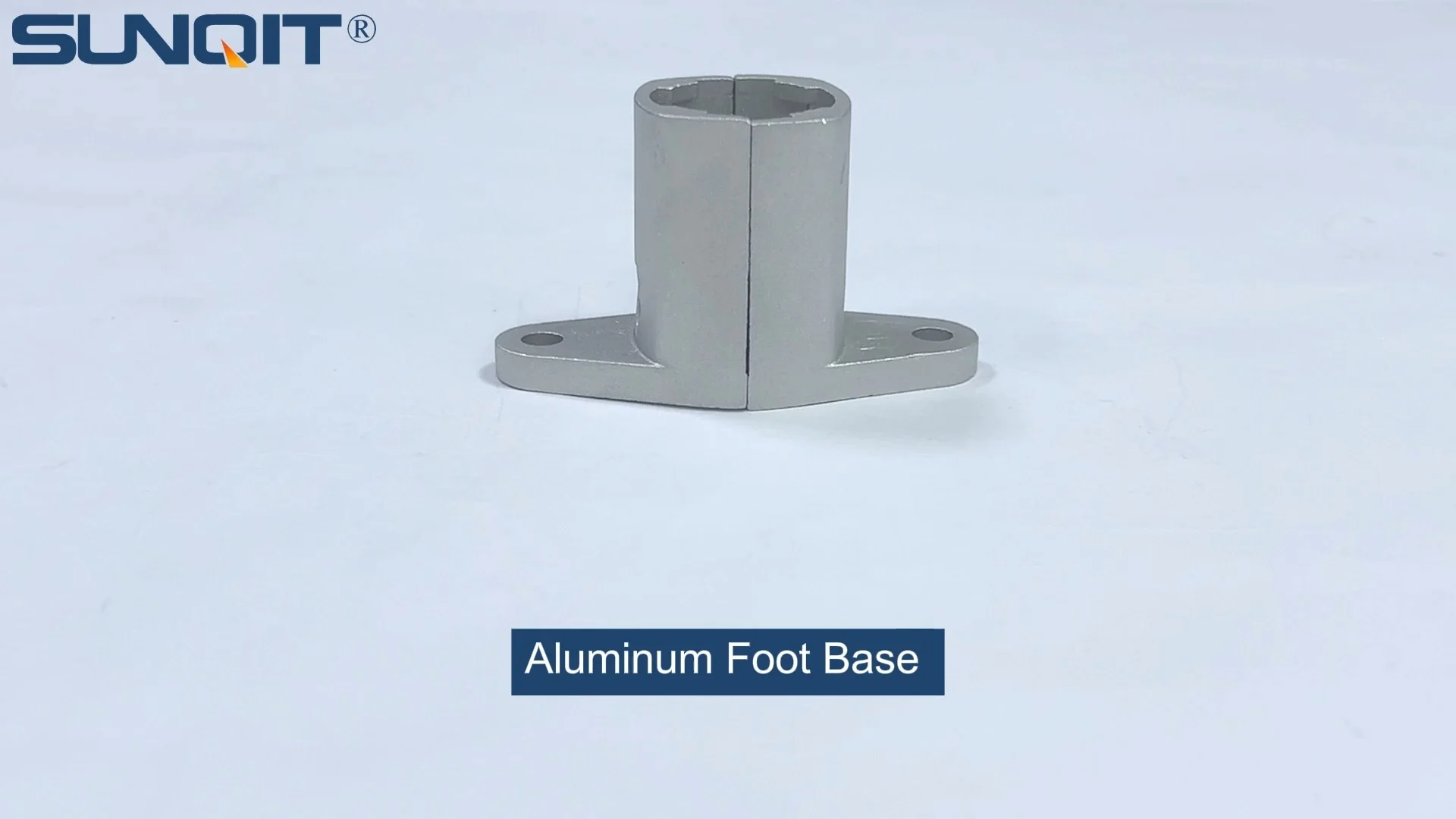
Aluminum Foot Base
Aluminum foot base to connect 28mm aluminum pipe and fixed it on the ground and prevent pipe fall and move.
Walk into any workspace—whether it's a bustling electronics assembly line, a quiet lab, or a busy warehouse—and you'll quickly notice one thing: no two are the same. Some have tight corners that demand space-saving solutions, others require work surfaces at specific heights to keep workers comfortable, and many need to adapt to ever-changing workflows. Yet for years, the default approach to workstation design has been "one-size-fits-all." Standard tables, fixed racks, and generic supports might get the job done, but they often leave gaps: wasted space, awkward movements, and systems that can't keep up when your needs shift. That's where aluminum foot base customization comes in. It's not just about building a better foundation for your workbench or flow rack—it's about crafting a workspace that bends to your layout, not the other way around.
What Is an Aluminum Foot Base, Anyway?
Let's start with the basics. An aluminum foot base is the unsung hero of any workstation. It's the structural foundation that supports everything from heavy-duty workbenches to lightweight flow racks, ensuring stability while quietly adapting to your space. Unlike clunky steel bases or flimsy plastic stands, aluminum foot bases bring together strength and flexibility. They're lightweight enough to move (when needed) but rigid enough to support hundreds of pounds of equipment or materials. Think of them as the "legs" of your workstation—only these legs can be adjusted, extended, or reconfigured to fit whatever floor plan, task, or load you throw at them.
But here's the key: not all foot bases are created equal. A standard off-the-shelf model might work for a simple desk, but when you're dealing with specialized setups—like an ESD workstation that needs to prevent static buildup, or a flow rack angled to feed materials directly to an assembly line—you need something tailored. Custom aluminum foot bases take the core benefits of aluminum (durability, corrosion resistance, light weight) and add a layer of personalization: adjustable heights, variable load capacities, specialized attachments, and designs that fit your exact space .
Why Customization Matters: The Problem with "One-Size" Workstations
Imagine trying to fit a square peg into a round hole—frustrating, right? That's what it feels like when you force a standard workstation into a unique layout. Let's break down the most common pain points:
- Space constraints: Maybe your facility has a narrow aisle that a standard flow rack can't squeeze into, or a low ceiling that limits how tall your material rack can be. A custom foot base can be shortened, angled, or even split to fit tight spaces without sacrificing stability.
- Ergonomics: Workers come in all heights, and tasks vary—soldering might require a lower bench, while packing could need a higher surface. Fixed-height foot bases force people into uncomfortable positions, leading to fatigue and even injuries. Custom bases let you dial in the perfect height for every task.
- Load variability: A lab workstation holding delicate equipment needs a stable, vibration-resistant base, while a warehouse rack storing heavy boxes requires a design that can handle dynamic weight shifts. Custom foot bases are engineered with your specific load in mind, using reinforced aluminum or specialized joints to prevent wobbling or collapse.
- Floor irregularities: Not every workspace has perfectly level floors. Concrete might be cracked, or tiles uneven. Standard bases rock or tip, but custom designs can include adjustable leveling feet or anti-slip pads to keep everything steady.
The bottom line? When your workstation's foundation is custom-built, every other component—from the workbench top to the flow rack above—works better. It's like building a house on a foundation that's been surveyed and tailored to the land, rather than dropping a prefab slab and hoping it fits.

Aluminum Lean Pipe: The Perfect Partner for Custom Foot Bases
You can't talk about aluminum foot base customization without mentioning aluminum lean pipe. If foot bases are the "legs" of your workstation, aluminum lean pipe is the "skeleton"—the modular framework that connects everything together. Aluminum lean pipe (sometimes called "aluminum profile" or "aluminum extrusion profile") is lightweight, strong, and incredibly versatile. It comes in various diameters and lengths, with slots (called T-slots) that let you attach accessories—shelves, bins, lights, even casters—without drilling or welding. When paired with a custom foot base, it becomes a dynamic system that can be reconfigured in minutes, not days.
Here's why they work so well together: Aluminum lean pipe is easy to cut, bend, and assemble, so your foot base can be designed to connect seamlessly with the pipe framework. For example, if you need a workbench that's 6 feet long but has a notch cut out for a conveyor, the foot base can be shaped to match that notch, and the aluminum lean pipe frame can be built around it. Or, if you want a flow rack that tilts 10 degrees to help materials slide forward, the foot base can be angled, and the aluminum lean pipe can be attached at that precise slope. The combination turns static workstations into flexible, adapt-on-the-fly systems that grow with your business.

Key Customization Features: Building a Foot Base That Fits You
So, what exactly can you customize with an aluminum foot base? The options are nearly endless, but here are the most impactful features:
Adjustable Height
One of the most requested customizations is height adjustability. Whether you need a workbench that can be raised from 30 inches to 42 inches (to accommodate standing or seated workers) or a flow rack that sits just 18 inches off the ground to feed materials to a low conveyor, adjustable foot bases make it possible. This is often achieved with telescoping aluminum tubes or threaded leveling feet that can be twisted up or down, giving you precise control over height—sometimes down to the millimeter.
Load Capacity Tuning
Not all workstations carry the same weight. A small ESD workstation might hold a laptop and some tools (50-100 lbs), while a material rack in a factory could support pallets of parts (500+ lbs). Custom foot bases are engineered with this in mind, using thicker aluminum walls, reinforced joints, or additional support brackets for heavier loads. For example, a "Workbench E (single deck-without caster)" might use a basic aluminum foot base, but a "Material Rack B (3 row and 3 floor)" would need a beefed-up design with cross-bracing to prevent sagging under the weight of multiple tiers of materials.
Shape and Size
Standard foot bases are usually rectangular or square, but your layout might demand something different. Maybe you need a U-shaped base to wrap around a machine, or a triangular design to fit into a corner. Custom foot bases can be cut and welded into any shape, with notches, curves, or extensions to match your space. For example, if you have a conveyor running along one wall, a foot base with a cutout can slide around the conveyor, keeping your workbench tight to the line without blocking access.
Specialized Attachments
Custom foot bases aren't just about the base itself—they're about how they connect to the rest of your workstation. Need to add casters for mobility? The foot base can include mounting plates designed to fit your caster wheels (like "caster installation base" or "caster fixed plate"). Want to prevent slipping on smooth floors? Add suction cup anti-slip foot adjusters or rubber leveling feet (like "M10*56 rubber leveling feet"). For ESD workstations, you might even integrate grounding points into the foot base to dissipate static electricity safely.
Environmental Adaptations
Workspaces can be harsh environments. A warehouse with concrete floors might need foot bases with shock-absorbing pads to reduce noise, while a food processing plant might require stainless steel components (from the "stainless steel pipe series") to resist corrosion from water or chemicals. Custom foot bases can be powder-coated, anodized, or made with specialized materials to stand up to whatever your facility throws at them.

Real-World Applications: Custom Foot Bases in Action
To understand the impact of custom aluminum foot bases, let's look at a few real-world scenarios. These aren't hypothetical—they're examples of how businesses transformed their workflows by ditching standard bases for tailored solutions.
Case Study 1: Electronics Assembly Line
A mid-sized electronics manufacturer was struggling with their assembly line. Their workbenches were standard 36-inch height, but half their workers were under 5'5" and had to hunch over, while taller workers strained their backs. Additionally, their material racks were fixed against the wall, forcing workers to walk 10 feet each time they needed a part—wasting 2-3 hours a day in total. They turned to a lean system supplier for help.
The solution? Custom aluminum foot bases for both workbenches and flow racks. The workbench bases were designed with adjustable height legs (telescoping aluminum tubes) that let each worker set their bench to their ideal height (between 32" and 40"). The flow racks, meanwhile, got angled foot bases that tilted the racks 7 degrees toward the assembly line, so parts slid forward as they were used—eliminating the need for workers to reach or walk. The result? A 15% increase in productivity and a 40% drop in worker complaints about discomfort.
Case Study 2: Lab Workstation for Chemical Testing
A research lab needed a workstation for handling volatile chemicals. The standard lab benches they'd used before had fixed steel bases that were hard to clean and prone to rust from chemical spills. Worse, the benches sat flat on the floor, making it impossible to clean underneath—creating a hygiene risk. They needed something durable, easy to sanitize, and elevated for cleaning.
The custom solution: An aluminum foot base made with "stainless steel pipe series" components for corrosion resistance, raised 6 inches off the floor with adjustable leveling feet (to account for the lab's slightly uneven tile floor). The base was also designed with rounded edges to prevent dust buildup and a powder-coated finish that repelled chemicals. Attached to an aluminum lean pipe frame with a chemical-resistant worktop, the new workstation was easy to wipe down, stood up to spills, and let janitors clean underneath—solving both hygiene and durability issues.
Case Study 3: Warehouse Flow Rack for Odd-Sized Parts
A warehouse storing auto parts had a problem: many of their parts were irregularly shaped (curved brackets, long hoses) that didn't fit in standard flow racks. Their existing racks had fixed shelves, so parts either hung over the edges (risking damage) or were stacked awkwardly (making them hard to find). They needed racks that could adapt to different part sizes.
The fix? Custom aluminum foot bases paired with adjustable aluminum lean pipe shelves. The foot bases were built with "parallel rotatory aluminum joint" attachments, allowing the shelves to pivot up or down to angle parts safely. For long hoses, some shelves were extended by adding extra aluminum pipe (from "basic aluminum tube") to the foot base, creating longer, narrow shelves. The result? A 30% reduction in damaged parts and a 25% faster picking time, as workers could now see and access parts without digging through stacks.
Standard vs. Custom: A Comparison
Still on the fence about custom aluminum foot bases? Let's put standard and custom options side by side to see the difference:
| Feature | Standard Foot Base | Custom Aluminum Foot Base | Key Benefit of Custom |
|---|---|---|---|
| Height | Fixed (usually 30-36 inches) | Adjustable (custom range based on needs) | Ergonomic comfort for all workers; fits under low ceilings or over obstacles |
| Load Capacity | One-size (often 200-300 lbs max) | Tailored to your needs (50 lbs to 1000+ lbs) | Safe support for heavy equipment or materials without overbuilding |
| Shape/Size | Rectangular or square; fixed dimensions | Custom shapes (U-shaped, triangular, notched) and sizes | Fits tight spaces, odd corners, or around existing equipment |
| Attachments | Limited (basic caster mounts, no specialized parts) | Custom mounts for casters, leveling feet, ESD grounding, etc. | Integrates seamlessly with your existing tools and systems |
| Durability | Basic (steel or plastic; prone to rust or cracking) | Engineered for your environment (aluminum, stainless steel, powder coating) | Longer lifespan, even in harsh conditions (moisture, chemicals, heavy use) |
| Adaptability | Static (can't be reconfigured) | Modular (can add/remove parts, adjust angles, or repurpose for new tasks) | Grows with your business; no need to replace when workflows change |
Choosing the Right Supplier: What to Look For
Custom aluminum foot bases are only as good as the supplier who builds them. To ensure you get a solution that truly fits your layout, look for a supplier with these key traits:
- Experience with lean systems: A good supplier understands "lean system" principles—efficiency, waste reduction, continuous improvement. They won't just sell you a foot base; they'll work with you to design a workstation that streamlines your workflow.
- Full range of components: Look for a supplier that offers not just foot bases, but also aluminum lean pipe, joints, casters, and accessories (like "roller track and accessories" or "aluminum profile accessories"). This ensures all parts work together seamlessly.
- Design support: Customization requires collaboration. A great supplier will send a team to your facility to measure your space, understand your workflow, and draft designs (with revisions!) before building. Avoid suppliers who just take an order over the phone.
- Quality materials: Aluminum foot bases should use high-grade aluminum (like "aluminum extrusion profile") that's strong but lightweight, with corrosion-resistant finishes. Ask about material certifications and test reports.
- Fast turnaround: Custom doesn't have to mean slow. Look for suppliers with in-house manufacturing capabilities to reduce lead times—ideally 2-4 weeks for most projects.
Remember, your supplier should be a partner, not just a vendor. They should take the time to learn your pain points and help you build a solution that solves them—now and in the future.
The Bottom Line: Invest in a Workspace That Works for You
Workstations are the backbone of any operation. They're where products are built, experiments are run, and orders are fulfilled. So why settle for a backbone that's rigid, ill-fitting, or outdated? Aluminum foot base customization isn't a luxury—it's an investment in efficiency, ergonomics, and adaptability. By tailoring your workstation's foundation to your unique layout, you're not just building a better bench or rack; you're building a workspace that can keep up with your pace, your team, and your goals.
Whether you're running a small workshop or a large manufacturing plant, the message is clear: one-size-fits-all workstations belong in the past. Custom aluminum foot bases, paired with aluminum lean pipe and the right accessories, let you design a space that's as unique as your business. So take the first step—reach out to a lean system supplier, talk about your layout, and start building a workstation that works for you.
After all, your workspace should adapt to you. Not the other way around.