- Company Articles
- Products and Technology
- Product knowledge
- Aluminum Foot Base Environmental Benefits: Recyclability & Energy Efficiency

Aluminum Foot Base Environmental Benefits: Recyclability & Energy Efficiency
Related Product
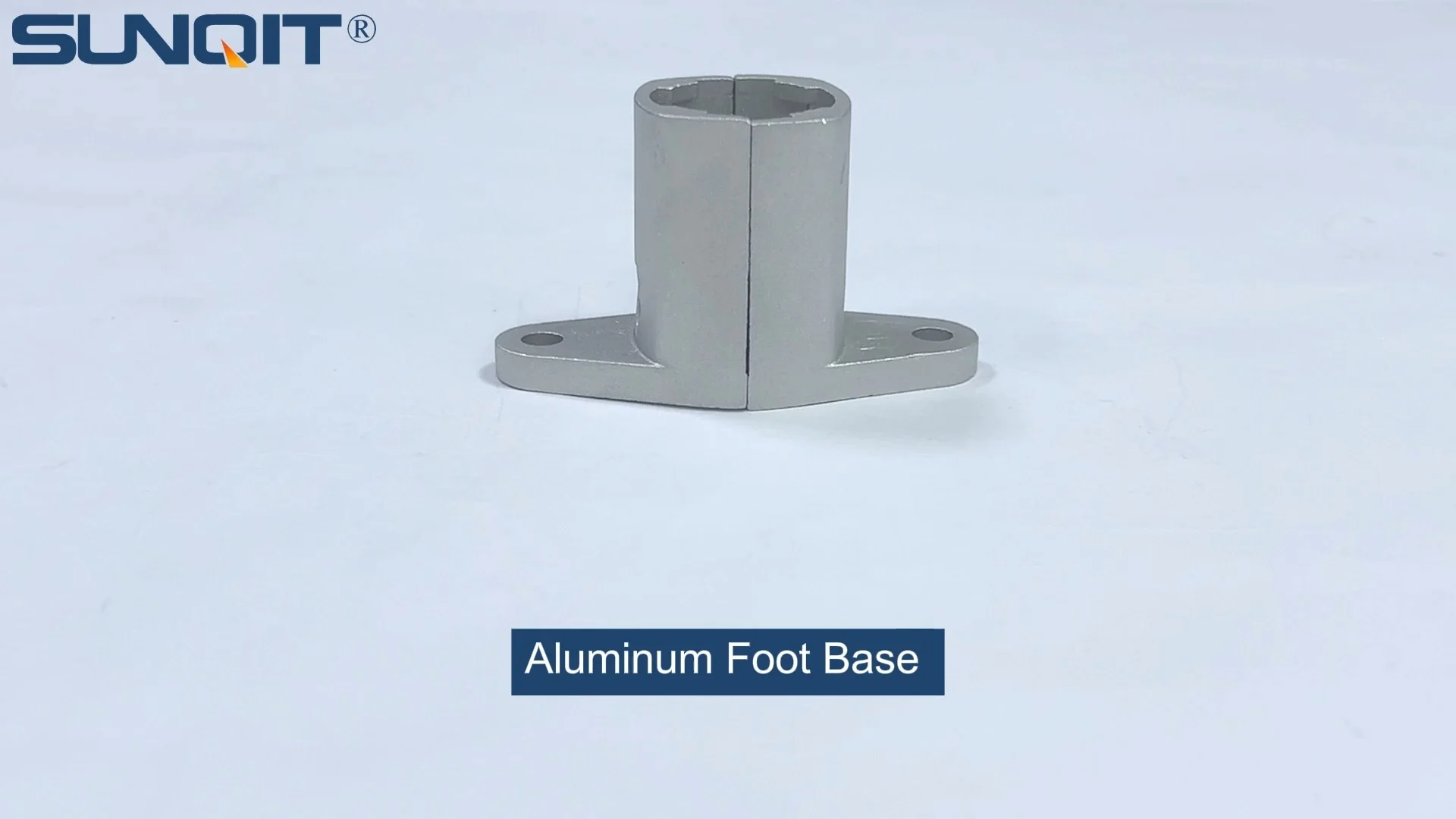
Aluminum Foot Base
Aluminum foot base to connect 28mm aluminum pipe and fixed it on the ground and prevent pipe fall and move.
Introduction: The Quiet Revolution of Sustainable Manufacturing
Walk into any modern factory, warehouse, or production facility today, and you'll notice a subtle but powerful shift: the tools, workbenches, and material handling systems that keep operations running are increasingly built with one eye on the planet. Sustainability isn't just a buzzword anymore—it's a critical consideration for businesses aiming to reduce their carbon footprint, cut costs, and meet the growing demand for eco-conscious practices. While much attention is paid to large-scale initiatives like renewable energy or electric vehicles, some of the most impactful changes are happening at the component level. Take, for example, the humble aluminum foot base. This unassuming part, often hidden beneath workbenches, conveyor systems, or material racks, plays a quiet but vital role in making manufacturing more sustainable. In this article, we'll explore how aluminum foot bases, paired with materials like aluminum profile and aluminum extrusion profile, are driving environmental progress through their exceptional recyclability and energy efficiency.
To understand why aluminum foot bases matter, let's start with the basics. These components are the "feet" that stabilize everything from lightweight assembly workbenches to heavy-duty production lines. Traditionally, they might have been made from steel, plastic, or even cast iron—materials that come with significant environmental trade-offs. Steel is durable but energy-intensive to produce and recycle. Plastic is cheap but rarely biodegradable, often ending up in landfills or oceans. Cast iron is heavy, requiring more energy to transport and prone to corrosion, which shortens its lifespan. Aluminum, by contrast, offers a unique combination of strength, lightness, and sustainability that's hard to match. When shaped into foot bases, aluminum extrusion profile, or even aluminum lean pipe systems, it becomes a cornerstone of green manufacturing.
What Exactly Is an Aluminum Foot Base?
Before diving into the environmental benefits, let's clarify what an aluminum foot base is and why it's such a staple in modern facilities. At its core, an aluminum foot base is a support component designed to anchor equipment to the ground, distribute weight evenly, and prevent tipping or sliding. It's typically made from aluminum extrusion profile—a process where aluminum is pushed through a die to create uniform, custom shapes. This manufacturing method allows for precise designs that balance strength and weight, making aluminum foot bases ideal for everything from small workbenches to large conveyor systems.
Aluminum foot bases often work hand-in-hand with other aluminum components, such as aluminum lean pipe (used in modular workstations) or aluminum profile accessories like brackets and connectors. Together, these parts form flexible, adaptable systems that can be reconfigured as production needs change—another sustainability win, as reusability reduces the need for new materials. For example, a factory might start with a basic aluminum foot base supporting a single-deck workbench, then later expand by adding more foot bases and aluminum lean pipe to create a multi-station assembly line. This flexibility not only cuts costs but also minimizes waste, as components can be repurposed instead of replaced.

Aluminum: The Eco-Friendly Metal We've Been Waiting For
Aluminum has long been celebrated for its versatility, but its environmental credentials are what make it a standout choice for components like foot bases. Let's break down why aluminum is often called the "green metal":
1. Abundance and Durability
Aluminum is the most abundant metal in the Earth's crust, making up about 8% of its composition. Unlike rare materials that require destructive mining practices, aluminum can be sourced responsibly with minimal environmental disruption. What's more, it's incredibly durable. An aluminum foot base, when properly maintained, can last 20 years or more in a industrial setting—far longer than plastic (5-10 years) or even some steel components (15-20 years). This longevity means fewer replacements, less waste, and lower demand for raw materials over time.
2. Lightweight Nature
Aluminum is about one-third the weight of steel. For manufacturers, this translates to significant energy savings in transportation and installation. A truckload of aluminum foot bases or aluminum lean pipe systems weighs far less than a truckload of steel equivalents, reducing fuel consumption and emissions during shipping. On the factory floor, lighter components are easier to move and reconfigure, cutting down on the energy needed for equipment adjustments. Imagine rearranging a production line: aluminum foot bases can be lifted by hand or with a small trolley, while steel bases might require forklifts or cranes—each adding to the facility's carbon footprint.

Recyclability: Aluminum's Superpower
If there's one environmental benefit that sets aluminum apart, it's its recyclability. Aluminum is 100% recyclable, and it can be recycled infinitely without losing quality. That means an aluminum foot base that's been in use for 20 years can be melted down, reshaped, and turned into a new foot base (or any other aluminum product) with the same strength and durability as the original. This is a game-changer in a world struggling with waste management.
The Aluminum Recycling Process: From Foot Base to Foot Base (and Beyond)
Let's walk through the lifecycle of an aluminum foot base to see how recycling works. First, the foot base is manufactured from aluminum extrusion profile, using recycled aluminum where possible. It then spends decades supporting a workbench in a factory. When the workbench is eventually retired or reconfigured, the foot base is removed, cleaned, and sent to a recycling facility. There, it's shredded into small pieces, melted in a furnace (at around 660°C, much lower than the 2,000°C needed to produce steel), and purified to remove any impurities. The molten aluminum is then cast into ingots, which are rolled or extruded into new aluminum profile or aluminum lean pipe. Finally, the new material is shaped into a fresh aluminum foot base, ready to start the cycle again.
Compare this to plastic foot bases, which are often "downcycled"—turned into lower-quality products like park benches or plastic lumber—before eventually ending up in landfills. Steel can be recycled, but the process requires more energy and often results in a material with slightly reduced strength, limiting its reuse in high-stress applications like foot bases. Aluminum's ability to retain its properties through endless recycling loops makes it a cornerstone of the circular economy, where waste is minimized, and resources are kept in use for as long as possible.

Energy Efficiency: Aluminum's Hidden Environmental Win
While recyclability gets a lot of attention, aluminum's energy efficiency is equally impressive—especially when it comes to recycled aluminum. Producing aluminum from raw bauxite ore is energy-intensive, but recycling aluminum uses just 5% of the energy required to make new aluminum from scratch. Let that sink in: for every ton of aluminum recycled, we save 95% of the energy that would have been used to mine, refine, and process bauxite. That's not just good for the planet; it's good for business too, as lower energy use translates to lower production costs.
Aluminum Extrusion Profile: Efficiency in Manufacturing
The process of creating aluminum extrusion profile—used to make aluminum foot bases—is also surprisingly energy-efficient. Extrusion involves heating aluminum billets to a malleable state (around 400-500°C) and forcing them through a die to create the desired shape. Compared to casting or forging, extrusion produces minimal waste, as the only scrap is from trimming the ends of the profiles. This "near-net-shape" manufacturing means less material is wasted, and less energy is needed to refine excess scrap. For example, a typical extrusion process has a material utilization rate of 95% or higher, compared to 70-80% for casting. When combined with recycled aluminum, the energy savings multiply, making aluminum foot bases one of the most energy-efficient components in modern manufacturing.
Aluminum Lean Pipe: Lightweight, Energy-Saving Systems
Aluminum lean pipe systems, often paired with aluminum foot bases, further enhance energy efficiency. Lean manufacturing principles focus on reducing waste, and aluminum lean pipe aligns perfectly with this goal. These pipes are lightweight, easy to assemble, and require no welding—cutting down on installation time and energy use. Because they're modular, they can be adjusted on the fly to accommodate new products or production methods, eliminating the need to build entirely new systems. For instance, a electronics manufacturer using aluminum lean pipe and aluminum foot bases to build smartphone assembly lines can quickly reconfigure the setup when a new model is released, saving the energy that would have been used to fabricate and transport new steel or plastic components.
Aluminum vs. Other Materials: A Sustainability Showdown
To truly appreciate the environmental benefits of aluminum foot bases, let's compare them to common alternatives: steel, plastic, and cast iron. The table below breaks down key metrics like recyclability, energy use, carbon footprint, and durability.
| Material | Recyclability Rate (%) | Energy Required for Production (MJ/kg) | Carbon Footprint (kg CO2/kg) | Typical Lifespan (Years) |
|---|---|---|---|---|
| Aluminum (Recycled) | 95 | 2.5 | 0.2 | 20+ |
| Steel | 85 | 15 | 1.8 | 15-20 |
| Plastic (PVC) | 9 | 60 | 3.0 | 5-10 |
| Cast Iron | 60 | 20 | 2.5 | 10-15 |
The numbers speak for themselves. Recycled aluminum has a recyclability rate of 95%, compared to just 9% for PVC plastic. It uses 6 times less energy than steel and 24 times less than plastic to produce. Its carbon footprint is a fraction of the competition, and it lasts longer, reducing the need for frequent replacements. For manufacturers looking to reduce their environmental impact, aluminum foot bases and aluminum extrusion profile are clearly the smarter choice.
Real-World Impact: How Aluminum Foot Bases Are Changing Industries
To see these benefits in action, let's look at a hypothetical but realistic case study. Imagine a mid-sized automotive parts manufacturer that decides to replace its steel workbench bases with aluminum foot bases and aluminum lean pipe systems. Here's how the switch plays out:
Case Study: Green Manufacturing in Action
Before the Switch: The factory uses steel workbenches with cast iron foot bases. Each workbench weighs 200 kg, making them difficult to move. Shipping the steel bases from the supplier emits 500 kg of CO2 per truckload. The steel bases corrode over time, requiring replacement every 10 years. When replaced, the old steel is recycled, but the process uses significant energy, and the new steel has a carbon footprint of 1.8 kg CO2 per kg.
After the Switch: The factory switches to aluminum foot bases and aluminum lean pipe. Each workbench now weighs 70 kg (a 65% reduction). Shipping the aluminum bases emits just 175 kg of CO2 per truckload (a 65% reduction). The aluminum foot bases are corrosion-resistant, lasting 25 years instead of 10. When eventually recycled, the aluminum uses 95% less energy than producing new steel, and the recycled aluminum has a carbon footprint of 0.2 kg CO2 per kg.
Over 25 years, the factory saves 75% on replacement costs, reduces transportation emissions by 65%, and cuts its carbon footprint from workbench bases by over 80%. These are tangible, measurable benefits that boost both sustainability and the bottom line. Multiply this across hundreds or thousands of factories worldwide, and the impact becomes enormous.
Beyond the Factory: Aluminum's Ripple Effects on the Planet
The environmental benefits of aluminum foot bases extend beyond the factory walls. Their lightweight nature reduces transportation emissions not just for the bases themselves, but for the products manufactured on the systems they support. For example, a lighter assembly line is easier to reposition, reducing the need for heavy machinery and the energy it consumes. Aluminum's corrosion resistance means less maintenance, which translates to fewer chemicals (like paints or rust inhibitors) being used and disposed of. Even the modularity of aluminum lean pipe and aluminum profile systems reduces construction waste, as components are pre-cut and assembled with minimal on-site trimming.
Perhaps most importantly, aluminum foot bases help drive demand for recycled aluminum, creating a market for scrap aluminum and encouraging more recycling overall. As more manufacturers adopt aluminum components, the recycling infrastructure improves, making it easier and more cost-effective to recycle aluminum. This creates a positive feedback loop: more recycling leads to lower costs, which leads to more adoption, which leads to more recycling.
The Future of Aluminum: Innovations in Sustainability
The future looks bright for aluminum and its role in sustainable manufacturing. Innovations in recycling technology are making it even easier to recover and reuse aluminum from complex components like aluminum foot bases. For example, new sorting technologies can separate aluminum from other materials in mixed scrap, increasing recycling rates. Advances in extrusion dies are allowing for even more efficient aluminum extrusion profile designs, reducing material use without sacrificing strength.
Researchers are also exploring new aluminum alloys that are even more lightweight and durable, further extending the lifespan of components like aluminum foot bases. Some alloys are being designed to be easier to recycle, with fewer trace elements that can complicate the purification process. As these innovations mature, aluminum will become an even more sustainable choice for manufacturers.
Conclusion: Small Components, Big Change
Aluminum foot bases might not be the most glamorous part of a factory, but they're a powerful example of how small, intentional choices can drive significant environmental change. By prioritizing recyclability and energy efficiency, aluminum foot bases, aluminum extrusion profile, and aluminum lean pipe systems are helping manufacturers reduce their carbon footprints, cut costs, and build more sustainable operations.
As consumers and regulators demand greener practices, the shift to aluminum components is only accelerating. Whether you're a factory manager looking to upgrade your workbenches or a business owner exploring sustainable supply chain options, consider the impact of the materials you choose. An aluminum foot base isn't just a support for your equipment—it's a support for a healthier planet.
In the end, sustainability isn't about grand gestures alone; it's about the sum of small, responsible choices. And in that sum, aluminum foot bases are proving to be a vital, eco-friendly addition.