- Company Articles
- Products and Technology
- Product knowledge
- Aluminum Foot Base for Conveyors: Alignment & Vibration Reduction

Aluminum Foot Base for Conveyors: Alignment & Vibration Reduction
Related Product
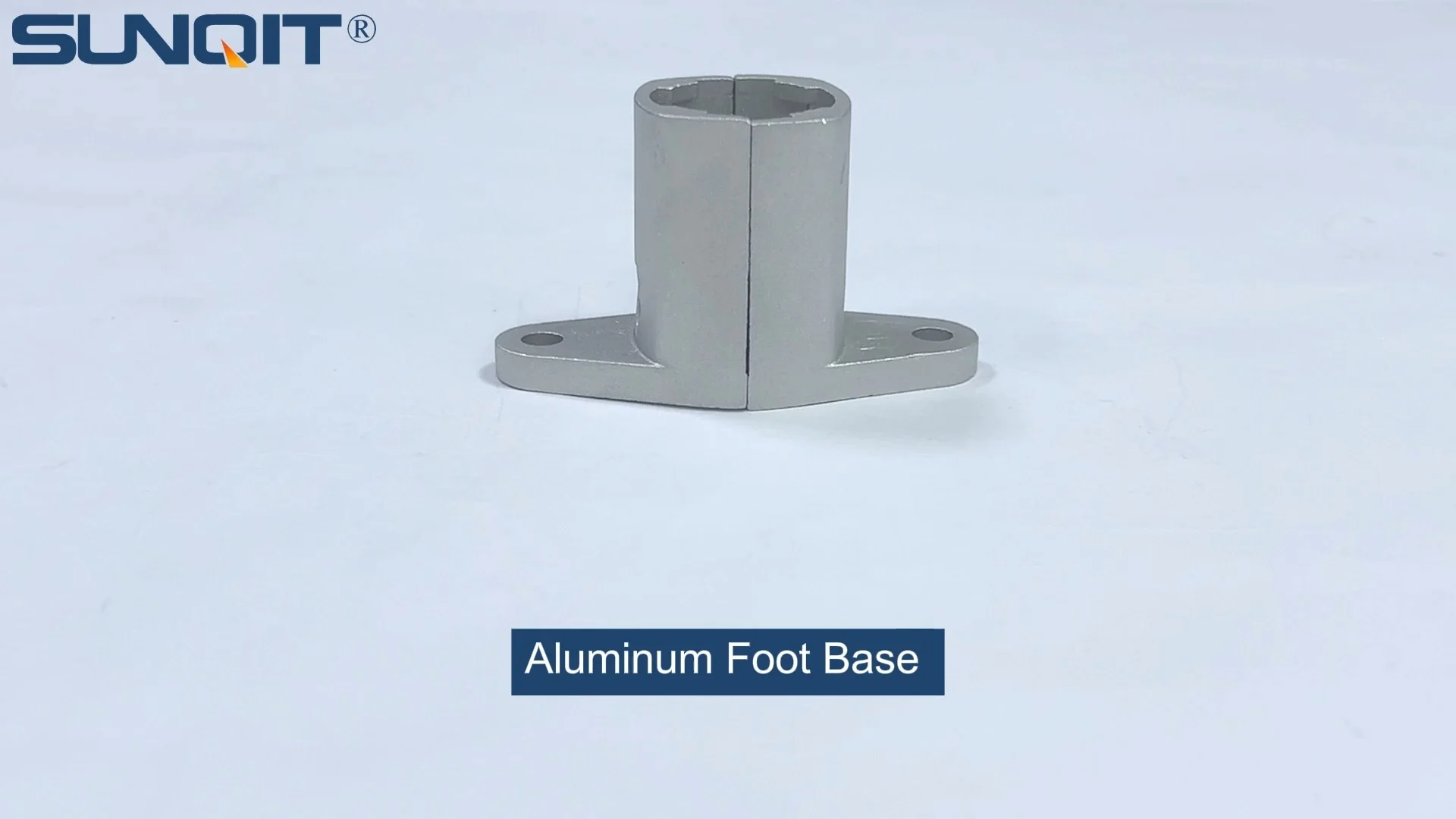
Aluminum Foot Base
Aluminum foot base to connect 28mm aluminum pipe and fixed it on the ground and prevent pipe fall and move.
Walk into any busy manufacturing facility, and your eyes will likely be drawn to the hum of conveyor belts, the precision of robotic arms, or the organized chaos of assembly lines. These are the stars of the show—visible, dynamic, and undeniably critical to keeping production moving. But behind every smooth-running conveyor system, there's an unsung hero working quietly beneath the surface: the aluminum foot base. Often overlooked, this unassuming component plays a pivotal role in two make-or-break aspects of conveyor performance: alignment and vibration control. In this article, we'll pull back the curtain on aluminum foot bases, exploring why they matter, how they work, and why they're becoming the go-to choice for forward-thinking manufacturers.
Imagine a conveyor system as a marathon runner. The belt or roller track is the legs, propelling the operation forward. The motor is the heart, providing power. But the foot base? That's the runner's shoes—providing stability, absorbing impact, and ensuring every step lands exactly where it should. Without the right support, even the most advanced conveyor can stumble, leading to downtime, wasted materials, and frustrated teams. So let's start by understanding why alignment and vibration aren't just "nice-to-haves"—they're essential for any operation that values efficiency, safety, and longevity.
Why Alignment Matters: The Hidden Cost of Misaligned Conveyors
Let's start with alignment. When a conveyor is out of alignment, it's like driving a car with a bent axle—you might not notice the problem immediately, but over time, the damage adds up. Misalignment can take many forms: a conveyor belt that drifts to one side, roller tracks that tilt, or a system that sits unevenly on the factory floor. At first glance, these issues might seem minor. A belt that needs occasional readjustment? A roller that makes a little noise? But the truth is, misalignment is a silent budget-drainer with far-reaching consequences.
First, there's the wear and tear. A misaligned conveyor belt rubs against its frame, fraying edges and weakening the material. Roller tracks that aren't level put uneven pressure on bearings, causing them to seize up or fail prematurely. Over time, these small issues become big expenses: replacing belts every few months instead of years, swapping out roller tracks or bearings ahead of schedule, and paying for emergency repairs when a component finally gives way. For a high-volume production line, even an hour of downtime can cost thousands of dollars in lost output—money that could have been saved with proper alignment.
Then there's product damage. Imagine delicate electronics or precision parts moving along a tilted roller track. A slight dip or tilt can cause items to shift, collide, or fall off entirely. In industries like automotive or aerospace, where parts can cost hundreds or even thousands of dollars, a single damaged component is a costly mistake. Even in less critical sectors, like packaging, misalignment can lead to jams, crushed boxes, or uneven labeling—all of which require rework and waste materials.
Safety is another major concern. A conveyor that's out of alignment is more likely to jam, creating pinch points or sudden stops that put workers at risk. Frayed belts can snap, and seized rollers can overheat, increasing the chance of fires. In the worst cases, misalignment can cause the entire system to shift or tip, leading to serious injuries. OSHA reports that conveyor-related accidents account for a significant number of workplace injuries each year, and many of these could be prevented with proper maintenance—starting with alignment.
Finally, there's energy inefficiency. A misaligned conveyor has to work harder to move products. A belt that's rubbing against the frame creates friction, forcing the motor to use more power. Roller tracks that aren't level mean products don't glide smoothly—they drag, requiring extra force to keep them moving. Over time, this adds up to higher electricity bills, making your operation less sustainable and less profitable. So why does misalignment happen in the first place? More often than not, it's due to the foundation: the surface the conveyor sits on and the components that support it.
Factory floors are rarely perfectly level. Over time, concrete can settle, cracks can form, or heavy machinery can create indentations. Even minor unevenness—an inch or less over several feet—can throw a long conveyor system out of alignment. Add to that the constant vibration from nearby equipment, the weight of heavy loads, and the natural shifting that occurs as metal components expand and contract with temperature changes, and it's easy to see why maintaining alignment is an ongoing challenge. This is where the aluminum foot base steps in: as the bridge between the conveyor and the floor, it's designed to compensate for these imperfections and keep the system stable.
Aluminum Foot Bases: Engineering for Precision Alignment
So what makes aluminum foot bases so effective at maintaining alignment? Let's start with the material itself. Aluminum is a dream for engineers: it's lightweight (about a third the weight of steel), yet surprisingly strong. This combination means aluminum foot bases are easy to install and reposition—no need for heavy lifting equipment—while still providing the stability to support even large conveyor systems. Unlike steel, aluminum is naturally resistant to corrosion, which is a game-changer in environments with moisture, chemicals, or frequent cleaning (think food processing plants or pharmaceutical facilities). And because it doesn't rust, aluminum foot bases maintain their structural integrity for years, even in harsh conditions.
But the real magic is in the design—specifically, the integration of adjustable leveling feet. These small but mighty components are the secret to fine-tuning conveyor alignment. Adjustable leveling feet typically consist of a threaded rod attached to a base plate, with a nut that allows you to raise or lower the foot by turning it. When paired with an aluminum foot base, these feet let you compensate for uneven floors with precision. Imagine a conveyor that spans 50 feet across a factory floor with a half-inch dip in the middle. By adjusting the leveling feet under that section, you can raise the base just enough to keep the conveyor perfectly level—no more sagging, no more misaligned belts or rollers.
Aluminum foot bases are also engineered to work seamlessly with different conveyor types. Whether you're using a roller track for heavy pallets, a belt conveyor for small parts, or a chain conveyor for automotive components, aluminum foot bases can be customized to fit. For example, roller track conveyors often require a low-profile base to keep the rollers close to the floor, while belt conveyors might need a taller base to accommodate the motor and drive system. Aluminum's malleability and the availability of aluminum pipe accessories (like brackets and connectors) make it easy to design a foot base that fits your specific conveyor's dimensions and weight requirements.
Another key advantage is rigidity. While aluminum is lightweight, it's also stiff—meaning it doesn't bend or flex under load. This is critical for alignment because a flexible base would shift over time, undoing your careful adjustments. Aluminum foot bases maintain their shape, even when supporting heavy loads, ensuring that once you set the alignment, it stays set. Compare that to plastic foot bases, which can warp under heat or heavy weight, or wooden bases, which absorb moisture and swell—both of which throw alignment off kilter.
Let's not forget about compatibility with other system components. Many manufacturers use aluminum profile or aluminum pipe to build workbenches, material racks, and conveyor frames. Aluminum foot bases are designed to connect with these components using standard aluminum profile accessories, creating a unified, modular system. This modularity makes it easy to expand or reconfigure your conveyor line as your needs change. Need to add a new section to your roller track conveyor? Simply attach a new aluminum foot base with compatible connectors, adjust the leveling feet, and you're ready to go—no need for custom fabrication or expensive modifications.

Vibration: The Silent Productivity Killer in Conveyor Operations
Now let's turn to vibration. If misalignment is a slow burn, vibration is a constant irritation that wears down both equipment and people. Every conveyor system vibrates—it's unavoidable. Motors hum, belts slap against rollers, products rattle as they move. But excessive vibration isn't just noisy; it's destructive. Over time, vibration loosens bolts, cracks welds, and fatigues metal components. It can even damage the products being transported, especially delicate items like circuit boards or glassware. And let's not forget the human cost: workers subjected to constant vibration and noise are more likely to experience fatigue, stress, and even long-term hearing damage.
So where does vibration come from? There are three main sources. First, the motor: even well-balanced motors create some vibration as their internal parts spin. Second, product movement: unevenly distributed loads, or products that bounce as they hit rollers, can send shockwaves through the system. Third, the floor: if the floor itself vibrates (from nearby machinery, for example), that energy transfers up into the conveyor base. Left unchecked, these vibrations compound, creating a feedback loop that gets worse over time.
This is where aluminum foot bases shine as vibration dampeners. Aluminum has natural damping properties, meaning it absorbs and dissipates vibration energy rather than transmitting it. Think of it like a shock absorber in a car: instead of letting every bump in the road jolt the passengers, the shock absorber smooths out the ride. Aluminum foot bases do the same for conveyors, reducing the amount of vibration that reaches the frame, rollers, and other components. Some aluminum foot bases even take this a step further by incorporating rubber pads or inserts in the adjustable leveling feet. These pads act as extra buffers, absorbing high-frequency vibrations that aluminum alone might not catch.
In precision manufacturing environments—like those using ESD workstations for electronics—vibration control is critical. Even tiny vibrations can disrupt delicate processes, like soldering microchips or assembling medical devices. Aluminum foot bases with vibration-dampening features help create a stable platform for these workstations, ensuring that sensitive operations aren't thrown off by conveyor-induced vibrations. It's a small detail, but one that can mean the difference between a flawless product and a costly defect.

Comparing Foot Base Materials: Why Aluminum Stands Out
To truly appreciate aluminum foot bases, it helps to compare them to the alternatives: steel, plastic, and wood. Each has its pros and cons, but for most conveyor applications, aluminum comes out on top. Let's break it down in the table below:
| Feature | Aluminum Foot Bases | Steel Foot Bases | Plastic Foot Bases |
|---|---|---|---|
| Weight | Lightweight (easy to install/transport) | Heavy (requires equipment for handling) | Lightweight, but less rigid |
| Corrosion Resistance | Excellent (no rust) | Poor (requires painting/coating) | Good, but can degrade in UV light |
| Vibration Dampening | Excellent (natural damping + optional rubber inserts) | Poor (transmits vibration) | Good, but less rigid under load |
| Adjustability | High (compatible with adjustable leveling feet; aluminum pipe accessories for customization) | Moderate (heavier, harder to reposition) | Low (limited customization options) |
| Cost | Higher upfront, but lower long-term (less maintenance/replacement) | Lower upfront, but higher long-term (rust, maintenance) | Lowest upfront, but shortest lifespan (wears, warps) |
As the table shows, aluminum strikes the perfect balance between performance, durability, and cost. Steel might be cheaper initially, but the ongoing costs of painting, rust removal, and replacement add up. Plastic is lightweight and cheap, but it can't handle heavy loads or high temperatures, making it unsuitable for industrial use. Aluminum, on the other hand, offers a long-term solution that pays for itself through reduced downtime, lower maintenance, and longer conveyor life.

Real-World Impact: How Aluminum Foot Bases Transform Operations
Let's look at some real-world examples of how aluminum foot bases have made a difference. Take a mid-sized automotive parts manufacturer in Michigan. They were struggling with a 100-foot roller track conveyor that kept misaligning, causing metal parts to jam and scratch. The conveyor sat on a steel frame with fixed feet, and the factory floor had settled over time, creating a slight slope. Every month, maintenance crews spent hours realigning the conveyor, and they were replacing roller tracks every six months due to uneven wear. After switching to aluminum foot bases with adjustable leveling feet, they were able to level the conveyor perfectly in a single day. Six months later, the roller tracks showed minimal wear, and jams dropped by 90%. The maintenance team now spends 10 minutes a month inspecting the system instead of hours adjusting it—a massive boost in productivity.
Another example comes from a medical device manufacturer in California that uses ESD workstations to assemble sensitive electronics. Their conveyor system, which transported circuit boards between workstations, was generating so much vibration that it was disrupting the soldering process, leading to a 5% defect rate. By upgrading to aluminum foot bases with rubber-dampened adjustable leveling feet, they reduced vibration by 70%. The defect rate plummeted to 0.5%, saving the company tens of thousands of dollars in rework and scrap. Plus, the ESD workstations themselves, which were mounted on similar aluminum bases, became more stable, improving the precision of their assembly work.
In the food and beverage industry, a craft brewery in Colorado was dealing with corrosion issues on their steel conveyor foot bases. The brewery's cleaning process involved high-pressure hoses and sanitizing chemicals, which quickly rusted the steel feet, leading to instability and frequent replacements. Switching to aluminum foot bases eliminated the rust problem entirely. Three years later, the bases still look brand new, and the brewery has cut maintenance costs by 60% for that conveyor line.
Maintenance Tips: Keeping Your Aluminum Foot Bases (and Conveyors) in Top Shape
Like any component, aluminum foot bases require some care to keep them performing at their best. Here are a few simple maintenance tips to ensure your foot bases (and the conveyors they support) stay aligned and vibration-free:
- Inspect adjustable leveling feet regularly : Check for signs of wear on the threads, base plates, or rubber inserts. Tighten any loose nuts to prevent shifting. If the threads are damaged, replace the leveling feet promptly—they're inexpensive compared to the cost of a misaligned conveyor.
- Clean aluminum surfaces : Wipe down the foot bases with a damp cloth to remove dust, grease, or debris. In corrosive environments, use a mild detergent to remove chemical residues. Avoid abrasive cleaners, which can scratch the aluminum and compromise its corrosion resistance.
- Check alignment quarterly : Even with the best foot bases, floors can shift over time. Use a level to check the conveyor's alignment every few months, and adjust the leveling feet as needed. This quick check can prevent minor issues from becoming major problems.
- replace damaged components : If you notice cracks in the aluminum base, bent brackets, or worn connectors, replace them immediately. Aluminum is strong, but it can still be damaged by heavy impacts (like a forklift collision). A small crack can weaken the entire base, leading to instability.
By following these tips, you'll extend the life of your aluminum foot bases and keep your conveyor system running smoothly for years to come.
Conclusion: The Foundation of Efficient Conveyor Systems
In the world of manufacturing, it's easy to focus on the flashy, high-tech components—the robots, the sensors, the advanced software. But as we've seen, the unsung heroes often have the biggest impact on efficiency, safety, and profitability. Aluminum foot bases are one of those heroes. By ensuring precise alignment and reducing vibration, they keep conveyor systems running smoothly, minimize downtime, and protect both equipment and products.
Whether you're running an automotive assembly line, a precision electronics workshop with ESD workstations, or a food processing plant, aluminum foot bases offer a winning combination of lightweight durability, corrosion resistance, and adjustability. They're a small investment that pays off in big ways: lower maintenance costs, fewer defects, longer equipment life, and a safer workplace.
So the next time you walk through your facility and hear the hum of a conveyor, take a moment to look down. Underneath that busy belt or roller track, you'll find the quiet foundation of your operation: aluminum foot bases, working tirelessly to keep everything aligned, stable, and moving forward. It's a reminder that in manufacturing, as in life, success often starts with a strong foundation.