- Company Articles
- Products and Technology
- Product knowledge
- Aluminum Foot Base for Flexible Production Lines: Compatibility Guide

Aluminum Foot Base for Flexible Production Lines: Compatibility Guide
Related Product
Aluminum Foot Base
Aluminum foot base to connect 28mm aluminum pipe and fixed it on the ground and prevent pipe fall and move.
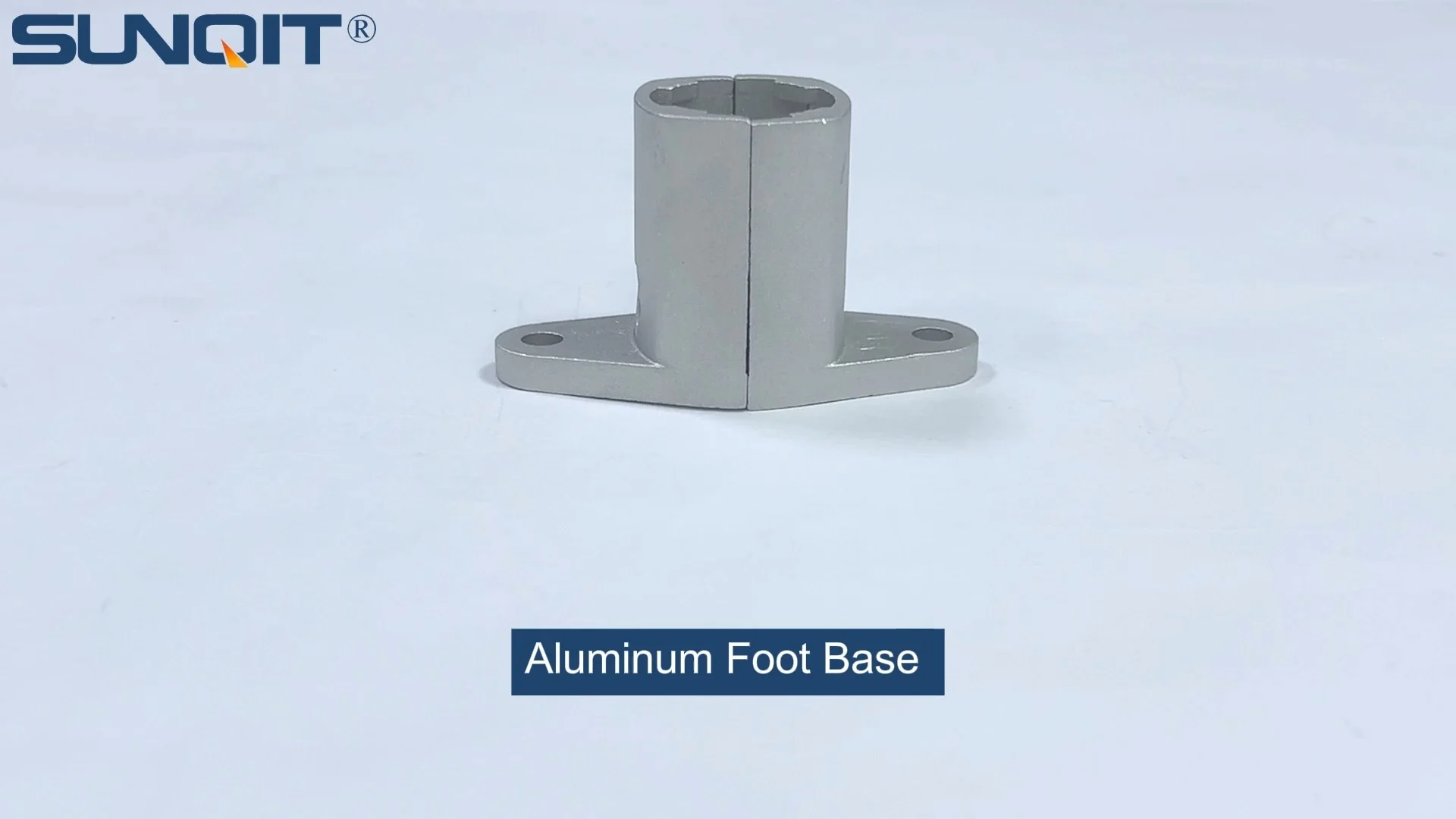
In the fast-paced world of modern manufacturing, flexibility isn't just a buzzword—it's the backbone of staying competitive. Whether you're running a small electronics workshop or a large automotive plant, the ability to reconfigure production lines, adapt to new product designs, and scale operations quickly can make or break your efficiency. Amidst the array of components that make this flexibility possible—conveyors, workbenches, material racks—there's one unsung hero that often goes unnoticed: the aluminum foot base. Quietly holding up workstations, stabilizing material flows, and bridging the gap between static structures and dynamic needs, this unassuming component is the foundation upon which adaptable production lines are built. In this guide, we'll dive into everything you need to know about aluminum foot bases, focusing on their compatibility with key production line components, how they enhance operational agility, and why they're a must-have for any facility aiming to thrive in today's ever-changing manufacturing landscape.
What Is an Aluminum Foot Base, and Why Does It Matter?
At its core, an aluminum foot base is a structural component designed to anchor and stabilize equipment in production environments. Typically crafted from high-grade aluminum alloy—often 6061 or 6063, known for their strength-to-weight ratio and corrosion resistance—it serves as the "feet" for structures like workbenches, material racks, conveyor supports, and even mobile trolleys. Unlike bulky steel bases or flimsy plastic alternatives, aluminum foot bases strike a balance between durability and portability: they're lightweight enough to move during reconfigurations but sturdy enough to support heavy loads without warping or rusting.
But their value goes beyond basic support. In flexible production lines, where every inch of space and every second of downtime counts, aluminum foot bases offer two critical advantages: adjustability and compatibility. Most models come with integrated leveling feet, allowing operators to fine-tune height by a few millimeters to compensate for uneven factory floors—essential for keeping workbenches stable or ensuring conveyor belts align perfectly. Even better, their modular design means they can connect seamlessly with other aluminum-based components, from aluminum profiles to caster wheels , turning static structures into adaptable systems that grow with your needs.
Consider this: A manufacturer switching from assembling smartphones to tablets might need to raise their workbench height by 10cm to accommodate larger screens. With a standard steel base, this would require replacing the entire structure or welding new supports—a time-consuming, costly process. With an aluminum foot base, however, it's as simple as adjusting the leveling feet or swapping in a taller base model that's compatible with the existing workbench frame. That's the power of compatibility: it turns "major overhaul" into "minor tweak."
Key Features of Aluminum Foot Bases: What to Look For
Not all aluminum foot bases are created equal. To ensure they integrate smoothly with your production line, there are a few key features to prioritize. Let's break them down:
1. Material Thickness and Load Capacity
The thickness of the aluminum plate used in the foot base directly impacts its load-bearing ability. For light-duty applications—like supporting a small workbench used for sorting small parts—a 2-3mm thick base might suffice. But for heavy-duty setups, such as a material rack holding steel components or a conveyor system transporting bulky goods, opt for 4-6mm thickness. Always check the manufacturer's load rating (usually listed in kg or lbs) to ensure it aligns with your needs. A base rated for 500kg, for example, shouldn't be paired with a structure that regularly carries 600kg, as this can lead to bending, instability, or even safety hazards.
2. Adjustability
Factory floors are rarely perfectly level, and small unevenness can throw off the alignment of conveyor belts, cause workbenches to wobble, or even lead to material jams. That's why adjustable leveling feet are a non-negotiable feature. Look for bases with threaded leveling screws (typically M10 or M12) that allow you to raise or lower each corner independently. Some models even include anti-slip rubber pads on the bottom of the feet to prevent shifting—critical for high-vibration environments like those with heavy machinery.
3. Connection Mechanisms
Compatibility starts with how the foot base attaches to other components. Most aluminum foot bases are designed to work with aluminum profiles —the modular, T-slot frames that form the skeleton of workbenches, racks, and conveyors. Look for bases with pre-drilled holes or T-slot compatible channels that align with standard profile sizes (e.g., 2020, 3030, 4040). This ensures you can use standard bolts or brackets to secure the base to the profile, avoiding the need for custom fabrication. For example, a 3030 aluminum profile (30mm x 30mm) should pair with a foot base that has mounting holes spaced 30mm apart, matching the profile's T-slot pattern.
4. Corrosion Resistance
Manufacturing environments can be harsh—think exposure to oils, coolants, or humidity. Aluminum's natural resistance to rust is a plus, but for extra protection, look for bases with anodized or powder-coated finishes. Anodization creates a hard, protective oxide layer on the aluminum surface, making it more resistant to scratches and chemical damage. This is especially important for facilities in food processing, pharmaceuticals, or coastal areas where salt air accelerates corrosion.

Compatibility Breakdown: Pairing Aluminum Foot Bases with Key Components
The true value of an aluminum foot base lies in how well it plays with others. Let's explore how it integrates with four critical production line components, and why these pairings matter for flexibility and efficiency.
1. Aluminum Profiles: The Backbone of Modular Structures
Aluminum profiles are the building blocks of modern production lines. These extruded aluminum beams, with T-slot channels running along their length, allow for easy attachment of shelves, panels, and accessories. The aluminum foot base acts as the "roots" of this structure, anchoring the profile to the ground and distributing weight evenly. Compatibility here is all about size and mounting. For example:
- 2020 Profiles (20mm x 20mm): Ideal for lightweight structures like small workbenches or test stations. Pair with a compact aluminum foot base (e.g., 80mm x 80mm base plate) with M5 or M6 mounting holes to match the profile's slot size.
- 3030 Profiles (30mm x 30mm): A workhorse for mid-weight applications, such as material racks or assembly stations. Look for a foot base with a 100mm x 100mm or larger plate and M8 bolts to secure the profile, ensuring stability for loads up to 300kg per leg.
- 4040/4080 Profiles (40mm x 40mm or 40mm x 80mm): Used for heavy-duty setups like industrial workbenches or conveyor supports. These require robust foot bases with thicker plates (5mm+) and M10 bolts, often with reinforced corners to handle loads exceeding 500kg per leg.
Mismatched sizes can lead to instability. A 2020 profile bolted to an oversized foot base might wobble, while a 4080 profile on a too-small base could crack under stress. Always check the profile's load rating and match it to the foot base's capacity.
2. Caster Wheels: Adding Mobility When Needed
While aluminum foot bases are primarily for static stability, many facilities need the option to move structures temporarily—for deep cleaning, line reconfiguration, or maintenance. This is where caster wheels come in, and compatibility between foot bases and casters is key. Most foot bases designed for mobility include pre-drilled holes or mounting plates that align with standard caster stem sizes (e.g., 12mm, 16mm) or plate-mounted casters.
For example, a "convertible" aluminum foot base might have a 4-hole mounting pattern (100mm x 100mm) that fits a plate-style caster with a 100mm x 100mm top plate. When mobility is needed, simply remove the leveling feet, bolt on the casters, and you've turned a static workbench into a mobile trolley. When the job is done, swap back to the foot base for stability. This flexibility eliminates the need to buy separate static and mobile structures, saving space and cost.
Pro tip: If you plan to use casters with your foot base, opt for locking casters (with brake levers) to secure the structure in place when stationary. This prevents unintended movement during operation, which is crucial for precision tasks like assembly or quality inspection.
3. Workbenches: Comfort and Stability for Operators
Workbenches are where the magic happens—assembly, testing, packaging—and their stability directly impacts operator comfort and productivity. A wobbly workbench can lead to errors, fatigue, or even injuries. Aluminum foot bases ensure workbenches stay level and secure, even when operators lean on them or place heavy tools on the surface.
Compatibility with workbenches depends on the bench's design. For example:
- Single-Deck Workbenches (e.g., "Workbench E (single deck-without caster)" from your product list): These simple, open-frame benches rely on 4-6 foot bases (one at each leg) for support. Ensure the foot base's height matches the bench's leg length—too short, and the bench sits too low; too tall, and it may feel unstable.
- Heavy-Duty Workbenches with Shelving : Benches with upper shelves or tool racks carry more weight, so they need foot bases with higher load capacities. Look for bases with reinforced gussets (triangular support plates) between the base plate and the profile connection point to distribute weight and reduce sway.
- ESD Workbenches (used in electronics manufacturing to prevent static damage): These require foot bases with conductive materials or grounding ports to dissipate static electricity. Some manufacturers offer ESD-specific aluminum foot bases with integrated grounding bolts, ensuring compatibility with ESD mats and wrist straps.
4. Aluminum Pipe Accessories: Enhancing Functionality
Aluminum pipe accessories—such as clamps, brackets, and tray holders—add functionality to production line structures, turning basic frames into specialized tools. The aluminum foot base provides the stability needed to support these add-ons without compromising the structure's integrity. For example:
- Material Racks : A "Material Rack B (3 row and 3 floor)" loaded with heavy turnover boxes needs foot bases that can handle the cumulative weight. Pairing the rack with wide-based aluminum foot bases (150mm x 150mm) distributes the load across the floor, preventing indentations in concrete or tile.
- Conveyor Guides : Roller tracks or guide rails (like "Plastic Roller Track Guide Rail Yellow" or "Aluminum Guide Rail A") mounted on a frame supported by aluminum foot bases need precise alignment. Adjustable foot bases allow you to tweak the height of each leg, ensuring the conveyor guides are level and materials flow smoothly without jamming.
- Tool Holders : Brackets for holding power tools or hand tools add weight to a workbench's frame. A sturdy aluminum foot base prevents the bench from tipping when tools are hung on one side, keeping the workspace safe and organized.

Aluminum Foot Base Compatibility Chart
| Aluminum Foot Base Model | Compatible Aluminum Profile Sizes | Recommended Caster Types (if applicable) | Compatible Workbench Styles | Max Load Capacity (per base) |
|---|---|---|---|---|
| AFB-2020 (Mini) | 2020, 2040 | N/A (static only) | Small test benches, ESD workstations (light-duty) | 150kg |
| AFB-3030 (Standard) | 3030, 3060 | Plate-mounted casters (100mm top plate) | Single-deck workbenches, 2-row material racks | 300kg |
| AFB-4040 (Heavy-Duty) | 4040, 4080, 3060 (reinforced) | Locking casters (125mm top plate, 500kg total load) | Double-deck workbenches, 3-row material racks, conveyor supports | 500kg |
| AFB-ESD (Anti-Static) | 2020, 3030, 4040 | ESD-safe casters (conductive rubber wheels) | ESD workstations, electronics assembly benches | 300kg |
| AFB-Adjustable (Tall) | 3030, 4040, 4080 | N/A (height-adjustable up to 200mm) | Ergonomic workbenches (adjustable height), elevated material racks | 400kg |

Installation Tips: Getting It Right the First Time
Even the most compatible components can underperform if installed incorrectly. Follow these steps to ensure your aluminum foot base integrates seamlessly with your production line:
1. Prep the Workspace
Start by clearing the area where the structure will stand. Sweep away debris and check the floor for unevenness using a spirit level. Mark high spots with a pencil—these are where you'll need to use the foot base's leveling feet to compensate. If the floor is severely uneven (more than 10mm difference across the area), consider using shims under the foot base, but avoid over-reliance on shims, as they can compress over time and reduce stability.
2. Align the Foot Bases with the Structure
Lay out the aluminum profiles or workbench frame on the floor first, positioning the foot bases at each leg. Use a tape measure to ensure the distance between foot bases matches the frame's dimensions—for a workbench, this might be 1200mm (length) x 600mm (width). Tighten the base to the profile using the appropriate bolts (e.g., M8 for 3030 profiles) and a torque wrench to avoid over-tightening, which can strip the T-slot threads.
3. Level the Structure
Once the frame is assembled and the foot bases are attached, stand the structure upright. Place the spirit level on the top surface (e.g., the workbench deck or a horizontal profile) and check for level in both directions (front-to-back and side-to-side). Adjust the leveling feet by turning the threaded screws—clockwise to lower, counterclockwise to raise—until the bubble is centered. For extra stability, lock the leveling feet in place with the jam nuts (if included) to prevent them from loosening due to vibration.
4. Test for Stability
Give the structure a gentle shake to test for wobbling. If it sways, double-check the foot base connections—ensure bolts are tight and the base plates are flat against the floor. For mobile setups (with casters), roll the structure back and forth to ensure the casters swivel smoothly and the brakes hold when engaged. Finally, load the structure with a representative weight (e.g., place boxes on a material rack) and recheck the level—heavy loads can cause minor settling, requiring a final tweak to the leveling feet.
Real-World Applications: How Factories Benefit from Compatibility
To see the impact of aluminum foot base compatibility in action, let's look at two case studies from different industries:
Case Study 1: Electronics Manufacturer Scales Production with Modular Workbenches
A mid-sized electronics company producing smart home devices faced a challenge: demand for their new sensor module spiked by 300%, requiring them to add two new assembly lines within a month. Their existing production area was limited, so they needed a solution that could be set up quickly and reconfigured as needed.
They opted for 3030 aluminum profiles paired with AFB-3030 aluminum foot bases and single-deck workbenches. The compatibility between the foot bases and profiles allowed the team to assemble each workbench in under an hour—no welding or custom tools required. The adjustable leveling feet ensured the benches stayed stable on the factory's slightly uneven concrete floor, preventing component misalignment during assembly. After three months, when demand shifted to a larger sensor model, the same foot bases and profiles were reused to build taller workbenches by simply swapping in longer profile legs—a process that took just a day, instead of the week it would have taken with fixed steel structures.
Case Study 2: Automotive Supplier Reduces Downtime with Mobile Material Racks
A tier-1 automotive supplier needed to streamline material flow to their assembly line, where workers assembled door panels. Previously, material racks were static, requiring workers to walk 10-15 feet to retrieve parts—a waste of time and energy. They wanted mobile racks that could be rolled directly to the line but still secure enough to hold heavy plastic moldings.
The solution? Material Rack B (3 row and 3 floor) frames built with 4040 aluminum profiles, paired with AFB-4040 foot bases and locking casters. The foot bases' compatibility with both the profiles and casters meant the racks could be easily converted from static to mobile: when loaded with parts, the casters were locked, and the foot bases kept the rack stable; when empty, the casters were unlocked, allowing the rack to be rolled to the warehouse for refilling. This reduced worker travel time by 40% and cut downtime between production runs by 25%—all thanks to the foot base's ability to bridge static stability and mobility.
Troubleshooting Common Compatibility Issues
Even with careful planning, compatibility issues can arise. Here's how to diagnose and fix the most common problems:
Issue: Wobbling Structure
Cause: Foot bases are uneven, or the load is distributed unevenly. Solution: Recheck the leveling feet with a spirit level—one or more feet may have loosened. Tighten the jam nuts after leveling. If the load is uneven (e.g., all materials stacked on one side of a rack), redistribute the weight to balance it across all foot bases.
Issue: Difficulty Attaching Foot Base to Profile
Cause: Mismatched hole spacing or profile size. Solution: Verify that the foot base's mounting holes align with the profile's T-slot pattern. For example, a 2020 profile has T-slots every 20mm, so the foot base should have holes 20mm apart. If the holes don't align, use T-slot nuts (inserted into the profile's slot) to secure the base instead of relying on pre-drilled holes.
Issue: Foot Base Slipping on Smooth Floors
Cause: Missing or worn anti-slip pads on the leveling feet. Solution: replace the rubber pads on the leveling feet—most suppliers sell these as replacement parts. For extra grip, apply a thin layer of non-slip adhesive tape to the bottom of the foot base plate (ensure it's compatible with your floor type to avoid damage).
Issue: Corrosion on Foot Base Surface
Cause: Exposure to chemicals or humidity without proper coating. Solution: Clean the affected area with a mild detergent and water, then apply a touch-up anodizing spray or rust-inhibiting paint. For ongoing protection, consider upgrading to a powder-coated aluminum foot base, which offers better chemical resistance than raw aluminum.
Conclusion: The Foundation of Flexible Manufacturing
In the quest for flexible production lines, it's easy to focus on flashy components like automated conveyors or smart sensors. But as we've explored, the aluminum foot base—quiet, reliable, and endlessly compatible—is the unsung hero that makes this flexibility possible. By pairing seamlessly with aluminum profiles , caster wheels , workbenches , and aluminum pipe accessories , it turns static structures into adaptable systems that can grow, shift, and evolve with your business needs.
When choosing an aluminum foot base, prioritize compatibility: look for models that align with your existing profiles, support your load requirements, and offer the adjustability your environment demands. With the right foot base, you're not just buying a component—you're investing in a foundation that will keep your production line agile, efficient, and ready for whatever the future of manufacturing brings.
So the next time you walk through your factory, take a moment to notice those unassuming aluminum plates under your workbenches and racks. They might not grab headlines, but they're holding up more than just structures—they're holding up your ability to compete, adapt, and thrive.