- Company Articles
- Products and Technology
- Product knowledge
- Aluminum Foot Base for Medical Workstations: Cleanroom Compatibility

Aluminum Foot Base for Medical Workstations: Cleanroom Compatibility
Related Product
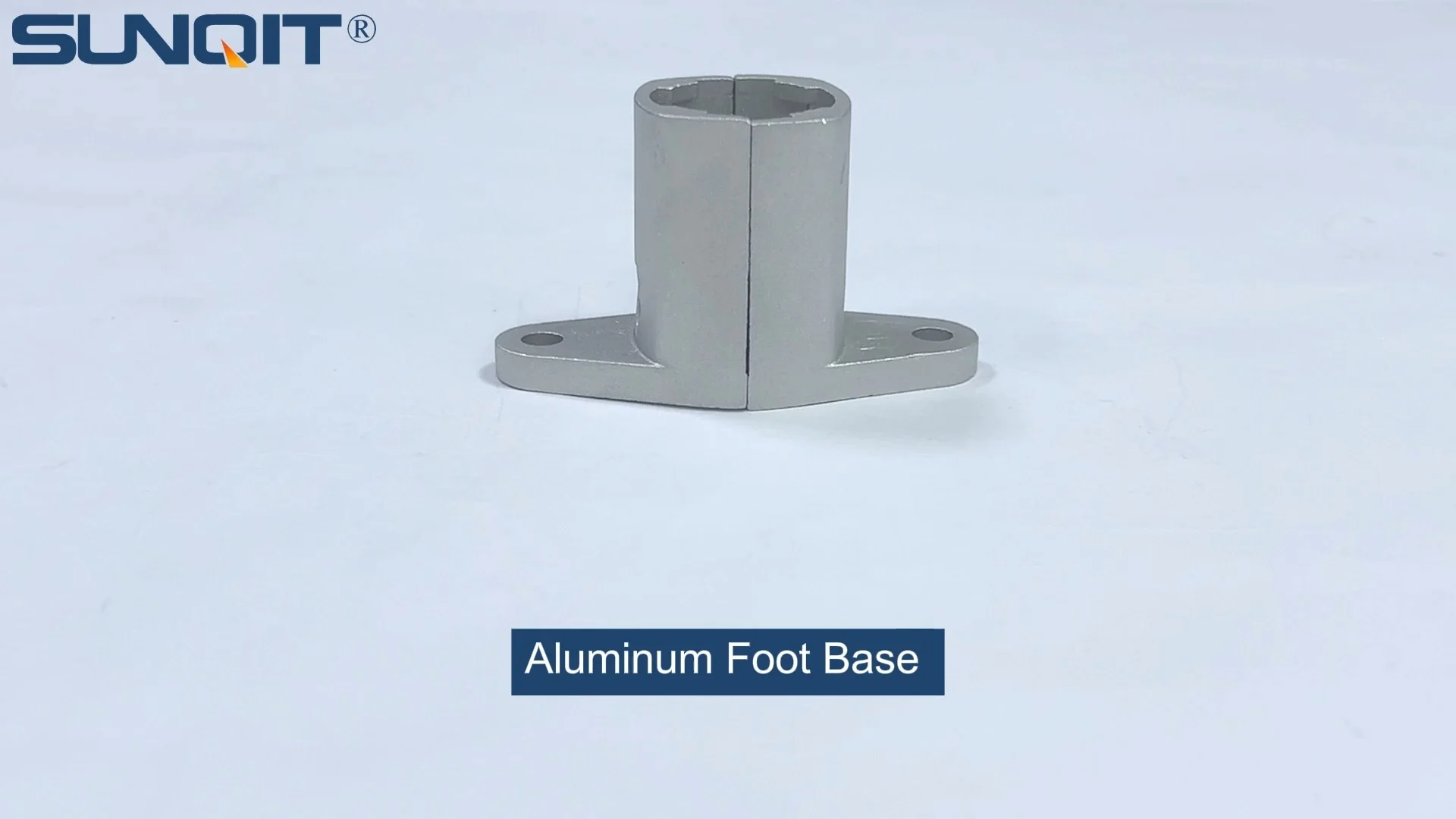
Aluminum Foot Base
Aluminum foot base to connect 28mm aluminum pipe and fixed it on the ground and prevent pipe fall and move.
The Unsung Hero of Medical Cleanrooms
Walk into any medical cleanroom—whether it's a pharmaceutical compounding lab, a surgical prep area, or a biotechnology research facility—and you'll notice the precision. Every surface gleams, every tool has its place, and the air feels almost tangible in its purity. But look closer at the workstations where healthcare professionals spend hours preparing medications, analyzing samples, or assembling medical devices, and you'll find a quiet workhorse: the aluminum foot base. It's not flashy, but it's the foundation that keeps these critical spaces running smoothly, safely, and up to the highest standards of cleanliness.
For anyone who works in these environments, the importance of a reliable workstation can't be overstated. A pharmacist measuring doses for a chemotherapy patient needs stability to avoid errors. A lab technician handling infectious samples can't afford to worry about a wobbly surface compromising sterility. And in a cleanroom where even a single dust particle can ruin a batch of life-saving drugs, the materials that make up that workstation—especially its base—are more than just components; they're guardians of quality and safety. That's where aluminum foot base steps in, quietly solving problems that no one talks about but everyone relies on.
Why Cleanrooms Demand More Than Just "Sturdy"
Cleanrooms aren't just "clean"—they're meticulously controlled environments governed by strict standards, like ISO 14644, which dictates allowable particle counts, temperature, humidity, and air pressure. In medical settings, these standards are even tighter. For example, an ISO 7 cleanroom (common in pharmaceutical manufacturing) allows no more than 352,000 particles larger than 0.5 microns per cubic meter—compare that to the millions of particles in a typical office. To maintain this, every piece of equipment must be designed to avoid harboring contaminants, resist corrosion from harsh disinfectants, and stand up to constant cleaning without degrading.
Workstations are ground zero for these challenges. Their bases, in particular, take a beating: they support heavy loads (think stacks of glassware, centrifuges, or reagent bottles), get sprayed with alcohol or bleach daily, and must stay stable enough to prevent spills or vibrations that could disrupt sensitive processes. Traditional materials like steel or plastic fall short here. Steel, while strong, is prone to rust if scratched—a rust spot is a perfect hiding place for bacteria. Plastic, on the other hand, can warp under heat or chemicals, and its porous surface can trap tiny particles even after cleaning. So what's the alternative? Enter aluminum, and more specifically, the aluminum foot base crafted from aluminum extrusion profiles.

Aluminum Foot Base: Built for the Rigors of Cleanroom Life
Aluminum Extrusion Profile: The Secret to Durability
Aluminum foot bases aren't just made of any aluminum—they're typically constructed from aluminum extrusion profiles, a manufacturing process that shapes aluminum into precise, consistent cross-sections. This isn't just about aesthetics; extrusion gives the base unmatched structural integrity. Unlike welded steel, which can have weak points at the joints, extruded aluminum profiles are uniform throughout, meaning they can support heavy weights without bending or warping. For a workstation holding a 50-pound autoclave or a row of glass reagent bottles, that's peace of mind.
But it's the material itself that makes aluminum ideal. Aluminum is naturally corrosion-resistant thanks to its oxide layer, which forms instantly when exposed to air. This layer acts as a shield, preventing rust even when the base is repeatedly wiped down with strong disinfectants like hydrogen peroxide or quaternary ammonium compounds. In a cleanroom where surfaces are sanitized multiple times a day, this resistance isn't just convenient—it's critical. A steel base might start to show pitting after a few months; an aluminum base? It'll still look new years later.
Non-Porous and Easy to Clean: No Hiding Spots for Contaminants
Cleanroom technicians know the enemy is often the smallest spaces: cracks, crevices, or porous surfaces where bacteria, dust, or chemicals can linger. Aluminum foot bases, with their smooth, non-porous surfaces, leave nowhere for contaminants to hide. Unlike wood (which can absorb liquids) or plastic (which can develop micro-scratches over time), aluminum wipes clean with a simple cloth and disinfectant. There's no need for harsh scrubbing or specialized cleaners—just a quick pass, and the surface is sterile again. This not only saves time but also reduces the risk of human error in cleaning protocols, ensuring the workstation stays compliant with ISO standards.
Lightweight Yet Stable: A Balancing Act for Healthcare Teams
Anyone who's ever moved a workstation in a busy lab knows: heavy equipment is a liability. A steel base might be sturdy, but it takes two people to reposition it, disrupting workflow and increasing the risk of strains or spills. Aluminum, by contrast, is lightweight—about a third the weight of steel—making it easy for a single technician to adjust the workstation's placement as needed. But don't mistake lightweight for flimsy: aluminum foot bases often come with adjustable leveling feet, small threaded pads that can be twisted to stabilize the workstation on uneven floors. In older facilities where floor tiles might be slightly uneven, this adjustability is a game-changer. No more wobbly surfaces, no more spilled samples, just a steady workspace that adapts to its environment.

How Aluminum Foot Base Stacks Up Against Other Materials
Still not convinced aluminum is the best choice? Let's compare it to the alternatives. The table below breaks down how aluminum foot base performs against steel and plastic in key cleanroom categories:
| Feature | Aluminum Foot Base (Aluminum Extrusion Profile) | Steel Foot Base | Plastic Foot Base |
|---|---|---|---|
| Sterility | Excellent: Non-porous surface, no cracks for bacteria | Poor: Prone to rust and scratches; harbor contaminants | Fair: Can develop micro-scratches over time |
| Corrosion Resistance | Outstanding: Natural oxide layer resists chemicals | Poor: Requires paint/coating, which can chip | Good: Resists chemicals but may warp in heat |
| Ease of Cleaning | Very Easy: Wipes clean with standard disinfectants | Difficult: Requires scrubbing to reach rust spots | Easy: But scratches trap residue over time |
| Weight | Lightweight: Easy to reposition solo | Heavy: Often requires 2+ people to move | Lightweight: But less stable under heavy loads |
| Longevity | 10+ years: Resists wear and corrosion | 5-7 years: Prone to rust and structural degradation | 3-5 years: Can warp or crack with heavy use |
The verdict is clear: aluminum foot base outperforms steel and plastic in nearly every category that matters for cleanrooms. It's not just a better material—it's a smarter investment, saving time on maintenance, reducing replacement costs, and most importantly, minimizing the risk of contamination.

Real-World Impact: How Aluminum Foot Base Supports Healthcare Heroes
To understand why aluminum foot base matters, let's step into the shoes of someone who relies on it daily: Maria, a lead pharmacy technician at a children's hospital. Her workstation is where she prepares IV medications for young patients, a task that demands precision—even a 0.1ml error can be dangerous for a toddler. "Before we switched to aluminum foot base workstations, we had steel ones," she recalls. "They were always rusting around the edges, and no matter how much we scrubbed, there were always little spots where bacteria could hide. Now, with aluminum, I wipe it down with alcohol, and it's spotless in seconds. The adjustable feet mean the workstation never wobbles, even when I'm mixing multiple meds at once. I don't have to worry about spills or contamination—I can focus on the patient."
Or consider Dr. Raj, a microbiologist researching infectious diseases in a BSL-3 lab. His workstation holds delicate equipment like PCR machines and biosafety cabinets, and the lab must maintain ISO 6 cleanroom standards (even stricter than ISO 7). "Stability is everything here," he says. "If the workstation vibrates, it can throw off PCR results. Aluminum foot base keeps everything rock-steady, and because it's lightweight, we can move the workstation when we need to deep-clean the floor. No more wrestling with heavy steel bases that scratch the tiles and create new contamination risks."
These aren't just anecdotes—they're the reality of healthcare settings where every detail impacts patient outcomes. Aluminum foot base doesn't just make workstations better; it makes healthcare safer.
Beyond the Base: Aluminum's Role in Sustainable Cleanrooms
Today's healthcare facilities aren't just focused on cleanliness—they're also prioritizing sustainability. Aluminum foot base aligns with this goal perfectly. Aluminum is 100% recyclable, and recycling it uses just 5% of the energy required to produce new aluminum. For hospitals and labs aiming to reduce their carbon footprint, choosing aluminum means less waste and lower environmental impact. Plus, aluminum's longevity means fewer replacements over time, further cutting down on resource use. It's a win-win: a material that protects patients and the planet.
Choosing the Right Aluminum Foot Base: What to Look For
Not all aluminum foot bases are created equal. When selecting one for your cleanroom, keep these factors in mind:
- Material Thickness: Thicker extrusion profiles (e.g., 2mm or more) offer better load-bearing capacity.
- Adjustable Feet: Look for bases with non-slip, height-adjustable leveling feet to adapt to uneven floors.
- Surface Finish: A smooth, anodized finish (a process that thickens the oxide layer) adds extra corrosion resistance.
- Compatibility: Ensure the base works with your existing workstation components, like aluminum profile accessories or casters (if mobility is needed).
Suppliers specializing in cleanroom equipment can often customize aluminum foot bases to fit specific workstation sizes or load requirements, ensuring a perfect match for your facility's needs.
Conclusion: The Foundation of Better Healthcare
Aluminum foot base might not be the first thing you notice in a cleanroom, but it's one of the most critical. Built from durable aluminum extrusion profiles, it combines sterility, durability, and sustainability in a way no other material can. For healthcare professionals, it's the quiet confidence that their workstation won't let them down—no rust, no wobbles, no hidden contaminants. For patients, it's the assurance that the medications, samples, and devices prepared on that workstation are safe and reliable.
In the end, aluminum foot base isn't just about supporting a table—it's about supporting the people who save lives. And in healthcare, that's everything.