- Company Articles
- Products and Technology
- Product knowledge
- Aluminum Foot Base for Trolleys: Swivel vs. Fixed Base Options

Aluminum Foot Base for Trolleys: Swivel vs. Fixed Base Options
Related Product
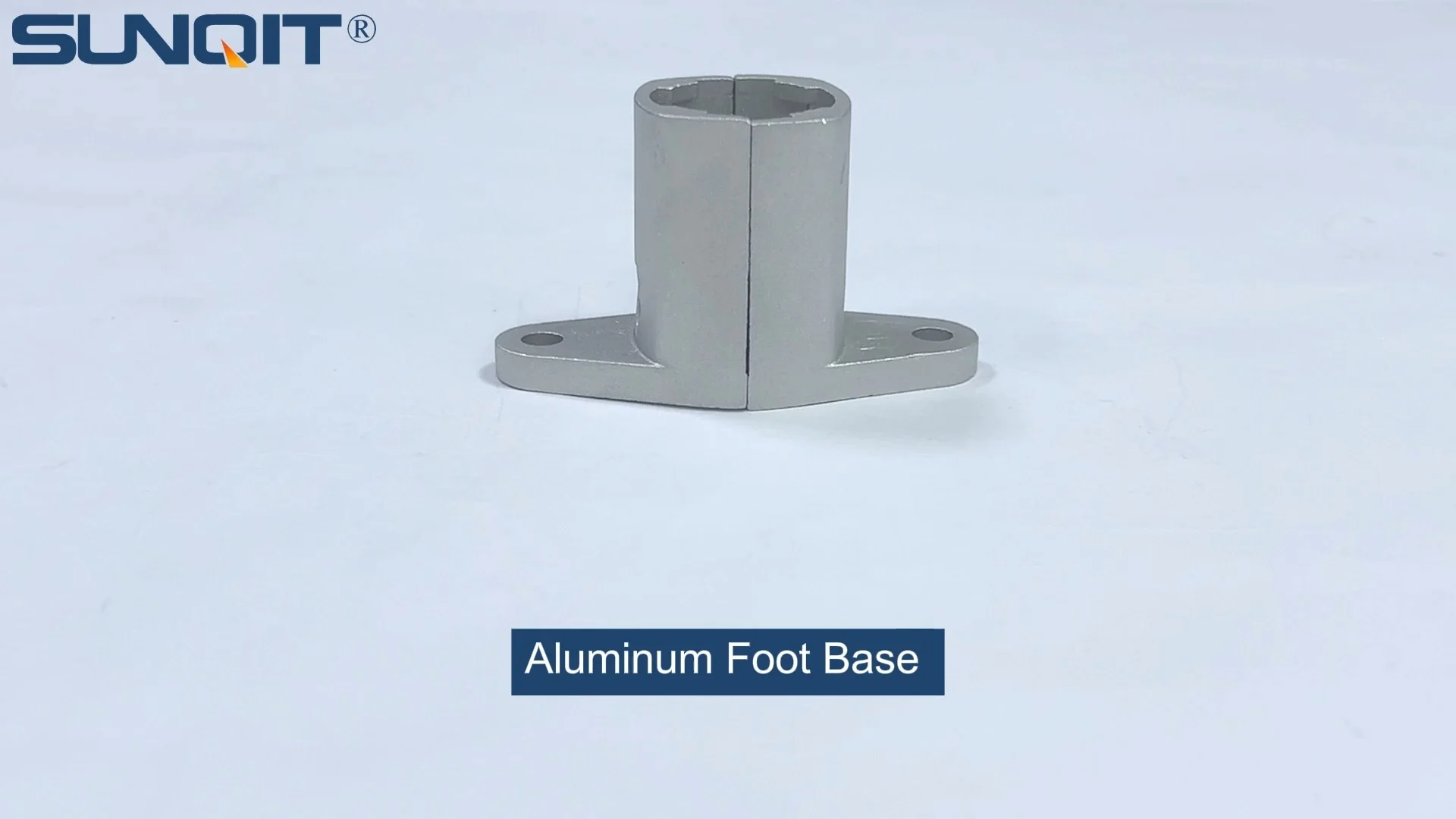
Aluminum Foot Base
Aluminum foot base to connect 28mm aluminum pipe and fixed it on the ground and prevent pipe fall and move.
Introduction: The Unsung Hero of Trolley Performance
Walk into any busy warehouse, manufacturing plant, or distribution center, and you'll notice a quiet workhorse keeping operations moving: the trolley. From hauling raw materials to transporting finished goods, trolleys are the backbone of material handling. But what makes a trolley truly reliable? Beyond the frame and wheels, there's a small yet critical component that often goes unnoticed: the aluminum foot base . This unassuming part connects the trolley's structure to its wheels, dictating everything from stability to maneuverability. In the world of industrial equipment, choosing between a swivel and fixed aluminum foot base can mean the difference between smooth, efficient workflows and frustrating, time-wasting delays. Let's dive into what makes these two options unique, how they perform in real-world settings, and how to pick the right one for your needs.
What Is an Aluminum Foot Base, Anyway?
Before we compare swivel and fixed bases, let's clarify what an aluminum foot base is and why it matters. Simply put, it's the component that attaches the trolley's frame to its caster wheel , acting as the bridge between the load and the floor. Made from high-grade aluminum, it's prized for its winning combination of strength and lightness—aluminum is 30% lighter than steel but still tough enough to handle daily wear and tear. It's also resistant to rust and corrosion, a must in environments where spills, humidity, or chemicals are common.
Think of the aluminum foot base as the trolley's "ankle." Just as your ankle allows your foot to move (or stay steady), the foot base determines how the trolley interacts with the ground. And like any good ankle, it needs to be durable, flexible (or rigid, depending on the job), and compatible with the rest of the "body"—in this case, the trolley's frame and wheels. As part of the broader family of aluminum profile accessories , it's designed to integrate seamlessly with aluminum trolley frames, ensuring a snug, secure fit that minimizes wobbling or loosening over time.

Swivel Aluminum Foot Bases: Maneuverability Meets Precision
If you've ever pushed a shopping cart through a crowded grocery store, you're already familiar with the magic of swivel bases. Swivel aluminum foot bases feature a rotating joint that allows the caster wheel to spin 360 degrees, giving the trolley unparalleled maneuverability. This rotation is typically enabled by ball bearings or a pivot mechanism, ensuring smooth, friction-free movement even when the trolley is fully loaded.
Benefits of Swivel Bases:
- Tight Space Mastery: In warehouses with narrow aisles or retail stockrooms crammed with shelves, swivel bases shine. They let operators pivot, turn, and navigate around obstacles with ease—no more backtracking or struggling to make sharp corners.
- Effortless Direction Changes: Need to switch from moving forward to sideways in a heartbeat? Swivel bases make it possible. This is a game-changer for tasks like loading/unloading turnover trolley and rack systems, where quick adjustments save precious time.
- Reduced Operator Fatigue: Pushing a trolley with swivel bases requires less force than wrestling with a rigid fixed-base model. The smooth rotation means operators can move loads farther without straining, boosting productivity and reducing injury risk.
Drawbacks to Consider:
- Stability at High Speeds: While swivel bases excel at slow, precise movements, they can feel "wobbly" if pushed too fast, especially with unevenly distributed loads. This makes them less ideal for open spaces where trolleys might be moved quickly.
- Load Limits: The rotating joint adds complexity, which can reduce the maximum weight the base can support. Most swivel bases top out around 300–400 kg, whereas fixed bases often handle 500+ kg.
- Maintenance Needs: The pivot mechanism requires regular lubrication to prevent rust or jamming. Dirt and debris can also get trapped in the joint, slowing rotation over time.
Common designs include lightweight swivel bases for light loads (e.g., 100–200 kg) and heavy-duty versions with reinforced joints for medium-weight tasks. Many also come with locking mechanisms that temporarily fix the wheel in place, blending swivel flexibility with fixed stability when needed.

Fixed Aluminum Foot Bases: Stability First, Always
If swivel bases are the "dancers" of the trolley world, fixed aluminum foot bases are the "weightlifters." As the name suggests, fixed bases lock the caster wheel in a single direction—usually forward and backward—preventing side-to-side rotation. This rigidity makes them the go-to choice for applications where stability and load capacity matter most.
Benefits of Fixed Bases:
- Rock-Solid Stability: When you're hauling heavy, fragile, or uneven loads—think stacks of glass panels, industrial machinery parts, or barrels of chemicals—fixed bases are non-negotiable. They keep the trolley moving in a straight line, minimizing swaying or tipping.
- High Load Capacity: Without the need for a rotating joint, fixed bases are simpler in design and stronger by nature. Many can handle 500 kg or more, making them indispensable in manufacturing plants or construction sites where heavy lifting is the norm.
- Low Maintenance: No moving parts mean fewer things to break. Fixed bases rarely need lubrication or adjustments, saving time and money on upkeep. A quick wipe-down to remove dirt is usually all they require.
- Safety in Straight-Line Operations: In settings like assembly lines or lean system production floors, where trolleys move along predefined paths, fixed bases ensure consistency. They reduce the risk of accidental veering, keeping workers and equipment safe.
Drawbacks to Consider:
- Limited Maneuverability: Fixed bases are great for straight lines, but they struggle in tight spaces. Turning a fixed-base trolley requires more room—you'll need to "jackknife" it (turn the front wheels and pull the back) to change direction, which is slow and cumbersome in crowded areas.
- Not Ideal for Frequent Direction Changes: If your workflow involves constant pivoting—like restocking multiple shelves in a warehouse—a fixed base will slow you down. Operators may end up taking longer routes to avoid obstacles.
Fixed bases are often paired with larger, sturdier wheels (e.g., rubber or polyurethane) to handle heavy loads and rough floors. They're also commonly used in tandem with swivel bases on the same trolley—for example, two swivel bases at the front for steering and two fixed bases at the back for stability. This "hybrid" setup is popular in applications where both mobility and load capacity are needed.

Swivel vs. Fixed: A Head-to-Head Comparison
Still on the fence? Let's break down the key differences between swivel and fixed aluminum foot bases with a side-by-side comparison:
| Feature | Swivel Aluminum Foot Base | Fixed Aluminum Foot Base |
|---|---|---|
| Load Capacity | Typically 100–400 kg (medium-duty) | 500+ kg (heavy-duty) |
| Mobility | Excellent—360° rotation for tight spaces | Limited—only forward/backward movement |
| Stability | Good at slow speeds; may sway with heavy/uneven loads | Excellent—no swaying, ideal for heavy or fragile loads |
| Best For | Narrow aisles, frequent direction changes, turnover trolley and rack systems | Straight-line operations, heavy loads, lean system production lines |
| Maintenance | Moderate—needs regular lubrication for the swivel joint | Low—no moving parts, minimal upkeep |
| Cost | Slightly higher (due to rotating mechanism) | More affordable (simpler design) |
Real-World Applications: Where Each Base Shines
To truly understand which base is right for you, let's look at how they perform in common industrial and commercial settings:
Swivel Bases in Action:
- Warehouse Order Picking: In facilities with narrow aisles and high shelves, order pickers rely on swivel-base trolleys to zip between racks, grab items, and pivot quickly to head to the next location. Turnover trolley and rack systems, which require frequent loading/unloading from multiple angles, are a perfect match.
- Retail Stockrooms: Stockers moving boxes of clothing, electronics, or groceries need to navigate around display racks and other obstacles. Swivel bases let them maneuver in tight spaces without disrupting store layouts.
- Hospitals and Clinics: Medical supply trolleys (e.g., medication carts, linen carts) need to move smoothly through crowded hallways and patient rooms. Swivel bases ensure nurses and staff can navigate around beds, chairs, and people with minimal effort.
Fixed Bases in Action:
- Automotive Manufacturing: Trolleys carrying engine parts, steel panels, or tires often weigh 500 kg or more. Fixed bases keep these heavy loads stable as they move along assembly lines, where precision and safety are critical.
- Construction Sites: Hauling bricks, concrete blocks, or tools across rough terrain? Fixed bases paired with large, rugged wheels handle uneven ground and heavy loads without tipping.
- Lean System Production Floors: In lean manufacturing, where workflows are optimized for efficiency, trolleys often move along fixed paths (e.g., from station A to station B). Fixed bases ensure they stay on track, reducing wasted time and motion.
How to Choose: 5 Key Questions to Ask
Selecting the right aluminum foot base boils down to understanding your unique needs. Ask yourself these questions to narrow it down:
- What's the typical load weight? If you're moving 500+ kg regularly, fixed is the way to go. For lighter loads (under 400 kg), swivel offers more flexibility.
- How much space do you have? Narrow aisles or crowded workspaces demand swivel bases. Open areas with straight paths work well with fixed bases.
- How often do you need to change direction? Frequent pivoting (e.g., order picking) = swivel. Rare direction changes (e.g., assembly lines) = fixed.
- What's the floor like? Smooth concrete is forgiving for both, but rough or uneven floors may require fixed bases for stability. Swivel bases can get stuck on debris or cracks.
- What's your budget for maintenance? If you're short on time or resources, fixed bases (low maintenance) are better. Swivel bases need regular lubrication and cleaning.
Pro tip: If you need both mobility and stability, consider a hybrid trolley with two swivel bases (front) and two fixed bases (back). This setup lets you steer with the swivel bases while the fixed bases keep the load steady—perfect for medium-heavy loads in semi-crowded spaces.
Caring for Your Aluminum Foot Base: Maintenance Tips
Whether you choose swivel or fixed, a little maintenance goes a long way in extending the life of your aluminum foot base. Here's how to keep it in top shape:
For Swivel Bases:
- Lubricate the Joint: Every 3–6 months (or more often in dusty/wet environments), apply a silicone-based lubricant to the swivel joint. This prevents rust and keeps rotation smooth.
- Clean Regularly: Wipe down the joint with a damp cloth to remove dirt, hair, or debris that could jam the mechanism. For tough grime, use a soft brush (avoid harsh chemicals that can damage aluminum).
- Check for Loose Bolts: Tighten any loose bolts or nuts holding the base to the trolley frame. Loose connections can cause wobbling or premature wear.
For Fixed Bases:
- Inspect Welds/Bolts: If your fixed base is welded to the frame, check for cracks or signs of stress. If it's bolted, tighten any loose bolts to prevent shifting.
- Clean the Wheel Axle: Dirt can build up around the wheel axle, slowing movement. Wipe it down and apply a light lubricant if the wheel starts to stick.
- replace Worn Wheels: The wheel itself (not the base) is the most likely part to wear out. replace worn or flat wheels promptly to avoid straining the base.
The Bigger Picture: Aluminum Foot Bases in Lean System and Beyond
Aluminum foot bases aren't just "parts"—they're integral to building efficient, adaptable workflows. In lean system manufacturing, where the goal is to eliminate waste (time, effort, resources), choosing the right foot base can reduce "motion waste" (unnecessary movement by operators) and "waiting waste" (delays from stuck or slow trolleys).
As part of the aluminum profile accessories ecosystem, aluminum foot bases also support modularity. Aluminum trolley frames are easy to customize—you can swap out foot bases, wheels, or shelves as your needs change. A warehouse that starts with swivel bases for order picking can later add fixed bases for heavy-duty tasks, all without replacing the entire trolley.
In a world where efficiency and durability are king, the aluminum foot base may be small, but its impact is huge. It's the difference between a trolley that frustrates and one that empowers—between a workflow that drags and one that soars.
Conclusion: Choose Wisely, Move Forward
Swivel and fixed aluminum foot bases each have their superpowers: swivel for maneuverability, fixed for stability. The key is to match their strengths to your workflow. If you're navigating tight spaces with light-to-medium loads, swivel is your ally. If you're hauling heavy, fragile, or bulky items along straight paths, fixed is the safer bet. And when in doubt, a hybrid setup (swivel + fixed) offers the best of both worlds.
Remember, the right aluminum foot base isn't just about moving things—it's about moving your business forward. It's about reducing stress for your team, cutting down on delays, and building a workflow that's as strong and reliable as the aluminum that supports it. So next time you're shopping for trolleys, take a closer look at the "ankle" of the operation. Your bottom line (and your operators) will thank you.