- Company Articles
- Products and Technology
- Product knowledge
- Aluminum Foot Base in 3C Assembly: Compatibility with Automated Tools

Aluminum Foot Base in 3C Assembly: Compatibility with Automated Tools
Related Product
Aluminum Foot Base
Aluminum foot base to connect 28mm aluminum pipe and fixed it on the ground and prevent pipe fall and move.
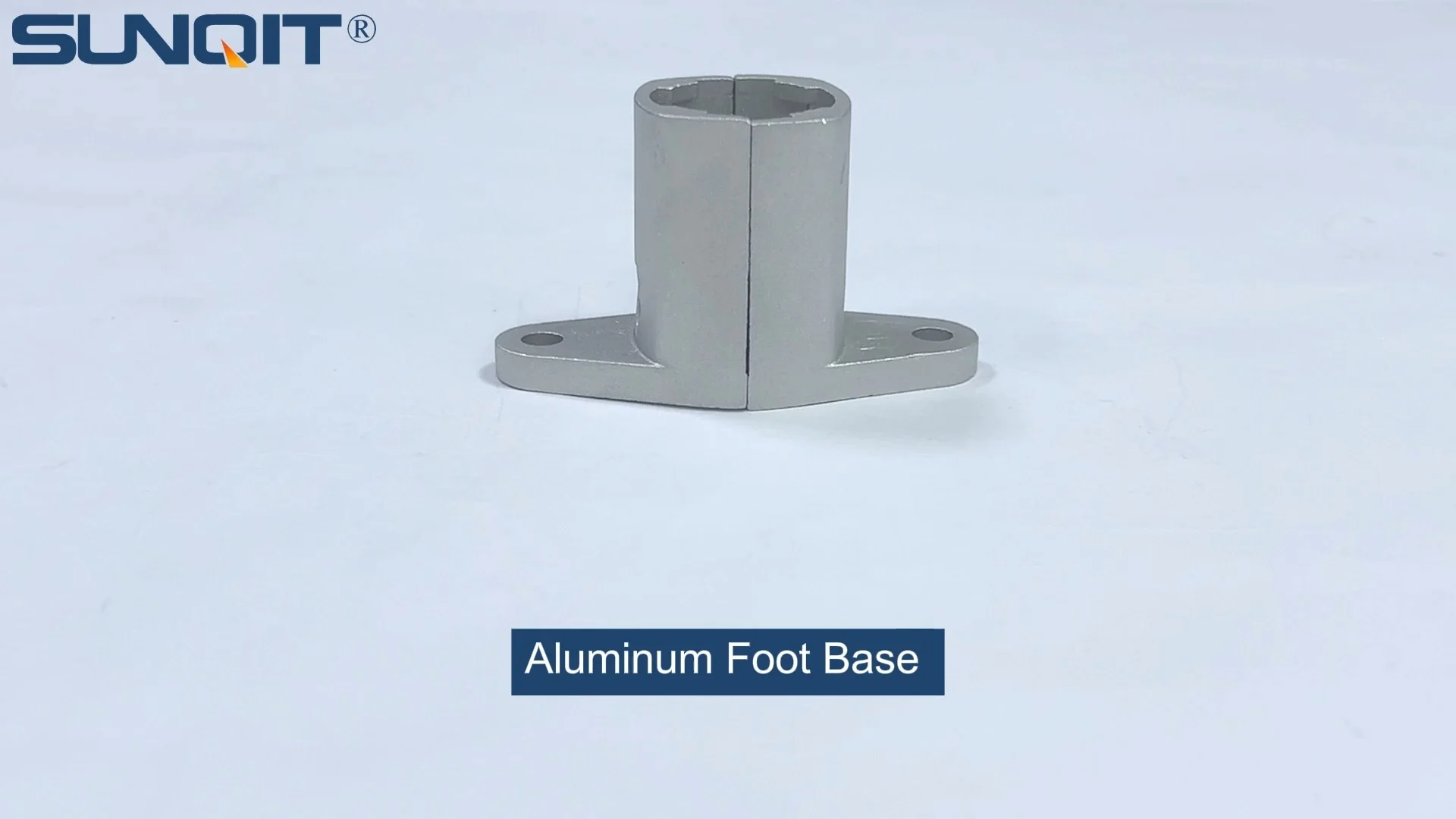
In the fast-paced world of 3C (Computer, Communication, Consumer Electronics) manufacturing, where precision is measured in millimeters and production lines hum with the rhythm of automated machinery, every component plays a silent but critical role. From the tiniest screw in a smartphone to the conveyor belts that ferry products through assembly, each part contributes to the final product's quality and the line's efficiency. Today, we're shining a light on one such unsung hero: the aluminum foot base. Often overlooked beneath the workbenches and equipment that dominate factory floors, this unassuming component is a linchpin in ensuring compatibility with automated tools—and in turn, keeping 3C assembly lines running smoothly, accurately, and lean.
The 3C Assembly Challenge: Precision Meets Automation
3C products—think smartphones, laptops, smartwatches—are marvels of miniaturization. Their assembly requires tasks that demand both human dexterity and machine precision: placing microchips, soldering delicate circuits, aligning screens, and testing components under strict quality controls. As consumer demand for newer, sleeker devices grows, manufacturers have turned to automation to keep up. Robotic arms handle repetitive tasks, conveyors move products between stations at consistent speeds, and optical inspection tools scan for microscopic defects. But here's the catch: all these automated tools rely on a stable, predictable foundation. A workbench that wobbles, a conveyor that sits unevenly, or a testing station that vibrates can throw off measurements, damage components, or slow down production. That's where the aluminum foot base enters the picture.
Traditional foot bases—often made of plastic, steel, or even wood—have their limitations. Plastic can warp under heavy loads or high temperatures; steel is durable but heavy, making reconfiguration (a must in agile 3C plants) cumbersome; wood lacks the precision needed for fine adjustments. Aluminum foot base, by contrast, is engineered to address these pain points. Crafted from aluminum extrusion profile—lightweight, rigid, and resistant to corrosion—it's designed to anchor workbenches, equipment, and even automated tools themselves, ensuring they stay level, stable, and perfectly aligned with the rest of the assembly line.
What Is an Aluminum Foot Base, Exactly?
Let's start with the basics. An aluminum foot base is a modular component attached to the bottom of workbenches, equipment stands, or tool frames to provide stability, adjustability, and a secure connection to the floor. At first glance, it might look like a simple block or threaded rod with a base plate, but its design is surprisingly nuanced. Most aluminum foot bases are made from aluminum extrusion profile—a material created by forcing heated aluminum through a die to form consistent, custom shapes. This process allows for precise dimensions, including threaded holes for adjustments, slots for mounting, and reinforced edges for added strength.
Key features of a typical aluminum foot base include:
- Adjustable Height: A threaded rod or bolt allows operators to raise or lower the foot base by small increments (often 1-5mm), compensating for uneven floors or aligning workbenches with conveyors.
- Anti-Slip Base: The bottom plate is often coated with rubber or textured to prevent sliding, even when equipment vibrates during operation.
- Compatibility with Aluminum Profiles: Since most 3C assembly workbenches and equipment frames are built using aluminum profiles (think T-slot aluminum extrusion profile), the foot base is designed to bolt directly into these profiles, creating a seamless, modular system.
- Lightweight yet Sturdy: Aluminum's high strength-to-weight ratio means the foot base can support heavy loads (up to several hundred kilograms) without adding unnecessary bulk, making it easy to move or reconfigure workstations when production needs change.
But why aluminum? Unlike steel, aluminum resists rust and corrosion—critical in factory environments where cleaning agents or humidity might degrade other materials. Unlike plastic, it doesn't flex under pressure, ensuring long-term stability. And because it's part of the aluminum extrusion family, it integrates effortlessly with other aluminum profile accessories, from workbench frames to conveyor rails, creating a unified, lean system that manufacturers crave.

The Workbench Connection: Why Foot Bases Matter in 3C Assembly
In 3C assembly, the workbench is the heart of the operation. It's where operators assemble circuit boards, where robotic arms deposit components, and where final inspections take place. A typical workbench might hold a soldering station, a small conveyor segment, and a testing device—all of which need to stay perfectly aligned. If the workbench is even slightly uneven, the consequences can be costly: a robotic arm might misplace a component, a conveyor might jam, or a test probe might scratch a delicate screen.
Here's where the aluminum foot base proves its worth. By attaching to the bottom of the workbench's aluminum profile frame, it acts as a "shock absorber" and leveling tool. Let's say the factory floor has a minor dip under one corner of the workbench. Using the foot base's adjustable threaded rod, operators can raise that corner by 2mm, ensuring the entire work surface is level. This stability is especially critical for tasks like precision screwdriving, where a misaligned workbench could cause a screw to strip or damage the product's casing.
But it's not just about leveling. 3C assembly tools, from automated pick-and-place machines to laser alignment systems, generate vibrations during operation. Over time, these vibrations can loosen components, shift alignment, or even damage sensitive equipment. The aluminum foot base's rigid construction and anti-slip rubber pad dampen these vibrations, preventing them from spreading through the workbench and affecting other tools. In essence, it turns the workbench from a wobbly platform into a rock-solid foundation for automation.

Compatibility with Automated Tools: A Closer Look
The true magic of the aluminum foot base lies in its ability to "speak the same language" as the automated tools that populate 3C assembly lines. Let's break down how it integrates with some of the most common tools:
1. Conveyors and Roller Tracks
Conveyors are the arteries of 3C assembly lines, moving semi-finished products from one station to the next. For a conveyor to work seamlessly with a workbench, their heights must match exactly—even a 1mm difference can cause products to get stuck or slide off. Aluminum foot bases solve this by allowing both the conveyor and the workbench to be adjusted to the same height. Most conveyors, especially those built with aluminum profiles, use the same mounting holes and thread sizes as aluminum foot bases, making alignment a matter of turning a wrench rather than shimming with pieces of wood or metal.
Take roller tracks, for example. These are often used to slide products between workstations manually or as part of a semi-automated system. A roller track mounted on a workbench with aluminum foot bases can be adjusted to slope slightly (1-2 degrees) to ensure smooth product flow—something that's nearly impossible with fixed steel or plastic foot bases.
2. Robotic Arms and Automated Pick-and-Place Systems
Robotic arms are the workhorses of modern 3C assembly, handling tasks like placing chips on circuit boards or attaching camera modules to smartphone frames. These arms rely on precise coordinates to position components—if their base (often a workbench or standalone frame) shifts, their accuracy plummets. Aluminum foot bases prevent this by locking the robotic arm's frame in place. Many advanced foot bases even include built-in leveling bubbles or digital sensors to alert operators if the base starts to tilt, allowing for real-time adjustments before errors occur.
Moreover, robotic arms generate torque during movement. A lightweight plastic foot base might twist under this torque, causing the arm to drift off course. Aluminum's rigidity resists this twisting, ensuring the arm's programming remains accurate shift after shift.
3. Testing and Inspection Equipment
3C products undergo rigorous testing: stress tests for buttons, water resistance checks, battery life evaluations. Testing equipment, like pressure sensors or optical scanners, requires absolute stability to produce reliable results. A vibrating workbench could cause a scanner to misread a barcode or a pressure sensor to register false readings. Aluminum foot bases, with their vibration-dampening design, keep testing stations steady, ensuring that every test is accurate and repeatable.
To illustrate this compatibility, let's compare the aluminum foot base with other common foot base materials in a table:
| Foot Base Material | Adjustability | Compatibility with Automated Tools | Vibration Dampening | Weight (per unit) |
|---|---|---|---|---|
| Aluminum (with extrusion profile) | High (1-5mm increments via threaded rod) | Excellent (mounts to aluminum profiles, conveyors, robotic frames) | Good (rigid construction + rubber pad) | Light (0.5-1.5kg) |
| Steel | Medium (adjustable but heavy to reposition) | Fair (requires custom brackets for aluminum tools) | Excellent (heavy, but prone to rust) | Heavy (2-3kg) |
| Plastic | Low (fixed height or limited adjustment) | Poor (limited mounting options; warps under heat) | Poor (flexes under vibration) | Light (0.3-0.8kg) |
As the table shows, aluminum foot bases strike the perfect balance between adjustability, compatibility, and performance—key traits for automated 3C assembly.

Synergy with Lean Systems: More Than Just Stability
In today's competitive manufacturing landscape, "lean" isn't just a buzzword—it's a philosophy that drives efficiency, reduces waste, and keeps costs in check. Lean systems focus on eliminating non-value-added activities, streamlining processes, and making production lines adaptable to change. Aluminum foot bases align perfectly with these goals, thanks to their modular design and compatibility with aluminum profiles and lean tools.
Consider reconfiguration, a cornerstone of lean manufacturing. 3C manufacturers often need to switch production from one model to another (e.g., from a budget smartphone to a premium one) in a matter of days. This means rearranging workbenches, adding new conveyors, or repositioning robotic arms. Steel foot bases, with their weight and fixed mounting, make this a labor-intensive process. Aluminum foot bases, however, are lightweight and designed to be unbolted and reattached quickly. Since they work with standard aluminum profile accessories, operators can reconfigure a workstation in hours rather than days—minimizing downtime and keeping the line lean.
Waste reduction is another lean principle aluminum foot bases support. Unlike custom steel brackets or plastic shims (which are often one-time-use and end up in landfills), aluminum foot bases are reusable. If a workbench is retired, the foot bases can be removed and attached to a new frame. Their durability also means they rarely need replacement, reducing the waste generated by worn-out components. Even better, aluminum is 100% recyclable, aligning with sustainability goals that many 3C manufacturers now prioritize.
Real-World Impact: A Case Study
To put this into perspective, let's look at a hypothetical (but realistic) case study of a mid-sized 3C manufacturer. Before switching to aluminum foot bases, the company used steel foot bases under its workbenches. When they introduced a new robotic arm for screen alignment, they ran into problems: the steel bases were too heavy to adjust, so the arm's base sat 2mm lower than the conveyor, causing screens to jam. Operators had to manually lift each screen onto the arm—a slow, error-prone process that added 10 seconds per unit and increased the risk of drops.
After switching to aluminum foot bases, the team adjusted the robotic arm's base and the conveyor to match heights in 15 minutes. The anti-slip pads reduced vibration, so the arm's accuracy improved by 30%, cutting down on misaligned screens. Best of all, when the company later reconfigured the line to produce a new tablet model, they unbolted the foot bases, moved the workbench, and readjusted in under an hour. The result? A 15% increase in line speed and a 50% reduction in screen damage—all thanks to a component that cost less than $20 per workbench.
Choosing the Right Aluminum Foot Base: Key Considerations
Not all aluminum foot bases are created equal. When selecting one for a 3C assembly line, manufacturers should keep these factors in mind:
- Load Capacity: Calculate the total weight of the workbench, tools, and materials it will support. Most aluminum foot bases are rated for 100-500kg per unit—choose one that exceeds your needs to avoid overloading.
- Adjustment Range: Look for a foot base with at least 10mm of adjustment to account for floor unevenness. Some models offer up to 30mm, which is ideal for lines with frequent reconfigurations.
- Mounting Compatibility: Ensure the foot base's bolt pattern matches the aluminum profile used in your workbenches (e.g., 2020, 3030, or 4040 aluminum profiles). Most suppliers list compatible profiles in their specs.
- Environmental Resistance: If your factory uses coolants, cleaning agents, or has high humidity, opt for anodized aluminum foot bases—anodization adds a protective layer that resists corrosion.
- Supplier Support: Choose a supplier that specializes in aluminum profile accessories (like aluminum foot base suppliers) to ensure you get matching parts and technical help if needed.
Conclusion: The Foundation of Future-Proof 3C Assembly
In the world of 3C assembly, where innovation happens at breakneck speed, it's easy to focus on the flashy technologies—the latest robotic arm, the fastest conveyor, the most advanced testing tool. But as we've seen, the aluminum foot base reminds us that even the smallest components can have a huge impact. By providing stability, adjustability, and seamless compatibility with automated tools, it turns workbenches into hubs of efficiency and lean systems into reality.
As manufacturers continue to push the boundaries of what's possible with 3C products, the demand for flexible, reliable, and automation-friendly infrastructure will only grow. Aluminum foot bases, with their lightweight strength, modular design, and ability to keep pace with changing tools, are poised to remain a critical part of that infrastructure. So the next time you pick up your smartphone or laptop, take a moment to appreciate the silent foundation that helped build it—one aluminum foot base at a time.