- Company Articles
- Products and Technology
- Product knowledge
- Aluminum Foot Base in 3C Assembly Lines: Key Advantages Explained

Aluminum Foot Base in 3C Assembly Lines: Key Advantages Explained
Related Product
Aluminum Foot Base
Aluminum foot base to connect 28mm aluminum pipe and fixed it on the ground and prevent pipe fall and move.
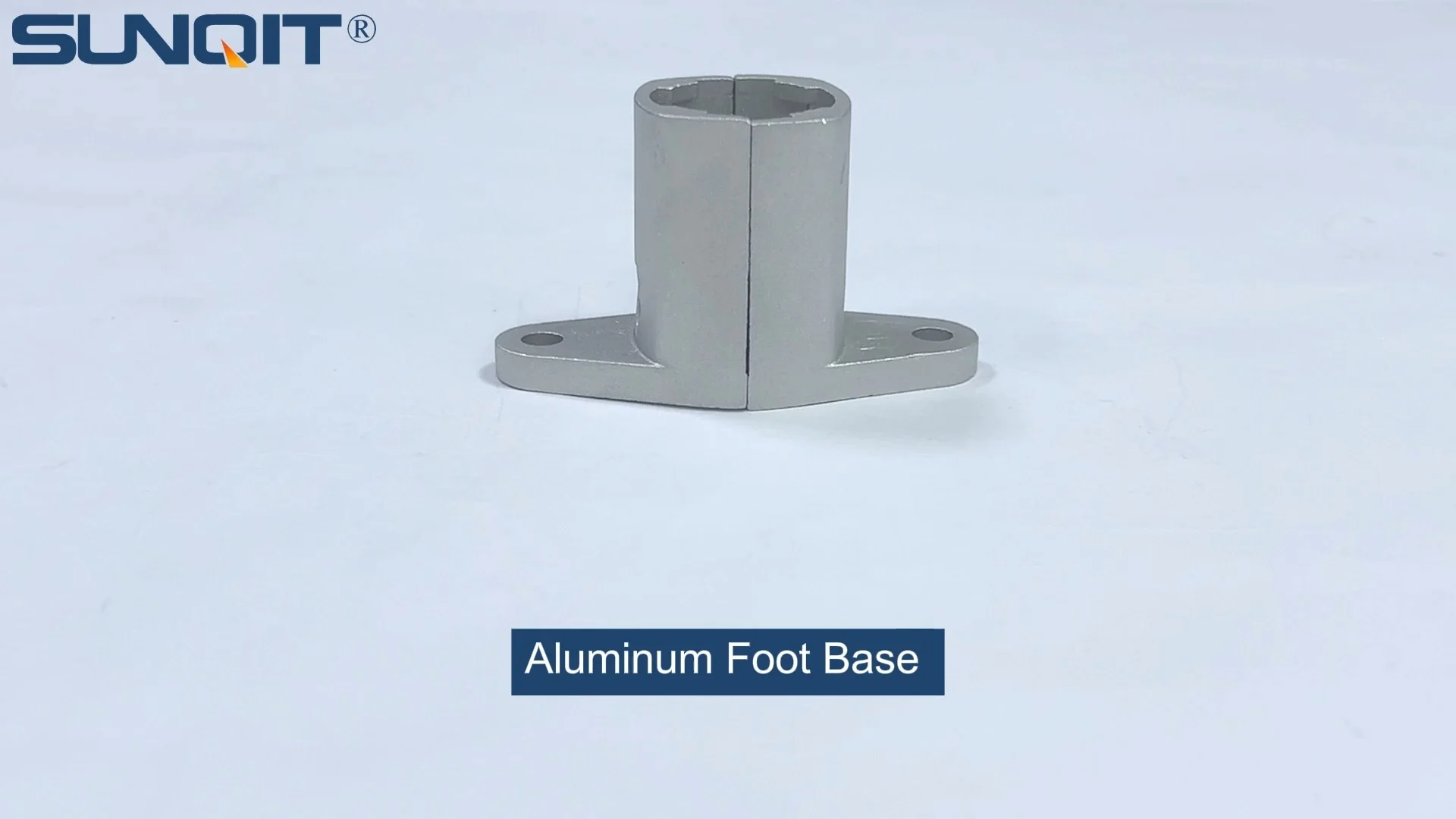
The 3C industry—encompassing computers, communications, and consumer electronics—thrives on speed, precision, and adaptability. From sleek smartphones to complex circuit boards, every product demands a manufacturing process that balances efficiency with meticulous attention to detail. While high-tech machinery and automated systems often steal the spotlight, the unsung heroes of these operations are the foundational components that keep assembly lines running smoothly. One such component, often overlooked but critically important, is the
aluminum foot base
. Far more than just a "support leg," this unassuming part plays a pivotal role in stabilizing workbenches, material racks, and production stations, directly impacting product quality, worker safety, and operational flexibility. In this article, we'll explore what makes aluminum foot bases indispensable in 3C assembly lines, diving into their key advantages and why they've become a staple for manufacturers aiming to stay competitive in a fast-evolving industry.
What Is an Aluminum Foot Base?
Before delving into its benefits, let's clarify what an aluminum foot base is and how it fits into the broader ecosystem of 3C manufacturing. Simply put, an aluminum foot base is a structural component designed to support and stabilize equipment like workbenches, conveyor systems, and material racks. It is typically crafted from
aluminum profile
—a lightweight, durable material extruded into specific shapes (e.g., square, round, or T-slot designs)—and often paired with accessories like adjustable leveling feet, brackets, or even
caster and accessories
for mobility. Its primary functions include distributing weight evenly, absorbing vibrations, adjusting height to ergonomic levels, and preventing equipment from shifting during operation.
In 3C assembly lines, where precision is non-negotiable, the aluminum foot base acts as the "silent guardian" of stability. Imagine a workbench where technicians assemble delicate smartphone motherboards: even a fraction of an inch of wobble could misalign a solder joint or damage a microchip. Here, the foot base ensures the workbench remains rock-steady, no matter how many tools, components, or workers interact with it. Similarly, in material handling areas—where racks hold thousands of small parts like screws or connectors—the foot base prevents tipping, reducing the risk of costly spills or delays.
Key Advantages of Aluminum Foot Bases in 3C Assembly Lines
1. Unmatched Stability and Load-Bearing Capacity
In 3C manufacturing, assembly stations are often loaded with heavy equipment: think soldering machines, testing rigs, or automated pick-and-place systems. A typical workbench in a PCB (Printed Circuit Board) assembly line, for example, might support 200–300 kg of tools and materials daily. Aluminum foot bases excel here, thanks to aluminum's exceptional strength-to-weight ratio. Unlike plastic foot bases, which can warp or crack under heavy loads, or steel bases, which are prone to bending under stress, aluminum profiles maintain their structural integrity even when supporting substantial weight.
This stability is further enhanced by the design of aluminum foot bases. Many are engineered with wide, flat contact surfaces that distribute weight across the factory floor, reducing pressure points and minimizing the risk of sinking into concrete or uneven surfaces. Some models also include adjustable leveling feet—small threaded components that can be twisted to compensate for floor imperfections. For 3C manufacturers, this means fewer errors caused by unstable equipment, lower scrap rates, and a more reliable production process overall.
2. Lightweight Design for Easy Reconfiguration (A Boon for Lean System Adaptability)
The 3C industry moves fast. A manufacturer might produce a budget smartphone model one month and shift to a high-end flagship the next, requiring assembly lines to be reconfigured in days, not weeks. This is where
lean system
principles—focused on minimizing waste and maximizing flexibility—come into play. Aluminum foot bases align perfectly with these goals, thanks to their lightweight nature.
Aluminum is roughly one-third the weight of steel, making aluminum foot bases easy to install, move, and reposition. For example, if a factory needs to rearrange its
workbench
layout to accommodate a new assembly process, workers can lift and adjust aluminum foot bases without heavy machinery, saving time and labor costs. In contrast, steel foot bases would require forklifts or cranes, slowing down reconfiguration and increasing the risk of workplace injuries. This agility is a game-changer for 3C manufacturers, who must adapt quickly to changing consumer demands and product designs.
3. Corrosion Resistance for Long-Term Durability
3C assembly lines are not always pristine environments. Factories may use cleaning agents to sanitize workbenches, or humidity levels may fluctuate in regions with tropical climates. Over time, these conditions can degrade metal components—unless the material is corrosion-resistant. Aluminum foot bases, especially those treated with anodization (a process that forms a protective oxide layer on the surface), stand up to moisture, chemicals, and daily wear and tear far better than untreated steel or plastic.
Consider a PCB assembly line where flux (a chemical used in soldering) occasionally spills onto workbench legs. A steel foot base might rust within months, weakening its structure and requiring replacement. An aluminum foot base, however, would resist corrosion, maintaining its strength for years. This durability translates to lower maintenance costs and fewer production disruptions—a critical advantage in an industry where downtime can cost thousands of dollars per minute.
4. Ergonomic Customization for Worker Well-Being
Worker productivity and safety are top priorities in 3C manufacturing, where repetitive tasks (e.g., inserting components into circuit boards) can lead to strain injuries if workstations are poorly designed. Aluminum foot bases address this by offering unparalleled customization options for height and alignment. Using
aluminum profile
with T-slot designs, manufacturers can easily adjust the height of workbenches to match the average stature of their workforce—typically 75–85 cm for standing workstations or 65–70 cm for seated positions. This reduces back, neck, and shoulder fatigue, lowering absenteeism and boosting overall efficiency.
Some aluminum foot bases even come with tilt-adjustable tops, allowing workers to angle workbenches slightly for better visibility when inspecting small components. For example, in a quality control station where technicians examine smartphone screens for scratches, a tilted workbench reduces eye strain and makes defects easier to spot. By prioritizing ergonomics, aluminum foot bases help manufacturers create a safer, more comfortable workplace—an increasingly important factor in attracting and retaining skilled labor.
5. Compatibility with Modular Systems
3C assembly lines rarely rely on "one-size-fits-all" equipment. Instead, they use modular systems where components (e.g., workbenches, conveyors, and racks) can be mixed and matched to suit specific tasks. Aluminum foot bases thrive in this modular world, as they are designed to integrate seamlessly with other aluminum-based components. T-slot
aluminum profile
, for instance, allows foot bases to connect with brackets, shelves, or even
caster and accessories
using simple bolts or screws—no welding or specialized tools required.
This modularity is a lifesaver during line reconfigurations. Suppose a manufacturer needs to add a new testing station to its smartphone assembly line. Instead of purchasing a brand-new workbench, they can reuse existing aluminum foot bases, attach a longer aluminum profile top, and bolt on a testing rig—all in a matter of hours. This not only cuts costs but also aligns with
lean system
goals by minimizing waste (e.g., avoiding disposal of old equipment) and maximizing resource reuse.

Aluminum vs. Steel vs. Plastic: How Do Foot Bases Compare?
| Feature | Aluminum Foot Base | Steel Foot Base | Plastic Foot Base |
|---|---|---|---|
| Weight (per unit length) | Light (2–3 kg/m for 40x40mm profile) | Heavy (7–8 kg/m for equivalent steel profile) | Very light (1–1.5 kg/m) |
| Max Load Capacity | High (up to 500 kg per base) | Very high (up to 800 kg per base) | Low (up to 150 kg per base) |
| Corrosion Resistance | Excellent (anodized aluminum resists rust/chemicals) | Poor (prone to rust without coating) | Good (resists moisture but degrades in UV light) |
| Customization | High (modular T-slot design; easy to cut/ drill) | Low (requires welding/heavy tools for modifications) | Medium (moldable but limited to fixed designs) |
| Cost (Initial/Long-Term) | Moderate initial cost; low long-term (durable, low maintenance) | Low initial cost; high long-term (prone to rust, heavy to replace) | Low initial cost; very high long-term (frequent replacement needed) |
| Ideal For | 3C assembly lines, lean systems, ergonomic workstations | Heavy industrial machinery (e.g., automotive presses) | Light-duty applications (e.g., temporary storage racks) |
As the table shows, aluminum foot bases strike the perfect balance between strength, flexibility, and cost—making them the ideal choice for 3C assembly lines. While steel may offer higher load capacity, its weight and lack of customization make it impractical for fast-paced 3C environments. Plastic, meanwhile, fails to meet the durability and stability demands of precision manufacturing. For 3C manufacturers, aluminum foot bases aren't just a component—they're an investment in long-term efficiency and reliability.

Real-World Applications: Aluminum Foot Bases in Action
To better understand the impact of aluminum foot bases, let's look at a real-world example: a leading smartphone manufacturer based in Shenzhen, China. This company produces over 5 million devices monthly and operates 20+ assembly lines, each requiring dozens of workbenches, material racks, and testing stations. A few years ago, the manufacturer was struggling with frequent workbench wobbles, leading to a 2% increase in defective PCBs—a cost of nearly $1 million annually. After switching from steel foot bases to aluminum ones (paired with adjustable leveling feet), the defect rate dropped to 0.5%, saving the company over $750,000 per year. Workers also reported less fatigue, as the new foot bases allowed for height adjustments that reduced bending and straining.
Another example comes from a laptop assembly plant in Vietnam. The plant needed to reconfigure its lines every 3–4 months to accommodate new laptop models, a process that previously took 2–3 days using steel foot bases (due to their weight and difficulty in modification). By switching to aluminum foot bases, the reconfiguration time was cut to just 8 hours—allowing the plant to launch new products faster and respond to market trends with greater agility. The lightweight aluminum also reduced the risk of worker injuries during moves, lowering the company's insurance costs.

Conclusion: Why Aluminum Foot Bases Are a Must-Have for 3C Manufacturers
In the high-stakes world of 3C manufacturing, success hinges on the details. While flashy technologies like AI-driven quality control or robotic assembly lines grab headlines, it's the foundational components—like the aluminum foot base—that keep operations running smoothly. Offering unmatched stability, flexibility, and durability, aluminum foot bases support everything from delicate PCB assembly to heavy material handling, directly impacting product quality, worker safety, and operational efficiency.
For manufacturers aiming to thrive in a competitive landscape, investing in aluminum foot bases is a no-brainer. They align with
lean system
principles by enabling quick reconfigurations, reduce long-term costs through durability, and enhance worker well-being through ergonomic design. As the 3C industry continues to evolve—with smaller, more complex products and faster production cycles—the aluminum foot base will remain a critical tool for building resilient, adaptable, and high-performing assembly lines. After all, in manufacturing, as in architecture, a strong foundation is the first step toward lasting success.