- Company Articles
- Products and Technology
- Product knowledge
- Aluminum Foot Base in Consumer Electronics Manufacturing: Precision Requirements

Aluminum Foot Base in Consumer Electronics Manufacturing: Precision Requirements
Related Product
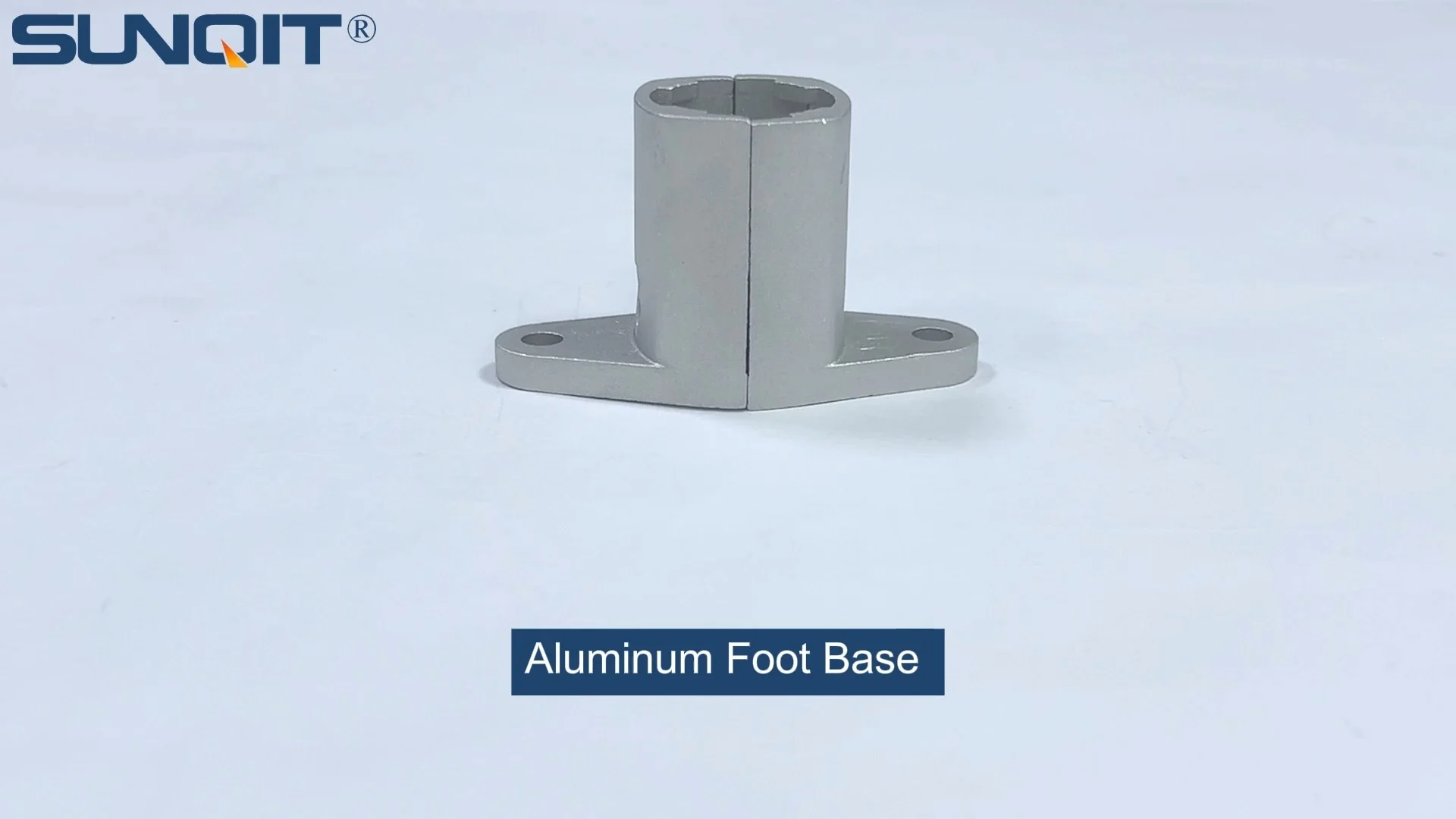
Aluminum Foot Base
Aluminum foot base to connect 28mm aluminum pipe and fixed it on the ground and prevent pipe fall and move.
In the fast-paced world of consumer electronics, where smartphones slim down to the thickness of a credit card and smartwatches pack more computing power than early laptops, precision isn't just a buzzword—it's the backbone of reliability. Every component, no matter how small, plays a role in ensuring that the final product functions flawlessly. Among these unsung heroes are aluminum foot bases: unassuming yet critical parts that stabilize workbenches, align assembly lines, and support the delicate dance of microchip placement and circuit soldering. In an industry where a 0.1mm misalignment can ruin a batch of $500 smartphones, the precision of these foot bases isn't just important—it's non-negotiable. Let's dive into why aluminum foot bases have become indispensable in consumer electronics manufacturing, the exacting standards they must meet, and how they shape the future of high-tech production.
1. The Unsung Hero: What Is an Aluminum Foot Base, and Why Does It Matter?
At first glance, an aluminum foot base might seem like little more than a metal block with a threaded rod. But in reality, it's the silent foundation of manufacturing efficiency. These components are typically mounted at the bottom of workbenches, material racks, or conveyor systems, providing a stable, adjustable platform that keeps equipment level and vibration-free. In consumer electronics manufacturing—where workers handle tiny components like 0.5mm camera modules or 7nm microprocessors—even the smallest wobble can lead to costly errors. A well-designed aluminum foot base absorbs vibrations from nearby machinery, ensures that assembly jigs stay aligned, and keeps work surfaces flat enough to support automated optical inspection (AOI) systems, which rely on pinpoint accuracy to detect defects.
Consider a typical smartphone assembly line. Each station—from PCB soldering to screen bonding—requires precise alignment. If the workbench at the screen-bonding station tilts by just 0.5 degrees, the adhesive might spread unevenly, leading to air bubbles or, worse, a cracked display. Here, aluminum foot bases shine: their adjustable height and rigid structure allow technicians to fine-tune the workbench's level to within 0.1mm, ensuring that every screen bonds perfectly. Similarly, in testing areas, where devices undergo drop tests or thermal cycling, foot bases with anti-slip features prevent equipment from shifting, ensuring consistent test results. In short, aluminum foot bases don't just support equipment—they support the entire promise of quality that consumer electronics brands make to their customers.
2. Why Aluminum? The Material Science Behind the Choice
When it comes to manufacturing foot bases, aluminum isn't the only option. Steel is stronger, plastic is cheaper, and wood is… well, wood. But aluminum's unique blend of properties makes it the gold standard for consumer electronics manufacturing. Let's break it down:
Lightweight yet strong: Consumer electronics factories are dynamic environments, with workbenches and material racks often reconfigured to accommodate new product lines. Aluminum foot bases, made from high-grade aluminum extrusion profiles, offer the perfect balance of strength and portability. A typical aluminum foot base weighs 30-50% less than a steel equivalent, making it easy for workers to move and adjust without heavy machinery. Yet, thanks to aluminum's inherent strength—especially when alloyed with magnesium or silicon—it can support loads of up to 500kg per foot, more than enough for even the heaviest AOI machines or automated assembly arms.
Corrosion resistance: Electronics manufacturing facilities are often kept clean and climate-controlled, but they're not immune to moisture. Cleaning agents, accidental spills, or even high humidity can take a toll on metal components. Aluminum's natural oxide layer acts as a barrier against rust, ensuring that foot bases remain functional for years without degradation. This is a stark contrast to steel, which requires regular painting or galvanizing to prevent corrosion, adding maintenance costs over time.
Machinability and precision: Aluminum is a dream to machine. Unlike plastic, which can warp under heat, or steel, which requires specialized tools, aluminum extrusion profiles can be cut, drilled, and threaded with tight tolerances—often as low as ±0.05mm. This precision is critical for foot bases, where the threaded rod (used for height adjustment) must align perfectly with the base plate to avoid binding. Aluminum's malleability also allows for complex designs, such as integrated gussets or anti-slip pads, which enhance stability without adding unnecessary weight.

3. Precision Requirements: The Numbers That Define Reliability
In consumer electronics manufacturing, "precision" isn't a vague term—it's a set of measurable standards. Aluminum foot bases must meet these standards to earn a place on the factory floor. Let's explore the key metrics:
Dimensional accuracy: The most basic requirement is that the foot base's dimensions match the design specs. For example, a standard aluminum foot base might have a base plate measuring 80mm x 80mm, with a threaded rod of M12 (12mm diameter). The tolerance here is typically ±0.1mm for the plate and ±0.05mm for the rod. Why so tight? If the rod is too thick, it won't fit into the workbench's mounting hole; if it's too thin, it will wobble, compromising stability. Similarly, the plate's flatness is critical—any bowing or warping (measured as total indicator runout, or TIR) must be less than 0.02mm over the entire surface. This ensures that the foot base sits flush against the floor, distributing weight evenly.
Load-bearing consistency: A foot base might look sturdy, but if it deforms under load, it's useless. Manufacturers test aluminum foot bases by applying 150% of their rated load (e.g., 750kg for a 500kg-rated base) and measuring deflection. The maximum allowable deflection is 0.1mm per 100kg of load—meaning a 500kg load should cause no more than 0.5mm of bending. This ensures that even under the weight of heavy equipment, the workbench remains level and stable.
Thermal stability: Consumer electronics factories often use ovens for curing adhesives or testing devices under extreme temperatures. These temperature fluctuations (from 15°C to 40°C or more) can cause materials to expand or contract. Aluminum has a coefficient of thermal expansion (CTE) of 23.1 x 10⁻⁶/°C, which is higher than steel but lower than plastic. However, its low mass means it heats and cools quickly, minimizing warping. More importantly, aluminum foot bases are designed to work with aluminum profile accessories, such as brackets and clamps, which have matching CTEs. This ensures that the entire system expands and contracts uniformly, avoiding stress that could loosen connections or misalign components.

4. From Design to Production: How Aluminum Foot Bases Are Made
Creating an aluminum foot base that meets these precision requirements is a multi-step process that blends art and science. It starts with design, where engineers use CAD software to model the foot base, considering factors like load distribution, adjustability, and compatibility with standard workbench designs. Once the design is finalized, production begins with aluminum extrusion—a process where heated aluminum billets are forced through a die to create the base's profile. Extrusion is ideal here because it allows for complex cross-sections (like T-slots for mounting accessories) with consistent dimensions along the entire length.
After extrusion, the profiles are cut to length using precision saws, which can achieve tolerances of ±0.05mm. The next step is machining: drilling holes for the threaded rod, tapping threads, and adding features like anti-slip pads or leveling indicators. For critical applications, CNC machines are used to ensure that every hole is drilled at the exact angle and depth specified. Surface finishing comes next—most aluminum foot bases undergo anodizing, a process that thickens the natural oxide layer, enhancing corrosion resistance and adding a durable, matte finish. Some are also powder-coated for color coding (e.g., yellow for "adjustable" or red for "fixed" bases), making them easier to identify on the factory floor.
Quality control is woven into every step. After machining, each foot base is inspected using coordinate measuring machines (CMMs), which check dimensions to within 0.001mm. Load tests are performed on random samples to ensure they meet deflection standards, and thermal cycling tests simulate years of temperature changes to verify stability. Only after passing these checks do the foot bases get shipped to manufacturers, ready to support the next generation of consumer electronics.

5. Integrating with Lean Systems: Aluminum Foot Bases in Modern Manufacturing
Today's consumer electronics manufacturers don't just chase precision—they chase efficiency. Lean manufacturing principles, which focus on minimizing waste and maximizing value, have become the norm. Here, aluminum foot bases play a surprisingly central role. Lean systems thrive on flexibility: the ability to reconfigure workstations quickly, adapt to new product designs, and reduce downtime. Aluminum foot bases, with their lightweight design and modularity, align perfectly with this ethos.
For example, consider a lean production line that switches from assembling smartwatches to fitness trackers. The workbenches, which previously held watch-specific jigs, need to be repositioned and fitted with new tools. Aluminum foot bases with adjustable height and swivel casters (another key accessory) allow workers to move the benches in minutes, rather than hours. Once in place, the casters can be locked, and the foot bases adjusted to level the workbench—all without specialized tools. This reduces changeover time, a critical metric in lean manufacturing, and ensures that the line is back up and running quickly.
Aluminum foot bases also support lean principles by improving ergonomics. In traditional setups, workers might strain to reach components on a poorly positioned workbench, leading to fatigue and errors. With adjustable aluminum foot bases, workbenches can be raised or lowered to match each worker's height, reducing the risk of injury and increasing productivity. This focus on worker well-being isn't just humanitarian—it's lean: fewer injuries mean less downtime, and more comfortable workers are more efficient.
6. Comparing Traditional vs. Aluminum Foot Bases: A Closer Look
To truly appreciate the impact of aluminum foot bases, let's compare them to two common alternatives: steel foot bases and plastic foot bases. The table below highlights key differences in precision, durability, and cost:
| Feature | Steel Foot Bases | Plastic Foot Bases | Aluminum Foot Bases |
|---|---|---|---|
| Precision Tolerance | ±0.2mm (due to higher weight and machining difficulty) | ±0.3mm (prone to warping under load/heat) | ±0.05mm (excellent machinability and low warpage) |
| Weight (per unit) | 1.5-2.0kg | 0.5-0.8kg | 0.8-1.2kg |
| Load Capacity | High (up to 800kg) | Low (up to 200kg) | Medium-High (up to 500kg) |
| Corrosion Resistance | Poor (requires coating) | Good (but prone to UV degradation) | Excellent (natural oxide layer) |
| Thermal Stability | Good (low CTE, but heavy) | Poor (high CTE, prone to warping) | Very Good (moderate CTE, low mass) |
| Cost (Relative) | High (material + coating) | Low (but short lifespan) | Moderate (but long lifespan, low maintenance) |
As the table shows, aluminum foot bases strike the perfect balance: they offer precision that rivals steel, weight close to plastic, and durability that outperforms both. For consumer electronics manufacturers, this balance translates to lower long-term costs, fewer production errors, and greater flexibility—all critical in an industry where margins are tight and innovation never stops.
7. Real-World Impact: Case Studies from the Factory Floor
To understand how aluminum foot bases transform manufacturing, let's look at two real-world examples:
Case Study 1: A Major Smartphone Manufacturer A leading smartphone brand was struggling with high defect rates in its camera module assembly line. After investigating, engineers found that the workbench at the module-placement station was vibrating due to nearby conveyor belts, causing the robotic arm to misalign the modules by 0.2mm—just enough to blur photos. The factory was using steel foot bases, which were heavy and difficult to adjust. Switching to aluminum foot bases with integrated vibration-dampening pads reduced vibration by 70%. The adjustable height feature also allowed technicians to level the workbench to within 0.05mm, aligning the robotic arm perfectly. Within three months, defect rates dropped by 45%, saving the company over $2 million annually.
Case Study 2: A Wearables Startup A small startup producing fitness trackers needed to quickly scale production. Their initial setup used plastic foot bases, which warped under the heat of soldering irons, leading to frequent workbench re-leveling. This downtime was costing them valuable production hours. By switching to aluminum foot bases and compatible aluminum profile workbenches, they reduced re-leveling time from 30 minutes per day to 5 minutes. The lightweight aluminum also made it easy to reconfigure the line as they added new tracker models, cutting changeover time by 60%. Today, they produce 20% more units per day with the same number of workers.
8. The Future of Aluminum Foot Bases: Innovations on the Horizon
As consumer electronics continue to evolve—with foldable screens, AI-powered devices, and even more compact designs—the demand for precision will only grow. Aluminum foot bases are evolving too, with manufacturers exploring new innovations:
Smart foot bases: Imagine foot bases embedded with sensors that monitor load, temperature, and vibration in real time. If a foot base starts to wear or a workbench becomes unlevel, the sensor could send an alert to maintenance, preventing downtime. Some manufacturers are already testing prototypes with Bluetooth connectivity, allowing factory managers to track equipment health via a smartphone app.
Sustainable materials: With the electronics industry under pressure to reduce its carbon footprint, aluminum foot base suppliers are increasingly using recycled aluminum. Recycled aluminum requires 95% less energy to produce than primary aluminum, without sacrificing strength or precision. Additionally, modular designs are making it easier to repair or replace parts of the foot base (like the threaded rod) rather than replacing the entire unit, reducing waste.
3D-printed customization: While aluminum extrusion is ideal for standard designs, 3D printing (using aluminum alloys) allows for highly customized foot bases with complex geometries—such as integrated cable management or ergonomic grips. This is particularly useful for niche applications, like testing stations for medical devices or aerospace components, where standard foot bases won't suffice.
9. Conclusion: Precision That Powers Innovation
In the grand scheme of consumer electronics manufacturing, aluminum foot bases may not get the same attention as the latest chipset or camera technology. But without them, the precision that defines modern electronics would be impossible. These unassuming components—crafted from aluminum extrusion profiles, machined to microscopic tolerances, and designed to work seamlessly with lean systems—are the quiet enablers of innovation. They ensure that when you unbox your next smartphone, smartwatch, or tablet, it works as flawlessly as the day it left the factory.
As we look to the future, one thing is clear: the demand for precision will only intensify. And as it does, aluminum foot bases will continue to evolve, adapting to new materials, new technologies, and new challenges. For manufacturers, investing in high-quality aluminum foot bases isn't just a cost—it's an investment in reliability, efficiency, and the trust of customers who expect nothing less than perfection. After all, in the world of consumer electronics, the smallest details often make the biggest difference.