- Company Articles
- Products and Technology
- Application Cases
- Aluminum Foot Base in Lean Manufacturing: Supporting Kaizen Continuous Improvement

Aluminum Foot Base in Lean Manufacturing: Supporting Kaizen Continuous Improvement
Related Product
Aluminum Foot Base
Aluminum foot base to connect 28mm aluminum pipe and fixed it on the ground and prevent pipe fall and move.
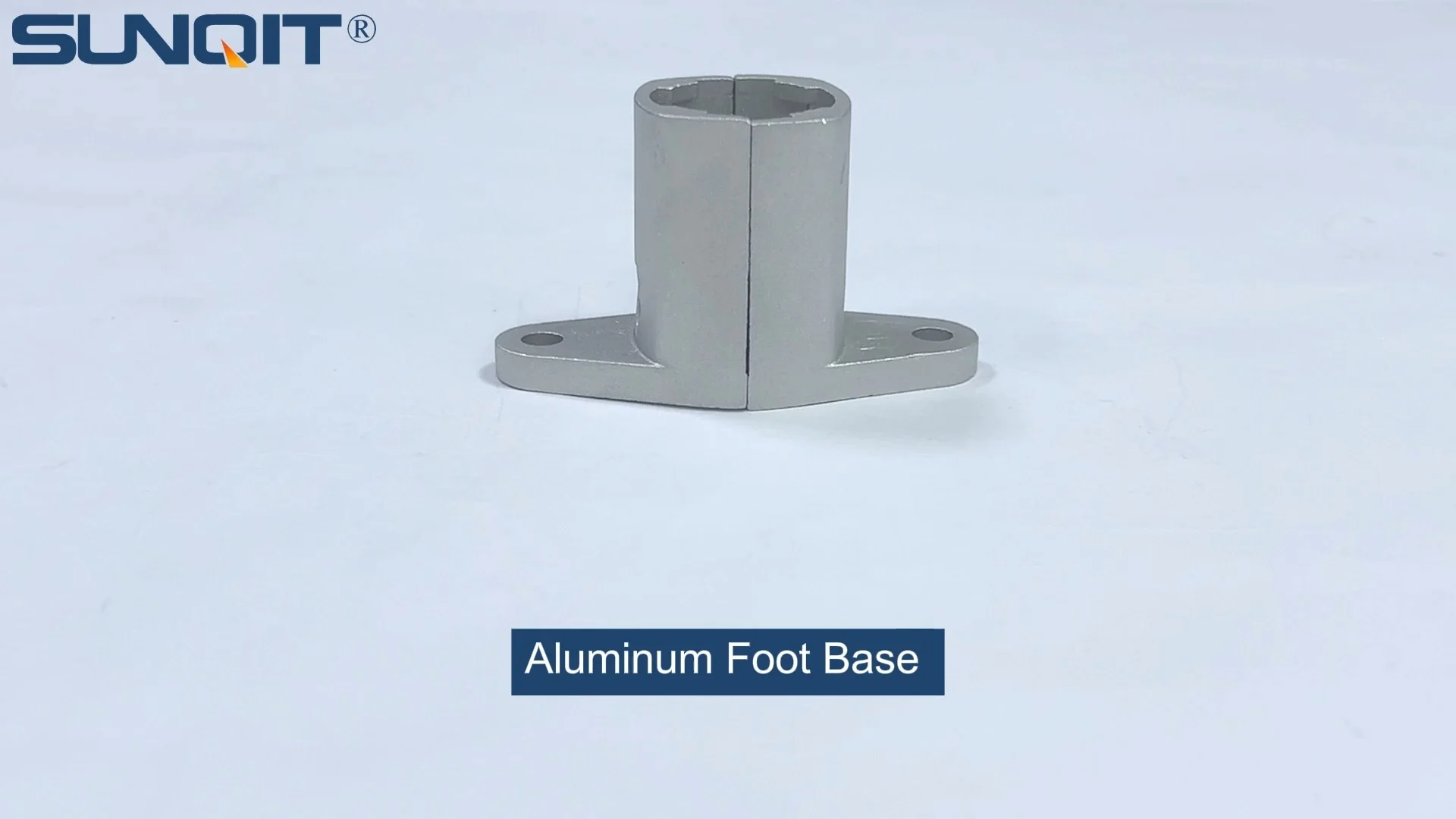
In the world of manufacturing, where every second counts and efficiency is the backbone of success, lean manufacturing has long been the gold standard. At its core, lean is about more than just cutting costs or speeding up production—it's a philosophy rooted in kaizen , the Japanese term for "continuous improvement." Kaizen thrives on the idea that small, incremental changes, when applied consistently, lead to transformative results. Yet, for all its focus on big-picture workflows and waste reduction, lean success often hinges on the smallest, most unassuming components. One such unsung hero? The aluminum foot base .
Walk through any lean-focused factory, and you'll see workbenches humming with activity, material racks gliding smoothly, and assembly lines where every movement feels intentional. What you might not notice, however, is what's holding it all together: the stable, unyielding foundation of aluminum foot bases. These unobtrusive components may not grab headlines, but they play a critical role in creating the stability, flexibility, and adaptability that kaizen demands. In this article, we'll dive into how aluminum foot bases support lean manufacturing, empower continuous improvement, and why they've become indispensable for manufacturers striving to build more efficient, resilient operations.
What Is an Aluminum Foot Base, and Why Does It Matter?
At first glance, an aluminum foot base might seem like little more than a simple metal plate or stand. But in reality, it's a precision-engineered component designed to stabilize equipment like workbenches, material racks, turnover trolleys, and even conveyor systems. Made from high-grade aluminum—often aluminum profile extrusions—it's built to balance strength, lightness, and durability. Think of it as the "feet" of your manufacturing setup: just as a solid foundation keeps a house standing, a reliable foot base ensures that work surfaces, storage units, and tools stay steady, secure, and ready for action.
But why aluminum? Unlike steel, which is heavy and prone to rust, or plastic, which lacks structural integrity, aluminum strikes a rare balance. It's lightweight enough to make equipment easy to reconfigure (a must for kaizen's "flexible layout" goals) yet strong enough to support heavy loads—think stacks of raw materials or fully loaded workbenches. Its natural resistance to corrosion means it holds up in dusty, humid, or even mildly chemical-exposed environments, reducing maintenance costs over time. And because aluminum is infinitely recyclable, it aligns with the growing focus on sustainability in modern manufacturing—a key pillar of lean's "green" evolution.
Perhaps most importantly, aluminum foot bases are designed with modularity in mind. They're engineered to work seamlessly with other lean components, from aluminum pipe frames to casters (for mobile setups) and adjustable height mechanisms. This compatibility isn't just convenient—it's essential for kaizen. When a team identifies a better way to arrange a workstation, they don't need to replace entire systems; they can simply adjust or swap out the foot base to fit the new layout. That adaptability turns "continuous improvement" from a buzzword into a daily reality.
The Role of Aluminum Foot Bases in Kaizen: Stability as a Catalyst for Improvement
Kaizen is all about eliminating waste—whether that's wasted time, motion, or materials. But here's the thing: instability creates waste. A wobbly workbench might lead to spilled parts or imprecise assembly, forcing workers to slow down or redo tasks. A material rack that shifts under load could cause inventory to topple, leading to damage or delays. Even a slight tilt in a conveyor system can throw off product flow, creating bottlenecks. In short, instability is the enemy of efficiency—and that's where aluminum foot bases step in.
By providing a rock-solid foundation, aluminum foot bases eliminate these hidden sources of waste. For example, consider a workbench in an electronics assembly line. Precision is critical here; even a millimeter of wobble could result in a faulty solder joint or misaligned component. An aluminum foot base with adjustable height and anti-slip padding ensures the workbench stays level, even when operators lean on it or move tools across the surface. The result? Fewer defects, faster assembly times, and less rework—all key metrics for kaizen success.
But stability isn't just about preventing errors. It also empowers workers to suggest improvements. When employees trust that their tools and work surfaces won't shift or fail, they're more likely to experiment with new processes. Maybe they want to rearrange their tools for better ergonomics, or add a second shelf to a material rack to reduce bending. With a stable base, these changes feel low-risk and easy to test. Over time, this culture of experimentation fuels a cycle of small wins—exactly what kaizen is built on.
Take the example of a automotive parts manufacturer we worked with last year. Their assembly line for brake components had long struggled with quality issues: roughly 5% of parts were rejected due to misalignment during the final inspection. The team assumed the problem was with the assembly tools, but after a kaizen workshop, they realized the root cause was simpler: the workbench itself was unstable. Its steel foot bases had rusted over time, creating tiny gaps that caused the surface to wobble. Switching to aluminum foot bases with adjustable leveling feet eliminated the wobble overnight. Within a month, rejection rates dropped to 1.2%—a 76% improvement. And because the new foot bases were compatible with the existing workbench frame, the upgrade cost just a fraction of replacing the entire setup. That's the power of focusing on foundational components.

Aluminum Foot Bases vs. Traditional Options: A Lean-Focused Comparison
To truly appreciate the value of aluminum foot bases, it helps to compare them to the alternatives. Let's break down how they stack up against steel and plastic foot bases—the two most common traditional options—in terms of key lean metrics like cost, durability, flexibility, and waste reduction.
| Feature | Steel Foot Bases | Plastic Foot Bases | Aluminum Foot Bases |
|---|---|---|---|
| Weight | Heavy (hard to reconfigure; increases shipping costs) | Light (but prone to bending under load) | Lightweight (easy to move/reposition; reduces labor for layout changes) |
| Durability | Strong, but rusts in humid/dusty environments; requires frequent painting | Corrosion-resistant, but cracks under heavy loads or impact | Corrosion-resistant; withstands heavy loads and impacts without deforming |
| Flexibility | Limited modularity (often welded; hard to adjust or replace) | Modular, but poor compatibility with metal components | Highly modular; compatible with aluminum pipes, casters, and adjustable mechanisms |
| Cost Over Time | Low upfront cost, but high maintenance (rust repair, repainting) | Very low upfront cost, but short lifespan (needs frequent replacement) | Higher upfront cost, but minimal maintenance and long lifespan (lower total cost of ownership) |
| Waste Reduction | Heavy weight increases energy use for transport; rusted parts become waste | Short lifespan leads to frequent disposal; non-recyclable plastics create landfill waste | Lightweight reduces transport energy; recyclable; long lifespan minimizes replacement waste |
The table tells a clear story: while steel and plastic have their place, aluminum foot bases excel in the areas that matter most for lean and kaizen. Their lightweight design cuts down on the labor required to reconfigure workspaces—a critical factor when your team wants to test a new layout in an afternoon. Their durability means fewer replacements, reducing downtime and material waste. And their modularity ensures they grow with your needs, so you're not locked into a "one-and-done" setup.
Take, for instance, a small electronics manufacturer that switched from plastic to aluminum foot bases on their material racks. Previously, their plastic bases would crack after 6–8 months of heavy use, requiring the team to halt production and replace them. The aluminum bases, by contrast, have lasted over three years with no signs of wear. The upfront cost was higher, but the savings in replacement parts, labor, and downtime paid for the upgrade in less than a year. More importantly, the stability of the aluminum bases reduced part damage during storage—another win for waste reduction.

Beyond Stability: How Aluminum Foot Bases Enable Modern Lean Innovations
As manufacturing evolves, so too does lean. Today's factories aren't just focused on eliminating waste—they're also embracing smart technologies, ergonomic design, and sustainability. Aluminum foot bases are evolving right alongside them, enabling innovations that make kaizen even more powerful.
One area where this is particularly evident is ergonomics. Modern workplaces prioritize worker health, recognizing that comfortable, injury-free employees are more productive and engaged. Aluminum foot bases support this by offering adjustable height mechanisms. Workers can tweak the height of their workbenches or material racks to match their own body proportions, reducing strain on backs, shoulders, and wrists. This isn't just a "nice-to-have"—it's a kaizen win. A study by the Occupational Safety and Health Administration (OSHA) found that ergonomic workstations reduce absenteeism by up to 25% and increase productivity by 15–20%. With aluminum foot bases, these adjustments are quick and tool-free, letting teams tailor their setups in minutes rather than days.
Then there's the rise of "smart lean" factories, where sensors and data analytics drive improvement. Aluminum foot bases are increasingly being integrated with load sensors that monitor weight distribution on workbenches or racks. If a shelf is overloaded, the sensor alerts the team before a collapse occurs—preventing damage and downtime. Or, if a workbench is consistently underused, the data might prompt a kaizen event to reallocate space. This blend of physical stability and digital insight is redefining what continuous improvement looks like.
Sustainability is another frontier. As companies aim to reduce their carbon footprints, aluminum's recyclability becomes a major advantage. Unlike plastic foot bases, which often end up in landfills, or steel bases that require energy-intensive rust treatments, aluminum foot bases can be melted down and reused at the end of their lifespan. Some manufacturers even use recycled aluminum in their foot bases, cutting down on raw material extraction. For lean operations, this aligns with the "reduce, reuse, recycle" ethos—turning environmental responsibility into a competitive edge.

Choosing the Right Aluminum Foot Base: Key Considerations for Lean Teams
Not all aluminum foot bases are created equal. To maximize their impact on kaizen, teams need to choose the right type for their specific needs. Here are a few key factors to consider:
Load Capacity: Start by calculating the maximum weight the foot base will need to support. A workbench used for light assembly might require a 200kg capacity, while a material rack storing metal parts could need 500kg or more. Overloading a foot base leads to instability—exactly what you're trying to avoid.
Adjustability: Look for foot bases with leveling feet or height-adjustable mechanisms. These are critical for uneven floors (common in older factories) or for ergonomic customization. Some models even offer swivel adjustments, making it easier to align workbenches with conveyor systems or other equipment.
Compatibility: Ensure the foot base works with your existing aluminum pipe frames, workbenches, or racks. Most manufacturers provide compatibility charts, but when in doubt, opt for modular designs that use standard connectors. This future-proofs your setup for when kaizen calls for a redesign.
Environment: Consider your factory's conditions. If you work with chemicals or high humidity, look for foot bases with extra corrosion-resistant coatings. For cleanrooms or food-grade facilities, choose models with smooth, easy-to-clean surfaces and no crevices where dust or bacteria can hide.
Sustainability: Ask suppliers about the recycled content of their aluminum and their recycling programs for old bases. Choosing eco-friendly options aligns with lean's long-term goals and can even boost your brand reputation.
Conclusion: The Small Component That Drives Big Change
In the grand scheme of lean manufacturing, the aluminum foot base may seem. It doesn't have the flash of a high-tech conveyor system or the complexity of a robotic arm. But as we've explored, its impact is profound. By providing stability, flexibility, and durability, it creates the foundation on which kaizen thrives. It turns wobbly workbenches into hubs of precision, rigid layouts into adaptable spaces, and short-lived equipment into long-term assets.
Kaizen teaches us that continuous improvement isn't about grand gestures—it's about paying attention to the details. It's about the workbench that stays steady during a 12-hour shift, the material rack that never sags under pressure, and the team that feels confident to experiment because their tools won't let them down. In that sense, the aluminum foot base isn't just a component; it's a symbol of lean's core truth: success lies in the strength of your foundation.
So the next time you walk through a lean factory, take a moment to look down. The aluminum foot bases holding up those workbenches and racks might not be glamorous, but they're hard at work—supporting kaizen, one small, steady step at a time.