- Company Articles
- Products and Technology
- Product knowledge
- Aluminum Foot Base in Mechanical Engineering: Supporting Precision Machinery

Aluminum Foot Base in Mechanical Engineering: Supporting Precision Machinery
Related Product
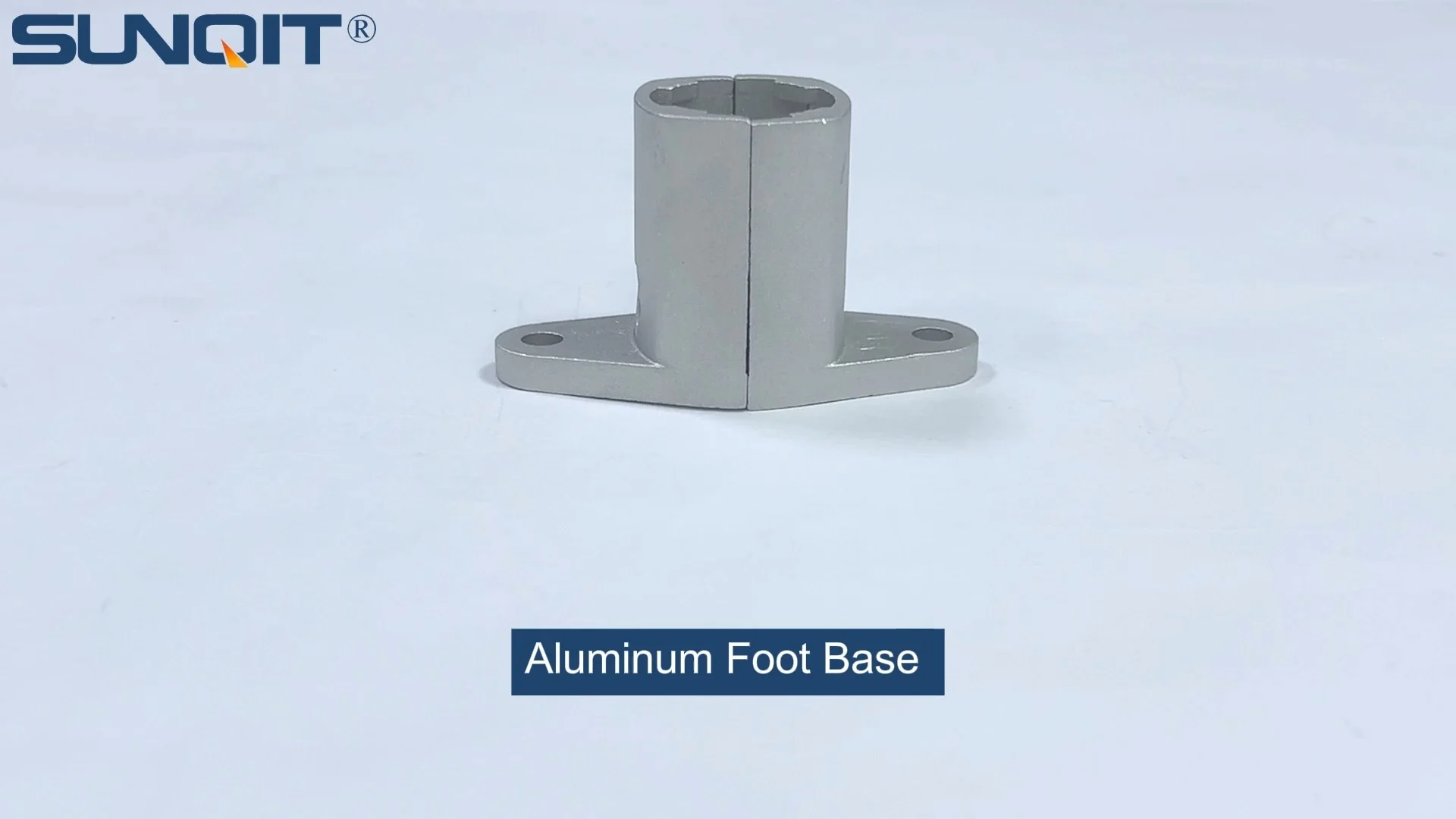
Aluminum Foot Base
Aluminum foot base to connect 28mm aluminum pipe and fixed it on the ground and prevent pipe fall and move.
The unsung hero behind stable, efficient, and accurate industrial operations
In the fast-paced world of manufacturing and industrial production, precision is everything. From the smallest electronic components in your smartphone to the massive gears in automotive assembly lines, the machinery that creates these products relies on one critical factor: stability. Even the tiniest wobble, the slightest vibration, or a fraction of a millimeter misalignment can turn a flawless product into a costly defect. Yet, amid the buzz of high-tech robots, advanced sensors, and automated systems, there's a humble component working quietly in the background to ensure this stability—the aluminum foot base. Often overlooked, this unassuming piece of engineering is the backbone that supports precision machinery, enabling industries to push the boundaries of accuracy and efficiency.
But what exactly is an aluminum foot base, and why does it matter so much? In this article, we'll dive into the world of mechanical engineering's unsung hero, exploring how aluminum foot bases are designed, why they're made from materials like aluminum extrusion profile, and how they integrate with other components such as aluminum pipe accessories and workbench systems. We'll also uncover the key role they play in industries ranging from aerospace to electronics, and why they've become the go-to choice for engineers seeking reliability, durability, and performance.
What Is an Aluminum Foot Base?
At its core, an aluminum foot base is a foundational component designed to support heavy machinery, equipment, or structures while ensuring stability, leveling, and vibration dampening. Think of it as the "feet" of a machine—only instead of being rigid and fixed, these feet are engineered to adapt, absorb, and stabilize. Typically made from aluminum extrusion profile, aluminum foot bases come in various shapes and sizes, but they all share a few key features: a broad, flat base plate to distribute weight, adjustable height mechanisms (often via threaded screws or bolts), and connection points to secure the machinery above.
Unlike generic metal blocks or plastic stands, aluminum foot bases are precision-engineered for industrial use. They're not just about holding something up—they're about holding it steady . For example, in a semiconductor manufacturing plant, where even a micron of misalignment can ruin a batch of microchips, the aluminum foot bases under the lithography machines must keep the equipment perfectly level and isolate it from floor vibrations caused by nearby conveyor systems or forklifts. In a medical device lab, where 3D printers create intricate surgical tools, the foot base ensures the printer bed doesn't shift mid-print, resulting in precise, consistent products.
Another key function of aluminum foot bases is adaptability. Manufacturing floors are rarely perfectly flat, and machinery often needs to be aligned with other equipment (like a conveyor belt feeding parts into an assembly workbench). Aluminum foot bases solve this with their adjustable height screws—turning the screw raises or lowers that corner of the machine, allowing operators to fine-tune the level until everything is perfectly aligned. This adjustability also helps accommodate uneven wear over time, ensuring the machinery remains stable throughout its lifespan.
Why Aluminum? The Material Advantage of Aluminum Extrusion Profile
If stability is the goal, why choose aluminum over other materials like steel or plastic? The answer lies in the unique properties of aluminum extrusion profile, the material most commonly used to make aluminum foot bases. Aluminum extrusion is a manufacturing process where aluminum alloy is pushed through a die to create complex cross-sectional shapes—think of it like squeezing toothpaste through a tube, but with metal. This process allows engineers to design foot bases with custom geometries, optimizing for strength, weight, and functionality.
Let's break down the advantages of aluminum extrusion profile for foot bases:
- Strength-to-Weight Ratio: Aluminum is significantly lighter than steel (about one-third the weight) but still boasts impressive strength. This makes aluminum foot bases easier to install—no need for heavy lifting equipment—and reduces the overall load on factory floors, which is critical for multi-story manufacturing facilities or older buildings with weight restrictions.
- Corrosion Resistance: Aluminum naturally forms a thin oxide layer when exposed to air, protecting it from rust and corrosion. Unlike steel, which requires painting or coating to prevent degradation, aluminum foot bases can withstand humid environments, chemical spills, and even outdoor use without losing structural integrity. This is a game-changer in industries like food processing or pharmaceuticals, where cleanliness and resistance to sanitizing agents are non-negotiable.
- Customizability: Thanks to extrusion, aluminum foot bases can be tailored to specific machinery needs. Need a foot base with integrated cable management channels? Or one with a T-slot design to attach aluminum pipe accessories like side guards? Extrusion makes it possible. This flexibility ensures the foot base doesn't just support the machine but integrates seamlessly into the larger system, whether it's a workbench, a conveyor, or a material rack.
- Thermal Conductivity: While not always a primary consideration, aluminum's ability to conduct heat can be beneficial in machinery that generates significant heat, like industrial ovens or laser cutters. The foot base can help dissipate some of that heat away from the machine, preventing overheating and extending component life.
To put this into perspective, let's compare aluminum foot bases with their steel and plastic counterparts using a simple table:
| Feature | Aluminum Foot Base (Aluminum Extrusion Profile) | Steel Foot Base | Plastic Foot Base |
|---|---|---|---|
| Weight | Light (1/3 the weight of steel) | Heavy (requires machinery for installation) | Very light (but less stable for heavy loads) |
| Corrosion Resistance | High (natural oxide layer) | Low (prone to rust; requires coating) | High (but can degrade in UV light or chemicals) |
| Strength | High (suitable for most industrial loads) | Very high (overkill for many applications) | Low (not ideal for heavy machinery) |
| Customization | High (extrusion allows complex shapes) | Low (limited to simple cuts and welds) | Medium (injection molding for simple designs) |
| Cost (Long-Term) | Moderate (low maintenance offsets initial cost) | High (coating, maintenance, and installation costs add up) | Low (but needs frequent replacement) |
As the table shows, aluminum strikes the perfect balance between strength, weight, and practicality. Steel may be stronger, but its weight makes installation and reconfiguration a hassle, and its susceptibility to rust means ongoing maintenance. Plastic is cheap and lightweight, but it lacks the load-bearing capacity for heavy precision machinery and can warp under heat or stress. Aluminum, on the other hand, offers the best of all worlds—strong enough for industrial use, light enough for easy handling, resistant to corrosion, and customizable to fit any need.

Key Design Features of Aluminum Foot Bases
While the material is critical, the design of an aluminum foot base is what truly makes it effective. Engineers don't just "slap a block of aluminum under a machine"—they carefully craft each component to address specific industrial challenges. Let's explore the key design features that set aluminum foot bases apart:
1. Adjustable Height Mechanisms
One of the most important features of an aluminum foot base is its ability to adjust height. This is typically achieved with a threaded screw or bolt that extends from the bottom of the base plate. By turning the screw, the foot base can be raised or lowered by a few millimeters to several centimeters, depending on the design. For example, a foot base used under a workbench might have a 50mm adjustment range, allowing operators to level the bench even if the factory floor has a slight slope.
The threads on these screws are often coarse and durable, designed to hold the adjusted height without slipping under load. Some high-end models even include locknuts to secure the position once leveling is complete, preventing accidental adjustments from vibrations or impacts.
2. Vibration Dampening Pads
Even the sturdiest foot base can't eliminate all vibrations—machinery itself generates movement, and nearby equipment can send shocks through the floor. That's where vibration dampening pads come in. Many aluminum foot bases feature rubber, silicone, or composite pads attached to the bottom of the base plate (or between the foot base and the machinery). These pads act like mini shock absorbers, absorbing vibrations and preventing them from traveling up into the machine or down into the floor.
In precision applications, like optical inspection systems, these pads are critical. Imagine a machine that uses a laser to measure the thickness of a smartphone screen—if the machine vibrates, the laser beam will waver, leading to inaccurate readings. The dampening pads in the aluminum foot base absorb those vibrations, keeping the laser steady and the measurements precise.
3. Load Distribution
A foot base's job isn't just to hold weight—it's to spread it out. A narrow, pointed foot might sink into a concrete floor under heavy load, causing instability. Aluminum foot bases solve this with broad, flat base plates that distribute the machine's weight over a larger area, reducing pressure on the floor. For example, a 500kg machine supported by four aluminum foot bases with 100mm x 100mm base plates exerts just 12.5kg per square centimeter on the floor—well within the limits of most industrial concrete.
Some foot bases also feature ribbed or reinforced base plates (thanks to aluminum extrusion profile's customizability) to add strength without increasing weight, ensuring they can handle dynamic loads (like a machine that starts and stops suddenly) without bending or warping.
4. Compatibility with Aluminum Pipe Accessories
In modern manufacturing, machinery rarely stands alone. It's part of a larger system—connected to conveyors, workbenches, material racks, and more. Aluminum foot bases are designed to play nice with these systems, often featuring T-slots, holes, or mounting brackets that allow them to attach to aluminum pipe accessories. For example, a foot base might have pre-drilled holes to bolt onto the legs of an aluminum workbench, or T-slots to slide in side guards made from aluminum profile. This integration ensures the entire system—from the foot base up to the machinery—works as a cohesive unit, reducing gaps, vibrations, and misalignments.

Real-World Applications: Where Aluminum Foot Bases Shine
Aluminum foot bases are everywhere in industrial settings, though you might not notice them at first glance. Let's take a look at some common applications where they're indispensable:
Workbench Systems
Walk into any assembly line, and you'll see workbenches—stations where operators assemble products, test components, or package goods. These workbenches need to be stable (to prevent tools from sliding off), level (to ensure parts align correctly), and durable (to withstand daily use). Aluminum foot bases are the foundation of these workbenches, supporting the tabletop and frame (often made from aluminum extrusion profile) while allowing for height adjustment to match the operator's comfort or the machinery on the bench.
For example, in an automotive parts plant, a workbench might be used to assemble brake calipers. The aluminum foot bases under the bench keep the surface steady, so when the operator tightens a bolt, the caliper doesn't shift. The adjustable height feature ensures the bench is at elbow level for the operator, reducing fatigue during long shifts. And because the foot bases are corrosion-resistant, they hold up even in environments where oil or coolant might spill onto the floor.
Conveyor and Roller Track Systems
Conveyors are the arteries of manufacturing, moving parts from one station to the next. But a conveyor that sags, wobbles, or is misaligned can jam, damage products, or slow down production. Aluminum foot bases support the conveyor frames and roller track, ensuring the belt or rollers stay level and straight. In systems with multiple conveyor sections, foot bases allow for precise alignment between sections, so products transition smoothly without getting stuck.
Consider a food packaging line, where plastic bottles move along a roller track to be filled, capped, and labeled. If the roller track dips in the middle due to uneven foot bases, bottles might tip over, spilling product and causing downtime. Aluminum foot bases with adjustable height screws keep the track perfectly level, even over long distances, ensuring a steady flow of bottles.
CNC Machines and Precision Tools
CNC (Computer Numerical Control) machines—like mills, lathes, and routers—are the workhorses of precision manufacturing. They carve, cut, and shape materials with tolerances as tight as 0.001mm. But all that precision goes out the window if the machine isn't stable. Aluminum foot bases are critical here, absorbing vibrations from the machine's motors and isolating it from floor movement. Some CNC machines even use specialized aluminum foot bases with built-in air springs for advanced vibration control, ensuring the cutting tool stays on course for flawless results.
Medical and Laboratory Equipment
In hospitals, labs, and medical device manufacturing facilities, sterility, precision, and reliability are non-negotiable. Equipment like centrifuges, MRI machines, and 3D bioprinters must operate with zero margin for error. Aluminum foot bases are ideal here because they're easy to clean (no rust, no crevices for bacteria to hide), corrosion-resistant (safe for use with disinfectants), and stable enough to support sensitive instruments. For example, a centrifuge spinning at 10,000 RPM generates significant centrifugal force—without a stable aluminum foot base, it could wobble, damage samples, or even become a safety hazard.

Integration with Aluminum Pipe Accessories: Building a Cohesive System
Aluminum foot bases don't work in isolation—they're part of a larger ecosystem of industrial components, many of which are made from aluminum extrusion profile or aluminum pipe accessories. This compatibility is key to their success, as it allows engineers to build modular, flexible systems that can adapt to changing production needs.
Take, for example, a material rack used to store components on a factory floor. The rack itself is built from aluminum extrusion profile, with shelves supported by aluminum pipe. The entire structure sits on aluminum foot bases, which keep the rack level and stable even when fully loaded with heavy parts. If the factory rearranges the production line, the rack can be disassembled, moved, and reassembled—with the foot bases adjusted to the new floor conditions. The T-slots on the foot bases and aluminum pipe accessories make it easy to add features later, like side guards or casters (for mobility, though casters are typically used alongside foot bases, not instead of them, for stability).
Another example is a custom workbench system for electronics assembly. The bench frame is made from aluminum pipe, with a (ESD) tabletop to protect sensitive components from static electricity. The aluminum foot bases support the frame, and because they're compatible with aluminum pipe accessories, engineers can add tool holders, cable management clips, or overhead shelves by simply sliding accessories into the T-slots of the foot bases or frame. This modularity reduces downtime when reconfiguring the bench for new products and ensures the entire system remains stable and aligned.
The Future of Aluminum Foot Bases: Innovations on the Horizon
As manufacturing evolves—with trends like Industry 4.0, automation, and sustainability driving change—aluminum foot bases are evolving too. Here are a few innovations we can expect to see in the coming years:
- Smart Foot Bases with Sensors: Imagine a foot base that can monitor load, vibration, and level in real time. Embedded sensors could send data to a factory's IoT system, alerting maintenance teams if a foot base is loose, overloaded, or vibrating (abnormally). This predictive maintenance could prevent breakdowns and extend machinery life.
- Eco-Friendly Materials: As sustainability becomes a priority, manufacturers are exploring recycled aluminum extrusion profile for foot bases. Recycled aluminum uses 95% less energy to produce than raw aluminum, making it a greener choice without sacrificing strength or durability.
- 3D-Printed Customization: While extrusion is great for high-volume production, 3D printing could allow for ultra-custom foot bases with complex geometries—like internal honeycomb structures for better vibration dampening or integrated cable channels—produced on-demand for niche applications.
- Advanced Vibration Dampening: New materials, like graphene-reinforced rubber, could make vibration pads even more effective, absorbing higher frequencies and reducing noise in addition to vibrations. This would be especially useful in industries like aerospace, where precision is critical and noise pollution is a concern.
Conclusion: The Quiet Power of Aluminum Foot Bases
In the grand scheme of industrial machinery, aluminum foot bases might seem like small potatoes. They don't have the flash of a robotic arm or the complexity of a CNC controller. But without them, the precision, efficiency, and safety we rely on in manufacturing would crumble. They're the silent partners ensuring that when a machine needs to be steady, it stays steady; when it needs to be level, it stays level; and when the factory floor shifts, they adapt.
Made from aluminum extrusion profile, these unassuming components bring together strength, lightness, corrosion resistance, and customizability—qualities that make them irreplaceable in modern manufacturing. Whether they're supporting a workbench in a small workshop or a multi-million-dollar lithography machine in a semiconductor plant, aluminum foot bases prove that sometimes, the most important innovations are the ones you don't see.
So the next time you walk through a factory, take a moment to look down. Underneath those machines, those workbenches, and those conveyors, you'll find aluminum foot bases—quietly doing their job, supporting the precision that powers our world.