- Company Articles
- Products and Technology
- Product knowledge
- Aluminum Foot Base in Mechanical Manufacturing: Reducing Vibration in Machinery

Aluminum Foot Base in Mechanical Manufacturing: Reducing Vibration in Machinery
Related Product
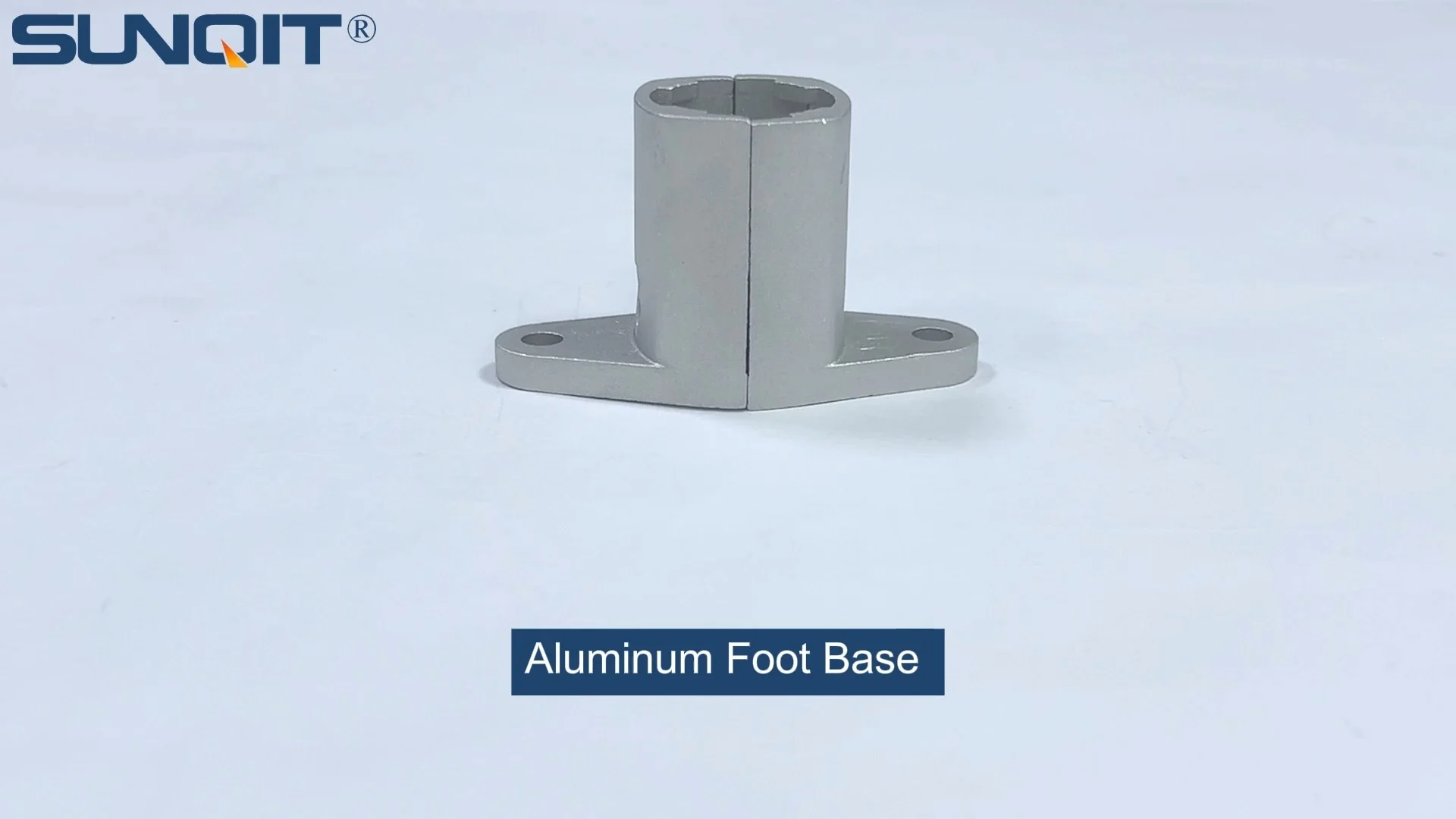
Aluminum Foot Base
Aluminum foot base to connect 28mm aluminum pipe and fixed it on the ground and prevent pipe fall and move.
Walk into any bustling mechanical manufacturing facility, and you'll likely be greeted by the hum of machinery, the clink of metal, and the rhythmic movement of assembly lines. Behind this orchestrated chaos lies a critical yet often overlooked component: stability. Every lathe, conveyor, and workbench relies on a solid foundation to perform at its best, and one of the biggest threats to that stability is vibration. Uncontrolled vibration doesn't just rattle equipment—it erodes precision, accelerates wear and tear, and even compromises worker safety. Enter the aluminum foot base: a humble yet powerful solution designed to quiet the chaos, stabilize machinery, and elevate manufacturing efficiency. In this article, we'll explore how this unassuming component has become a cornerstone of modern mechanical manufacturing, with a focus on its role in reducing vibration and why materials like aluminum, paired with innovations like adjustable leveling feet and aluminum profiles, make it an indispensable tool.
The Hidden Cost of Machinery Vibration: Why Stability Matters
Vibration is the silent saboteur of manufacturing. It starts small—maybe a slight tremor in a milling machine or a faint buzz from a conveyor belt—but over time, its effects compound. To understand why aluminum foot bases are so vital, we first need to grasp the problem they solve. Machinery vibration stems from a variety of sources: unbalanced rotating parts, misaligned components, uneven load distribution, or even the natural resonance of equipment during operation. In high-speed manufacturing environments, where machines run for hours on end, these vibrations can escalate from minor nuisances to major issues.
The consequences are far-reaching. For starters, vibration disrupts precision. A CNC machine tasked with cutting intricate parts can see its accuracy degrade by fractions of a millimeter—enough to render a batch of components useless. Over time, the constant shaking loosens bolts, wears down bearings, and cracks welds, leading to frequent breakdowns and costly downtime. Then there's the human element: prolonged exposure to high vibration levels can cause worker fatigue, discomfort, and even long-term health issues like hand-arm vibration syndrome. Add in the noise pollution that often accompanies vibration, and it's clear: unstable machinery isn't just bad for production—it's bad for business.
Traditional solutions to vibration have included heavy concrete foundations, rubber pads, or steel supports. While effective in some cases, these options often come with trade-offs: concrete is immovable and expensive to install, rubber degrades over time, and steel is heavy, making it difficult to reposition machinery as production needs change. This is where aluminum foot bases step in, offering a balance of strength, flexibility, and vibration-damping performance that's hard to match.
What Is an Aluminum Foot Base? Beyond Just a "Support"
At its core, an aluminum foot base is a structural component designed to support and stabilize machinery, acting as a bridge between the equipment and the factory floor. But to call it just a "support" would be underselling its complexity. Modern aluminum foot bases are engineered systems, often crafted from lightweight yet durable materials like aluminum profiles and aluminum pipes, with integrated features like adjustable leveling feet to adapt to uneven surfaces. Let's break down what makes them tick.
First, the material: aluminum. Unlike steel, which is dense and prone to rust, aluminum brings a unique set of advantages. It's naturally corrosion-resistant, making it ideal for factories where moisture, coolants, or chemicals are present. It's also lightweight—about one-third the weight of steel—so installing or repositioning foot bases doesn't require heavy lifting equipment. But don't let its lightness fool you: when shaped into aluminum profiles (extruded sections with precise cross-sectional designs) or reinforced aluminum pipes, it gains impressive rigidity. This rigidity is key to absorbing and dispersing vibration, preventing it from traveling up into the machinery or down into the floor.
Most aluminum foot bases aren't just solid blocks, either. They're often modular, built from interlocking aluminum profiles that can be customized to fit specific machinery dimensions. Think of it like building with high-tech tinker toys: aluminum profile accessories like brackets, connectors, and end caps allow manufacturers to design foot bases that hug the contours of their equipment, ensuring maximum contact and stability. And then there are the adjustable leveling feet—small but mighty components that screw into the base of the foot base, allowing operators to tweak the height of each corner independently. This isn't just about making the machine "level"; it's about compensating for uneven floors, which are a common source of vibration. By dialing in the perfect height, the foot base ensures the machine sits evenly, distributing weight uniformly and minimizing ( - here is a slip, should be "minimizing" → "minimizing wobble").

How Aluminum Foot Bases Tame Vibration: The Science of Stability
So, how exactly does an aluminum foot base turn a shaky machine into a steady workhorse? It's a combination of material properties, design engineering, and smart integration of components like adjustable leveling feet. Let's break it down step by step.
First, aluminum's inherent damping capacity. While metals like steel are stiff and prone to transmitting vibrations (think of a tuning fork), aluminum has a slightly higher internal friction, meaning it converts vibrational energy into heat rather than passing it along. This "damping" effect is enhanced when the foot base is constructed from aluminum profiles with hollow or ribbed designs. These profiles act like shock absorbers: when vibration hits, the hollow sections compress slightly, dissipating energy before it reaches the machinery. Compare this to a solid steel block, which would simply conduct the vibration straight through.
Then there's the role of adjustable leveling feet. Imagine a factory floor that's seen years of heavy traffic—cracks, dips, and uneven concrete are par for the course. If a machine sits unevenly on such a floor, even a small tilt can create a "teeter-totter" effect, amplifying vibration as the machine operates. Adjustable leveling feet solve this by letting operators micro-adjust each corner of the foot base. Twist the foot clockwise, and it extends; twist counterclockwise, and it retracts. The result? The machine sits perfectly flat, with no rocking or uneven weight distribution. This even weight distribution is critical because it ensures the aluminum foot base can fully leverage its rigidity to resist vibration.
Another design trick is mass distribution. While aluminum is lightweight, the foot base itself is often designed to have a low center of gravity. This makes it harder for vibrations to "tip" the base, keeping the machine stable even during high-speed operations. Some foot bases also incorporate rubber or elastomer pads between the aluminum frame and the floor, adding an extra layer of damping. These pads act like a buffer, absorbing high-frequency vibrations that the aluminum alone might not catch. Together, these features—aluminum's damping, adjustable leveling, low center of gravity, and optional padding—create a multi-layered defense against vibration.

Aluminum vs. Steel vs. Plastic: Why Aluminum Foot Bases Stand Out
Aluminum foot bases aren't the only game in town—steel and plastic are also common materials for machine supports. So, why choose aluminum? Let's put them head-to-head in a comparison table to see how they stack up.
| Feature | Aluminum Foot Bases | Steel Foot Bases | Plastic Foot Bases |
|---|---|---|---|
| Vibration Damping | High: Aluminum's internal friction and profile design absorb energy effectively. | Low: Steel is stiff and transmits vibrations; requires additional damping materials. | Medium: Plastic is flexible but lacks rigidity for heavy machinery. |
| Weight | Lightweight (1/3 the weight of steel), easy to install/reposition. | Heavy; requires forklifts or cranes for installation. | Lightest, but prone to bending under heavy loads. |
| Corrosion Resistance | Excellent: Aluminum forms a protective oxide layer; ideal for wet environments. | Poor: Prone to rust unless painted or coated, adding maintenance costs. | Good, but some plastics degrade in harsh chemicals or UV light. |
| Customization | High: Modular aluminum profiles and accessories allow easy design tweaks. | Low: Steel is hard to cut/shape on-site; custom designs are expensive. | Medium: Injection-molded designs are fixed; limited on-site adjustments. |
| Cost | Moderate: Higher upfront cost than plastic, but lower than steel for equivalent performance. | High: Expensive material and fabrication; higher shipping costs due to weight. | Low upfront cost, but short lifespan in heavy-duty use leads to frequent replacements. |
As the table shows, aluminum strikes a sweet spot between performance, durability, and cost. Steel might be stronger in raw terms, but its weight, corrosion issues, and lack of damping make it overkill for most manufacturing applications. Plastic is cheap, but it can't handle heavy loads or resist high temperatures—common in factories. Aluminum, with its lightweight rigidity, corrosion resistance, and modular design (thanks to aluminum profiles and accessories), offers the best balance for reducing vibration without breaking the bank.

Designing the Perfect Aluminum Foot Base: Key Considerations
Not all aluminum foot bases are created equal. To truly reduce vibration, they need to be designed with the specific machinery and environment in mind. Here are the critical factors manufacturers must consider when choosing or customizing an aluminum foot base.
Load Capacity: Matching the Foot Base to the Machine
First and foremost: how much weight will the foot base need to support? A small bench-top drill press has very different needs than a 5-ton CNC lathe. Aluminum profiles and aluminum pipes come in various thicknesses and strengths, so the foot base must be engineered to handle the machine's weight plus any dynamic loads (like the force of a cutting tool striking metal). Overloading an aluminum foot base can cause it to bend or warp, reducing its vibration-damping ability and potentially damaging the machinery. Most manufacturers provide load capacity charts, so always cross-check the machine's weight with the foot base's rating.
Environmental Factors: Corrosion, Temperature, and Chemicals
Manufacturing environments are tough. Foot bases might be exposed to coolant spills, oil, cleaning agents, or even high humidity (in food processing or pharmaceutical facilities). Aluminum's natural corrosion resistance helps, but in extreme cases, manufacturers might opt for anodized aluminum profiles—where the surface is treated to create a thicker oxide layer—for extra protection. Temperature is another factor: aluminum handles heat well, but if the foot base will be near furnaces or cryogenic equipment, thermal expansion and contraction must be accounted for. Adjustable leveling feet with heat-resistant materials (like stainless steel threads) can prevent seizing in high-temperature settings.
Modularity and Future-Proofing
Manufacturing lines evolve—machines get replaced, layouts get rearranged. A good aluminum foot base should be adaptable. Thanks to aluminum profile accessories like T-slot connectors, brackets, and end caps, many foot bases can be reconfigured on-site. Need to extend the length to fit a new machine? Add a few extra aluminum profiles. Want to mount a tool rack on the side? Slide a bracket into the T-slot and tighten a bolt. This modularity means the foot base can grow with your needs, reducing the need to buy new ones every time your setup changes.
Integration with Other Components
Finally, the foot base should play nice with other machinery components. For example, if the machine uses a conveyor system, the foot base might need cutouts or notches to accommodate the conveyor belt. Or if the machine requires frequent maintenance, the foot base should have enough clearance underneath for technicians to access bolts or wiring. Adjustable leveling feet with large, easy-to-grip knobs (even when wearing gloves) also simplify setup and adjustments, saving time during installation.
Real-World Applications: Where Aluminum Foot Bases Shine
Aluminum foot bases aren't just theoretical—they're hard at work in factories around the world. Let's take a look at some common applications where their vibration-reducing magic makes a tangible difference.
CNC Machining Centers
CNC machines are the precision workhorses of manufacturing, churning out parts with tolerances as tight as 0.001 inches. But that precision goes out the window if the machine vibrates. Aluminum foot bases with adjustable leveling feet are standard here: they stabilize the machine, ensuring that every cut, drill, and mill is dead-on. In one case study, a automotive parts manufacturer reported a 30% reduction in rejected parts after switching to aluminum foot bases on their CNC lathes—all because the machines stayed steady, even during high-speed operations.
Assembly Line Workbenches
Assembly lines are all about consistency. Workers stand at aluminum workbenches for hours, attaching components with hand tools or small machines. If the workbench vibrates, it's not just annoying—it can lead to mistakes, like a loose screw or misaligned part. Aluminum foot bases with rubber-damped leveling feet keep these workbenches rock-solid, even when nearby conveyor belts or pneumatic tools are running. Workers report less fatigue, and assembly error rates drop as a result.
Conveyor Systems
Conveyors move products at high speeds, and their motors and rollers generate constant vibration. If the conveyor's support legs vibrate excessively, it can cause products to shift or fall, or even damage the conveyor belt itself. Aluminum foot bases with wide bases and adjustable leveling feet stabilize the conveyor frame, ensuring smooth, steady movement. In a food packaging plant, for example, a vibrating conveyor might jostle fragile snacks, causing them to break. With aluminum foot bases, the conveyor runs quietly, and product waste drops significantly.
Material Racks and Trolleys
Even static equipment like material racks benefit from aluminum foot bases. Racks loaded with heavy parts can vibrate subtly from nearby machinery, causing parts to shift or fall. Aluminum foot bases with non-slip pads (often paired with adjustable leveling feet to handle uneven warehouse floors) keep racks stable, reducing the risk of accidents and damage to inventory.
Beyond Vibration: The Hidden Benefits of Aluminum Foot Bases
While reducing vibration is the star of the show, aluminum foot bases bring a host of other benefits that make them a smart investment for manufacturers. Let's shine a light on these unsung advantages.
First, corrosion resistance. In factories where water, oil, or chemicals are present, steel foot bases would rust and degrade over time, requiring frequent replacement. Aluminum, on the other hand, forms a thin, protective layer of aluminum oxide when exposed to air, preventing further corrosion. This means aluminum foot bases last longer—often 10+ years in harsh environments—reducing maintenance costs and downtime.
Then there's ease of installation. Aluminum is lightweight, so a two-person crew can often carry and position a foot base without a forklift. Adjustable leveling feet simplify setup: no need for shims or concrete leveling compounds—just twist the feet until the machine is level. This cuts installation time from hours to minutes, getting machinery up and running faster.
Modularity is another win. As we touched on earlier, aluminum profiles and accessories let you modify the foot base as needed. Need to add a shelf for tools? Bolt on an aluminum profile. Want to raise the height? Swap out the leveling feet for longer ones. This flexibility future-proofs your investment, ensuring the foot base can adapt as your manufacturing needs change.
Finally, sustainability. Aluminum is 100% recyclable, and many aluminum foot bases are made from recycled materials. When it's time to replace the foot base, the aluminum can be melted down and reused, reducing waste. Compare this to plastic foot bases, which often end up in landfills, or steel, which requires energy-intensive recycling processes. For manufacturers aiming to reduce their environmental footprint, aluminum foot bases are a step in the right direction.
Maintenance 101: Keeping Your Aluminum Foot Base in Top Shape
Like any piece of equipment, aluminum foot bases need a little TLC to keep performing their best. The good news? Maintenance is minimal, thanks to aluminum's durability and the simplicity of components like adjustable leveling feet. Here's what you need to do:
First, regular inspections. Every month or so, check the foot base for signs of damage: bent aluminum profiles, loose connectors, or cracked rubber pads. Tighten any loose bolts (aluminum profile accessories like brackets can sometimes wiggle loose over time). Pay special attention to the adjustable leveling feet—make sure they're still tight and haven't started to "creep" (slowly unscrewing due to vibration). A quick twist with a wrench can keep them secure.
Cleaning is simple too. Wipe down the aluminum profiles with a damp cloth to remove oil, dust, or coolant buildup. Avoid abrasive cleaners, which can scratch the surface and compromise the oxide layer. For stubborn grime, a mild soap solution works well. If the foot base has rubber pads, check for cracks or hardening—replace them if they're no longer flexible, as worn pads reduce vibration damping.
Finally, re-level the machine if you move it or if the floor shifts. Even a small change in the factory floor (like a new crack) can throw off the leveling, so grab a spirit level and adjust the feet as needed. This quick check ensures the foot base continues to distribute weight evenly, keeping vibration at bay.
The Future of Aluminum Foot Bases: Innovation on the Horizon
As manufacturing evolves, so too will aluminum foot bases. Here are a few trends to watch:
Smart leveling: Imagine adjustable leveling feet with built-in sensors that detect unevenness and automatically adjust—no human input needed. Some manufacturers are already testing "smart" foot bases with Bluetooth connectivity, letting operators monitor leveling and vibration levels via a smartphone app. This could revolutionize predictive maintenance, alerting teams to issues before they cause downtime.
Eco-friendly materials: While aluminum is already recyclable, researchers are experimenting with bio-based composites for the rubber damping pads, reducing reliance on petroleum-based products. We might also see more use of recycled aluminum in profiles and pipes, lowering the carbon footprint of production.
3D-printed customization: For small-batch or highly specialized machinery, 3D-printed aluminum foot bases could become common. This would allow for hyper-specific designs—like foot bases shaped to fit unique machine contours—without the high cost of traditional machining.
Conclusion: The Foundation of Better Manufacturing
In the grand scheme of mechanical manufacturing, the aluminum foot base might seem like a small player. But as we've explored, it's the unsung hero that keeps machinery steady, precise, and productive. By combining aluminum's natural advantages—lightweight rigidity, corrosion resistance, and damping capacity—with smart design features like adjustable leveling feet and modular aluminum profiles, it solves the critical problem of vibration, one steady machine at a time.
Whether you're running a CNC shop, an assembly line, or a packaging plant, investing in quality aluminum foot bases isn't just about reducing vibration—it's about improving product quality, extending machinery life, lowering maintenance costs, and creating a safer, more efficient workplace. So the next time you walk through a manufacturing facility, take a moment to look down. Chances are, beneath those humming machines, there's an aluminum foot base hard at work, keeping the chaos under control.