- Company Articles
- Products and Technology
- Solution
- Aluminum Foot Base in Warehousing Logistics: Optimizing Space Utilization

Aluminum Foot Base in Warehousing Logistics: Optimizing Space Utilization
Related Product
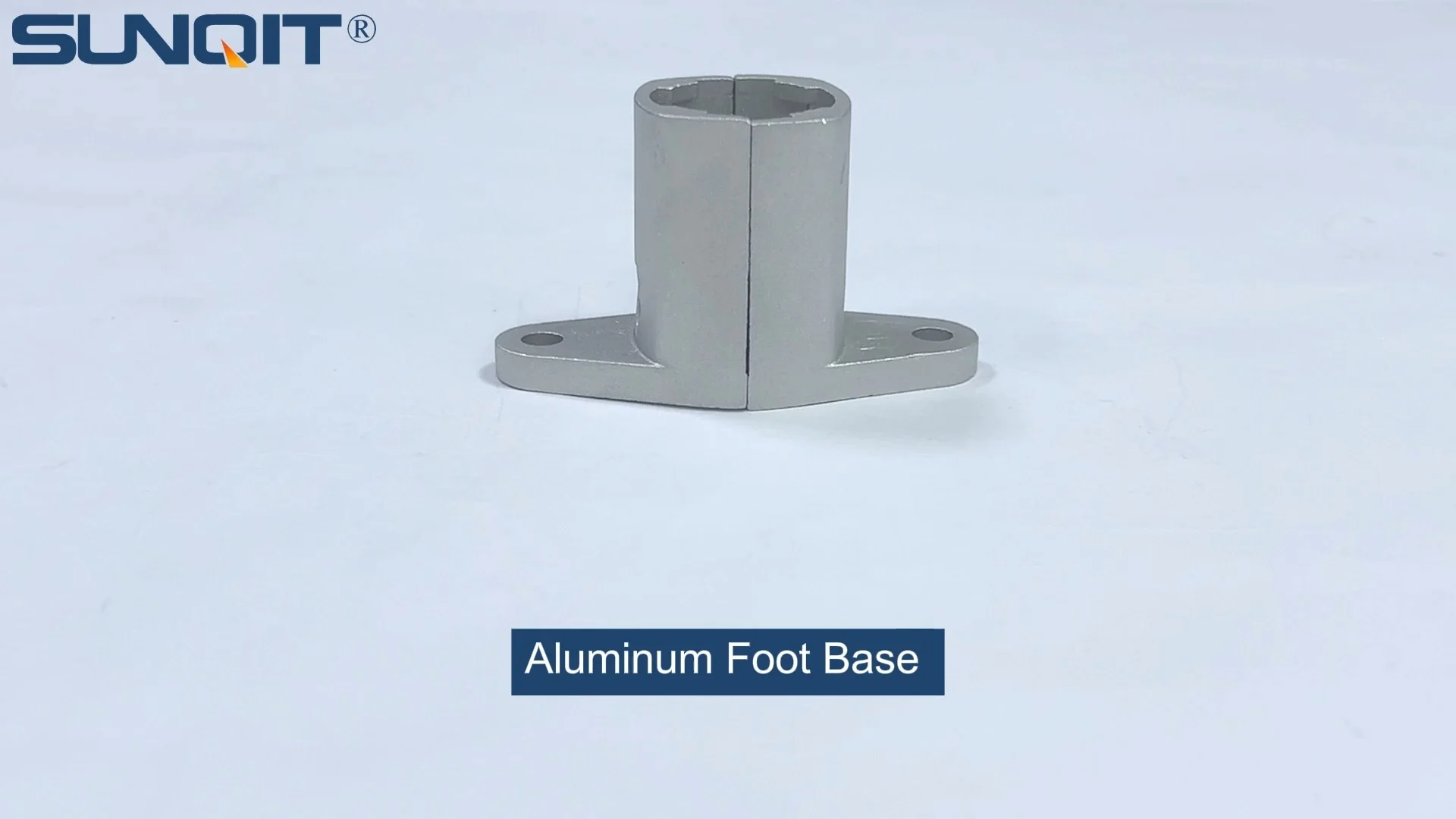
Aluminum Foot Base
Aluminum foot base to connect 28mm aluminum pipe and fixed it on the ground and prevent pipe fall and move.
Walk into any busy warehouse, and you'll see a symphony of movement: pallets gliding on forklifts, workers picking orders with practiced speed, conveyors humming as packages zip toward shipping. But behind this chaos lies a silent battle—one that keeps logistics managers up at night: space. Every square foot counts, and the pressure to squeeze more inventory, streamline workflows, and cut costs never lets up. What if the key to unlocking that extra space wasn't a fancy new machine or a complete overhaul? What if it was something as as the base holding up your workbenches, flow racks, and conveyors? Enter the aluminum foot base—a small component with a huge impact on how we use space in modern warehousing.
What is an Aluminum Foot Base? Breaking Down the Basics
Let's start with the basics: An aluminum foot base is exactly what it sounds like—a foundational component, typically shaped like a small platform or bracket, designed to support equipment like workbenches, racks, and conveyors. But don't let its simplicity fool you. Made from high-grade aluminum alloy, it's engineered to be lightweight yet surprisingly strong, resistant to rust and corrosion, and built for adaptability. Unlike clunky steel bases that weigh down equipment and limit mobility, aluminum foot bases are the unsung heroes of modular design. Think of them as the "legs" of your warehouse setup—quietly holding everything together while letting you rearrange, adjust, and grow without breaking a sweat.
What makes aluminum the material of choice? For starters, it's about a third the weight of steel, which means installing or moving equipment becomes a one-person job instead of a team effort. But it doesn't skimp on strength: Modern aluminum alloys can support heavy loads, from the tools on a workbench to the stacked boxes on a flow rack. And unlike steel, aluminum doesn't rust—critical in warehouses where spills, humidity, or temperature swings are part of daily life. Add in its smooth, clean finish, and you've got a base that's as durable as it is easy to maintain.
The Lean Connection: Aluminum Foot Base in Modern Lean Systems
If you've spent any time in warehousing, you've heard of "lean systems"—the philosophy of eliminating waste, streamlining processes, and continuously improving efficiency. Lean is all about flexibility: being able to shift workflows, adapt to new products, and respond to sudden demand changes without getting bogged down by rigid infrastructure. Here's where the aluminum foot base shines: it's lean by design.
Traditional steel bases are often welded or bolted in place, turning your warehouse layout into a permanent puzzle. Want to move a workbench six feet to the left to align with a new conveyor? Good luck—you'll need tools, time, and maybe even a. Aluminum foot bases, on the other hand, are modular. They attach to equipment via simple bolts or clamps, and many are designed to work with aluminum profile accessories, making reconfiguration a matter of loosening a few screws and shifting things into place. This isn't just convenient—it's a game-changer for lean systems. When you can adjust your workbench height to fit a taller employee, or reposition a flow rack to shorten picking paths, you're cutting out the "waste" of fixed layouts and making every square foot work harder.
Take, for example, a electronics warehouse that recently adopted lean principles. Their old setup had steel-based workbenches bolted to the floor, each at a fixed height. When they introduced a new product line requiring taller shelves, they had to either buy new workbenches (costing thousands) or spend days unbolting and modifying the old ones. Today, with aluminum foot bases, they simply adjusted the height of the existing benches using adjustable screws on the bases. The result? Zero downtime, zero new equipment costs, and a workflow that adapted in hours instead of weeks. That's lean in action—and it all starts with the base.

Real-World Applications: Where Aluminum Foot Base Shines
Workbenches: Stability Meets Adaptability
Workbenches are the workhorses of any warehouse or production floor. Whether it's packing orders, assembling parts, or inspecting goods, employees spend hours at these stations—so they need to be stable, comfortable, and flexible. Aluminum foot bases check all three boxes. Let's say you run a small manufacturing shop with a mix of tall and short workers. With traditional wooden or steel workbenches, you might end up with employees hunching over or straining to reach tools, leading to fatigue and errors. An aluminum foot base solves this with adjustable height settings: turn a dial or loosen a bolt, and the bench rises or lowers to fit the user. No more one-size-fits-all discomfort.
But it's not just about height. Many aluminum foot bases come with pre-drilled holes or slots that make adding accessories a breeze—like attaching casters for mobility. Imagine a scenario where your production line needs to shift from assembling Product A to Product B overnight. With caster-equipped workbenches on aluminum bases, you can roll them into a new configuration in minutes, instead of disassembling and rebuilding. This kind of agility is priceless in today's fast-paced markets, where product lifecycles are shorter than ever. One warehouse manager I spoke to recently put it this way: "Before aluminum bases, reconfiguring our workbenches for a new order would take half a day. Now? We do it during lunch. Our team used to dread change; now they look forward to it because it's so easy."
Flow Racks: Optimizing Picking Paths, One Base at a Time
Flow racks are the backbone of order picking—those sloped racks where boxes or totes glide forward as items are removed, ensuring the next product is always at the front. They're designed to save time by reducing walking and reaching, but their effectiveness depends entirely on alignment. If a flow rack is even slightly tilted or wobbly, products get stuck, jamming the works and slowing down pickers. That's where aluminum foot bases come in: they act as stabilizers, ensuring the rack sits level and secure, even when loaded with heavy items.
Here's how it works: Aluminum foot bases are often designed with adjustable feet—small threaded pads that can be twisted to raise or lower one corner of the rack. This is a lifesaver in older warehouses with uneven floors, where a traditional steel base might rock or wobble. By fine-tuning each foot, you can make sure the entire rack is perfectly level, so products glide smoothly every time. And because aluminum is lightweight, you can stack flow racks higher without worrying about the base buckling under the weight. One distribution center in Texas reported a 15% increase in picking speed after upgrading to aluminum-based flow racks—simply because fewer jams meant less time unclogging and more time picking.
But the space-saving magic doesn't stop there. Aluminum foot bases are also slimmer than their steel counterparts, which means you can fit more racks into the same aisle width. Instead of leaving extra space to accommodate bulky bases, you can tighten up your layout, adding an extra rack or two in the process. Over time, those extra racks add up to hundreds of additional units of inventory—all without expanding your warehouse footprint.
Conveyors: Keeping the Flow Uninterrupted
Conveyors are the arteries of a warehouse, moving goods from receiving to storage to shipping. When they work well, they're invisible—when they don't, they're a nightmare of jams, delays, and damaged products. The secret to a smooth-running conveyor? Alignment. Even a tiny misalignment can cause packages to tip, get stuck, or veer off course. Aluminum foot bases prevent this by providing a stable, vibration-resistant foundation. Unlike steel, which can transmit vibrations from the floor (like a passing forklift) up into the conveyor, aluminum absorbs those shocks, keeping the belt or rollers steady.
Consider a food and beverage warehouse where conveyor belts carry fragile glass bottles. A steel base might shake with every passing pallet jack, causing bottles to clink and sometimes break. An aluminum foot base dampens those vibrations, reducing breakage and saving money on damaged goods. And when it's time to expand your conveyor system? Aluminum bases make adding new sections easy. Their modular design means you can bolt on extensions without redoing the entire foundation, letting you grow your conveyor line as your business grows—without shutting down operations for days.

Beyond Space: The Ripple Effects of Better Foot Bases
So far, we've focused on space optimization, but the benefits of aluminum foot bases ripple far beyond square footage. Let's talk about cost—something every logistics manager watches closely. Aluminum foot bases might have a slightly higher upfront cost than basic steel or plastic bases, but they pay for themselves quickly. Their durability means they last longer (aluminum doesn't rust or corrode, so you won't need to replace them every few years). Their lightweight design cuts down on installation labor—no need to hire a crew with heavy lifting equipment. And their adaptability means you won't have to buy new workbenches or racks every time your needs change. It's an investment in long-term flexibility.
Then there's safety. A wobbly workbench or unstable rack isn't just inefficient—it's a hazard. Tools slide off, boxes topple, and employees risk trips or falls. Aluminum foot bases reduce these risks with their stable, non-slip design. Many models come with rubberized pads that grip the floor, preventing shifting even when equipment is moved. In warehouses where spills are common (like in food processing or cold storage), aluminum's corrosion resistance adds another layer of safety—no rusted, weakened bases to give way under pressure.

Traditional vs. Aluminum: A Closer Look
| Feature | Traditional Steel Foot Bases | Aluminum Foot Bases |
|---|---|---|
| Weight | Heavy (requires 2+ people to move) | Lightweight (often movable by one person) |
| Installation Time | Long (welding or complex bolting required) | Short (simple bolts or clamps; no special tools) |
| Reconfiguration Ease | Difficult (often permanent once installed) | Easy (adjustable, modular, and movable) |
| Durability | Prone to rust and corrosion in damp environments | Rust-resistant; withstands humidity and spills |
| Space Usage | Bulky design takes up extra floor space | Slim profile; fits into tighter layouts |
| Cost Over Time | Higher (replacement and maintenance costs) | Lower (durable, low maintenance, adaptable) |
Choosing the Right Aluminum Foot Base: Key Considerations
Now that you're sold on the benefits, how do you pick the right aluminum foot base for your warehouse? Start with load capacity: How much weight will the equipment need to support? A workbench with light tools will need a different base than a flow rack stacked with heavy cartons. Check the manufacturer's specs for weight limits, and always err on the side of caution—overloading a base is a safety risk.
Next, think about your environment. Is your warehouse dry, or do you deal with spills (like in a beverage facility)? Look for aluminum foot bases with added corrosion resistance, like anodized finishes. Do you need mobility? Opt for bases with pre-drilled holes for casters, so you can add wheels later if needed. And don't forget compatibility: If you're using existing aluminum profile or aluminum pipe accessories, make sure the base's slots or holes align with those systems. Modularity only works if everything clicks together.
Finally, plan for growth. A good aluminum foot base should grow with your business. Look for designs that allow for height adjustments, extensions, or easy stacking. The last thing you want is to outgrow your bases in a year—invest in ones that can adapt as your warehouse expands, your workflows change, and your team grows.
The Future of Warehousing: Why Aluminum Foot Bases Are Here to Stay
Warehousing is changing fast. E-commerce growth means more orders, smaller shipments, and tighter deadlines. Automation is becoming more common, with robots and AI working alongside human employees. Through it all, one thing remains constant: the need for space. Aluminum foot bases aren't just a trend—they're a foundational piece of the flexible, adaptable warehouses of the future. As more businesses adopt lean systems and modular layouts, the demand for lightweight, durable, and reconfigurable components will only grow. Aluminum foot bases fit that bill perfectly, bridging the gap between stability and flexibility.
Imagine a warehouse 10 years from now: robots zip between workbenches that adjust height automatically, flow racks that reconfigure based on real-time order data, and conveyors that expand or contract with seasonal demand. At the heart of it all? Aluminum foot bases, quietly supporting the technology and workflows that keep the supply chain moving. They may not be the flashiest innovation, but they're the ones making the future possible—one square foot at a time.
Small Base, Big Impact
At the end of the day, warehousing is about solving problems—whether it's fitting one more pallet, speeding up a picking route, or keeping employees safe. Aluminum foot bases may seem small, but they solve one of the biggest problems of all: how to do more with less space. They're the unsung heroes, the quiet innovators, and the foundation upon which efficient, lean, and successful warehouses are built. So the next time you walk through your warehouse, take a look at what's holding everything up. You might just find that the key to optimizing your space has been under your feet all along.