- Company Articles
- Products and Technology
- Installation And Maintenance
- Aluminum Foot Base Installation Mistakes to Avoid in Flexible Production Lines

Aluminum Foot Base Installation Mistakes to Avoid in Flexible Production Lines
Related Product
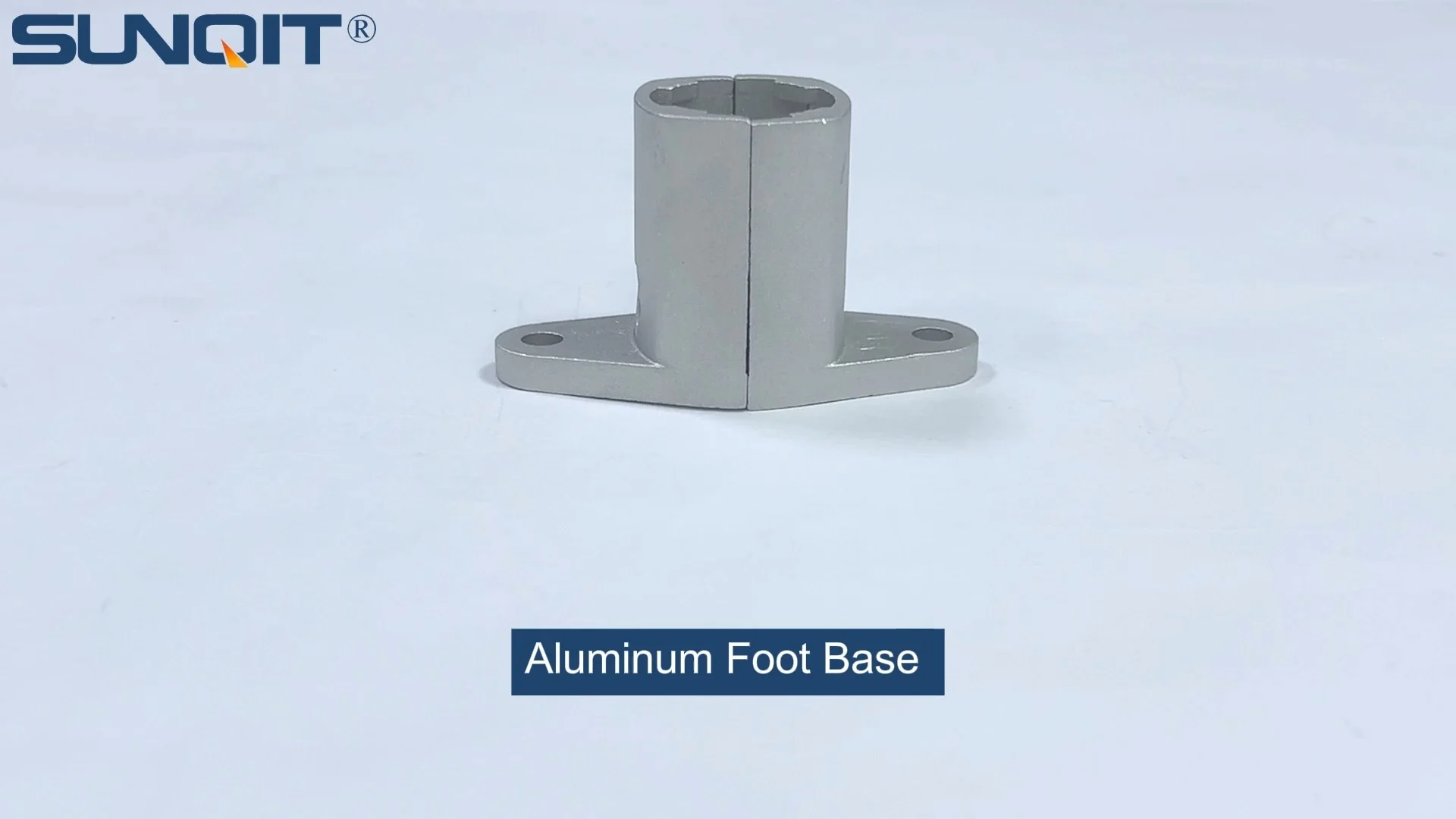
Aluminum Foot Base
Aluminum foot base to connect 28mm aluminum pipe and fixed it on the ground and prevent pipe fall and move.
Walk into any modern manufacturing facility, and you'll quickly spot the unsung heroes of efficient operations: flexible production lines. These setups, built around modular components like aluminum profiles, workbenches, and caster wheels, thrive on adaptability—allowing teams to reconfigure workflows, reduce waste, and boost productivity. Yet, for all their innovation, these systems rely on a surprisingly simple foundation: aluminum foot bases. These unassuming components anchor workbenches, material racks, and conveyor supports, ensuring stability even as production demands shift. But when installation goes wrong, the consequences ripple through the entire operation. From wobbly workstations that slow assembly to misaligned conveyors that jam materials, poor aluminum foot base installation can turn a lean system into a source of frustration and downtime. In this article, we'll dive into the most common mistakes teams make when installing aluminum foot bases, why they happen, and how to avoid them—so your flexible production line stays flexible, efficient, and safe.
Mistake 1: Underestimating Load Capacity—The Hidden Risk of "Good Enough"
One of the biggest myths in production line setup is assuming "close enough" works for load capacity. Many teams glance at a workbench or material rack, guess its weight, and pick the first aluminum foot base that fits. But here's the problem: aluminum foot bases aren't one-size-fits-all. A base rated for 500kg might seem sturdy, but if your workbench holds 300kg of tools, 200kg of raw materials, and a 150kg operator leaning on it daily, that "500kg" base is suddenly carrying 650kg—well beyond its limits. Over time, this leads to gradual deformation: the foot base bends, the workbench wobbles, and sensitive equipment like ESD workstations (critical for electronics manufacturing) loses precision. In extreme cases, the base can fail entirely, sending tools and materials crashing to the floor.
Real-World Example: The Cost of Guessing
A mid-sized electronics plant recently expanded its assembly line, adding three new workbenches to handle increased order volume. The team reused aluminum foot bases from an old project, assuming they'd "probably hold." Six weeks later, operators began complaining about wobbly surfaces—so bad that small components like resistors and capacitors kept sliding off. An inspection revealed the foot bases, rated for 400kg each, were supporting workbenches loaded with 600kg of equipment and materials. The constant stress had bent the bases by 2 degrees, throwing the entire workstation out of level. Fixing the issue required halting production for two days to replace the bases, costing the company $12,000 in downtime—not to mention the $3,000 in scrapped components from the slips.
So, how do you avoid this? Start by calculating the total load —not just the static weight of equipment, but dynamic forces too. If operators will be leaning on the workbench, if materials will be dropped onto it (even gently), or if the setup includes moving parts like roller tracks, add 20-30% to the static load to account for these forces. Then, check the manufacturer's specs for the aluminum foot base. Reputable suppliers (like those specializing in lean system components) provide detailed load ratings, including both vertical and lateral strength. When in doubt, ask: a quick call to your aluminum foot base supplier can save you from costly mistakes.
Mistake 2: Ignoring Floor Conditions—Why "Flat Enough" Isn't Flat Enough
Production floors are rarely perfect. Even new facilities can have subtle slopes, cracks, or uneven concrete—imperfections that become glaring problems when installing aluminum foot bases. Yet, many teams rush installation, skipping the step of assessing floor flatness. The result? A workbench or material rack that "looks level" but actually tilts by a few millimeters. Over time, this tilt causes materials to slide off, conveyor belts to wear unevenly, and caster wheels (if paired with foot bases) to lock up. Worse, uneven loading on the foot bases can lead to premature failure, as some bases bear more weight than others.
Consider a simple scenario: a flow rack with three levels, installed on a floor that slopes 1 degree toward a drain. The team didn't check with a spirit level, so the rack tilts slightly forward. At first, it's barely noticeable. But as workers load boxes onto the top shelf, gravity pulls them toward the front. Within weeks, boxes start sliding off the front edge, risking damage to products and injury to anyone below. The root cause? The aluminum foot bases on the downhill side of the rack are compressed more than those on the uphill side, leading to uneven wear and instability.
The solution starts with a $20 tool: a 24-inch spirit level. Before installing a single foot base, check the floor in multiple spots where the workbench or rack will stand. If the floor slopes more than 0.5 degrees (about 1/8 inch over 10 feet), use shims—thin, durable pieces of metal or plastic—to level the aluminum foot base. For larger gaps, adjustable aluminum foot bases (which include threaded stems to raise or lower the base) are worth the investment. These bases let you fine-tune height by up to 20mm, ensuring even weight distribution across all feet. And don't forget to recheck after installation: once the workbench is loaded, the weight can compress the floor slightly, changing the level. A quick recheck with the spirit level ensures everything stays stable.

Mistake 3: Using Incompatible Accessories—When Parts Don't Play Well Together
Flexible production lines thrive on modularity—mixing and matching components like aluminum profiles, roller tracks, and caster wheels to create custom setups. But this flexibility can backfire when teams pair aluminum foot bases with incompatible accessories. For example, using steel fasteners with aluminum profiles (a common mistake) can cause galvanic corrosion: the dissimilar metals react with moisture in the air, creating rust-like buildup that weakens the connection. Or, using a foot base with a threaded hole designed for M10 bolts with an M8 bolt (too small) leads to a loose fit, causing the base to shift over time.
The Corrosion Catastrophe
A food packaging plant recently upgraded its material handling area with new aluminum profile workbenches, paired with aluminum foot bases. To save time, the maintenance team used leftover steel bolts from an old project to attach the foot bases to the profiles. Six months later, inspectors noticed white, powdery residue around the bolts—and when they tried to adjust the foot bases, the bolts snapped. The culprit? Galvanic corrosion. The steel bolts, in contact with the aluminum profiles and exposed to occasional water splashes from floor cleaning, had corroded from the inside out. Replacing all 120 bolts required disassembling the workbenches, costing 16 hours of downtime and $800 in replacement parts.
To avoid this, stick to accessories designed for aluminum components. Most aluminum profile suppliers offer compatible bolts, nuts, and washers—often made from stainless steel or coated aluminum to prevent corrosion. When attaching aluminum foot bases to the frame, check the thread size (M8, M10, etc.) and length: a bolt that's too long can protrude through the profile, damaging materials or injuring workers, while one that's too short won't secure the base properly. And always use lock washers or thread-locking adhesive (like Loctite) to prevent bolts from loosening due to vibration—common in production environments with nearby machinery.

Mistake 4: Overlooking Adjustability—Why Fixed Bases Fail in Dynamic Environments
Flexible production lines aren't static. Teams reconfigure workbenches, add new conveyor sections, or shift material racks to adapt to new orders. Yet, many install aluminum foot bases as if they'll never move—using fixed, non-adjustable models that can't be tweaked once in place. This rigidity becomes a problem when workflows change. For example, if a workbench needs to be raised by 5cm to align with a new conveyor, a fixed foot base makes this impossible without disassembling the entire setup. Or, if the floor settles slightly over time (common in older facilities), a non-adjustable base can't be shimmed, leading to instability.
Adjustable aluminum foot bases solve this problem with threaded stems or telescoping designs, allowing height adjustments of 10-50mm. They're especially valuable for lean systems, where adaptability is key. For instance, a pharmaceutical manufacturer using lean principles might reconfigure its packaging line monthly to accommodate new product sizes. With adjustable foot bases, their team can raise or lower workbenches in minutes, rather than hours. Even in less dynamic environments, adjustability helps with maintenance: if a foot base wears down over time, you can simply twist the stem to compensate, extending its lifespan.
The catch? Adjustable bases cost slightly more than fixed ones—typically 10-15% extra. But consider the alternative: downtime from disassembling a workbench, the cost of replacement bases, or lost productivity from a misaligned setup. For most operations, the investment in adjustability pays off within months. When shopping, look for bases with clear adjustment markings (like millimeter increments) and locking mechanisms (such as a hex nut that tightens against the stem) to keep the height secure once set.

Mistake 5: Skipping Post-Installation Testing—The "Set It and Forget It" Trap
You've calculated the load, leveled the floor, used compatible accessories, and chosen adjustable bases—so you're done, right? Wrong. One of the most common mistakes is skipping post-installation testing. Even with careful planning, small issues can slip through: a bolt that wasn't tightened enough, a foot base that's slightly misaligned, or a hidden floor imperfection that only reveals itself under load. Without testing, these issues fester until they cause bigger problems.
The Silent Loosening
A automotive parts supplier installed a new lean system, including 12 workbenches with aluminum foot bases. The team followed all best practices—calculating load, leveling floors, using stainless steel bolts. But they skipped testing, assuming everything was correct. Two weeks later, a quality control audit revealed that 3 of the workbenches had developed a 2mm wobble. Investigation showed that the bolts securing the foot bases had loosened slightly due to vibration from nearby stamping machines. While the wobble was minor, it caused precision tools (like torque wrenches) to give inaccurate readings, leading to 500 defective parts before the issue was caught. Retesting and retightening the bolts took 8 hours, and scrapping the defective parts cost $5,000.
Post-installation testing doesn't have to be complicated. Start with a visual inspection: check that all bolts are tight, foot bases are flush with the floor, and there are no gaps between the base and the frame. Then, apply a load test: place weighted objects (sandbags work well) on the workbench or rack, matching the expected daily load, and leave them for 24 hours. Afterward, recheck the level and tightness of the foot bases—this reveals any settling or shifting. Finally, simulate real-world use: have operators work at the station for an hour, moving materials, using tools, and testing conveyor movement. If something feels off (a squeak, a wobble, a stuck roller), stop and adjust before full production begins.
A Quick Reference: Common Mistakes and Solutions
| Mistake | Why It Happens | Impact | How to Fix It |
|---|---|---|---|
| Underestimating load capacity | Guessing weight; ignoring dynamic forces (vibration, operator movement) | Base deformation, wobbling, collapse risk | Calculate static + 20-30% dynamic load; check manufacturer specs |
| Ignoring floor conditions | Rushing installation; assuming floors are flat | Uneven wear, sliding materials, caster wheel jams | Use a spirit level; shim or use adjustable bases to level |
| Incompatible accessories | Reusing old parts; mixing steel and aluminum | Corrosion, loose connections, bolt failure | Use stainless steel/aluminum accessories; match thread size |
| Non-adjustable bases in dynamic lines | Assuming setup won't change; cost-cutting | Downtime for reconfiguration; misalignment | Choose adjustable bases with locking mechanisms |
| Skipping post-installation testing | Overconfidence; tight deadlines | Hidden loosening, inaccurate workflows, defective products | Visual inspection + load test + real-world simulation |
Conclusion: Invest in the Foundation to Protect Your Lean System
Aluminum foot bases may seem like small components in the grand scheme of a flexible production line, but their impact is enormous. A well-installed base keeps workbenches stable, conveyors aligned, and lean systems running smoothly—while a poorly installed one can turn efficiency into frustration. By avoiding these five mistakes—underestimating load capacity, ignoring floor conditions, using incompatible accessories, overlooking adjustability, and skipping testing—you'll ensure your aluminum foot bases do their job: providing a solid foundation for your team to thrive.
Remember, the goal of a lean system is to eliminate waste—including the waste of downtime, rework, and replacement parts caused by preventable installation errors. Take the time to plan, choose quality components, and test thoroughly. Your team, your products, and your bottom line will thank you.