- Company Articles
- Products and Technology
- Product knowledge
- Aluminum Foot Base Load Testing: Ensuring Safety in Heavy-Duty Applications

Aluminum Foot Base Load Testing: Ensuring Safety in Heavy-Duty Applications
Related Product
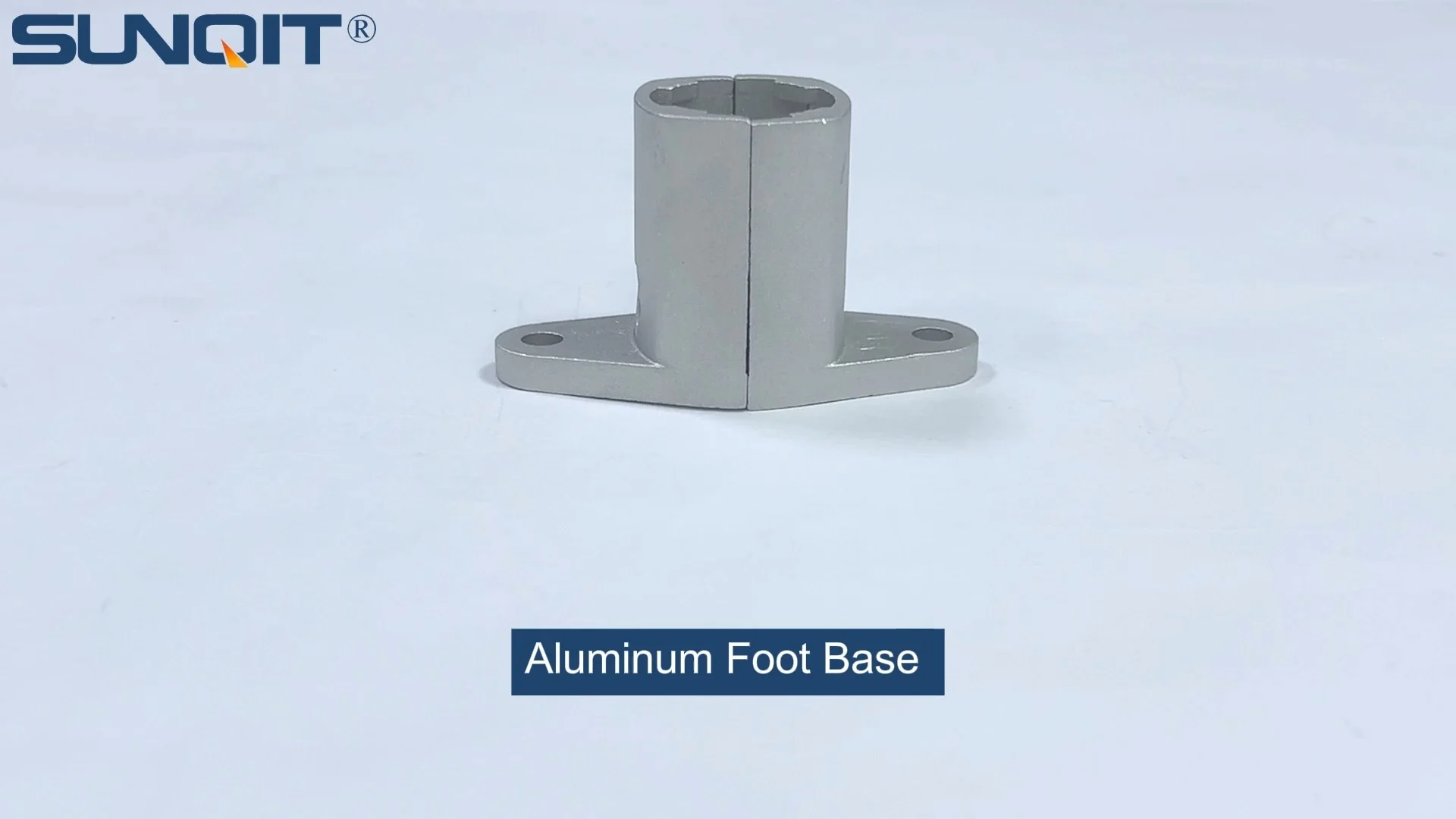
Aluminum Foot Base
Aluminum foot base to connect 28mm aluminum pipe and fixed it on the ground and prevent pipe fall and move.
Walk into any busy manufacturing plant, warehouse, or industrial facility, and you'll notice a common thread: the equipment that keeps operations moving—workbenches, material racks, assembly lines—all rely on a foundation that's often out of sight, yet absolutely critical. That foundation? The aluminum foot base. These unassuming components are the silent guardians of workplace safety, stability, and efficiency. But here's the thing: not all aluminum foot bases are created equal. In heavy-duty applications, where thousands of pounds of machinery, tools, and materials rest on these bases daily, cutting corners on quality or skipping load testing isn't just risky—it's a recipe for disaster. Today, we're diving deep into aluminum foot base load testing: what it is, why it matters, how it's done, and why every business that depends on heavy-duty equipment should make it a non-negotiable part of their process.
What Is an Aluminum Foot Base, Anyway?
Before we get into the nitty-gritty of load testing, let's make sure we're all on the same page about what an aluminum foot base actually is. At its core, an aluminum foot base is a structural component designed to support and stabilize equipment like workbenches, conveyor systems, and material racks. Made from lightweight yet durable aluminum profile, these bases are favored in industrial settings for their strength-to-weight ratio, resistance to corrosion, and adaptability—qualities that make them ideal for lean system environments where efficiency and flexibility are key.
Think of it this way: if a workbench is the "workhorse" of a production line, the aluminum foot base is its "legs." Just as a horse can't perform if its legs are weak, a workbench can't safely hold tools, parts, or machinery if its foot base isn't up to the task. And in heavy-duty scenarios—say, an automotive assembly line where a workbench supports welding equipment or a warehouse where a material rack holds pallets of heavy goods—those "legs" need to be more than just sturdy. They need to be proven, tested, and certified to handle the load.
Aluminum foot bases come in various designs, from simple flat plates to adjustable models with leveling feet, and they're often paired with other components like caster wheels for mobility or braces for extra stability. But regardless of their design, their primary job remains the same: to distribute weight evenly, prevent tipping or collapse, and ensure that the equipment they support operates safely, day in and day out.
Why Load Testing Isn't Optional—It's Essential
Let's start with the obvious: safety. In any industrial setting, the risk of injury from equipment failure is very real. A workbench that collapses under the weight of tools or materials could crush hands, feet, or worse. A material rack with a weak foot base might tip over, sending heavy items crashing to the floor and endangering nearby workers. According to the Occupational Safety and Health Administration (OSHA), over 20% of workplace injuries in manufacturing are due to equipment instability—many of which could be prevented with proper load testing.
But safety is just the beginning. Load testing also protects your bottom line. Imagine this: a small manufacturing company skips load testing on their new aluminum foot bases, assuming the supplier's "up to 1000kg" claim is accurate. A few months in, a workbench supporting a 800kg machine collapses, damaging the machine (costing $10,000 to repair) and halting production for two days (losing another $20,000 in revenue). Add in potential workers' compensation claims, and the total cost balloons to well over $50,000—all because of a skipped test that would have cost a fraction of that. As industry experts often say, "Load testing isn't an expense; it's an investment in avoiding disaster."
Then there's compliance. Many industries—aerospace, automotive, pharmaceuticals—have strict regulations governing equipment safety. For example, ISO 9001-certified facilities are required to verify that all structural components meet load-bearing standards. Skipping load testing could result in failed audits, fines, or even the loss of certifications, which can cripple a business's ability to secure contracts.

The Load Testing Process: How It's Done Right
Load testing an aluminum foot base isn't as simple as stacking weights on it and seeing when it breaks. It's a systematic process that involves careful planning, precise execution, and detailed analysis. Let's walk through the key steps.
Step 1: Define the Test Parameters
First, you need to know what you're testing for. Start by identifying the maximum load the aluminum foot base will need to support in real-world use. This isn't just the weight of the equipment itself; you also need to account for dynamic loads (e.g., workers leaning on the workbench, materials being placed or removed), environmental factors (temperature fluctuations, humidity), and any future modifications (e.g., adding shelves to a rack). A good rule of thumb? Test for 125% of the expected maximum load to account for these variables.
Next, decide on the type of load to test: static (constant weight over time) or dynamic (sudden or shifting weight). Most heavy-duty applications require both. For example, a workbench in an assembly line might need to handle static loads (tools left on it) and dynamic loads (parts being dropped or pushed across the surface).
Step 2: Prepare the Testing Setup
Once the parameters are set, it's time to set up the test. You'll need a controlled environment—preferably a lab or dedicated testing area—where you can safely apply and measure loads. The aluminum foot base should be mounted exactly as it would be in the field: if it's meant to support a workbench, attach it to the same type of aluminum profile workbench frame it would use in production. This ensures the test reflects real-world conditions.
You'll also need specialized equipment: load cells to measure weight, strain gauges to detect deformation, and data loggers to record results. For dynamic testing, hydraulic rams or pneumatic systems may be used to simulate sudden weight shifts. It's critical to calibrate all equipment before testing to ensure accuracy—even a 5% error in load measurement could lead to dangerous miscalculations.
Step 3: Apply the Load and Monitor
With the setup ready, start applying the load gradually. For static testing, begin at 25% of the target load, then increase in 25% increments, pausing at each stage to monitor for signs of stress: bending, cracking, or shifting. At each increment, record data from the strain gauges and load cells. Most standards require holding the maximum load for at least 30 minutes to check for creep (slow deformation under constant stress).
Dynamic testing is more complex. It involves applying sudden loads—for example, dropping a weighted plate onto the workbench—to simulate impact. Sensors measure how the aluminum foot base absorbs and distributes that force. The goal here is to ensure the base doesn't fail during unexpected stress, like a worker accidentally knocking over a heavy tool.
Step 4: Analyze the Results
After the test, the data is analyzed to determine if the aluminum foot base meets the required standards. Key metrics include: maximum load before deformation (yield strength), maximum load before failure (ultimate strength), and deflection (how much the base bends under load). For most applications, deflection should be minimal—typically less than 0.1 inches under maximum load—to ensure stability.
If the base passes, it's certified for use. If not, engineers will examine where it failed (e.g., a weak joint, thin aluminum profile) and make design adjustments before retesting. This iterative process ensures that the final product is as safe and reliable as possible.

Key Factors That Affect Load Capacity
Not all aluminum foot bases perform the same, even if they look similar. Several factors influence their load-bearing capacity, and understanding these can help you choose the right base for your needs—and ensure accurate load testing.
Material Quality and Thickness
The type of aluminum profile used is critical. Most aluminum foot bases are made from 6061 or 6063 aluminum alloys, known for their strength and corrosion resistance. But the thickness of the profile matters too: a 3.0mm thick profile will support more weight than a 1.5mm one. During load testing, thinner profiles may bend or warp under heavy loads, while thicker ones maintain their shape. That's why it's essential to verify the supplier's material specifications before testing—don't just take their word for it.
Design and Joint Integrity
Even the strongest aluminum profile can fail if the design is flawed. For example, a foot base with sharp corners may concentrate stress, leading to cracks, while rounded edges distribute stress more evenly. Joints are another weak point: if the aluminum foot base is assembled with low-quality screws or adhesives, those joints can loosen or break under load. During testing, pay close attention to how the base flexes—uneven deformation often points to poor joint design.
Environmental Conditions
Aluminum is resistant to rust, but extreme temperatures can affect its performance. In very cold environments, aluminum becomes more brittle, reducing its impact resistance. In hot environments, it may creep more under constant load. For outdoor applications or facilities with temperature swings, load testing should include temperature cycling—exposing the base to extreme heat and cold—to simulate real-world conditions.

Real-World Applications: Where Load Testing Makes a Difference
To truly understand the importance of aluminum foot base load testing, let's look at some real-world scenarios where it's made a tangible difference.
Automotive Manufacturing
In automotive plants, workbenches are often used to assemble heavy components like engines and transmissions. A typical engine weighs around 300kg, and the workbench may also hold tools, parts bins, and a worker leaning on it—easily pushing the total load to 500kg or more. One major automaker recently upgraded their workbenches to aluminum foot bases and discovered during load testing that a batch of bases from a new supplier could only handle 400kg before deforming. By catching this early, they avoided potential collapses on the production line, saving countless hours of downtime and preventing injuries.
Warehouse Material Racks
Warehouses rely on material racks to store pallets of goods, which can weigh up to 1000kg per pallet. A single rack may have 5-10 pallets, putting immense pressure on the aluminum foot bases. A large logistics company in Europe learned this the hard way when a rack collapsed, injuring a worker and destroying $50,000 worth of inventory. An investigation revealed that the foot bases had not been load tested for the added weight of stacked pallets. Today, the company requires all new racks to undergo third-party load testing before installation—an investment that has paid off with zero rack failures in three years.
Aerospace Assembly
In aerospace, precision is everything. Workbenches used to assemble aircraft parts must be rock-solid to ensure accuracy. Even a tiny amount of deflection can throw off measurements, leading to faulty components. A leading aerospace manufacturer uses aluminum foot bases with built-in leveling feet and subjects them to rigorous load testing, including 24-hour static tests at 150% of maximum load. This attention to detail has helped them maintain a perfect safety record and meet the strict standards of organizations like the FAA.
Choosing the Right Supplier: Why Reputation Matters
Load testing is only effective if the aluminum foot base itself is well-made. That's why choosing a reputable supplier is just as important as the testing process. Here's what to look for:
First, check for certifications. A supplier that adheres to ISO 9001 or ASME standards is more likely to produce high-quality aluminum foot bases. Ask to see test reports from independent labs—any supplier worth their salt will be happy to provide them. Avoid suppliers who claim "load capacity" without evidence; if they can't show you test data, walk away.
Second, look for experience. Suppliers who specialize in industrial aluminum components (like aluminum profile and lean system parts) have the expertise to design foot bases that meet heavy-duty needs. They'll also be familiar with common pitfalls, like under-sizing joints or using subpar materials.
Finally, consider customer support. A good supplier will work with you to determine the right foot base for your application, help define test parameters, and even assist with retesting if needed. As one plant manager put it, "We don't just buy aluminum foot bases—we buy peace of mind. A supplier who partners with us on safety is worth every penny."
Aluminum Foot Base Types and Their Load Capacities
To help you choose the right aluminum foot base for your needs, the table below compares common types, their load capacities, and ideal applications. Remember, these are general guidelines—always load test for your specific use case.
| Aluminum Foot Base Type | Material Thickness | Max Static Load Capacity | Ideal Application | Compliance Standard |
|---|---|---|---|---|
| Standard Duty | 1.5mm Aluminum Profile | 500kg | Light Workbenches, Small Material Racks | ISO 9001 |
| Heavy Duty | 3.0mm Aluminum Profile | 1500kg | Industrial Assembly Lines, Large Racks | ASME B30.20 |
| Extra Heavy Duty | 5.0mm Aluminum Profile | 3000kg | Aerospace Tooling, Automotive Engine Stands | ISO 13849-1 |
| Adjustable | 2.0mm Aluminum Profile | 800kg | Mobile Workstations, Uneven Floors | IEC 60204 |
Table 1: Aluminum foot base types and their typical load capacities. Always verify with supplier data and load testing.
Conclusion: Don't Cut Corners on Safety
At the end of the day, aluminum foot base load testing is about more than just checking a box. It's about protecting the workers who rely on that equipment, safeguarding your business from costly accidents, and ensuring that your operations run smoothly, day in and day out. In a world where every second of downtime counts, and every injury is one too many, load testing is the foundation of a safe, efficient workplace.
So the next time you're setting up a new workbench, installing a material rack, or upgrading your lean system, remember: the aluminum foot base might be out of sight, but it should never be out of mind. Invest the time and resources in load testing. Your team, your bottom line, and your peace of mind will thank you.