- Company Articles
- Products and Technology
- Installation And Maintenance
- Aluminum Foot Base Maintenance Schedule: Monthly vs. Quarterly Checks

Aluminum Foot Base Maintenance Schedule: Monthly vs. Quarterly Checks
Related Product
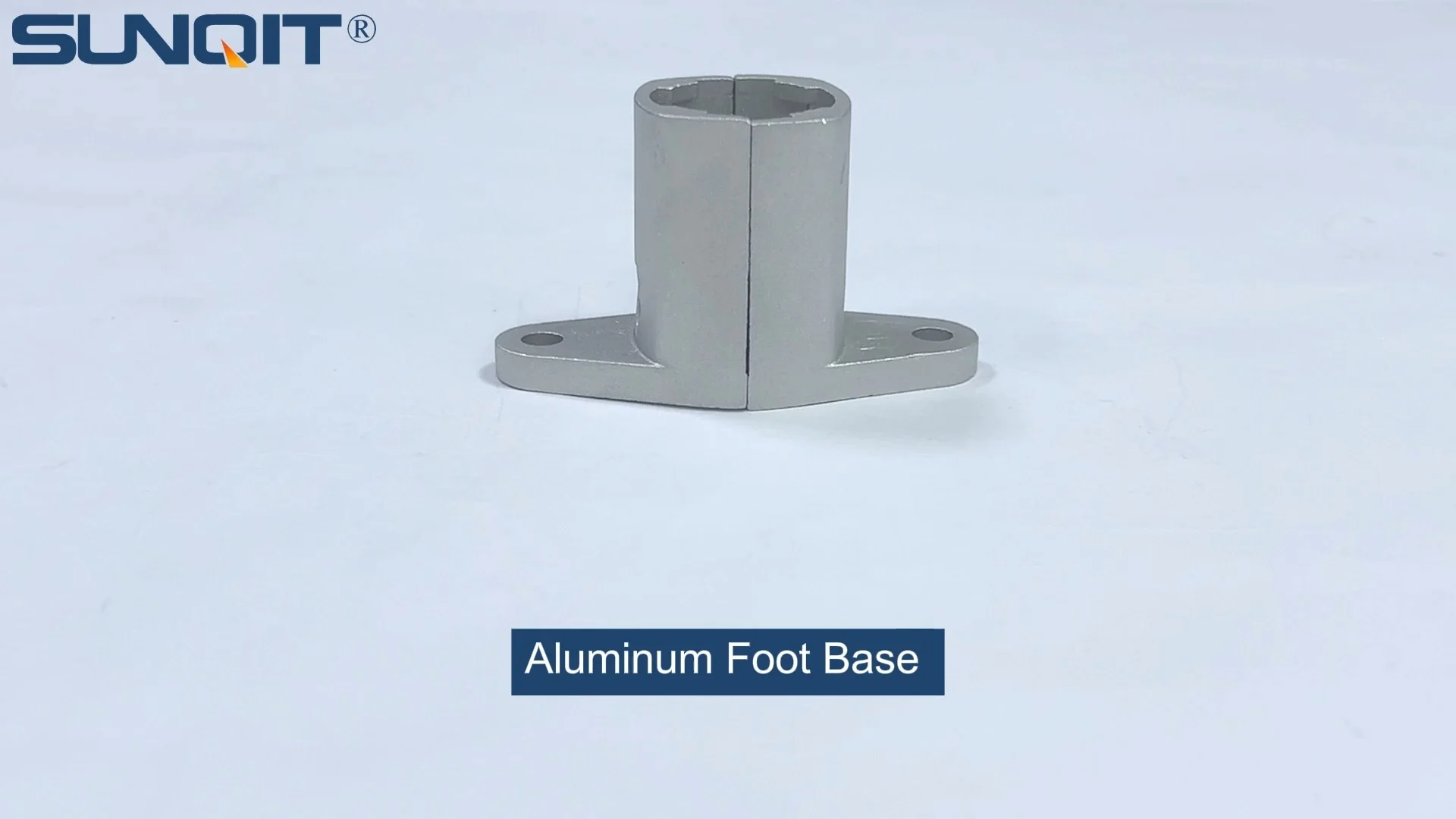
Aluminum Foot Base
Aluminum foot base to connect 28mm aluminum pipe and fixed it on the ground and prevent pipe fall and move.
In the world of lean manufacturing and efficient production lines, every component plays a silent but critical role. Among these, the aluminum foot base might not grab headlines, but it's the backbone of stability for everything from workbenches to material racks, conveyor systems to turnover trolleys. Crafted from durable aluminum—often paired with aluminum lean pipe, caster wheels, and roller track systems—these foot bases keep operations grounded, literally and figuratively. But like any hardworking team member, they need regular care to perform at their best. Neglecting maintenance can lead to wobbly workbenches, stuck caster wheels, or misaligned roller tracks, all of which chip away at productivity and safety. In this guide, we'll break down the essential monthly and quarterly maintenance tasks that will keep your aluminum foot bases (and the systems they support) running smoothly for years. Whether you're a facility manager, maintenance tech, or production supervisor, consider this your roadmap to proactive care—because an ounce of prevention is worth a pound of costly repairs.
Why Aluminum Foot Base Maintenance Matters
Before diving into schedules, let's start with the "why." Aluminum foot bases are designed for resilience—aluminum's natural resistance to corrosion and lightweight strength make it ideal for industrial settings. But even the toughest materials wear down over time. Think about the daily grind: workbenches holding heavy tools, material racks supporting boxes, caster wheels rolling across factory floors, and roller tracks guiding parts through assembly. Every bump, load, and shift puts stress on the foot base's joints, connections, and structural integrity.
Without maintenance, small issues snowball. A loose bolt on an aluminum lean pipe connection might start as a minor rattle but soon lead to a wobbly workbench, risking operator safety. A caster wheel that's dry or clogged with debris could jam mid-shift, halting material transport. A roller track misaligned because of a bent aluminum profile accessory might cause parts to get stuck, slowing production. The costs add up: downtime, replacement parts, and even workplace accidents.
But maintenance isn't just about avoiding problems—it's about extending lifespan. A well-cared-for aluminum foot base can outlast its expected tenure by 2–3 years, delaying the need for expensive replacements. It also preserves efficiency: smooth-rolling caster wheels and aligned roller tracks keep workflows uninterrupted, while stable workbenches reduce operator fatigue. In short, maintenance transforms a "set-it-and-forget-it" component into a long-term investment in your operation's success.
Monthly Maintenance: The "Quick Check" Routine
Monthly checks are your first line of defense—quick, frequent inspections and minor tune-ups to catch issues early. Think of them as your "weekly health checkup" for the foot base: short, focused, and designed to spot red flags before they escalate. These tasks take 15–30 minutes per system (depending on size) and require basic tools: a flashlight, adjustable wrench, wire brush, and lubricant. Let's break them down step by step.
1. Visual Inspection: Spotting the Obvious
Start with a thorough visual scan. Walk around the foot base and the system it supports (workbench, rack, etc.) and look for:- Corrosion or rust: Aluminum resists rust, but if the protective coating is scratched (e.g., from heavy impacts), you might see white, powdery oxidation. Check joints, welds, and areas near the floor where moisture lingers.
- Loose or missing fasteners: Look at bolts, nuts, and aluminum profile accessories (like brackets or clamps) connecting the foot base to the main structure. Are any visibly loose? Are there gaps between the foot base and the aluminum lean pipe?
- Bent or damaged components: Inspect the aluminum tubing for dents, especially around the base where it contacts the floor. Check caster wheels for cracks or flat spots, and roller track guides for warping.
- Debris buildup: Dust, oil, or metal shavings can accumulate around foot base joints, caster wheel axles, or roller track channels. This isn't just unsightly—it can trap moisture and cause parts to bind.
2. Cleaning: Keeping It Debris-Free
Once you've inspected, it's time to clean. Even small amounts of debris can cause big problems. For aluminum foot bases:- Wipe down surfaces: Use a damp cloth to remove dust and oil from the aluminum lean pipe and foot base frame. For stubborn grime, add a mild detergent (avoid harsh chemicals—they can damage aluminum's finish).
- Clear caster wheel and roller track channels: Use a wire brush or compressed air to dislodge debris from caster wheel axles and roller track grooves. A toothpick works wonders for tiny, hard-to-reach gaps in aluminum profile accessories.
- Dry thoroughly: Moisture is aluminum's silent enemy. After cleaning, dry all surfaces with a clean rag, paying extra attention to joints and crevices.
3. Tightening: Securing Connections
Vibration is constant in industrial settings, and it loves to loosen bolts. Grab your adjustable wrench or socket set and tighten any fasteners that showed signs of movement during the visual inspection. Focus on:- Foot base-to-frame bolts: These connect the aluminum foot base to the main structure (e.g., a workbench or material rack). Loose bolts here cause wobbling, which stresses other components.
- Aluminum profile accessories: Brackets, clamps, and connectors that hold aluminum lean pipe in place. A loose clamp can shift the entire structure, misaligning roller tracks or caster wheels.
- Caster wheel mounts: If the foot base has caster wheels, check the bolts securing the wheels to the base. A loose mount can cause the wheel to swivel unpredictably or lock up.
4. Lubrication: Keeping Movements Smooth
Moving parts need lubrication to reduce friction and wear. For aluminum foot bases, focus on two key areas:- Caster wheel axles: Apply a few drops of lithium-based grease or silicone spray to the axle where the wheel meets the mount. This prevents squeaking and ensures smooth rolling.
- Roller track bearings: If the foot base supports a roller track system, lubricate the bearings in the rollers. Use a precision oiler to target the bearing points—too much lubricant attracts dust, so a little goes a long way.

Quarterly Maintenance: Deep Dives and Long-Term Care
Monthly checks handle the basics, but quarterly maintenance is where you dig deeper. These tasks are more involved—think of them as a "physical exam" for your aluminum foot base, designed to catch wear and tear that builds up over time. Plan for 1–2 hours per system, and gather tools like a torque wrench, level, wire brush, sandpaper, and replacement parts (e.g., caster wheels, aluminum profile accessories, or roller track guides).
1. Structural Integrity Testing
Quarterly checks start with a stress test. Aluminum foot bases are built to hold weight, but over time, repeated loading can cause subtle bends or fatigue. Here's how to test:-
Load testing:
Place the maximum rated weight on the system (e.g., a fully loaded workbench or material rack). Let it sit for 10–15 minutes, then check for:
- Visible bending in the aluminum lean pipe or foot base frame.
- Gaps opening between the foot base and the floor (a sign of uneven settling).
- Creaking or shifting sounds, which indicate stress on joints.
- Leveling check: Use a spirit level to ensure the foot base is perfectly horizontal. Even a 1-degree tilt can cause uneven weight distribution, leading to premature wear on caster wheels or roller tracks. Adjust leveling feet (if equipped) to correct tilts.
2. Corrosion Treatment
Even with monthly cleaning, corrosion can take hold in high-moisture or chemical-heavy environments. Quarterly is the time to address it:- Remove oxidation: For minor white corrosion, use a wire brush or 120-grit sandpaper to gently scrub the area until the aluminum surface is smooth and shiny.
- Apply protective coating: After cleaning, treat the area with an aluminum-specific anti-corrosion spray or clear sealant. This creates a barrier against moisture and chemicals.
- Inspect welds: If the foot base has welded joints, check for cracks or signs of corrosion around the welds. These are weak points and may need professional repair if damaged.
3. Component Replacement: Swapping Worn Parts
Some parts are designed to wear out—caster wheels, roller track bearings, and aluminum profile accessories like brackets or clamps. Quarterly checks are the perfect time to replace them before they fail:- Caster wheels: If wheels have flat spots, cracks, or don't roll smoothly even after lubrication, replace them. Look for wheels rated for your load capacity (e.g., 200kg vs. 500kg) and compatible with your floor type (rubber for concrete, polyurethane for smooth surfaces).
- Roller track rollers: Stiff or noisy rollers should be swapped out. Remove the roller from its track, check the bearing for play, and replace if it doesn't spin freely.
- Fasteners and accessories: replace any bolts, nuts, or aluminum profile accessories that are stripped, bent, or corroded. It's better to replace a $5 bolt than risk a $500 workbench collapse.
4. Alignment Checks for Integrated Systems
Aluminum foot bases rarely work alone; they're part of larger systems like roller tracks or conveyor belts. Quarterly, verify that these systems are aligned with the foot base:- Roller track alignment: Place a straightedge along the roller track. It should run parallel to the foot base's edge, with no gaps or bends. Misaligned tracks cause parts to jam or slide off course.
- Caster wheel swivel test: For mobile systems (like turnover trolleys), check that caster wheels swivel 360 degrees smoothly and lock securely when engaged. Adjust or replace swivel mechanisms if they stick.
- Workbench stability: Push gently on the workbench from all sides. It should wobble minimally—excessive movement means the foot base isn't securing it properly, possibly due to loose connections or worn leveling feet.

Monthly vs. Quarterly: A Side-by-Side Comparison
| Task | Monthly Checks | Quarterly Checks | Tools Needed | Purpose |
|---|---|---|---|---|
| Visual Inspection | Quick scan for corrosion, loose fasteners, debris | Detailed check for structural damage, weld cracks, deep corrosion | Flashlight, cloth | Catch early warning signs before they escalate |
| Cleaning | Wipe surfaces, clear debris from caster wheels/roller tracks | Deep clean with detergent, scrub corrosion-prone areas | Damp cloth, wire brush, mild detergent | Prevent debris buildup and corrosion |
| Fastener Tightening | Tighten visibly loose bolts/nuts on foot base and connections | Torque all fasteners to manufacturer specs; replace stripped parts | Adjustable wrench, torque wrench | Ensure structural stability and prevent component stress |
| Lubrication | Lubricate caster wheel axles and roller track bearings | Disassemble and relubricate swivel mechanisms; replace old lubricant | Lithium grease, silicone spray, precision oiler | Reduce friction and extend lifespan of moving parts |
| Structural Testing | Not required | Load testing, leveling check, bend inspection | Spirit level, weights (for load testing) | Identify hidden structural weaknesses |
| Component Replacement | Not required (unless part fails unexpectedly) | replace worn caster wheels, roller track rollers, and accessories | Screwdrivers, pliers, replacement parts | Proactively replace parts before failure causes downtime |

Troubleshooting Common Issues: Real-World Scenarios
From Wobbly Workbenches to Stuck Caster Wheels: How to Fix What Breaks
Even with regular maintenance, issues can pop up. Here are three common scenarios and how to resolve them—using your monthly and quarterly checklists as guides.Scenario 1: The Workbench Wobbles
Problem: An operator reports their workbench shakes when they use power tools. Monthly checks showed no loose bolts—what's wrong?
Diagnosis: Wobbling often stems from uneven foot bases. During quarterly leveling checks, you discover one corner of the foot base is slightly higher than the others, causing the bench to rock. This could be due to a worn leveling foot or the floor settling.
Solution: Adjust the leveling feet (turn clockwise to lower, counterclockwise to raise) until the workbench is level. If the leveling foot is stripped, replace it with a new one (an aluminum profile accessory available from most suppliers). Retighten all foot base bolts afterward to ensure stability.
Scenario 2: Caster Wheels Jam Mid-Roll
Problem: A turnover trolley's caster wheel suddenly locks up, making it hard to push. Monthly lubrication didn't help.
Diagnosis: During quarterly inspection, you remove the wheel and find debris (metal shavings) trapped in the axle bearing. The shavings have worn down the bearing, causing it to seize.
Solution: replace the caster wheel (including the bearing). While you're at it, check the other wheels for debris and clean their axles thoroughly. Apply fresh lubricant to all wheels after reinstallation.
Scenario 3: Roller Track Misalignment
Problem: Parts keep sliding off the roller track leading to the assembly line. Monthly checks showed the track looked straight.
Diagnosis: Quarterly alignment testing reveals the roller track has a slight bend near the foot base connection. This bend, caused by a heavy load months ago, is now causing parts to drift off course.
Solution: Loosen the roller track's aluminum profile accessories (brackets and clamps) and gently bend the track back into alignment using a rubber mallet. Retighten the accessories and test with a straightedge. If bending doesn't work, replace the damaged track section.
Long-Term Benefits: Beyond the Checklist
Consistent maintenance isn't just about avoiding headaches—it delivers tangible, long-term benefits that impact your bottom line. Let's break them down:
1. Extended Lifespan
Aluminum foot bases and their components (aluminum lean pipe, caster wheels, roller tracks) are built to last, but they're not indestructible. A well-maintained foot base can survive 7–10 years in a busy factory, while a neglected one might fail in 3–4. That's double the lifespan, which translates to lower replacement costs and less downtime for installations.2. Improved Safety
A wobbly workbench or stuck caster wheel isn't just annoying—it's a safety hazard. Loose components can lead to falls, dropped tools, or even collapsed racks. Regular maintenance reduces these risks, keeping your team safe and compliant with OSHA standards.3. Enhanced Productivity
Downtime is the enemy of efficiency. A caster wheel that jams or a roller track that misaligns can halt production for hours while you troubleshoot. Proactive maintenance minimizes these disruptions, keeping workflows smooth and operators focused on their tasks—not fixing equipment.4. Lower Repair Costs
Replacing a $10 caster wheel during quarterly checks is far cheaper than replacing an entire $500 workbench after it collapses. Maintenance turns big, unexpected expenses into small, predictable ones. Plus, suppliers often offer discounts on replacement parts when you buy in bulk—stocking up during quarterly checks saves even more.
Aluminum foot bases are the unsung heroes of lean production—quietly supporting the systems that keep your operation running. By sticking to a monthly and quarterly maintenance schedule, you're not just caring for metal and bolts; you're investing in safety, efficiency, and the longevity of your equipment. Remember: monthly checks are about catching small issues early, while quarterly checks dig deeper to prevent big problems. With the right tools, a little time, and a proactive mindset, you can keep your aluminum foot bases (and their aluminum lean pipe, caster wheel, and roller track companions) in top shape for years to come.
So, grab your flashlight, wrench, and lubricant—and start checking. Your production line (and your bottom line) will thank you.