- Company Articles
- Products and Technology
- Product knowledge
- Aluminum Foot Base Material Thickness: How It Affects Stability

Aluminum Foot Base Material Thickness: How It Affects Stability
Related Product
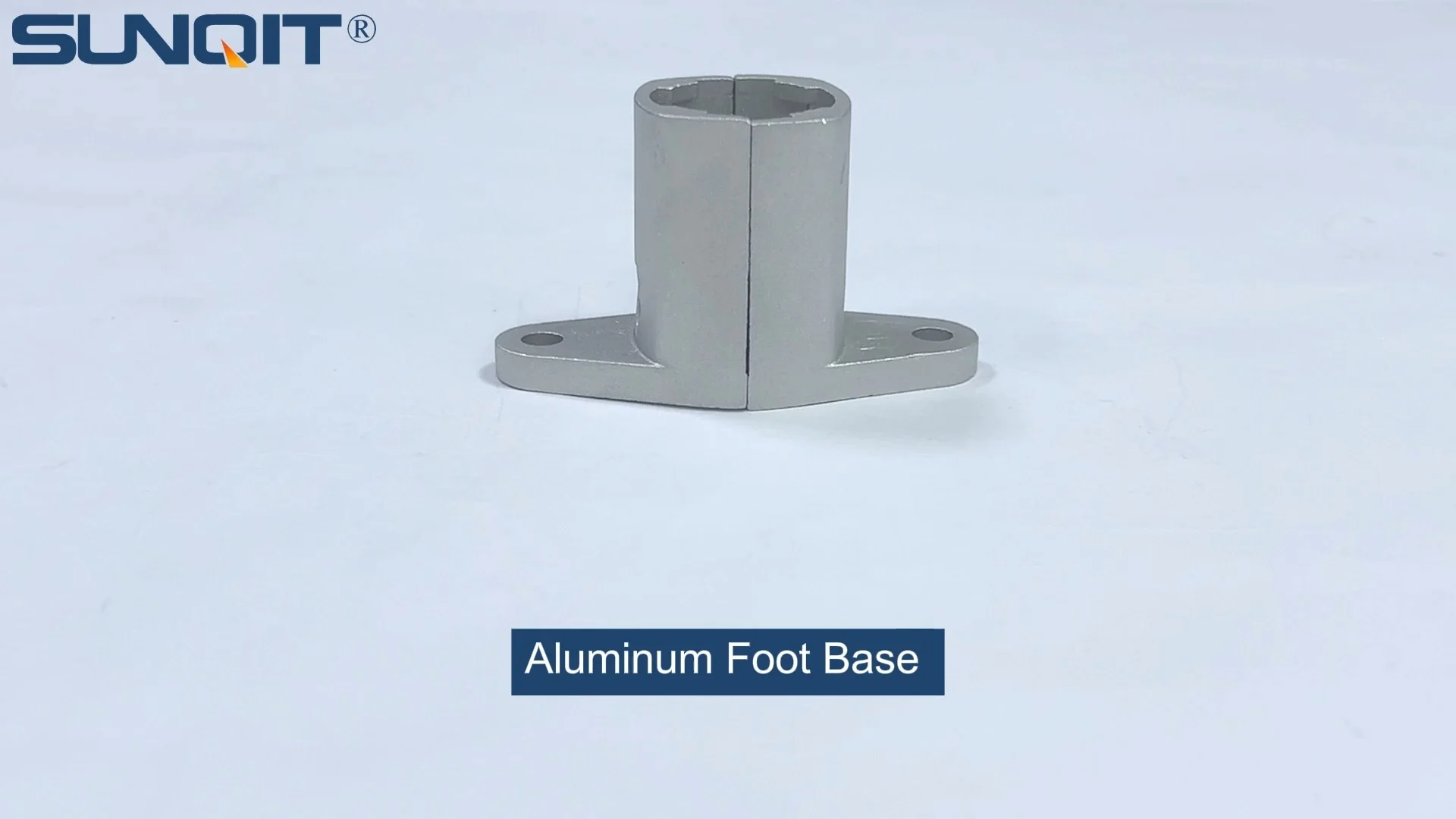
Aluminum Foot Base
Aluminum foot base to connect 28mm aluminum pipe and fixed it on the ground and prevent pipe fall and move.
If you've ever stood at a workbench that wobbled when you leaned on it, or watched a material rack shift under the weight of tools, you know how frustrating instability can be. In manufacturing, warehousing, or even small-scale production setups, the difference between a smooth workflow and a day full of delays often comes down to the smallest components. One such unsung hero? The aluminum foot base. These unassuming parts form the foundation of everything from lean system workstations to heavy-duty material racks, and their thickness plays a critical role in keeping your operations steady, safe, and efficient.
Aluminum foot bases are more than just metal plates—they're the silent guardians of stability. They connect your aluminum profile structures to the ground, distributing weight, absorbing vibrations, and resisting the daily wear and tear of busy production floors. But not all foot bases are created equal. The thickness of the aluminum used directly impacts how much weight they can support, how well they resist bending, and how long they'll last. In this article, we'll dive into why aluminum foot base thickness matters, how it influences stability, and how to choose the right thickness for your needs—whether you're setting up a new lean system or upgrading an existing workbench.
What Is an Aluminum Foot Base, Anyway?
Before we get into thickness, let's clarify what an aluminum foot base is. Simply put, it's a flat or slightly angled piece of aluminum designed to anchor vertical structures—like aluminum profile frames, workbench legs, or material rack supports—to the floor. Think of it as the "feet" of your industrial setup. Without a sturdy foot base, even the strongest aluminum profile would sink, tilt, or slide, turning your carefully planned workflow into a safety hazard.
Aluminum is the go-to material for these bases for good reason. It's lightweight, which makes installation easier, and naturally resistant to corrosion—critical in environments where spills, humidity, or chemicals are common. Unlike steel, it won't rust, so it maintains its strength over time. But aluminum's real advantage lies in its versatility: it can be extruded into precise shapes, allowing foot bases to be custom-designed to fit specific aluminum profile sizes (like 2020, 3030, or 4040 profiles) and load requirements. Pair that with aluminum pipe accessories like brackets or clamps, and you get a base that integrates seamlessly with your existing setup.
Material Thickness: More Than Just a Number
When we talk about "thickness" in aluminum foot bases, we're referring to the distance from the top to the bottom surface of the base, measured in millimeters (mm). Common thicknesses range from 1.2mm for light-duty use up to 3.0mm for heavy industrial applications. At first glance, a difference of 0.3mm might seem trivial—after all, that's thinner than a credit card. But in structural engineering, even small variations in thickness can drastically change a component's performance.
To understand why, let's break down what thickness affects: flexural strength (how much the base bends under load), load distribution (how well it spreads weight across the floor), and durability (how it holds up to repeated stress). A thicker base has more material to resist bending, which means it can support heavier loads without deforming. It also distributes weight over a larger area, reducing the risk of the base sinking into soft floors (like concrete that's cracked or uneven). And over time, thicker aluminum is less likely to develop fatigue cracks from daily vibrations—say, from a conveyor running next to a workbench or workers moving heavy tools on and off the surface.
But thickness isn't the only factor. The quality of the aluminum alloy matters too. Most foot bases use 6061 or 6063 aluminum—alloys known for their balance of strength and machinability. A 1.5mm base made from high-grade 6061 aluminum might outperform a 2.0mm base made from a lower-quality alloy. That said, assuming the same alloy, thickness remains the most straightforward way to gauge a base's stability. For example, a 2.0mm 6061 aluminum foot base can typically support 30-40% more weight than a 1.2mm version of the same design.

The Real Impact of Thickness on Stability: 3 Key Scenarios
To see how thickness plays out in real-world settings, let's look at three common scenarios where aluminum foot bases are critical: workbenches, material racks, and lean system workstations. In each case, choosing the wrong thickness can lead to instability that disrupts operations—sometimes in subtle ways that take months to notice.
1. Workbenches: Where Precision Meets Pressure
A typical workbench in a manufacturing plant might hold tools, parts bins, and even small machinery—easily 100-200kg of weight. Add a worker leaning on the edge, or a sudden impact (like dropping a heavy wrench), and the load spikes even higher. If the aluminum foot bases are too thin, here's what happens: the base bends slightly under the weight, causing the workbench to tilt. Over time, that tilt gets worse as the aluminum fatigues, leading to misaligned tools, uneven assembly work, and even worker discomfort (no one wants to stand at a lopsided bench for 8 hours).
Consider a small electronics workshop using a workbench with 1.2mm aluminum foot bases. The bench holds a soldering station, a parts organizer, and a microscope—total load around 120kg. At first, it feels steady. But after a few weeks, workers notice the microscope's view is slightly off; measurements are inconsistent. When they check the base, they find the foot bases have bent upward by 2mm at the corners. Upgrading to 1.5mm bases solves the problem: the thicker aluminum resists bending, keeping the bench level and the work precise.
2. Material Racks: Stacking Weight Without Sway
Material racks—like the "material rack b (3 row and 3 floor)" often used in warehouses—are built to hold stacked boxes, pallets, or raw materials. These racks can weigh 500kg or more when fully loaded, and their stability depends entirely on how well the aluminum foot bases anchor them to the floor. A thin base here is a disaster waiting to happen. If the base bends, the rack tilts, and the entire stack could collapse—damaging inventory and risking injury.
Take a distribution center using 1.5mm foot bases on their material racks. Each rack holds 400kg of packaged goods. On windy days (if the warehouse has open loading docks), the racks sway slightly—a sign the bases aren't rigid enough to resist lateral forces. Over time, the sway loosens the connections between the aluminum profiles and the foot bases, making the racks even less stable. Switching to 2.0mm bases adds the rigidity needed to stop the sway. The thicker aluminum acts like a anchor, keeping the rack planted even when pushed or buffeted by wind.
3. Lean System Workstations: Efficiency Relies on Consistency
Lean systems are all about efficiency—minimizing waste, streamlining workflows, and keeping everything in its place. A lean system workstation might include a conveyor, a workbench, and a turnover trolley, all connected to form a seamless production line. For this to work, every component must stay aligned. If the aluminum foot bases under the workstation legs are too thin, the entire setup shifts over time. Conveyors misalign with workbenches, parts fall off roller tracks, and workers waste time readjusting instead of producing.
A automotive parts manufacturer learned this the hard way. They installed a lean system with 1.2mm foot bases on the workstation legs. Within a month, the conveyor feeding parts to the workbench had shifted by 5mm—enough that parts occasionally jammed. The root cause? The constant vibration from the conveyor loosened the thin foot bases, which then deformed under the workstation's weight. Upgrading to 2.0mm bases stabilized the setup: the thicker aluminum absorbed vibrations, kept the legs aligned, and the conveyor ran smoothly again.

Aluminum Foot Base Thickness: A Practical Comparison
To help you choose the right thickness, here's a breakdown of common aluminum foot base thicknesses, their typical load capacities, and best-use scenarios. All examples assume 6061 aluminum alloy and a standard square base design (100x100mm) unless noted.
| Thickness (mm) | Max Static Load (kg) | Stability in Vibration (1-5) | Best For | Limitations |
|---|---|---|---|---|
| 1.2mm | Up to 80kg | 2/5 (Poor: Bends under vibration) | Light-duty workbenches, small tool racks, static storage (no movement) | Not suitable for dynamic loads (e.g., conveyor-adjacent setups) or heavy tools |
| 1.5mm | 80-150kg | 4/5 (Good: Minimal bending under vibration) | Medium workbenches (with tools), small material racks (2-3 levels), lean system workstations with light loads | May flex under sudden impacts (e.g., dropping heavy parts) |
| 2.0mm | 150-300kg | 5/5 (Excellent: Resists vibration and bending) | Heavy workbenches (with machinery), large material racks (3+ floors), conveyor-integrated lean systems | Heavier to install; slightly higher cost than thinner options |
| 2.5mm+ | 300kg+ | 5/5 (Excellent: Rigid even under extreme stress) | Industrial-grade racks, workbenches with heavy machinery (e.g., CNC tools), outdoor setups (resists weather stress) | Overkill for most small/medium operations; adds unnecessary weight |

How to Choose the Right Thickness for Your Setup
Now that you understand how thickness affects stability, how do you pick the right one for your needs? Start by answering these four questions:
1. What's the maximum load the structure will carry?
Add up the weight of everything on or in the structure: tools, parts, machinery, even workers (if they'll stand or lean on it). Be generous—factor in occasional overloading (e.g., stacking an extra box on a material rack). A good rule of thumb: choose a base with a max load 20% higher than your estimated needs to account for surprises.
2. Is the environment dynamic or static?
Dynamic environments have movement or vibration: nearby conveyors, workers moving quickly, or machinery that shakes (like air compressors). These require thicker bases (1.5mm+) to resist fatigue. Static environments (e.g., a storage room with rarely moved boxes) can get by with 1.2mm bases.
3. What's the floor condition?
Uneven or soft floors (e.g., cracked concrete, warehouse floors with dips) need thicker bases to distribute weight and prevent sinking. Thicker bases have larger contact areas, which helps them "bridge" small gaps in the floor.
4. How long do you need the setup to last?
If you're setting up a permanent lean system or workbench that will be used daily for years, invest in 1.5mm+ bases. Thicker aluminum resists fatigue and corrosion better, so you won't need to replace bases as often. For temporary setups (e.g., a pop-up production line for a 6-month project), 1.2mm might suffice—but don't skimp if safety is on the line.
Myth Busting: "Thicker Is Always Better"
It's easy to think, "Why not just use 2.0mm bases everywhere?" But thicker aluminum has tradeoffs. First, cost: thicker bases are pricier, and for light-duty setups, that extra expense is unnecessary. Second, weight: a 2.0mm base is heavier than a 1.2mm one, which can make installation harder (especially if you're mounting it to walls or overhead structures). Third, over-engineering: a 2.0mm base on a small tool rack holding 50kg is like using a sledgehammer to hang a picture—it's more than you need, and it won't improve performance.
Another myth: "All aluminum foot bases are the same." Not true. Even with the same thickness, a base with a reinforced lip (to attach to aluminum profiles) or a textured bottom (for better grip on smooth floors) will perform better than a flat, generic base. Always check for design features that complement thickness—like pre-drilled holes for easy mounting with aluminum pipe accessories, or a powder-coated finish to resist scratches.
Stability Starts at the Base
At the end of the day, aluminum foot base thickness is about more than just numbers on a spec sheet. It's about ensuring your workbench stays level, your material rack doesn't sway, and your lean system runs smoothly—so you can focus on what matters: producing quality products and keeping your team safe. Whether you're a small business owner setting up your first production line or a plant manager upgrading an existing setup, taking the time to choose the right thickness will save you headaches, money, and downtime in the long run.
Remember: 1.2mm works for light, static loads; 1.5mm is the sweet spot for most medium-duty setups; and 2.0mm+ is for heavy loads, dynamic environments, or permanent installations. Pair your base with high-quality aluminum profiles and accessories, and you'll build a foundation that lasts. After all, in manufacturing, as in life, stability isn't just a nice-to-have—it's the cornerstone of success.