- Company Articles
- Products and Technology
- Product knowledge
- Aluminum Foot Base Materials: Alloy Types & Corrosion Resistance

Aluminum Foot Base Materials: Alloy Types & Corrosion Resistance
Related Product
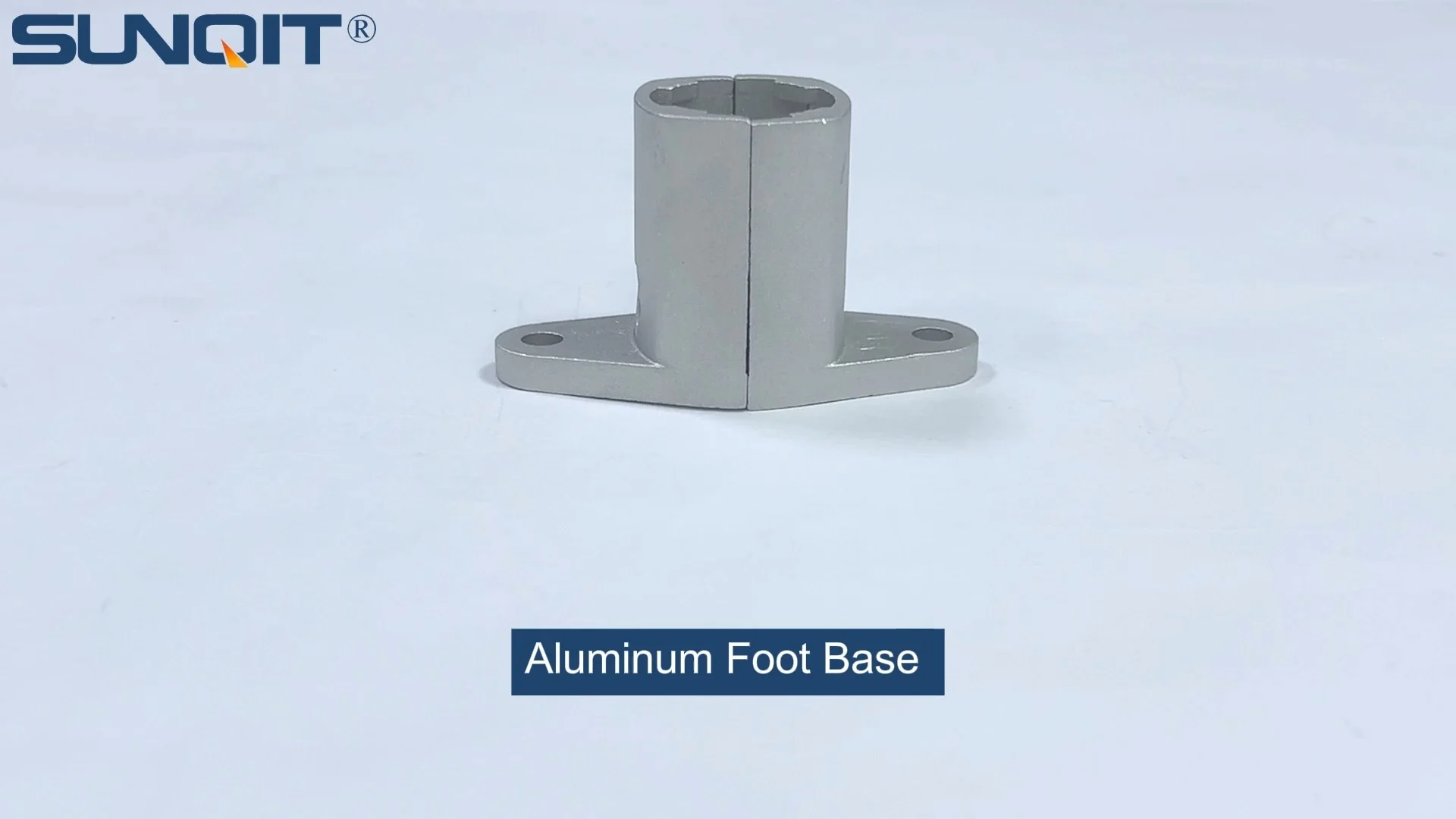
Aluminum Foot Base
Aluminum foot base to connect 28mm aluminum pipe and fixed it on the ground and prevent pipe fall and move.
Walk into any modern factory, warehouse, or assembly line, and you'll notice a silent workhorse holding everything together: the humble foot base. These unassuming components might not grab headlines, but they're the backbone of stability for workbenches, material racks, conveyors, and even turnover trolleys. When it comes to choosing the right material for these foundational parts, aluminum has emerged as a clear favorite—and for good reason. Lightweight yet strong, resistant to the elements, and endlessly adaptable, aluminum foot bases have revolutionized how industries build durable, long-lasting workspaces. But not all aluminum is created equal. The secret to their reliability lies in two critical factors: the type of aluminum alloy used and how well it resists corrosion. Let's dive into what makes aluminum foot bases tick, explore the alloys that power them, and uncover why their corrosion resistance is non-negotiable in industrial settings.
What Exactly Is an Aluminum Foot Base?
Before we get into the nitty-gritty of alloys and corrosion, let's make sure we're on the same page about what an aluminum foot base is. Simply put, it's the bottom support structure that anchors equipment to the ground, distributing weight evenly and preventing wobbling or tipping. Think of it as the "feet" of a workbench or the "base" of a material rack—without it, even the sturdiest setup would be unstable.
Aluminum foot bases are typically made from extruded aluminum profiles, which are shaped by forcing heated aluminum through a die to create uniform, custom cross-sections. This process allows manufacturers to design foot bases that fit specific needs, whether it's a narrow base for a compact workbench or a wide, reinforced one for a heavy-duty conveyor. And because aluminum is malleable, these foot bases can be paired with a range of aluminum profile accessories—like brackets, connectors, and leveling feet—to adapt to uneven floors or unique equipment layouts.
But why aluminum, specifically? Let's start with the basics: weight. Steel foot bases, for example, are strong but heavy, making them hard to move or reconfigure if your workflow changes. Aluminum, by contrast, weighs about a third of steel, which means installing or relocating equipment becomes a one-person job instead of a team effort. Then there's durability. Unlike steel, aluminum doesn't rust, which is a game-changer in environments where moisture, chemicals, or humidity are common. And let's not forget cost—aluminum strikes a balance between performance and price, making it accessible for small workshops and large factories alike.
Alloy Types: The Building Blocks of Aluminum Foot Bases
Aluminum on its own is soft and ductile—great for foil or wiring, but not nearly strong enough for a foot base that needs to support hundreds of pounds of equipment. That's where alloys come in. By mixing pure aluminum with small amounts of other metals like copper, magnesium, silicon, or zinc, manufacturers create aluminum alloys with enhanced strength, hardness, and other properties tailored to specific tasks. When it comes to foot bases, three alloys stand out for their reliability: 6061, 6063, and 5052. Let's break down what makes each one unique.
6061 Aluminum Alloy: The Workhorse
If there's an "all-rounder" in the aluminum alloy world, it's 6061. Composed of aluminum, magnesium, and silicon, this alloy hits the sweet spot between strength, weldability, and corrosion resistance—traits that make it ideal for foot bases. Let's put its strength into perspective: 6061 has a tensile strength of about 30,000 psi (pounds per square inch), which means a small section of 6061 aluminum can support the weight of a compact car without bending. For a foot base holding a workbench or a material rack, that's more than enough muscle.
What really makes 6061 shine, though, is its versatility. It's easy to machine, so manufacturers can drill holes, cut threads, or shape it into custom foot base designs without weakening the material. It also welds well, which is crucial if you need to attach brackets or additional supports to the foot base. And while it's not the most corrosion-resistant alloy out there (we'll get to that later), it holds up surprisingly well in most indoor industrial environments, even with occasional exposure to water or oils.
You'll often find 6061 aluminum foot bases paired with aluminum pipes or aluminum extrusion profiles in heavy-duty setups. For example, a workbench E (single deck-without caster) might use 6061 foot bases to ensure stability during assembly tasks, while a material rack B (3 row and 3 floor) relies on 6061's strength to support stacked boxes or parts.
6063 Aluminum Alloy: The Precision Performer
If 6061 is the workhorse, 6063 is the precision tool. Sometimes called "architectural aluminum," this alloy is made with a higher silicon content than 6061, which gives it excellent extrudability. That means it can be shaped into complex, detailed profiles with smooth surfaces—perfect for foot bases that need to fit seamlessly with other components like aluminum guide rails or roller track connectors.
While 6063 isn't as strong as 6061 (tensile strength around 25,000 psi), it more than makes up for it in corrosion resistance and aesthetics. Its smooth, uniform finish is ideal for environments where appearance matters, like cleanrooms or retail-facing warehouses. It's also highly resistant to pitting and crevice corrosion, which is why you'll often see 6063 foot bases in settings with frequent moisture, such as food processing plants or outdoor loading docks.
One of the biggest advantages of 6063 is its compatibility with aluminum extrusion profiles. Since both are often extruded using the same process, foot bases made from 6063 can be easily integrated with other extruded components—think a conveyor system where the foot base connects directly to an aluminum profile frame. This seamless fit reduces assembly time and ensures a more stable overall structure.
5052 Aluminum Alloy: The Corrosion Fighter
When corrosion resistance is non-negotiable, 5052 aluminum alloy takes center stage. This alloy is rich in magnesium (around 2.5%), which forms a dense, protective oxide layer on its surface—nature's own shield against rust and degradation. Unlike 6061 or 6063, 5052 isn't as strong (tensile strength of about 33,000 psi, though it's less rigid), but its ability to withstand saltwater, chemicals, and extreme weather makes it the go-to for foot bases in harsh environments.
Imagine a coastal warehouse where salt air hangs thick in the air, or a manufacturing plant where cleaning solutions are used daily—these are places where steel foot bases would rust within months, and even 6061 might start to show signs of wear. 5052, however, stands firm. Its corrosion resistance is so impressive that it's often used in marine applications, so a little factory moisture is hardly a challenge.
5052 foot bases are also prized for their flexibility. While they're not as weldable as 6061, they're easy to form, which makes them great for custom-shaped foot bases that need to wrap around uneven surfaces or fit into tight spaces. If you've ever seen a turnover trolley with a curved foot base that glides smoothly over rough floors, chances are it's made from 5052.
| Alloy Type | Key Elements | Tensile Strength (psi) | Corrosion Resistance | Best For |
|---|---|---|---|---|
| 6061 | Aluminum, Magnesium, Silicon | 30,000 | Good | Heavy-duty workbenches, material racks, conveyors |
| 6063 | Aluminum, Silicon (higher content) | 25,000 | Very Good | Precision setups, cleanrooms, architectural applications |
| 5052 | Aluminum, Magnesium (high content) | 33,000 | Excellent | Harsh environments (saltwater, chemicals), outdoor use |
Of course, these aren't the only alloys out there. For specialized applications—like foot bases that need to support extreme weights—manufacturers might turn to 7075 aluminum (a high-strength alloy with zinc), but its brittleness and lower corrosion resistance make it overkill for most standard foot base needs. For the everyday industrial setting, 6061, 6063, and 5052 cover just about every requirement.

Corrosion Resistance: Why It Matters (and How Aluminum Delivers)
If you've ever left a steel tool outside in the rain, you know the result: rust. That reddish-brown coating isn't just unsightly—it weakens the metal, turning a solid piece into a brittle, unreliable mess. For foot bases, which are often in contact with concrete floors, spilled liquids, or humid air, corrosion isn't just a cosmetic issue; it's a safety hazard. A corroded foot base can crack or collapse, putting equipment, products, and even workers at risk. That's why corrosion resistance is one of the top priorities when choosing aluminum foot base materials.
Aluminum's natural resistance to corrosion starts with its chemistry. When exposed to oxygen, aluminum forms a thin, invisible layer of aluminum oxide (Al₂O₃) on its surface. This layer is only a few nanometers thick, but it's incredibly dense and adherent—meaning it doesn't flake off like rust. Instead, it acts as a barrier, preventing oxygen and moisture from reaching the underlying metal. Even if the layer is scratched, it quickly reforms, self-healing to protect the alloy underneath.
But while all aluminum alloys benefit from this oxide layer, some are better at resisting corrosion than others—hence why 5052 outperforms 6061 in harsh environments. The addition of magnesium in 5052, for example, enhances the oxide layer's stability, making it more resistant to acids and saltwater. Silicon in 6063, on the other hand, improves the alloy's ability to withstand pitting (small, localized corrosion spots) in humid or wet conditions.
Surface Treatments: Boosting Corrosion Resistance Even Further
While aluminum's natural oxide layer is impressive, industrial settings often demand extra protection. That's where surface treatments come in. These processes enhance the oxide layer or add a protective coating, making foot bases even more resistant to corrosion, scratches, and wear. Here are the most common treatments used for aluminum foot bases:
Anodizing: Hardening the Oxide Layer
Anodizing is like giving aluminum a "supercharged" oxide layer. The process involves submerging the aluminum foot base in an electrolytic solution and passing an electric current through it. This causes the oxide layer to grow thicker—up to 100 microns, compared to the natural 0.1 microns—and harder, making the surface more resistant to scratches and corrosion. Anodized foot bases also come in a range of colors, from clear to black, which can help with organization (e.g., color-coding workbenches by department).
Type II anodizing (the most common) is ideal for indoor foot bases, while Type III (hard anodizing) creates a thicker, more durable layer for outdoor or high-wear applications. If you've ever seen a workbench with a matte, metallic finish that doesn't chip, it's likely anodized.
Powder Coating: Adding a Colorful Shield
Powder coating takes a different approach: instead of thickening the oxide layer, it adds a layer of dry powder (usually polyester or epoxy) that's electrostatically charged and then baked onto the aluminum surface. The result is a smooth, durable finish that's available in almost any color and texture—from glossy to matte. Powder coating is especially popular for foot bases that need to match a company's branding or blend into a specific workspace aesthetic.
Beyond looks, powder coating provides excellent corrosion resistance, especially when combined with a pre-treatment like chromate conversion coating (which further enhances the oxide layer). It's also tough against impacts and abrasions, making it a great choice for foot bases in busy areas where equipment is moved frequently.
Chromate Conversion Coating: The Invisible Protector
For foot bases that need corrosion protection without changing their appearance, chromate conversion coating is the way to go. This process involves dipping the aluminum in a chromate solution, which reacts with the surface to form a thin, transparent layer that enhances the natural oxide barrier. The result is a foot base that looks like untreated aluminum but resists corrosion up to 10 times better.
Chromate coating is often used as a pre-treatment before painting or powder coating, but it can also be used alone for a natural finish. It's particularly useful for foot bases that need to be welded, as it doesn't interfere with the welding process like some thicker coatings.

Real-World Applications: How Aluminum Foot Bases Shine
Let's step out of the lab and into the factory to see how aluminum foot bases perform in real-world settings. Take a typical electronics assembly line, for example. Here, workbenches need to be stable enough to support delicate circuit boards and tools, but lightweight enough to reconfigure when production needs change. A foot base made from 6061 aluminum, anodized for corrosion resistance, fits the bill perfectly. It can handle the weight of the workbench (like the "workbench E (single deck-without caster)" model) and resist spills from cleaning solvents or solder flux.
Now, imagine a warehouse near the coast, where salt air drifts in through open loading bays. Material racks here need foot bases that can stand up to constant moisture and salt. That's where 5052 aluminum comes in. A "material rack B (3 row and 3 floor)" with 5052 foot bases won't rust or weaken, even after years of exposure to coastal humidity. The same goes for outdoor applications, like loading docks or construction sites—5052 foot bases keep equipment stable without succumbing to the elements.
In food processing plants, where sanitation is critical, 6063 aluminum foot bases with powder coating are a staple. The smooth, non-porous surface of powder coating is easy to clean with harsh chemicals, and the 6063 alloy's natural corrosion resistance ensures the foot bases won't react with acidic or alkaline cleaning solutions. Plus, the ability to color-code foot bases (e.g., red for allergen zones, blue for non-allergen) helps maintain safety standards.
Even in more specialized settings, like cleanrooms for pharmaceutical manufacturing, aluminum foot bases excel. 6063 alloy, with its smooth extrusion finish and anodized coating, is non-shedding (no flakes or particles) and easy to sanitize—essential for environments where even a speck of dust can ruin a batch of medication.

Aluminum vs. the Competition: Why It's the Top Choice
You might be wondering: why not use steel or stainless steel for foot bases? Both are strong, and steel is often cheaper upfront. Let's break down the comparison to see why aluminum comes out on top for most industrial applications.
Steel Foot Bases: Steel is strong—there's no denying that. A steel foot base can support heavier loads than aluminum, which is why it's still used in some heavy machinery applications. But steel has two major drawbacks: weight and corrosion. A steel foot base for a standard workbench can weigh three times as much as an aluminum one, making installation and relocation a back-breaking task. And without regular painting or coating, steel rusts quickly, especially in humid or wet environments. Over time, that rust weakens the foot base, leading to costly replacements.
Stainless Steel Foot Bases: Stainless steel solves the corrosion problem with its chromium content, which forms a protective oxide layer similar to aluminum. But it's expensive—often two to three times the cost of aluminum. It's also heavier than aluminum, though lighter than carbon steel. For most foot base applications, the added cost of stainless steel isn't justified unless the environment is extremely corrosive (e.g., chemical plants with constant acid exposure).
Aluminum Foot Bases: Aluminum hits the sweet spot of strength, weight, cost, and corrosion resistance. It's light enough to move easily but strong enough for most industrial loads. It resists corrosion naturally, with treatments like anodizing or powder coating extending its lifespan even further. And while it's slightly more expensive than steel upfront, the lower installation costs (no need for heavy lifting equipment) and longer lifespan (no rust-related replacements) make it cheaper in the long run.
Think of it this way: a steel foot base might cost $50 initially, but you'll need to replace it in 5 years due to rust. An aluminum foot base might cost $75, but it'll last 15 years with minimal maintenance. Over time, aluminum is the more economical choice—and that's before factoring in the labor savings from easier installation and reconfiguration.
Choosing the Right Aluminum Foot Base: What to Consider
Now that you know the basics of alloys and corrosion resistance, how do you choose the right aluminum foot base for your needs? Here are a few key questions to ask:
- What's the load capacity? If you're supporting a heavy workbench with tools and equipment, 6061 or 5052 is better than 6063. Check the manufacturer's load ratings to ensure the foot base can handle your needs.
- What's the environment like? Indoor, dry settings might only need a basic 6061 foot base with chromate coating. Coastal or humid areas will benefit from 5052 with anodizing. Food processing plants might require powder-coated 6063 for easy cleaning.
- Will it need to be welded or modified? 6061 is the easiest to weld, while 5052 can be tricky due to its high magnesium content. If you plan to customize the foot base, 6061 is the safer bet.
- What's your budget? 6063 is generally more affordable than 5052, while 6061 falls in the middle. Balance cost with performance—don't skimp on corrosion resistance if you need it.
And don't forget about accessories! Aluminum foot bases rarely work alone. They're often paired with aluminum profile accessories like leveling feet (to adjust for uneven floors), brackets (to attach to frames), or casters (if mobility is needed). Choosing compatible accessories ensures a secure, stable setup that will last for years.
Final Thoughts: Why Aluminum Foot Bases Are Here to Stay
At the end of the day, aluminum foot bases are more than just metal parts—they're an investment in efficiency, safety, and longevity. By choosing the right alloy (6061 for strength, 6063 for precision, 5052 for corrosion resistance) and pairing it with the proper surface treatment (anodizing, powder coating, or chromate conversion), you're ensuring that your workbenches, material racks, and conveyors stay stable and reliable for years to come.
In a world where industries are constantly evolving—demanding lighter equipment, faster reconfigurations, and higher durability—aluminum foot bases rise to the challenge. They're lightweight enough to move, strong enough to support, and resistant enough to endure. So the next time you walk through a factory or warehouse, take a moment to appreciate the silent strength beneath your feet. Chances are, it's aluminum—and it's doing its job, quietly and effectively, just as it should.