- Company Articles
- Products and Technology
- Product knowledge
- Aluminum Foot Base Sizing Guide for Small vs. Large Workstations

Aluminum Foot Base Sizing Guide for Small vs. Large Workstations
Related Product
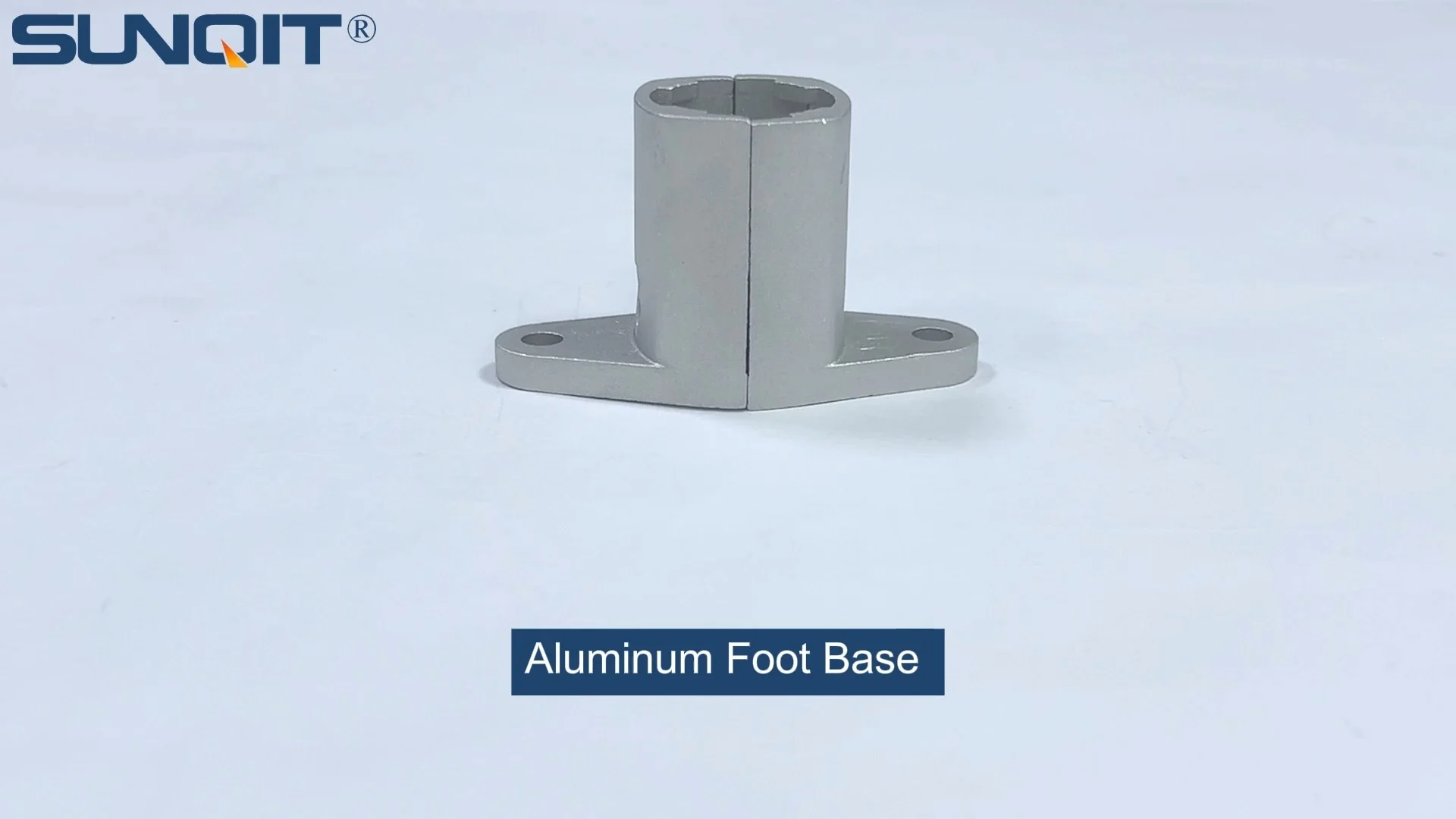
Aluminum Foot Base
Aluminum foot base to connect 28mm aluminum pipe and fixed it on the ground and prevent pipe fall and move.
In the world of manufacturing, warehousing, and industrial operations, the workstation is more than just a table—it's the heartbeat of productivity. Every nut tightened, every part assembled, every order packed relies on a workstation that's stable, secure, and tailored to the task at hand. And at the foundation of that reliability? The often-overlooked aluminum foot base. These unassuming components don't just hold up the workstation; they determine its stability, adaptability, and even its longevity. Whether you're setting up a compact electronics assembly station or a sprawling automotive production line, getting the aluminum foot base sizing right isn't just a detail—it's a critical decision that impacts safety, efficiency, and your bottom line.
Aluminum has become the material of choice for foot bases thanks to its winning combination of strength, lightweight design, and resistance to corrosion. Unlike steel, it won't weigh down mobile setups or rust in humid environments, and unlike plastic, it can handle heavy loads without flexing or cracking. But even the best material can fail if the size is wrong. A foot base that's too small for a large workstation might wobble under pressure, risking damage to products or injury to workers. One that's oversized for a small bench? It wastes space, adds unnecessary cost, and might even throw off the workstation's ergonomics. In this guide, we'll dive into the nuances of sizing aluminum foot bases for small and large workstations, breaking down the key factors, common pitfalls, and real-world applications to help you make the perfect choice.
Understanding Small Workstations: Compact, Nimble, and Purpose-Driven
Small workstations are the unsung heroes of precision work. Think of the electronics assembly line where technicians solder microchips onto circuit boards, the lab bench where scientists analyze samples, or the packing station where workers sort and box small items. These setups are designed for focus, efficiency in tight spaces, and tasks that demand close attention to detail. Typically measuring between 120cm to 180cm in width and 60cm to 90cm in depth, small workstations are often single-person operations, though some may accommodate two workers in a pinch. Their defining trait? They prioritize functionality over size, making every inch of space count.
Common Uses of Small Workstations
Small workstations shine in environments where precision and space efficiency are non-negotiable. In electronics manufacturing, for example, they're used for assembling smartphones, tablets, or circuit boards—tasks that require a stable surface to prevent tiny components from shifting. In warehouses, they double as packing stations for e-commerce orders, where workers need quick access to labels, tape, and boxes without movement. Labs and medical facilities also rely on small workstations for testing, sample preparation, and research, where sterility and stability are critical. Even in offices, you'll find them as printing stations or mail sorting areas, proving their versatility across industries.
Aluminum Foot Bases for Small Workstations: Key Considerations
When it comes to small workstations, the aluminum foot base's job is to provide stability without taking up extra space or adding unnecessary weight. Let's break down the essentials:
Load Capacity: Small workstations handle lighter loads compared to their larger counterparts, typically ranging from 50kg to 300kg. This includes the weight of the workstation itself (often an aluminum profile frame with a plywood or metal top) plus the tools, materials, and products on it. For example, a "workbench e (single deck-without caster)"—a common small workstation design—might weigh 40kg empty and hold another 100kg of components, tools, and a laptop. The aluminum foot base must support this total load (140kg in this case) without bending or sinking. Aluminum's strength-to-weight ratio makes it ideal here: a 10cm x 10cm aluminum foot base with a 5mm thickness can easily handle 300kg, providing a safety margin without overengineering.
Size Constraints: Small workstations thrive in tight spaces, so their foot bases need to be compact. A typical small workstation might have four foot bases, one at each corner, each measuring 8cm to 12cm in diameter or square width. This keeps the base from protruding beyond the workstation's edges, preventing trips and maximizing floor space. For example, a 120cm x 80cm workbench with 10cm square foot bases will have a total footprint of 120cm x 80cm—no extra space wasted. Aluminum's malleability also allows for custom shapes, like low-profile designs that sit closer to the floor, further reducing the risk of accidental bumps.
Adjustability: Even small workstations need a level surface, especially when precision is involved. Uneven floors can cause the workstation to wobble, making tasks like soldering or measuring frustrating and error-prone. Aluminum foot bases for small workstations often come with adjustable leveling feet—threaded screws that can be turned to raise or lower the base by 5mm to 15mm. This might not sound like much, but it's enough to compensate for minor floor imperfections in older buildings or concrete slabs with slight dips. For example, a lab workstation on a slightly sloped floor can be leveled in minutes by adjusting the feet, ensuring test tubes stay upright and samples don't spill.
Compatibility with Workbench Design: Small workstations like the "workbench e (single deck-without caster)" are designed to be lightweight and mobile (even without casters, they can be moved with two people). Their aluminum foot bases must align with the workstation's frame—usually an aluminum profile system with T-slots for easy attachment. Foot bases with pre-drilled holes or clamp-on designs work best here, allowing for quick assembly and disassembly if the workstation needs to be reconfigured. This compatibility ensures the foot base and workstation act as a single unit, preventing shifting or separation over time.
Understanding Large Workstations: Heavy-Duty, High-Throughput, and Built to Last
If small workstations are the precision tools of the industrial world, large workstations are the workhorses. These setups are designed for scale: multi-person teams, heavy loads, and tasks that require constant movement of materials. Think of the automotive assembly line where workers install doors, engines, or dashboards on a moving conveyor belt, or the warehouse material handling hub where pallets of goods are sorted, labeled, and shipped. Large workstations can span 3 meters or more in width, accommodate 5+ workers at once, and handle loads exceeding 1000kg. They're not just surfaces—they're operational hubs that drive productivity in high-volume environments.
Common Uses of Large Workstations
Large workstations are the backbone of manufacturing, logistics, and heavy industry. In automotive plants, they're used for assembling car bodies, where teams of workers collaborate to attach panels, wiring, and mechanical parts. In aerospace facilities, they support the assembly of aircraft components, from wings to landing gear, requiring extreme stability to handle sensitive measurements. Warehouses use them as bulk sorting stations, where pallets are broken down, and goods are organized by destination. Even in construction, large workstations serve as on-site fabrication areas for pre-cutting materials like steel beams or pipes. No matter the industry, large workstations share one goal: to keep high-throughput operations running smoothly, safely, and efficiently.
Aluminum Foot Bases for Large Workstations: Key Considerations
Large workstations demand foot bases that can handle more weight, distribute loads evenly, and maintain stability across a broader area. Here's what matters most:
Load Capacity (Static and Dynamic): Unlike small workstations, large setups face both static loads (the weight of the workstation, tools, and stored materials) and dynamic loads (the force of workers moving, materials being dropped, or equipment like drills and saws vibrating). A typical automotive assembly workstation, for example, might have a static load of 800kg (workstation frame, tools, and parts) plus dynamic loads of 200kg from workers leaning on the bench or parts being placed down. Aluminum foot bases here need to handle 1000kg+ per base, depending on how many feet the workstation has. Larger foot bases—15cm to 20cm in diameter or square width—with thicker aluminum (8mm to 12mm) are standard, as they spread the load over a larger area, reducing pressure on the floor and preventing sinking.
Mobility vs. Stability: Many large workstations need to be mobile, even if only occasionally. For example, a material handling hub might need to be repositioned to align with a new conveyor line, or a production workstation might shift location during a factory redesign. This is where aluminum foot bases with integrated caster wheels shine. Casters allow for easy movement, but they must be paired with locking mechanisms to ensure stability during operation. When sizing foot bases for mobile large workstations, it's critical to balance caster size (larger wheels handle rough floors better) with the foot base's load capacity. A 5-inch caster wheel paired with a 18cm square aluminum foot base can support 300kg per wheel, making it suitable for a workstation with 4 casters (total capacity 1200kg).
Load Distribution: Large workstations have a bigger footprint, which means weight isn't always evenly distributed. A workstation with a heavy machine on one end and lighter tools on the other can create uneven stress on the foot bases. To combat this, aluminum foot bases are often spaced strategically—closer together under heavier areas and farther apart under lighter ones. For example, a 4-meter long workstation with a 500kg press on the left end might have three foot bases on the left (spaced 60cm apart) and two on the right (spaced 100cm apart). This ensures each foot base carries a similar load, preventing overstress and extending the base's lifespan.
Adjustable Leveling Feet for Uneven Floors: Large workstations span more floor area, increasing the chance of encountering uneven surfaces. A concrete slab with a 2cm dip over 3 meters might not seem like much, but it can cause a workstation to rock, making tasks like welding or measuring inaccurate. Aluminum foot bases for large workstations often feature adjustable leveling feet with a wider range of motion—up to 30mm of adjustment—to compensate for these imperfections. Some even come with anti-slip pads to grip the floor, reducing the risk of the workstation shifting during use.

Key Factors in Aluminum Foot Base Sizing: Small vs. Large Workstations
Whether you're sizing for a small electronics bench or a large automotive line, certain universal factors dictate the perfect aluminum foot base. Let's compare how these factors play out in both scenarios:
| Factor | Small Workstations | Large Workstations |
|---|---|---|
| Typical Load Capacity | 50kg – 300kg total (static load only) | 500kg – 2000kg+ total (static + dynamic loads) |
| Foot Base Size (per unit) | 8cm – 12cm (diameter/square width) | 15cm – 25cm (diameter/square width) |
| Number of Foot Bases | 4 (one at each corner) | 4 – 8+ (depending on length/load distribution) |
| Adjustment Range | 5mm – 15mm (minor floor unevenness) | 15mm – 30mm (major floor dips/imperfections) |
| Mobility Needs | Rarely mobile (fixed feet standard) | Often mobile (casters with locks common) |
| Common Accessories | Basic adjustable leveling feet, plastic anti-slip pads | Heavy-duty adjustable leveling feet, caster wheels, steel anti-slip plates |
Load Capacity: The Foundation of Sizing
Load capacity is the most critical factor in foot base sizing, and it's not just about the total weight—it's about how that weight is applied. For small workstations, static load (the weight when everything is stationary) is the primary concern. A packing station with a 20kg workbench top, 50kg of boxes, and a 30kg laptop would have a static load of 100kg. A 10cm square aluminum foot base with a 5mm thickness can handle this easily, as aluminum's yield strength (the point at which it bends permanently) is around 250MPa—more than enough for 25kg per foot (100kg ÷ 4 feet).
Large workstations, however, add dynamic load to the mix. Dynamic load includes any movement or force applied to the workstation: a worker leaning on the bench (adding 80kg of force), a part being dropped (creating a shock load), or machinery vibrating during use. To calculate dynamic load, engineers often multiply the static load by a safety factor (typically 1.5 to 2). For a static load of 1000kg, a safety factor of 1.8 gives a dynamic load of 1800kg. A 20cm square aluminum foot base with 10mm thickness can handle 450kg per foot (1800kg ÷ 4 feet), ensuring the base won't bend or fail under stress.
Workstation Dimensions: Matching Foot Bases to Size
A workstation's width, depth, and height directly impact foot base sizing. For small workstations, which are often square or slightly rectangular (e.g., 120cm x 80cm), four evenly spaced foot bases (one at each corner) are sufficient. The key is to ensure the foot bases are positioned so the workstation's center of gravity stays within the "support polygon"—the area formed by connecting the foot bases. If the center of gravity strays outside this polygon, the workstation will tip. For a 120cm x 80cm workstation with foot bases at the corners, the support polygon is a rectangle with the same dimensions, making tipping unlikely unless the workstation is overloaded or bumped hard.
Large workstations, with their longer lengths (3m to 6m), require more strategic foot base placement. A 5m long workstation might have foot bases every 1.5m along its length, plus two at the ends, to prevent sagging in the middle. This is especially important for workstations with thin tops (like aluminum profiles), which can bend under their own weight if not supported properly. For example, a 4m long workstation with a 2mm thick aluminum top would need foot bases at 0m, 1.3m, 2.6m, and 4m to distribute weight evenly and prevent flexing.

Common Mistakes to Avoid When Sizing Aluminum Foot Bases
Even with the best intentions, it's easy to make sizing mistakes that compromise your workstation's performance. Here are the most frequent pitfalls and how to steer clear of them:
Underestimating Load Capacity: This is the cardinal sin of foot base sizing. It's tempting to round down on load estimates to save money, but the consequences can be disastrous. A foot base that's overloaded will bend, crack, or sink, causing the workstation to wobble. In extreme cases, it can even collapse, damaging products or injuring workers. To avoid this, always calculate the maximum possible load (workstation weight + tools + materials + dynamic forces) and add a 20% safety margin. If you're unsure, consult the aluminum foot base manufacturer's load capacity charts—they're there for a reason.
Ignoring Floor Conditions: Not all floors are created equal. A small workstation in a new office with polished concrete might need minimal adjustability, but the same workstation in an old factory with cracked, uneven floors could wobble constantly without proper leveling feet. For large workstations, floor conditions are even more critical—uneven floors can cause stress fractures in the foot bases over time. Always inspect the installation area first, measure floor unevenness with a level, and choose foot bases with adjustable feet that can compensate for those dips and bumps.
Mismatching Foot Base Size to Workstation Type: Using a small workstation's foot base on a large workstation (or vice versa) is a recipe for failure. A 10cm foot base designed for a 100kg small bench will buckle under a 500kg large workstation, while an 18cm foot base on a small bench will waste space and add unnecessary weight. Always match the foot base size to the workstation's dimensions and load, using the guidelines in the table above as a starting point.
Overlooking Mobility Needs: If a large workstation needs to be mobile but is fitted with fixed foot bases, moving it will require heavy equipment (like forklifts) and risk damaging the floor or the workstation itself. Conversely, a small workstation with casters that's never moved will have unnecessary moving parts that can wear out over time. Assess mobility needs upfront: Will the workstation stay in one place forever, or might it need to shift location? Choose fixed foot bases for stationary setups and caster-equipped bases for mobile ones, ensuring casters are sized to handle the load and floor conditions.

Real-World Case Studies: Sizing Foot Bases for Success
Case Study 1: Small Electronics Assembly Workstation
Scenario: A contract manufacturer needed to set up 20 small workstations for assembling smartwatch components. Each workstation would be used by one technician, with a workbench top (aluminum profile frame, plywood top) weighing 35kg, plus tools (20kg), components (15kg), and a laptop (5kg). Total static load: 75kg per workstation. The factory floor was relatively even, with minor dips (up to 8mm).
Solution: The team chose "workbench e (single deck-without caster)" for its compact design and compatibility with aluminum foot bases. They selected 10cm square aluminum foot bases with 5mm thickness, each rated for 50kg (well above the 18.75kg per foot: 75kg ÷ 4 feet). The foot bases included adjustable leveling feet with a 10mm range, allowing technicians to level the workstation in minutes. After six months of use, the workstations showed no signs of wobbling or damage, and technicians reported improved precision due to the stable surface.
Case Study 2: Large Automotive Production Workstation
Scenario: An automotive plant needed a 4-meter long workstation for assembling car door panels. The workstation would accommodate 3 workers, with a steel top (200kg), tools (150kg), door panels (300kg), and a riveting machine (400kg). Total static load: 1050kg. Dynamic load (workers leaning, machine vibration) added another 750kg, bringing total load to 1800kg. The floor had a 2cm dip in the middle, and the workstation needed to be mobile for repositioning every 6 months.
Solution: The plant opted for 20cm square aluminum foot bases with 10mm thickness, rated for 450kg per foot. They used 4 foot bases (one at each corner) and added two extra foot bases under the riveting machine (the heaviest point) to distribute load. The foot bases included 5-inch caster wheels with locking brakes for mobility and adjustable leveling feet with a 30mm range to compensate for the floor dip. After a year of use, the workstation had been repositioned twice without damage, and load testing showed no deformation in the foot bases.
Conclusion: Sizing for Success
Aluminum foot bases might not be the most glamorous part of a workstation, but they're the foundation on which productivity, safety, and efficiency rest. For small workstations, the focus is on compact size, lightweight design, and minor adjustability to handle tight spaces and lighter loads. For large workstations, it's all about heavy-duty load capacity, strategic spacing, and mobility features to manage big footprints and dynamic stress. By understanding the differences between small and large workstations, calculating load capacity (static and dynamic), and considering factors like floor conditions and mobility, you can size aluminum foot bases that keep your workstation stable, secure, and ready for whatever the job throws at it.
Remember: The right foot base isn't just a purchase—it's an investment in your team's productivity and safety. Take the time to measure, calculate, and choose wisely, and your workstation will reward you with years of reliable performance.