- Company Articles
- Products and Technology
- Product knowledge
- Aluminum Foot Base vs. Cast Iron: Weight Savings in Material Handling

Aluminum Foot Base vs. Cast Iron: Weight Savings in Material Handling
Related Product
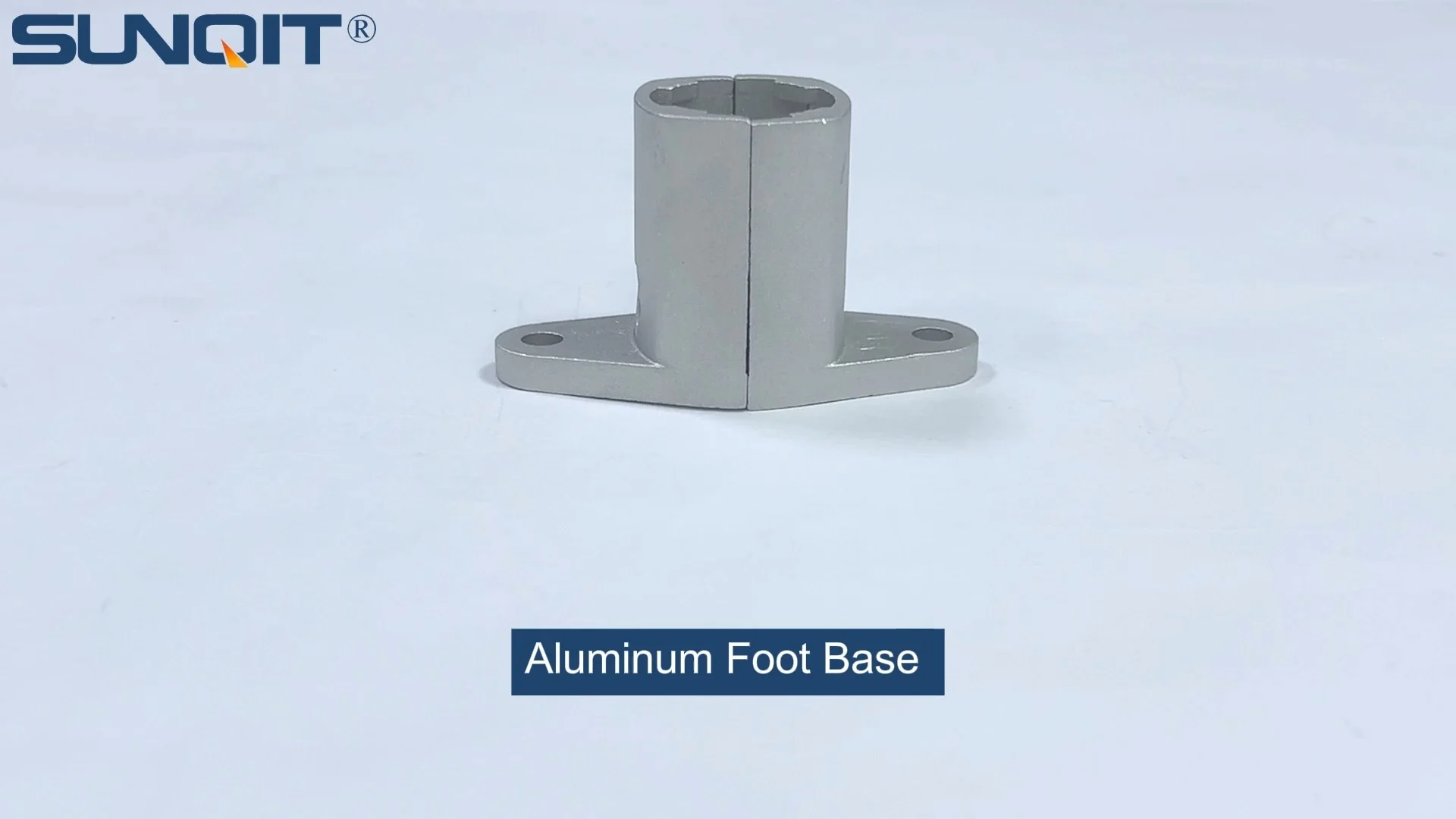
Aluminum Foot Base
Aluminum foot base to connect 28mm aluminum pipe and fixed it on the ground and prevent pipe fall and move.
Walk into any warehouse, factory floor, or distribution center, and you'll notice a silent battle unfolding every minute: the fight against inefficiency. Forklifts hum past, workers push trolleys loaded with parts, and conveyor belts glide with products—but beneath this orchestrated chaos lies a hidden obstacle that slows everything down: weight. Not the weight of the products themselves, but the weight of the very tools designed to move them. Enter the unsung hero (or villain) of material handling: the foot base. These unassuming components—found under workbenches, beneath turnover trolleys, and at the base of storage racks—are the foundation of efficiency. And today, the debate over their material choice is reshaping how we think about productivity: aluminum foot base versus cast iron. Let's dive into why this seemingly small decision carries big consequences for workers, costs, and the future of lean system operations.
The Unsung Foundation: What Are Foot Bases, Anyway?
Before we pit aluminum against cast iron, let's clarify what a foot base does. Think of it as the "feet" of your material handling equipment. Whether it's a workbench where assembly line workers piece together electronics, a mobile trolley ferrying components between stations, or a heavy-duty material rack holding inventory, the foot base is what keeps everything stable, level, and connected to the ground (or caster wheels). Its job is simple but critical: support heavy loads without bending, integrate seamlessly with casters for mobility, and withstand the daily grind of industrial use. For decades, cast iron has been the default choice here. It's strong, cheap, and familiar. But as industries pivot toward agility and worker-centric design, that "familiar" choice is starting to feel like dead weight—literally.
Cast Iron Foot Bases: The Old Reliable (But Heavy) Workhorse
Cast iron has been the backbone of industrial design since the Industrial Revolution, and for good reason. Melt iron, pour it into a mold, and you get a dense, rigid component that laughs at heavy loads. A cast iron foot base can support thousands of pounds without so much as a creak, making it ideal for static equipment like stationary workbenches or machinery that never needs to move. Its low cost—thanks to simple manufacturing processes—also made it a favorite for budget-conscious operations. But here's the catch: that density comes with a price. Cast iron is heavy. We're talking really heavy. A standard cast iron foot base for a medium-sized workbench might weigh 40-50 pounds; for larger equipment, that number can climb to 100 pounds or more. On static setups, this isn't a problem. But when you attach caster wheels to that same base to make it mobile? Suddenly, that "strength" becomes a liability.
Let's paint a scenario: A warehouse uses turnover trolleys with cast iron foot bases to move parts from the stockroom to the assembly line. Each trolley, empty, weighs 80 pounds (most of that from the base). A worker needs to push it 200 feet, navigate a tight corner, and stop precisely at a workstation. That 80-pound base isn't just dead weight—it's extra effort. Multiply that by 20 trips a day, across 50 workers, and you're looking at thousands of wasted calories, increased fatigue, and a higher risk of strains or injuries. Even with caster wheels designed for smooth movement, the laws of physics don't lie: more weight means more friction, more wear on floors, and more strain on the caster bearings. Over time, those "cheap" cast iron bases end up costing more in worker downtime, caster replacements, and even higher energy bills (for motorized equipment like automated guided vehicles).

Aluminum Foot Base: The Lightweight Revolution
Enter aluminum. For years, aluminum was dismissed as "too flimsy" for heavy-duty industrial use. But that was before advances in aluminum profile technology. Modern aluminum extrusion profile manufacturing allows engineers to create structures that are both lightweight and surprisingly strong. Unlike cast iron, which is solid and dense, aluminum foot bases are often built using hollow aluminum profile tubes or extruded shapes with internal bracing—think of it like a bird's bone: strong on the outside, light on the inside. The result? A foot base that can match cast iron's load-bearing capacity at a fraction of the weight.
Let's crunch the numbers: Aluminum has a density of about 2.7 g/cm³, while cast iron sits around 7.0-7.5 g/cm³. That means aluminum is roughly 1/3 the weight of cast iron for the same volume. So that 50-pound cast iron foot base we mentioned earlier? An aluminum version would weigh just 15-18 pounds. That's a 65-70% weight reduction. Imagine pushing that same turnover trolley we discussed—suddenly, the empty weight drops from 80 pounds to 40 pounds. What does that mean for a worker? Less exertion, fewer breaks, and the ability to move faster and more precisely. For a warehouse with 100 trolleys, that's a collective weight savings of 4,000 pounds per shift—no small feat.
But aluminum isn't just about weight. It brings other perks to the table. Unlike cast iron, which rusts if not painted or coated, aluminum naturally forms a protective oxide layer, making it corrosion-resistant. That's a game-changer for environments like food processing plants, pharmaceutical labs, or outdoor warehouses where moisture is a concern. It's also easier to customize: aluminum profile accessories like brackets, hinges, and T-slot connectors let you modify foot bases on the fly—adding a caster wheel here, a brake there—without welding or heavy machining. Cast iron? Once it's cast, it's fixed. No tweaks, no adaptability.

Head-to-Head: Aluminum vs. Cast Iron Foot Bases
To really see the difference, let's put these two materials side by side. Below is a breakdown of how they stack up in key areas that matter for material handling:
| Factor | Cast Iron Foot Base | Aluminum Foot Base |
|---|---|---|
| Weight | High (3x denser than aluminum). Adds significant bulk to mobile equipment. | Low (1/3 the weight of cast iron). Ideal for caster-equipped trolleys and lean system setups. |
| Strength | Excellent for compression (static loads) but brittle—prone to cracking if dropped or bent. | High tensile strength (resists bending) when using reinforced aluminum profile designs. Ductile, so it bends rather than shatters under impact. |
| Corrosion Resistance | Poor. Requires painting or coating to prevent rust; fails quickly in humid or wet environments. | Excellent. Naturally forms a protective oxide layer; no coating needed for most industrial settings. |
| Cost | Lower upfront cost. Raw materials and casting are cheap, but shipping (due to weight) and long-term maintenance add hidden expenses. | Higher upfront cost (aluminum is pricier per pound). But lower shipping costs, reduced caster/wheel wear, and minimal maintenance offset this over time. |
| Installation & Mobility | Hard to move. Often requires forklifts or multiple workers to install. Caster wheels wear faster due to excess weight. | Easy to handle. One person can carry and install. Lighter weight reduces strain on caster wheels, extending their lifespan. |
| Customization | Limited. Fixed shape once cast; modifications require welding or machining. | Highly customizable. Compatible with aluminum profile accessories (brackets, clamps, hinges) for quick adjustments. |
| Best For | Static equipment (stationary workbenches, heavy machinery that never moves). | Mobile setups (turnover trolleys, lean system workstations, clean rooms, and any environment where agility matters). |

Beyond the Scale: How Aluminum Foot Bases Boost Lean System Performance
For businesses invested in lean system principles—eliminating waste, streamlining processes, and prioritizing worker value—aluminum foot bases are a no-brainer. Lean is all about cutting "non-value-added" activities, and excess weight is the ultimate non-value add. Every pound of cast iron on a trolley is waste: waste of worker energy, waste of time spent moving slower, waste of money on replacing worn caster wheels and repairing damaged floors. Aluminum foot bases directly attack this waste. By trimming weight, they turn sluggish trolleys into nimble tools, reduce worker fatigue (lowering injury rates), and even cut down on shipping costs for new equipment (since lighter bases mean lower freight fees).
Take a real-world example: A mid-sized electronics manufacturer recently switched from cast iron to aluminum foot bases on their assembly line workbenches and turnover trolleys. The results? Workers reported a 30% reduction in "effort to move trolleys," and the plant saw a 15% increase in the number of parts transported per hour. Even better, caster wheel replacements dropped by 40% because the lighter bases put less stress on the wheels. Over six months, the upfront cost of aluminum was offset by savings in labor, maintenance, and reduced downtime. That's lean system thinking in action—small changes, big results.
When to Stick with Cast Iron (Yes, There Are Exceptions)
To be clear, aluminum isn't a one-size-fits-all solution. Cast iron still has its place. If you're building a static workbench that will never move and needs to support 5,000+ pounds (think heavy metalworking machinery), cast iron's compression strength and low cost make sense. Similarly, in environments where extreme heat is a factor (foundries, glass manufacturing), cast iron's high melting point (1,200°C vs. aluminum's 660°C) gives it an edge. But for the vast majority of material handling tasks—mobile trolleys, lean system workstations, adjustable racks, and anything with caster wheels—aluminum foot bases are the smarter choice. They're not just lighter; they're smarter .
The Future of Material Handling: Lightweight, Agile, and Worker-First
As industries evolve, the focus is shifting from "how much can we carry?" to "how efficiently can we carry it?" Aluminum foot bases represent this shift. They're not just a material upgrade—they're a mindset upgrade. By prioritizing weight savings, we're prioritizing workers (less strain, fewer injuries), efficiency (faster workflows, lower costs), and sustainability (less energy use, recyclable materials). And with advances in aluminum profile technology—stronger alloys, better extrusion designs, and more versatile aluminum profile accessories—the gap between aluminum and cast iron in strength is shrinking every year.
So, the next time you see a worker pushing a trolley, take a look at the base. If it's cast iron, imagine how much easier that push could be with aluminum. If it's aluminum, know that someone made a choice to value efficiency, workers, and the future of lean system operations. In the end, the battle between aluminum and cast iron foot bases isn't just about metal—it's about building a material handling system that works with people, not against them. And when it comes to that, aluminum is already miles ahead.