- Company Articles
- Products and Technology
- Product knowledge
- Aluminum Foot Base Weight Capacity: Calculating for Heavy-Duty Material Racks

Aluminum Foot Base Weight Capacity: Calculating for Heavy-Duty Material Racks
Related Product
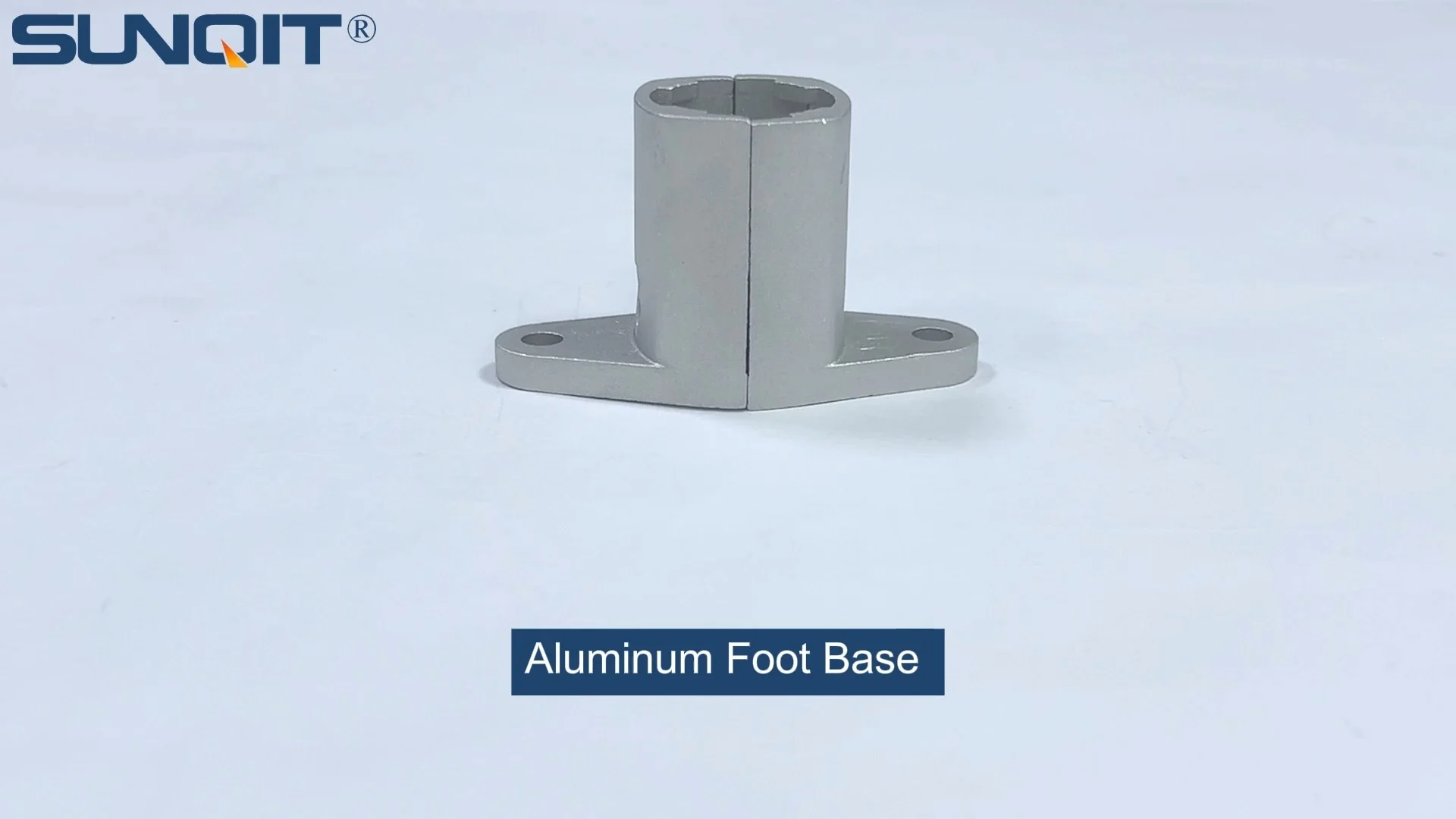
Aluminum Foot Base
Aluminum foot base to connect 28mm aluminum pipe and fixed it on the ground and prevent pipe fall and move.
Walk into any busy warehouse or manufacturing floor, and you'll see them: rows of material racks stacked high with components, tools, and finished products. They're the unsung workhorses of production, keeping operations running smoothly by keeping everything organized and accessible. But here's the thing—even the sturdiest rack is only as reliable as what's holding it up. Enter the aluminum foot base: that humble, often overlooked component that sits quietly at the bottom of your rack, bearing the weight of everything above. Get its weight capacity wrong, and you're not just risking a wobbly shelf—you're gambling with workplace safety, lost productivity, and costly damage.
In this guide, we're diving deep into the world of aluminum foot bases. We'll break down what they are, why they matter, and most importantly, how to calculate their weight capacity to ensure your heavy-duty material racks—like the popular Material Rack B (3 row and 3 floor)—stay stable, secure, and ready for whatever you throw at them. Whether you're a warehouse manager, a production supervisor, or someone tasked with setting up a lean system, understanding the math behind these unassuming components could save you from a world of trouble.
What Exactly Is an Aluminum Foot Base?
Let's start with the basics: an aluminum foot base is the foundation of your material rack. Think of it as the "feet" of the rack—flat, sturdy plates (or structures) made from aluminum that connect the rack's legs to the floor. They distribute the rack's total weight across a larger surface area, preventing the legs from sinking into soft floors, tipping over, or wobbling under heavy loads. But not all foot bases are created equal, and aluminum has become the go-to material for many industries—and for good reason.
Aluminum, especially when shaped into an aluminum extrusion profile (a process where aluminum is pushed through a die to create specific cross-sectional shapes), offers a winning combo of strength and lightness. Unlike steel, which is heavy and prone to rust, aluminum is corrosion-resistant, making it ideal for humid warehouses or outdoor storage areas. It's also surprisingly strong: modern aluminum profiles, reinforced with internal structures, can support hundreds—even thousands—of kilograms without bending or warping. And because it's lightweight, installing aluminum foot bases is easier on your team, reducing the risk of strain injuries during setup.
But an aluminum foot base isn't just a flat piece of metal. Most are designed with specific features to enhance stability: pre-drilled holes for bolting to the floor, rubber or non-slip pads to grip smooth surfaces, and contours that perfectly fit the legs of standard racks like Material Rack B. Some even come with adjustable height settings, letting you level the rack on uneven floors—because let's face it, no warehouse floor is perfectly flat.
Key Factors That Influence Aluminum Foot Base Weight Capacity
Calculating how much weight an aluminum foot base can handle isn't as simple as "bigger is better." Several factors come into play, each affecting the base's overall capacity. Let's break them down one by one:
1. Material Thickness of the Aluminum Profile
The thickness of the aluminum extrusion profile used to make the foot base is the first thing to check. Thicker aluminum means more material to absorb and distribute weight. For example, a foot base made from a 3mm-thick aluminum profile will almost always support more weight than one made from 1.5mm aluminum—assuming all other factors are equal. Think of it like a piece of cardboard: a single sheet bends easily, but stack two or three, and it becomes much sturdier. Aluminum works the same way.
2. Base Dimensions (Length, Width, and Height)
The size of the foot base matters too. A larger base (wider and longer) spreads the load over more floor space, reducing the pressure per square centimeter. For instance, a 20cm x 20cm foot base will exert less pressure on the floor than a 10cm x 10cm base when supporting the same weight. Height also plays a role: taller bases (within reason) can help stabilize the rack by lowering its center of gravity, but excessively tall bases might introduce flexibility, weakening the structure.
3. Load Distribution: Even vs. Uneven
How you load your rack directly impacts the foot base's capacity. If you stack all your heaviest items on one shelf of Material Rack B (3 row and 3 floor), the foot bases on that side will bear more weight than the others. This uneven distribution can push individual foot bases beyond their limits, even if the total weight is under the rack's rated capacity. Always aim for even loading—balance heavy items across shelves and rows—to keep the weight evenly spread across all foot bases.
4. Floor Condition and Surface Grip
A foot base is only as good as the floor it's on. A cracked, uneven concrete floor might cause the foot base to rock, concentrating weight on one corner. Similarly, smooth floors (like polished concrete) can reduce friction, making the rack more prone to sliding. Many aluminum foot bases come with rubber pads or suction cup anti-slip foot adjusters to counteract this, but it's still a factor to consider when calculating capacity—add a small buffer if your floor isn't in perfect shape.
5. Connection Strength: How It Attaches to the Rack
Even the strongest foot base is useless if it detaches from the rack. The bolts, screws, or brackets used to connect the foot base to the rack's legs must be rated for the same weight as the base itself. For example, if your foot base can handle 500kg, but the bolts holding it to the rack can only handle 300kg, the bolts become the weak link. Always check the manufacturer's specs for both the foot base and its connecting hardware.

The Math Behind the Capacity: How to Calculate Weight Limits
Now, let's get to the numbers. Calculating an aluminum foot base's weight capacity might sound intimidating, but it's actually a straightforward process once you know the formula. Here's the basic equation you'll need:
Weight Capacity (kg) = (Material Strength × Cross-Sectional Area) / Safety Factor
Let's break this down with simple definitions:
- Material Strength: This is the maximum stress the aluminum can handle before bending or breaking, measured in megapascals (MPa). For most aluminum extrusion profiles used in foot bases, this is around 200-250 MPa (check the manufacturer's specs for exact numbers).
- Cross-Sectional Area: The area of the foot base's aluminum profile when cut perpendicular to its length, measured in square meters (m²). For a simple flat foot base, this is width × thickness (e.g., 0.2m wide × 0.003m thick = 0.0006 m²).
- Safety Factor: A buffer to account for unexpected stress (like sudden impacts or uneven loading). For heavy-duty racks, a safety factor of 1.5-2.0 is standard—meaning the foot base should be rated to support 1.5-2 times the actual load you plan to put on it.
Let's plug in some numbers with a real-world example. Suppose you're using an aluminum extrusion profile with a material strength of 220 MPa, and your foot base has a cross-sectional area of 0.0005 m². Using a safety factor of 1.8:
Weight Capacity = (220 MPa × 0.0005 m²) / 1.8
First, convert MPa to kg/m² (since 1 MPa = 101,971.62 kg/m²): 220 × 101,971.62 ≈ 22,433,756.4 kg/m²
Then multiply by area: 22,433,756.4 kg/m² × 0.0005 m² ≈ 11,216.88 kg
Divide by safety factor: 11,216.88 kg / 1.8 ≈ 6,231.6 kg
So this foot base could theoretically support around 6,232 kg. But wait—this is the capacity for the entire foot base. If your rack has four foot bases, each would need to support 1/4 of the total load. Let's apply this to Material Rack B (3 row and 3 floor) to see how it works.

Real-World Application: Calculating for Material Rack B (3 Row and 3 Floor)
Material Rack B is a staple in many warehouses: a sturdy, 3-row, 3-floor rack designed to hold tools, components, or finished goods. Let's say each floor of your Material Rack B is 1.2m long and 0.6m deep, and you plan to load each floor with 400kg of materials. The rack itself weighs 150kg. What's the total load, and how much weight will each foot base need to support?
Step 1: Calculate Total Load on the Rack
Total load = (Load per floor × Number of floors) + Rack weight
Total load = (400kg × 3 floors) + 150kg = 1,200kg + 150kg = 1,350kg
Step 2: Determine Load per Foot Base
Most racks, including Material Rack B, have 4 legs (and thus 4 foot bases). So:
Load per foot base = Total load / Number of foot bases = 1,350kg / 4 = 337.5kg
Step 3: Apply the Safety Factor
Using a safety factor of 1.8, each foot base must support:
Required capacity = Load per foot base × Safety factor = 337.5kg × 1.8 = 607.5kg
Step 4: Choose a Foot Base That Meets the Requirement
Now, refer back to the earlier formula. Suppose you're looking at a foot base made from a 3mm-thick aluminum extrusion profile with a cross-sectional area of 0.0004 m² and material strength of 220 MPa. Using the same safety factor of 1.8:
Weight Capacity = (220 MPa × 0.0004 m²) / 1.8 ≈ (220×101971.62×0.0004)/1.8 ≈ (8973.5 kg) / 1.8 ≈ 4985 kg
Wait—that's way higher than the 607.5kg needed. Why? Because the formula assumes the entire cross-sectional area is bearing the load, which is true for simple compression. In reality, foot bases are often designed with reinforcing ribs or thicker sections, so their actual capacity is even higher. The key takeaway: as long as your foot base's rated capacity (from the manufacturer) is above 607.5kg, it's safe for Material Rack B in this scenario.

Common Mistakes to Avoid When Estimating Capacity
Even with the formula in hand, it's easy to slip up. Here are some common mistakes to watch out for:
Mistake #1: Ignoring Dynamic Loads
Static load (the weight of stationary items) is easy to calculate, but dynamic loads—sudden impacts from dropping boxes, vibrations from nearby machinery, or even someone leaning on the rack—can increase stress on the foot base by 20-30%. Always add a small buffer (5-10% of the static load) for dynamic forces.
Mistake #2: Overlooking Floor Flatness
If your warehouse floor has a slope or dips, one foot base might end up bearing more weight than the others. For example, a 1° slope across a 2m-wide rack can shift 10-15% of the load to the lower foot bases. Use a level to check the floor, and consider adjustable foot bases to compensate for unevenness.
Mistake #3: Mixing and Matching Foot Bases
Not all foot bases are compatible with all racks. Material Rack B's legs might have a specific bolt pattern that won't fit a foot base designed for a different rack model. Using mismatched parts can weaken the connection, reducing the foot base's effective capacity.
Mistake #4: Forgetting About Corrosion
Aluminum is corrosion-resistant, but it's not immune. In highly humid or chemical-heavy environments, aluminum can develop a thin oxide layer that slightly weakens the material over time. If your rack is in such an area, reduce the foot base's rated capacity by 5-10% to account for long-term wear.
Choosing the Right Aluminum Foot Base for Your Needs
Now that you know how to calculate capacity, how do you pick the right foot base? Here's a quick checklist:
1. Match the Foot Base to Your Rack
Start with your rack model. Material Rack B, for example, has specific leg dimensions (check the manufacturer's specs) that the foot base must fit. Look for foot bases labeled as compatible with your rack, or measure the leg width and bolt spacing to ensure a snug fit.
2. Prioritize Thicker Aluminum Profiles
All else equal, a thicker aluminum extrusion profile (3mm vs. 2mm) will offer higher capacity. If you're unsure, opt for the thicker option—it's better to have extra capacity than to cut corners.
3. Check for Reinforcements
Foot bases with ribbed designs or folded edges (common in aluminum extrusion profiles) are stronger than flat, unreinforced ones. These features increase the cross-sectional area and stiffness, boosting capacity without adding much weight.
4. Don't Skimp on Hardware
Use the bolts, washers, and nuts recommended by the foot base manufacturer. Cheap hardware can shear under load, even if the foot base itself is strong enough.
5. Think About Future Expansion
Will you need to load more weight on Material Rack B in the future? If so, choose a foot base with 20-30% extra capacity now to avoid upgrading later.
Case Study: A Warehouse's Success Story
The Problem: A mid-sized electronics warehouse was using Material Rack B (3 row and 3 floor) to store heavy circuit boards. After a few months, workers noticed the racks wobbling when loaded to full capacity. An inspection revealed the original foot bases were thin (2mm aluminum) and undersized for the load.
The Solution: The warehouse manager calculated the total load (1,400kg per rack) and determined each foot base needed to support 630kg (with a safety factor of 1.8). They upgraded to 3mm-thick aluminum foot bases with reinforced ribs, rated for 800kg each.
The Result: The racks stabilized immediately. Over the next year, there were zero incidents of wobbling or near-tips, and workers reported feeling more confident loading and unloading heavy items. The warehouse also saved money by avoiding damaged inventory and costly rack repairs.
Aluminum Foot Base Comparison Table
| Model | Aluminum Profile Thickness (mm) | Dimensions (L×W cm) | Weight Capacity (kg) | Suitable Racks |
|---|---|---|---|---|
| AF-300 | 3mm | 15×15 | 750kg | Material Rack B, Workbench E |
| AF-400 | 4mm | 20×20 | 1,200kg | Heavy-duty material racks, 4-row shelving |
| AF-250 | 2.5mm | 12×12 | 550kg | Light-duty Material Rack B, turnover trolleys |
| AF-500 | 5mm | 25×25 | 1,800kg | Industrial-grade racks, outdoor storage |
Conclusion: Invest in Stability, Invest in Safety
Aluminum foot bases might not be the most glamorous part of your lean system, but they're the foundation of safe, efficient material handling. By taking the time to calculate their weight capacity—considering factors like material thickness, load distribution, and safety factors—you're ensuring that your Material Rack B (and all your other heavy-duty racks) can handle whatever your operation throws at them.
Remember: a stable rack is more than just a storage solution—it's a productivity booster. Workers can load and unload items faster, with less stress, knowing the rack won't tip or wobble. And in the long run, avoiding accidents and damage will save your business time, money, and headaches.
So the next time you're setting up a new rack or inspecting existing ones, take a closer look at those aluminum foot bases. They might be small, but their impact on your workplace is anything but.