- Company Articles
- Products and Technology
- Product knowledge
- Aluminum Foot Base Weight Capacity Charts: Choosing for Your Equipment

Aluminum Foot Base Weight Capacity Charts: Choosing for Your Equipment
Related Product
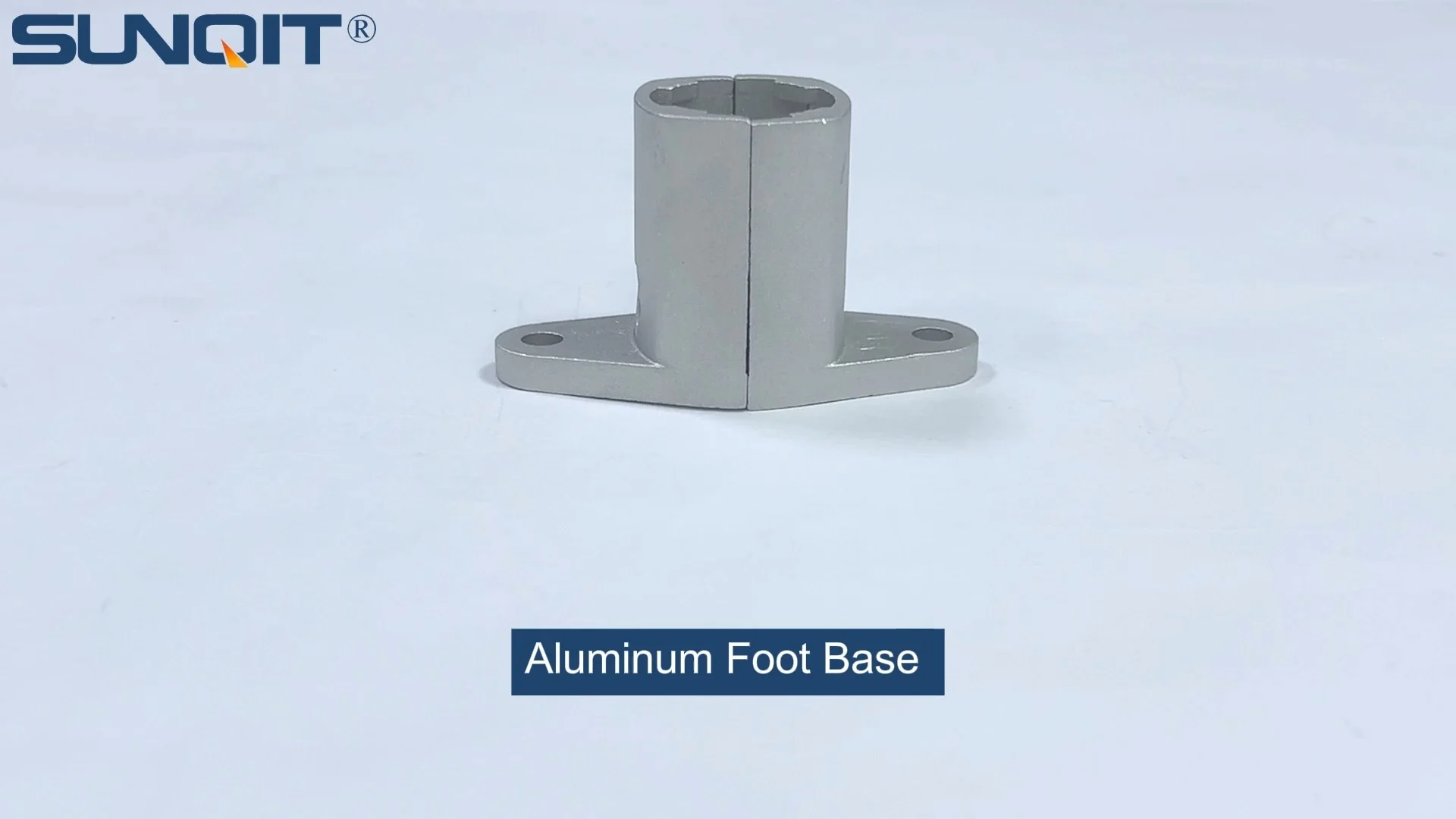
Aluminum Foot Base
Aluminum foot base to connect 28mm aluminum pipe and fixed it on the ground and prevent pipe fall and move.
If you've ever built or maintained equipment—whether it's a workbench in your garage, a material rack in a factory, or an assembly line station—you know that the "invisible" parts often matter the most. Take the aluminum foot base, for example. It's not the flashiest component, but without a sturdy, properly sized one, your entire setup could wobble, tip, or even fail. That's why understanding weight capacity charts and choosing the right aluminum foot base isn't just about checking a box—it's about protecting your equipment, your workspace, and the people using it.
In this guide, we're going to dive deep into everything you need to know about aluminum foot bases and their weight capacities. We'll break down what they are, why weight limits matter, how to read those confusing charts, and even walk through real-world examples of choosing the right one for different types of equipment. By the end, you'll feel confident picking a foot base that keeps your setup stable, safe, and ready for whatever you throw at it.
First Things First: What Even Is an Aluminum Foot Base?
Let's start with the basics. An aluminum foot base is a small but critical component designed to support and stabilize equipment like workbenches, material racks, conveyor frames, or aluminum profile structures. Think of it as the "feet" of your setup—they sit at the bottom of vertical aluminum pipes or profiles, distributing the weight of the equipment (and whatever you put on it) evenly across the floor. Unlike casters, which let you move equipment, foot bases are fixed, keeping things rooted in place.
Why aluminum? Well, aluminum is lightweight, resistant to rust and corrosion, and surprisingly strong for its weight—perfect for indoor and even some outdoor environments. Most aluminum foot bases are made from high-grade aluminum alloys (like 6061 or 6063, common in industrial applications) and often come with a rubber or plastic pad on the bottom to prevent slipping and protect floors from scratches.
You'll usually find them paired with aluminum profile systems—those modular, T-slot frames used to build everything from simple shelving to complex assembly lines. They screw or bolt into the bottom of the profile, creating a solid connection between the equipment and the ground. Some are adjustable (with a threaded stem) to level out uneven floors, while others are fixed. Either way, their main job is to hold weight—safely.
Why Weight Capacity Matters (Spoiler: It's Not Just About "Heavy" vs. "Light")
At first glance, weight capacity might seem straightforward: "My workbench weighs 200 lbs, so I need a foot base that holds at least 200 lbs." But it's actually a bit more nuanced. Weight capacity isn't just about the static weight of the equipment itself—it also includes the dynamic loads (like someone leaning on the workbench), the distribution of weight (is it evenly spread, or is there a heavy tool on one corner?), and even environmental factors (like vibrations from nearby machinery).
Real-World Example: Let's say you have a small workbench (about 3 feet wide) with a total weight (bench + tools + materials) of 300 lbs. If you use a foot base rated for 100 lbs per leg, and the bench has four legs, that might seem like 400 lbs total—more than enough, right? But if you place a 200-lb machine on one corner, that single foot base now has to support way more than its 100-lb limit. Over time, that could bend the foot base, making the bench wobble and risking damage or injury.
Manufacturers test foot bases to determine their maximum weight capacity, which is usually listed as a "static load" (weight when the equipment is stationary) or "dynamic load" (weight when moving, though foot bases are rarely used for moving equipment). They also include a safety margin—often 2:1 or 3:1—meaning the listed capacity is lower than the actual breaking point. For example, a foot base rated for 200 lbs might actually hold 400 lbs before failing, but you'd never want to push it that far. The safety margin is there to account for unexpected stress, like a sudden impact or uneven weight distribution.

Decoding the Chart: What Those Numbers and Terms Actually Mean
Okay, so you've found a weight capacity chart for aluminum foot bases. Now what? These charts can look intimidating, with rows of model numbers, measurements, and cryptic terms. Let's break down the key things to look for:
- Model Name/Number: This is just the manufacturer's identifier (e.g., "AFB-40-100" might mean "Aluminum Foot Base, 40mm Profile, 100-lb Capacity").
- Material Thickness: Thicker aluminum means more strength. A 3mm thick base will usually hold more weight than a 1.5mm one, all else equal.
- Base Size: The diameter or footprint of the base (e.g., "80mm diameter" or "100x100mm square"). A larger base spreads weight over more floor area, reducing pressure and increasing stability.
- Max Weight Capacity: The key number! This is the maximum static load the foot base can handle. Always check if it's per foot base or total (though it's almost always per unit).
- Compatible Profile Size: Aluminum foot bases are designed to fit specific aluminum profile sizes (e.g., 20x20mm, 30x30mm, 40x40mm). Using a foot base that's too small for your profile will lead to a loose, unstable connection.
- Adjustable vs. Fixed: Adjustable foot bases have a threaded stem that lets you raise or lower them by a few millimeters—great for uneven floors. Fixed ones are simpler but less flexible.
Let's put this into practice with a sample chart. Below is a simplified version of what you might find from a supplier:
| Model | Material Thickness | Base Size | Max Weight Capacity (Per Unit) | Compatible Aluminum Profile | Best For |
|---|---|---|---|---|---|
| AFB-20 | 1.5mm | 60mm Diameter | 150 lbs | 20x20mm, 20x40mm | Small shelves, lightweight workbenches |
| AFB-30 | 2.0mm | 80mm Diameter | 300 lbs | 30x30mm, 30x60mm | Medium workbenches, tool racks |
| AFB-40 | 3.0mm | 100mm Diameter | 600 lbs | 40x40mm, 40x80mm | Heavy-duty workbenches, material racks |
| AFB-40-ADJ | 3.0mm | 100mm Diameter | 500 lbs (adjustable stem) | 40x40mm, 40x80mm | Uneven floors, heavy setups needing leveling |
| AFB-60 | 4.0mm | 120mm x 120mm Square | 1,000 lbs | 60x60mm, 60x120mm | Industrial conveyor frames, large material racks |
Looking at this chart, you can see how even small differences in material thickness and base size lead to big jumps in capacity. The AFB-20, with a thin 1.5mm base and small 60mm diameter, tops out at 150 lbs—great for a tiny shelf. The AFB-60, on the other hand, has a thick 4mm base and large square footprint, handling up to 1,000 lbs for industrial gear.

What Affects an Aluminum Foot Base's Weight Capacity?
Weight capacity charts give you a starting point, but real-world performance depends on more than just the model number. Here are the key factors that can change how much weight a foot base can actually handle:
1. Material and Alloy
Not all aluminum is created equal. Most industrial aluminum foot bases use alloys like 6061-T6, which is heat-treated for extra strength. Cheaper, lower-grade aluminum (like pure aluminum) might bend under heavy loads, even if the chart says it can handle it. Always check the material specs—look for "6061" or "6063" in the description; these are industry standards for strength.
2. Design: Base Size and Shape
A larger base (wider diameter or bigger square) distributes weight over more floor space, reducing the pressure per square inch. For example, a 100mm diameter base spreads weight over ~7,850 mm², while an 80mm base covers ~5,027 mm²—meaning the smaller base has to handle more pressure for the same total weight. Some foot bases also have reinforced ribs or thicker edges to boost strength without adding too much weight.
3. Installation and Tightening
Even the strongest foot base won't perform if it's installed poorly. If the bolts connecting the foot base to the aluminum profile are loose, the weight won't transfer evenly, and the foot base might flex or twist. Always use the recommended hardware (usually M8 or M10 bolts for industrial setups) and tighten them to the manufacturer's torque specs. Also, make sure the foot base is sitting flat on the floor—if it's tilted, the load, weakening the structure.
4. Environmental Factors
Humidity, temperature, and chemicals can all affect aluminum over time. While aluminum resists rust, constant exposure to moisture (like in a damp warehouse) can cause corrosion, weakening the metal. Extreme temperatures (very hot or cold) can also make aluminum more brittle or prone to bending. If you're using foot bases in harsh environments, look for ones with a protective coating or stainless steel components.

How to Choose the Right Aluminum Foot Base for Your Equipment
Now that you know what to look for, let's walk through a step-by-step process to choose the perfect foot base for your setup. We'll use three common scenarios: a small workbench, a heavy-duty material rack, and an adjustable assembly line station.
Scenario 1: Small Workbench (Home Garage or Small Shop)
Setup: 4-foot wide workbench made from 30x30mm aluminum profiles. Total weight: bench (50 lbs) + tools and materials (max 200 lbs) = 250 lbs. Four legs. Floor is concrete (even, dry).
Step 1: Calculate weight per leg. 250 lbs ÷ 4 legs = 62.5 lbs per leg. But remember the safety margin! We should aim for a foot base rated for at least 1.5x that (to account for uneven loading). 62.5 x 1.5 = ~94 lbs per leg.
Step 2: Check compatible profiles. The bench uses 30x30mm profiles, so we need a foot base that fits 30mm profiles.
Step 3: Pick a model. Looking at our sample chart, the AFB-30 is rated for 300 lbs per leg—way more than our 94 lbs. That's a safe choice, and the 30x30mm compatibility fits perfectly. No need for adjustability here since the floor is even.
Scenario 2: Heavy-Duty Material Rack (Factory Warehouse)
Setup: 6-foot tall material rack with 40x80mm aluminum profiles. Holds 10 boxes of parts, each 50 lbs (total 500 lbs) + rack weight (100 lbs) = 600 lbs. Four legs. Floor has minor unevenness (old concrete).
Step 1: Weight per leg. 600 lbs ÷ 4 = 150 lbs per leg. Safety margin (2x for industrial use) = 300 lbs per leg.
Step 2: Profile size. 40x80mm profiles, so we need a foot base for 40mm systems.
Step 3: Adjustability needed. The floor is uneven, so an adjustable foot base (like the AFB-40-ADJ) would help level the rack. Its 500 lbs capacity is more than enough for 300 lbs per leg.
Scenario 3: Assembly Line Station (Food Processing Plant)
Setup: Conveyor support frame with 40x40mm aluminum profiles. Constant vibrations from the conveyor. Total weight: frame (80 lbs) + conveyor and products (max 400 lbs) = 480 lbs. Six legs (more legs = less weight per leg, but more stability).
Step 1: Weight per leg. 480 lbs ÷ 6 = 80 lbs per leg. Safety margin (2.5x for vibrating equipment) = 200 lbs per leg.
Step 2: Environment. Food plant = lots of water/cleaning chemicals. Need corrosion-resistant foot bases.
Step 3: Choose model. The AFB-40 (non-adjustable) is rated for 600 lbs, which is way over 200 lbs per leg. Its 3mm thickness and large base will handle vibrations well, and aluminum's corrosion resistance works for the wet environment.
Common Mistakes to Avoid (So You Don't Regret Your Choice)
Even with the best intentions, it's easy to slip up when choosing aluminum foot bases. Here are the most common mistakes and how to steer clear of them:
- Undersizing to save money. It's tempting to buy a cheaper, lower-capacity foot base, but replacing a failed setup (or dealing with an injury) will cost way more in the long run. Always prioritize safety over cost.
- Ignoring the safety margin. Never assume "close enough" is good enough. If the math says you need 100 lbs per leg, don't pick a 100-lb foot base—go for 150 lbs to be safe.
- Mixing and matching models. Using different foot base models on the same setup (e.g., two AFB-30s and two AFB-20s) can lead to uneven weight distribution. Stick to one model for consistency.
- Forgetting adjustability in uneven spaces. If your floor slopes or has cracks, an adjustable foot base isn't a luxury—it's a necessity. A tilted setup will stress the foot bases and profiles over time.
- Overlooking aluminum pipe accessories . Foot bases don't work alone! Make sure you have the right bolts, washers, and T-slot nuts to secure them to the profiles. Using mismatched hardware can weaken the connection.
Taking Care of Your Aluminum Foot Bases (They'll Return the Favor)
Once you've installed your foot bases, a little maintenance goes a long way in keeping them (and your setup) stable for years. Here's what to do:
- Check tightness regularly. Every few months (or more if the equipment vibrates), tighten the bolts connecting the foot base to the profile. Vibrations can loosen them over time.
- Clean and inspect for corrosion. Wipe down foot bases with a damp cloth to remove dirt and debris. Look for signs of rust or pitting—if you see any, consider replacing them (or treat with a corrosion-resistant spray).
- Level as needed. For adjustable foot bases, check if the setup has tilted over time and tweak the stems to keep everything flat.
- replace worn pads. If the rubber/plastic pad on the bottom is cracked or worn, replace it. The pad prevents slipping and protects the floor—without it, the foot base might slide or scratch the surface.
Final Thoughts: Your Setup Deserves a Solid Foundation
Aluminum foot bases might not get the attention of flashy tools or high-tech equipment, but they're the foundation of a safe, stable workspace. By taking the time to understand weight capacity charts, calculate your needs, and avoid common mistakes, you're not just buying a part—you're investing in peace of mind. Whether you're building a small workbench or an industrial assembly line, the right foot base will keep things steady, secure, and ready to handle whatever your day throws at it.
So next time you're planning a project, don't skip the foot base section of the catalog. Grab that weight capacity chart, do the math, and choose like your setup (and sanity) depend on it—because they do.