- Company Articles
- Products and Technology
- Solution
- Aluminum Guide Rail A & Lean Pipe Workbench: Perfect Pair for Productivity

Aluminum Guide Rail A & Lean Pipe Workbench: Perfect Pair for Productivity
Related Product
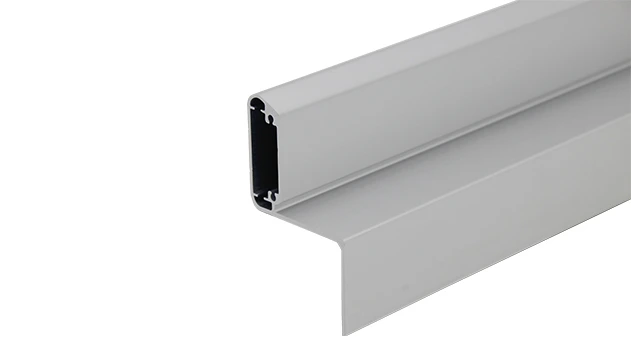
Aluminum Guide Rail A
The aluminum guide rails hold the transport goods securely on the roller track. For installation, the guide rails are simply pushed over the roller tracks.To protect sensitive products.
Every manufacturer knows the drill: production lines hum, workers hustle to meet deadlines, and the pressure to do more with less never lets up. But what if the secret to smoother workflows, happier teams, and bigger profits isn't just about working harder? What if it's about working smarter—with tools that fit your process like a well-tailored glove? Enter two unsung heroes of modern manufacturing: Aluminum Guide Rail A and Lean Pipe Workbench . Together, they're not just tools—they're a productivity powerhouse, turning clunky, rigid processes into streamlined, flexible systems that grow with your business. Let's dive into how this dynamic duo is changing the game for factories, warehouses, and assembly lines across industries.
Aluminum Guide Rail A: The Silent Workhorse of Smooth Material Flow
First, let's talk about the unsung hero keeping materials moving: Aluminum Guide Rail A. You might not notice it at first glance, but this unassuming aluminum profile is the backbone of efficient material handling. Made from high-grade aluminum extrusion, it's built to withstand the daily grind of busy factories—no rust, no warping, just reliable performance day in and day out.
Why Aluminum? It's All in the Material
Aluminum isn't just lightweight (though that's a big plus for easy installation and reconfiguration). It's also naturally resistant to corrosion, making it perfect for humid warehouses or cleanrooms in the medical industry. Unlike steel rails that weigh down your setup and require heavy tools to adjust, Aluminum Guide Rail A can be moved, cut, or extended by just a few team members—no need for a whole maintenance crew. And with its smooth, anodized surface, materials glide over it with minimal friction, reducing wear and tear on both the rail and your products.
Designed for Flexibility: T-Slots and Beyond
What really sets Aluminum Guide Rail A apart is its clever design. Take a close look, and you'll notice the T-shaped slots running along its length. These slots aren't just for show—they're the key to endless customization. Slide in a plastic roller track guide rail (yellow for visibility, grey for low-key), snap on a placon mount bracket, or attach a stop end to keep materials from sliding off. It's like building with modular blocks, but for your production line. Need to adjust the angle of a flow rack? Swap out a connector. Adding a new conveyor section? Just bolt the rail to the frame. No complicated tools, no downtime—just quick, easy tweaks that keep your line moving.
Real Impact: A consumer electronics plant in Shenzhen swapped their old steel rails for Aluminum Guide Rail A on their flow racks. Within a month, they noticed a 20% reduction in jams during component transfer, and workers reported less strain from pushing heavy bins—all because the aluminum's smooth surface and lightweight design made material movement feel effortless.
Where It Shines: More Than Just a "Rail"
Aluminum Guide Rail A isn't limited to one job. It's the multitasker of your production floor: - Flow Racks: Pair it with swivel roller balls (1 inch or 0.5 inch) to create gravity-fed flow racks that deliver parts right to workers' fingertips, eliminating time wasted hunting for components. - Conveyors: Use it as the track for roller conveyors, ensuring boxes and assemblies glide smoothly from one workstation to the next without getting stuck. - Workbench Extensions: Mount it to the side of a lean pipe workbench to create a mini "feeding line" for tools or, keeping the workspace organized and efficient. - Assembly Lines: Guide products through inspection stations with aluminum guide rail a, ensuring consistent alignment and reducing errors.
Lean Pipe Workbench: Your Team's New Favorite Workspace
Now, let's shift to the heart of the action: the Lean Pipe Workbench. This isn't your grandpa's rickety workbench—it's a customizable, ergonomic hub where precision meets comfort. Built with lightweight aluminum pipes and internal rotary aluminum joints, it's designed to adapt to your needs, not the other way around.
Built to Adapt: From Sketch to Reality in Days
Imagine a workbench that changes as fast as your projects do. Need extra shelf space for tools? Add a Material Rack B (3 row, 3 floor) on the side. Switching from assembling small medical devices to larger automotive parts? Adjust the height with anti-slip leveling feet. Working with sensitive electronics? Opt for an ESD (Electrostatic Discharge) workbench, complete with a static-dissipative top that protects components from damage. Even the base can evolve—choose Workbench E (single deck, no casters) for a stationary setup, or add swivel casters for a mobile workstation that follows your team around the floor.
Ergonomics First: Happy Workers = Better Results
Let's talk about the people behind the products. A worker hunched over a poorly designed bench for 8 hours isn't just uncomfortable—they're slower, more prone to mistakes, and at risk of injury. The Lean Pipe Workbench fixes that. With adjustable heights (from 750mm to 900mm, or custom to your team's average height), rounded edges to prevent scrapes, and plenty of legroom underneath, it's built for humans, not robots. Add a monitor arm for assembly instructions, a tool rail for easy access to screwdrivers and pliers, and a cup holder (yes, even that matters!), and suddenly, your team isn't just working—they're thriving.
| Feature | Benefit | Example Use Case |
|---|---|---|
| Internal Rotary Aluminum Joints | 360° rotation for quick reconfiguration | Swapping from a flat work surface to a tilted assembly station in 5 minutes |
| ESD-Compliant Top | Protects sensitive electronics from static damage | Assembling circuit boards for smartphones or medical monitors |
| Adjustable Leveling Feet | Stable on uneven factory floors | Warehouse workbenches on concrete with minor cracks or slopes |
| Modular Shelving | Custom storage for tools, bins, or documentation | Material Rack B holding 3 tiers of screws, washers, and connectors |
Durability That Lasts: Built for the Long Haul
Let's get practical: manufacturing is tough on equipment. Spills, heavy tools, constant use—your workbench takes a beating. That's why the Lean Pipe Workbench uses 1.5mm thick aluminum pipes (with options up to 2.0mm for heavy-duty use) and corrosion-resistant joints. Unlike wooden benches that warp or particleboard tops that chip, this bench stands up to oils, coolants, and daily scrubbing. A manufacturer in Dongguan has had theirs for 5 years, and apart from a few scratches (a badge of honor!), it still looks and functions like new. Now that's a return on investment.

The Perfect Pair: How They Work Together
Aluminum Guide Rail A and Lean Pipe Workbench are great on their own, but together? They're a productivity dream team. Think of it as a relay race: the workbench is where the "baton" (your product) gets polished, and the guide rail is the track that carries it to the next runner—seamlessly, quickly, and without fumbles.
From Workbench to Warehouse: A Smooth Handover
Let's walk through a typical scenario in a 3C assembly plant (think smartphones or laptops): 1. Assembly at the Workbench: A worker sits at a Lean Pipe Workbench E, assembling a phone's motherboard. The ESD top keeps static at bay, and a flow rack with Aluminum Guide Rail A is mounted to the bench's side, feeding small components (screws, connectors) via gravity. No more reaching across the bench—parts roll right to their hand. 2. Transfer to Testing: Once the motherboard is done, the worker places it in a bin. The bin slides along an Aluminum Guide Rail A track (connected to the workbench) onto a roller conveyor. The rail's smooth surface ensures the bin glides quietly—no loud clanging, no jolts that could damage the board. 3. Next Station: The conveyor carries the bin to the testing workstation, where another Lean Pipe Workbench (this one with a monitor arm for test software) awaits. The guide rail ensures the bin stops exactly at the worker's reach, so they can start testing immediately. 4. Final Step: After testing, the motherboard moves via another guide rail-equipped flow rack to packaging—all without a single worker leaving their station.
Numbers Don't Lie: A medical device manufacturer in Suzhou implemented this pair (Aluminum Guide Rail A + Lean Pipe Workbench) in their catheter assembly line. They saw a 35% reduction in "dead time" (workers waiting for materials or moving between stations) and a 15% increase in daily output. Plus, employee satisfaction scores jumped—because when your tools make your job easier, you show up ready to perform.
Beyond the Basics: Adding More Lean Tools
Why stop at the bench and rail? This pair plays well with others, too. Add a turnover trolley (with Aluminum Guide Rail A on its shelves) to transport finished goods from the workbench to storage. Use a stainless steel swivel roller ball track (paired with the guide rail) to create a 360° material transfer point. Or integrate a conveyor system (with the rail as its track) to connect multiple workbenches into a full lean production line. It's all part of a lean solution that grows with your business—no need to rip and replace when you scale.

Real-World Wins: How Industries Are Using This Pair
Still not convinced? Let's look at how different industries are leveraging Aluminum Guide Rail A and Lean Pipe Workbench to solve their unique challenges.
3C Electronics: Speed and Precision
In the fast-paced world of consumer electronics, where new models launch every few months, flexibility is key. A major smartphone manufacturer in Guangzhou uses Lean Pipe Workbenches with ESD tops for assembling delicate screens, paired with Aluminum Guide Rail A on flow racks to feed tiny OLED components. When a new model comes in with slightly different dimensions? They reconfigure the workbench in an hour (thanks to internal rotary joints) and adjust the guide rail's angle on the flow rack—no need for a whole new setup. Result: They cut changeover time from 8 hours to 1, staying ahead of tight production deadlines.
Medical Devices: Cleanliness and Compliance
Medical device assembly demands sterility, precision, and strict compliance with regulations. A surgical instrument maker in Hangzhou uses Lean Pipe Workbenches with aluminum honeycomb panels (easy to sanitize) and Aluminum Guide Rail A with plastic roller tracks (no crevices for bacteria to hide). The rail's smooth surface is wiped down daily, and the workbench's modular design means they can add or remove shelves without tools—critical for maintaining a cleanroom environment. Plus, since both products are aluminum, there's no risk of rust or contamination from paint chips, keeping their ISO 13485 certification intact.
Automotive Parts: Heavy-Duty Performance
Automotive parts are bulky, heavy, and require robust tools. A car parts supplier in Changchun opted for heavy-duty Lean Pipe Workbenches (with 2.0mm aluminum pipes) and Aluminum Guide Rail A with steel roller tracks to handle engine components. The workbench's adjustable height lets workers assemble parts standing or sitting, reducing fatigue, while the guide rail-equipped conveyors move 50kg bins with ease—no more straining to lift. They even added a parallel aluminum joint to extend the workbench, creating a larger surface for assembling transmission parts. After 2 years, the setup has handled over 100,000 parts with zero breakdowns.
More Than Tools: Embracing Lean Manufacturing
At the end of the day, Aluminum Guide Rail A and Lean Pipe Workbench aren't just products—they're part of a bigger philosophy: lean manufacturing. The idea is simple: eliminate waste, optimize flow, and empower your team to improve processes every day. These tools make that philosophy actionable.
Aluminum Guide Rail A reduces waste by ensuring materials move only when needed (no overstocking, no waiting). Lean Pipe Workbench eliminates wasted motion (workers don't walk, reach, or bend unnecessarily). And because both are modular, you can reuse them when you redesign your line—no throwing away old equipment, no wasted money. It's sustainability that makes sense for your bottom line and the planet.
Think of it this way: Every time you adjust a workbench joint, add a guide rail to a new rack, or repurpose a conveyor section, you're not just fixing a problem—you're building a smarter, more resilient business. One that can adapt to market changes, keep up with customer demands, and keep your team proud to come to work.
Manufacturing isn't just about making things—it's about making things better . Aluminum Guide Rail A and Lean Pipe Workbench get that. They're not flashy, but they're reliable. They don't demand attention, but they deliver results. Whether you're assembling smartphones, surgical tools, or car parts, this pair works tirelessly to make your process smoother, your team happier, and your profits bigger.
So why settle for clunky, rigid systems that hold you back? Upgrade to tools that grow with you, adapt to you, and help you do more with less. After all, in manufacturing, the best investments aren't just in machines—they're in making every part of your operation work together . And with Aluminum Guide Rail A and Lean Pipe Workbench, you're not just buying tools—you're building a future where productivity feels effortless.