- Company Articles
- Products and Technology
- Solution
- Aluminum Guide Rail A and Flow Racks: Enhancing Material Flow in Production

Aluminum Guide Rail A and Flow Racks: Enhancing Material Flow in Production
Related Product
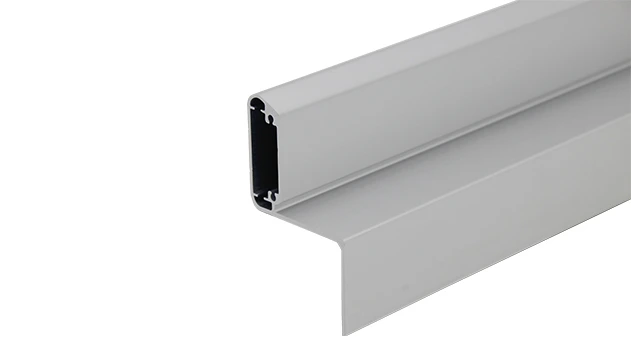
Aluminum Guide Rail A
The aluminum guide rails hold the transport goods securely on the roller track. For installation, the guide rails are simply pushed over the roller tracks.To protect sensitive products.
Walk into any busy manufacturing plant—whether it's a 3C assembly line churning out smartphones or a medical device workshop crafting precision instruments—and you'll notice a silent but critical player in the chaos: material flow. It's the invisible current that keeps production alive. When parts glide smoothly from storage to workstation, when tools are within arm's reach, and when finished goods move seamlessly to packaging, the whole operation hums like a well-tuned engine. But when that flow stalls—when workers waste time hunting for components, when heavy cartons get stuck on rough rails, or when a sudden production change leaves old storage racks obsolete—frustration mounts, deadlines slip, and profits shrink.
This is where two unsung heroes of modern manufacturing step in: Aluminum Guide Rail A and flow racks. More than just metal and rollers, they're the backbone of efficient material handling, designed to turn bottlenecks into pathways and chaos into order. Let's dive into how these tools work, why they matter, and how they're reshaping production floors across industries like automotive, electronics, and healthcare.
Why Material Flow is the "Lifeblood" of Production
Think of a production line as a human body. If the circulatory system (material flow) falters, every other organ (assembly, quality control, shipping) suffers. Lean manufacturing experts estimate that up to 30% of factory labor hours are wasted on material handling —fetching parts, moving carts, or waiting for supplies. In high-speed industries like 3C assembly, where products move from component to finished goods in hours, even a 5-minute delay per workstation can derail daily targets.
Traditional setups often exacerbate these issues. Static shelves force workers to bend, stretch, or walk long distances to grab parts. Rigid conveyor systems can't adapt when a new product line is introduced. And heavy steel racks corrode over time in humid environments, like food processing or coastal factories, leading to frequent replacements.
Enter flow racks and Aluminum Guide Rail A: designed to address these pain points with flexibility, durability, and worker-centric design. Let's start with flow racks—the workhorses of smart storage.
Flow Racks: More Than Shelves—A "Pull System" for Efficiency
Flow racks (or in Chinese) aren't your grandma's bookshelf. They're dynamic storage solutions that use gravity to keep materials moving. Picture this: tilted shelves fitted with rollers, where boxes or bins slide gently toward the front as items are taken. No more digging to the back of a shelf or asking a coworker to grab something from the top rack. It's like a vending machine for factory parts—always ready, always organized.
How Flow Racks Transform Daily Work
Maria, a line supervisor at a mid-sized (home appliance) factory, recalls the days before flow racks: "Workers spent 20 minutes each hour just walking to the storage area and back. We had bins falling off shelves, and parts getting mixed up. Now, with flow racks along the assembly line, every station has its own 'mini warehouse.' The rollers make sure the next bin is always at eye level—no bending, no searching. Our line speed went up by 15% in the first month."
Key benefits of flow racks include:
- FIFO (First-In-First-Out) Inventory Control: Older stock slides to the front first, reducing waste from expired or obsolete parts—critical in industries like pharmaceuticals or electronics with short component lifespans.
- Ergonomic Design: Tilted rails mean workers stand upright, lowering the risk of back injuries. A study by the National Institute for Occupational Safety and Health (NIOSH) found that ergonomic storage solutions reduce musculoskeletal disorders by up to 40% .
- Space Savings: Flow racks double storage density by eliminating aisles between static shelves. In one automotive parts plant, switching to flow racks freed up 300 sq. ft. of floor space—enough for a new testing station.
| Feature | Traditional Static Racks | Modern Flow Racks |
|---|---|---|
| Material Access | Manual retrieval (bending, stretching) | Gravity-fed to front (no reaching) |
| Inventory Accuracy | Prone to miscounts (hard to see back stock) | Clear visibility (easy to track stock levels) |
| Flexibility | Fixed shelf heights; hard to reconfigure | Adjustable rails; adapt to bin sizes in minutes |
| Worker Fatigue | High (repetitive motion, long walks) | Low (stationary access, minimal movement) |
But flow racks are only as good as their rails. That's where Aluminum Guide Rail A comes in—the unsung hero that keeps the "flow" in flow racks.

Aluminum Guide Rail A: The "Silent Glide" Behind Smooth Operations
Aluminum Guide Rail A is the backbone of flow racks, conveyor systems, and workstations. Made from high-grade aluminum extrusion profiles (), it's lightweight yet surprisingly tough—think of it as the "carbon fiber" of factory hardware. But what makes it special?
Why Aluminum? The Material That Checks All Boxes
Steel rails are strong, but they're heavy and rust-prone. Plastic rails warp under heavy loads. Aluminum Guide Rail A strikes the perfect balance:
- Lightweight: Aluminum is 1/3 the weight of steel, making installation a one-person job. No need for forklifts or heavy lifting equipment—critical for quick reconfigurations during production line changes.
- Corrosion-Resistant: Unlike steel, aluminum naturally forms a protective oxide layer, so it holds up in damp environments like food processing plants or coastal warehouses. A medical device manufacturer in Guangzhou reported their Aluminum Guide Rail A rails still looked new after 5 years of daily cleaning with disinfectants.
- Smooth Surface: The precision-extruded finish means bins glide without jamming. Compare that to rough steel rails, where dust and debris can cause snags. "We used to have to oil our steel rails weekly to keep parts moving," says a maintenance technician at a computer peripheral factory. "Aluminum rails? We wipe them down once a month, and they're good to go."
- Modular by Design: Aluminum Guide Rail A works with standard aluminum profile accessories—connectors, brackets, end caps—so you can cut it to length, add stops, or curve it around corners without custom machining. Need a 2.4m rail for a new workstation? Just grab a saw and some brackets—it's that easy.
Beyond Flow Racks: Where Else Does Aluminum Guide Rail A Shine?
While flow racks are a primary use, Aluminum Guide Rail A is a multitasker. It's the "track" in roller conveyors, guiding packages from assembly to packaging. It's the edge guard on workbenches, protecting tools from sliding off. In lean tube systems (), it connects workstations into flexible lines that adapt as production needs change.
In one 3C assembly plant in Shenzhen, engineers used Aluminum Guide Rail A to build a custom "U-shaped" production line. By mounting guide rails on aluminum profile frames, they created a loop where phones move from soldering to testing to boxing—all without manual carting. "We reduced material handling errors by 25%," says the plant manager. "And when we launched a new phone model, we reconfigured the rails in a day instead of a week."

From Storage to Transport: Conveyors and the "Continuous Flow" Vision
Flow racks and Aluminum Guide Rail A handle storage and point-of-use access, but what about moving materials between stations? That's where conveyors () step in—turning isolated work cells into a connected ecosystem.
Imagine a (automotive parts) factory: flow racks feed parts to assembly stations, where workers build components. Once finished, those components slide onto a roller conveyor (fitted with Aluminum Guide Rail A, of course) that carries them to the next station. No more workers pushing heavy carts or waiting for a forklift. It's a symphony of movement—quiet, efficient, and reliable.
Conveyors: Tailored to Your Pace
Not all conveyors are created equal. Light-duty belt conveyors move small electronics, while heavy-duty roller conveyors handle metal parts. The best part? They integrate seamlessly with flow racks and Aluminum Guide Rail A. For example:
- Flow Rack + Conveyor Combo: At a medical device plant, flow racks store sterile components. When a bin is empty, a sensor triggers the conveyor to send a new bin from the warehouse—no human intervention needed.
- Flexible Conveyor Lines: Aluminum frame conveyors (using aluminum profiles) can be extended or shortened with minimal tools. A consumer electronics factory in Dongguan added 10 meters to their conveyor line in 3 hours to keep up with holiday demand.
Lean Solutions: Because Every Factory is Unique
Here's the truth: no two factories are the same. A 3C assembly line needs compact, ESD-safe () workstations to protect sensitive chips. A medical device plant requires easy-to-clean, corrosion-resistant equipment. A automotive plant needs heavy-duty racks for engine parts. That's where lean solutions () come in—custom designs that combine flow racks, Aluminum Guide Rail A, conveyors, and aluminum profiles into systems that fit your space, your products, and your people.
Case Study: 3C Assembly's Need for Flexibility
A leading smartphone manufacturer needed a production line that could switch between 3 models daily. Their old steel racks and fixed conveyors took days to reconfigure. Enter a lean solution: flow racks with quick-adjust dividers, Aluminum Guide Rail A conveyors on lockable casters, and aluminum profile workbenches that fold and roll. Now, line changes take 2 hours instead of 2 days , and they've cut setup waste by 60%.
Case Study: Medical Equipment's Demand for Cleanliness
A surgical instrument maker required storage that could withstand daily sanitization. Standard steel racks rusted; plastic warped. The solution? Stainless steel flow racks with Aluminum Guide Rail A (naturally corrosion-resistant) and ESD workbenches. Now, workers clean the system with alcohol wipes daily, and the equipment has lasted 7 years—double the lifespan of their old setup.
These aren't just "products"—they're partnerships. Lean solution providers work with you to map your workflow, identify bottlenecks, and design systems that grow with your business. It's not about selling racks or rails; it's about creating a production floor that works for your team, not against them.
Investing in Material Flow: More Than Equipment—An Investment in People
At the end of the day, Aluminum Guide Rail A and flow racks aren't just about moving parts faster. They're about respecting the people who build our products. When workers don't have to bend, reach, or wait, they're happier, healthier, and more productive. When production lines adapt quickly, businesses stay competitive. When waste is cut, costs drop, and innovation thrives.
Whether you're running a small workshop or a large factory, the message is clear: material flow matters. And with tools like flow racks, Aluminum Guide Rail A, and custom lean solutions, you're not just upgrading your equipment—you're building a smarter, more human-centered production future.
Ready to see the difference? Start small: swap one static shelf for a flow rack, or replace a rusted steel rail with Aluminum Guide Rail A. You might be surprised how quickly those small changes add up to big results.