- Company Articles
- Products and Technology
- Product knowledge
- Aluminum Guide Rail A for Lean Management Accessories: Organizing Production Lines

Aluminum Guide Rail A for Lean Management Accessories: Organizing Production Lines
Related Product
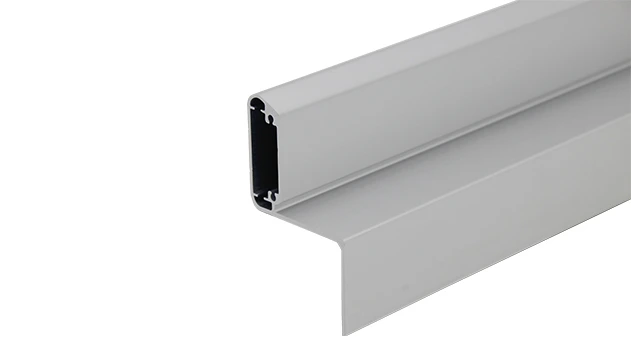
Aluminum Guide Rail A
The aluminum guide rails hold the transport goods securely on the roller track. For installation, the guide rails are simply pushed over the roller tracks.To protect sensitive products.
The Heartbeat of Lean Manufacturing: Why Details Like Guide Rails Matter
Walk into any world-class manufacturing facility today, and you'll notice something subtle but powerful: flow . Parts glide from station to station, workers move without hesitation, and every square inch of space feels intentional. This isn't magic—it's lean management in action. And at the center of that flow? Often, it's the small, unsung heroes like aluminum guide rails. These unassuming components might not grab headlines, but they're the backbone of a production line that runs like a well-tuned orchestra.
In industries where margins are tight and efficiency is everything—think 3C assembly lines churning out smartphones, or medical device plants where precision can't be compromised—even a tiny bottleneck can derail an entire shift. That's why forward-thinking manufacturers are turning to specialized tools like Aluminum Guide Rail A. It's more than just a piece of metal; it's a statement about how you value your team's time, your products' quality, and your company's future.
What Is Aluminum Guide Rail A, Anyway? Breaking Down the Basics
Let's start simple: Aluminum Guide Rail A is a lightweight, durable rail designed to guide materials, products, or even tools along a production line. But what makes it "lean"? Unlike rigid, one-size-fits-all steel rails of the past, this guide rail is built for flexibility. It's part of a system—one that includes lean pipe workbenches, flow racks, and conveyors—all working together to adapt to your needs, not the other way around.
Picture this: You're running a consumer electronics plant, and next month's new model requires a slightly different assembly process. With traditional rails, you'd be looking at hours (or days) of rework, welding, or even replacing entire sections. But with Aluminum Guide Rail A? Thanks to its modular design and compatibility with internal rotary aluminum joints, your team can adjust the rail's angle, height, or path in minutes. No special tools, no downtime, just a quick tweak to keep up with change.

Design That Delivers: The Features That Make Aluminum Guide Rail A Stand Out
Not all guide rails are created equal. Aluminum Guide Rail A earns its spot in lean management setups because of details that matter on the factory floor:
- Aluminum Alloy Construction: Light enough for one person to handle during setup, but strong enough to withstand the daily grind of heavy parts. It's rust-resistant too—no more worrying about corrosion in humid warehouses or messy production areas.
- Precision Engineering: The rail's smooth, consistent surface ensures materials slide without sticking. Whether you're moving small circuit boards or larger mechanical parts, there's no jarring, no jamming, just steady motion.
- Flexible Connections: Pair it with internal rotary aluminum joints, and suddenly you've got a rail that can curve, tilt, or connect to other components like lean pipe workbenches with zero hassle. It's like building with advanced Lego blocks for adults.
- Surface Options: Need ESD protection for sensitive electronics? Choose the anti-static coating. Working with food-grade materials? Opt for the smooth, easy-to-clean finish. It adapts to your environment, not the other way around.

More Than a Rail: How It Plays Well With Others in the Lean Family
A single guide rail can't transform a production line—but when it's part of a lean system, magic happens. Let's break down how Aluminum Guide Rail A teams up with other key players:
Example 1: Aluminum Guide Rail A + Lean Pipe Workbench
Imagine a 3C assembly station where workers build laptop motherboards. The lean pipe workbench holds tools and components at waist height, while Aluminum Guide Rail A runs along the edge, connecting to a small flow rack. As each motherboard is assembled, it glides along the rail to the next station—no lifting, no carrying, no wasted steps. The rail keeps the workflow linear, so workers stay focused, and parts stay organized. It's like having an invisible assistant that never takes a break.
Example 2: Aluminum Guide Rail A + Flow Rack
In a medical device warehouse, space and speed are critical. A flow rack loaded with sterile components needs to feed assembly lines without delay. Aluminum Guide Rail A lines the rack's shelves, ensuring boxes slide forward as the front one is taken—no more reaching to the back or digging through disorganized piles. Workers spend less time hunting for parts and more time building life-saving equipment. That's efficiency with a human touch.
Example 3: Aluminum Guide Rail A + Conveyor System
At an automotive parts plant, large plastic panels need to move from molding to painting to assembly. Aluminum Guide Rail A mounts alongside the conveyor, keeping panels aligned and preventing them from shifting during transport. No more scratched surfaces, no more rework, no more frustrated operators. The rail acts as a gentle guide, ensuring consistency in every step.
Real Results: How Industries Are Winning with Aluminum Guide Rail A
Numbers tell the story best. Let's look at how different sectors are turning this simple rail into big wins:
| Industry | Challenge | Solution with Aluminum Guide Rail A | Outcome |
|---|---|---|---|
| 3C Electronics | Frequent product changes requiring line reconfigurations | Quick-connect rails with adjustable angles | Line changeover time reduced by 40%; downtime cut by 25 hours/month |
| Medical Devices | Strict hygiene standards and small, delicate parts | Smooth, corrosion-resistant rails with ESD options | Contamination incidents dropped to zero; part damage reduced by 60% |
| Automotive Parts | Heavy parts causing wear on traditional steel rails | Durable aluminum rails with reinforced joints | Rail replacement costs down by 70%; maintenance time cut by 50% |
| Warehouse Logistics | Inefficient picking leading to order delays | Aluminum rails on flow racks for first-in, first-out (FIFO) systems | Order fulfillment speed up by 30%; worker fatigue reported as "significantly reduced" |
Sustainability: Lean Today, Greener Tomorrow
Lean management isn't just about efficiency—it's about respect for resources. Aluminum Guide Rail A checks this box too. Unlike steel rails that end up in landfills when they wear out, aluminum is 100% recyclable. And because it's modular, you can reuse sections when you reconfigure your line instead of buying new ones. It's a small choice that adds up: companies report reducing their production waste by 15-20% simply by switching to sustainable lean components like this rail.
Think about it: every time you avoid replacing a worn-out steel rail, you're saving money and reducing your carbon footprint. It's lean manufacturing with a conscience—and that's a story your customers, employees, and stakeholders will love.
Choosing the Right Aluminum Guide Rail A: What to Look For
Not all aluminum guide rails are the same. To make sure you're getting a rail that delivers on the lean promise, keep these tips in mind:
- Check the Tolerances: A rail that's even slightly warped or uneven will cause jams. Ask suppliers about their quality control process—look for precision measurements (we're talking fractions of a millimeter here).
- Test the Connections: The rail should attach to joints and other components without requiring special tools or excessive force. If setup feels like a chore, your team won't use it to its full potential.
- Ask About Customization: Your production line is unique. Can the supplier cut the rail to your exact length? Add special coatings? The best lean solutions are tailored, not off-the-shelf.
- Think Long-Term: A cheaper rail might save money today, but if it bends, rusts, or needs frequent replacement, it'll cost you more in the long run. Look for suppliers who stand behind their products with warranties and responsive support.
Final Thought: Lean Isn't About Perfection—It's About Progress
At the end of the day, Aluminum Guide Rail A is more than a tool. It's a symbol of a mindset: the belief that small improvements add up to big results. It's about respecting your team enough to give them the best tools, caring about your products enough to eliminate waste, and planning for a future where efficiency and sustainability go hand in hand.
So the next time you walk through your production line, take a closer look at the details. The rails, the workbenches, the flow racks—they're not just metal and plastic. They're the building blocks of a lean system that works for you, not against you. And with components like Aluminum Guide Rail A leading the way, the possibilities for progress are endless.