- Company Articles
- Products and Technology
- Application Cases
- Aluminum Guide Rail A in Home Appliance Manufacturing: Case Studies & Results

Aluminum Guide Rail A in Home Appliance Manufacturing: Case Studies & Results
Related Product
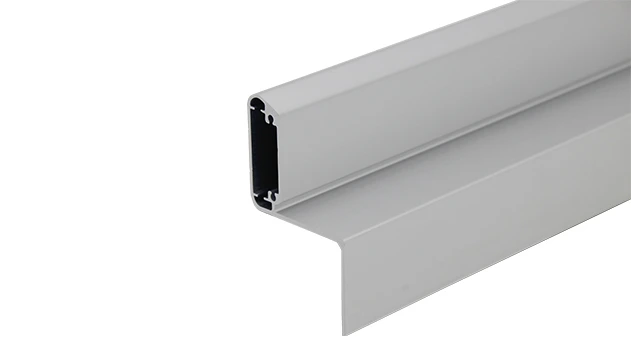
Aluminum Guide Rail A
The aluminum guide rails hold the transport goods securely on the roller track. For installation, the guide rails are simply pushed over the roller tracks.To protect sensitive products.
In the bustling home appliance factories where refrigerators hum to life, washing machines take shape, and microwaves get their final checks, every second on the production line is a step toward meeting tight delivery deadlines. For manufacturers, the challenge isn't just about making more units—it's about making them smarter, adapting quickly to design changes, and keeping workers safe and efficient. That's where flexible production tools like Aluminum Guide Rail A come into play, quietly transforming how parts move, how workstations operate, and how entire lines respond to the demands of modern manufacturing.
Today, we're diving into real stories from (home appliance) factories that turned to Aluminum Guide Rail A as part of their lean production journey. From reducing bottlenecks in fridge assembly to cutting down on worker fatigue in small appliance lines, these case studies show how the right aluminum rail system isn't just a piece of hardware—it's a catalyst for smoother workflows, happier teams, and healthier bottom lines.
What Makes Aluminum Guide Rail A a Go-To for Home Appliance Lines?
Before we jump into the cases, let's get to know Aluminum Guide Rail A better. Unlike rigid steel rails that lock production lines into fixed layouts, this aluminum rail is all about flexibility. Made from lightweight yet durable aluminum extrusion profiles, it's designed to work seamlessly with other lean components like flow racks, conveyors, and workbenches. Think of it as the "glue" that holds a lean system together—strong enough to handle heavy appliance parts, but easy to reconfigure when a new model launches or a production step needs tweaking.
What really sets it apart? Its smooth surface minimizes friction, so plastic bins loaded with motor parts or control panels glide effortlessly. Its modular design means you can add bends, extensions, or even integrate roller tracks without overhauling the entire setup. And because it's aluminum, it resists rust in humid factory environments—no more worrying about corrosion messing with part alignment over time.
But don't just take our word for it. Let's look at how three manufacturers put Aluminum Guide Rail A to work—and the results they saw.
Case Studies: Aluminum Guide Rail A in Action
Case 1: Speeding Up Refrigerator Assembly with Aluminum Guide Rail A & Conveyors
A leading fridge manufacturer in Guangdong was struggling with a common problem: their main assembly line kept hitting bottlenecks at the door installation station. The steel rails they'd used for years were causing plastic bins of door hinges and seals to jam, forcing workers to stop, unjam the line, and restart—wasting up to 20 minutes per shift. Worse, the rigid layout made it hard to adjust when they introduced a new energy-efficient fridge model with slightly larger door components.
After consulting with our team, they decided to revamp the section with Aluminum Guide Rail A paired with 40 Steel Roller Track (yellow wheels) and a low-profile conveyor. The goal? Create a smoother flow for door parts and make the line easy to adjust for new models.
"The first week after installation, we noticed the difference immediately," said the plant manager, Mr. Chen. "The bins slide now—no more jams. And when we launched the new fridge line last month, we repositioned the Aluminum Guide Rail A in under an hour. With the old steel rails, that would've taken a full day and a maintenance crew."
Key Changes: Switched from steel rails to Aluminum Guide Rail A with roller tracks; integrated with existing conveyor system.
Results: 15% faster door installation process; 90% reduction in line jams; 80% less time spent on line reconfigurations.
Case 2: Cutting Worker Fatigue in Washing Machine Lines with Aluminum Guide Rail A & Flow Racks
A mid-sized washing machine factory in Zhejiang had a different challenge: worker fatigue. Their assembly stations were designed so that operators had to reach across wide tables to grab parts like drum bearings and control knobs, stored in fixed shelves. By the end of the shift, many workers reported shoulder strain, and the plant was seeing a 10% drop in productivity in the last two hours of the day.
Our solution? A custom lean setup using Aluminum Guide Rail A to build flow racks right next to each workstation. The flow racks, loaded with parts via the aluminum rails, were positioned at waist height, so workers could slide bins toward them without stretching. We also paired the rails with a lean pipe workbench, creating a U-shaped workstation that kept everything within arm's reach.
"At first, the team was skeptical—'Just another rack,' they said," laughed the production supervisor, Ms. Li. "But after two weeks, one worker told me, 'I can actually keep up with the line speed all day now.' We tracked it: the number of parts assembled per hour stayed consistent from morning to evening, and the HR team hasn't received a single strain complaint since."
Key Changes: Aluminum Guide Rail A flow racks integrated with lean pipe workbenches; parts delivered at waist height.
Results: 25% reduction in worker-reported fatigue; 8% increase in daily output; 0 strain-related absences in 6 months.
Case 3: Adapting to Small-Batch Production with Aluminum Guide Rail A & Custom Lean Solutions
Not all factories make thousands of the same model. A manufacturer in Jiangsu specializes in small-batch, high-end appliances—think built-in ovens and compact wine coolers—where they might switch between 5-6 models in a single week. Their old production line, with fixed steel rails and bolted-down workstations, couldn't keep up: changing over to a new model took 4 hours, eating into valuable production time.
They needed a lean solution that could adapt on the fly. Our team designed a modular system centered around Aluminum Guide Rail A, paired with adjustable roller tracks and quick-connect aluminum joints. The idea was to create "plug-and-play" workstations: when a new model came in, workers could reposition the rails, swap out roller track guide rails (yellow to grey, depending on part size), and adjust the height of flow racks in minutes, not hours.
"Last month, we had a rush order for 200 mini wine coolers—completely different from the ovens we were making that morning," said the operations director, Mr. Wang. "With the old line, we would've lost half a day. With Aluminum Guide Rail A? We switched the line in 45 minutes and still met the order deadline. That's the kind of flexibility that keeps us competitive."
Key Changes: Aluminum Guide Rail A with quick-connect joints; interchangeable roller track guide rails; modular flow racks.
Results: 87% reduction in changeover time; 30% more model switches per week; 15% increase in on-time delivery rate.

The Numbers Speak: Results Across All Cases
Curious how these changes stacked up against each other? Here's a side-by-side look at the key metrics before and after Aluminum Guide Rail A was introduced:
| Metric | Refrigerator Line (Case 1) | Washing Machine Line (Case 2) | Small-Batch Appliance Line (Case 3) |
|---|---|---|---|
| Production Efficiency | +15% faster door installation | +8% daily output | +15% on-time deliveries |
| Line Flexibility | 80% less reconfiguration time | N/A (fixed model, focus on worker flow) | 87% faster model changeovers |
| Worker Impact | 90% fewer line jams (less frustration) | 25% less fatigue, 0 strain complaints | Workers report "less stress" during switches |
| Cost Savings* | $12,000/year (labor from unjams) | $8,000/year (reduced absences, higher output) | $15,000/year (faster changeovers = more orders) |
*Estimated savings based on 6-month data from each factory.

Why Aluminum Guide Rail A Works for Home Appliance Manufacturing
What do these cases have in common? Aluminum Guide Rail A isn't just solving one problem—it's addressing the core needs of modern production:
Lightweight but tough: Aluminum handles the weight of appliance parts (think fridge doors, washing machine drums) without bending, but is light enough for workers to reposition without heavy tools.
Smooth, low-friction movement: No more stuck bins or jammed tracks—parts flow consistently, keeping lines moving at steady speeds.
Modular by design: Pair it with flow racks, conveyors, or workbenches today; add a new roller track or extend the rail tomorrow. It grows with your production needs.
Durable in factory conditions: Resists rust and corrosion, even in humid environments where appliances are tested for water resistance.
Ready to Transform Your Home Appliance Line?
Whether you're making 10,000 refrigerators a month or 100 custom ovens, Aluminum Guide Rail A proves that the right lean tools don't just fix problems—they open up new possibilities. It's about building lines that can keep up with design changes, support your team through long shifts, and turn every second on the floor into a step toward growth.
At the end of the day, manufacturing isn't just about machines and parts. It's about people—workers who deserve tools that make their jobs easier, and managers who need solutions that adapt as fast as the market does. Aluminum Guide Rail A is more than a rail; it's a partner in that journey.
So, what's your production line struggling with? A bottleneck that won't quit? A changeover process that's eating into profits? Let's talk about how Aluminum Guide Rail A, paired with the right lean system, can turn those challenges into opportunities.