- Company Articles
- Products and Technology
- Product knowledge
- Aluminum Guide Rail A: Lightweight Design for Easy Installation & Reconfiguration

Aluminum Guide Rail A: Lightweight Design for Easy Installation & Reconfiguration
Related Product
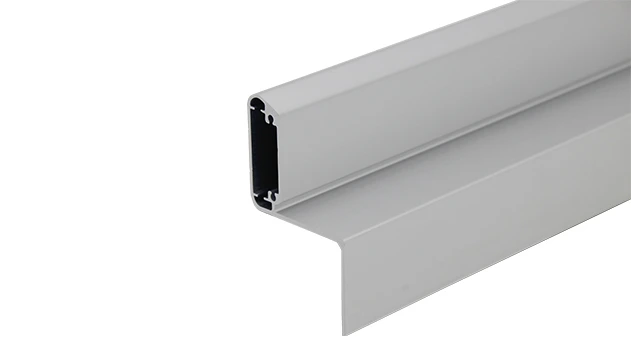
Aluminum Guide Rail A
The aluminum guide rails hold the transport goods securely on the roller track. For installation, the guide rails are simply pushed over the roller tracks.To protect sensitive products.
How a Simple Component Transforms Lean Production Lines Across Industries
The Unsung Hero of Modern Manufacturing: Why Guide Rails Matter
Walk into any busy factory today, and you'll see the heartbeat of production in motion—conveyors moving parts, workbenches humming with assembly, and (material racks) keeping components within arm's reach. But behind this seamless flow is a network of small but critical components that often go unnoticed: guide rails. These unassuming pieces are the silent organizers of the production floor, ensuring materials glide smoothly, alignment stays precise, and every step of the process stays on track.
For manufacturers, the right guide rail isn't just a "nice-to-have"—it's a make-or-break factor for efficiency. When rails are heavy, installation drags on. When they're rigid, reconfiguring for a new product means days of downtime. And when they wear out quickly, maintenance costs pile up. That's where Aluminum Guide Rail A comes in. Designed with the core principles of lean manufacturing in mind— eliminate waste, maximize flexibility, and empower teams —this rail isn't just a component. It's a tool that helps factories adapt, grow, and stay competitive in a world where production needs change faster than ever.
Lightweight by Design: The Aluminum Advantage
Let's start with the obvious: aluminum profile is a game-changer for weight. Traditional steel guide rails can feel like moving boulders—requiring two or three people just to position them during setup. Aluminum Guide Rail A, by contrast, cuts that weight by nearly half. Picture this: a single worker can carry a 6-foot section with one hand, maneuver it into place, and have it secured in minutes. No more waiting for a team to free up, no more strained backs, no more wasted time on heavy lifting.
"We used to spend half a day just installing steel rails for our new phone assembly line," says a production manager at a leading 3C manufacturer. "With Aluminum Guide Rail A, two people had the entire system set up in under two hours. It's not just faster—it's safer. Our team isn't rushing to lift heavy parts anymore, and we've seen fewer on-the-job strains since switching."
But lightweight doesn't mean sacrificing strength. Aluminum Guide Rail A is engineered with a reinforced aluminum extrusion profile that balances durability with portability. It handles the daily grind of manufacturing—whether it's plastic parts sliding over it in a medical device plant or metal components in an automotive workshop—without bending or warping. And because aluminum resists corrosion, it holds up in environments where moisture or chemicals are present, like in food processing or pharmaceutical facilities. This longevity isn't just about saving money on replacements; it's about building a production line you can rely on, day in and day out.

Easy Installation: From Unboxing to Operation in Hours, Not Days
Time is money on the production floor, and nowhere is that truer than during setup or upgrades. Traditional guide rails often come with a laundry list of requirements: special tools, welding equipment, or even custom brackets that need to be fabricated on-site. Aluminum Guide Rail A flips that script with a design focused on simplicity.
Take the mounting system, for example. Instead of complicated fasteners, it uses pre-drilled holes and compatible aluminum profile accessories that snap or bolt into place with basic hand tools. A maintenance technician with minimal training can align the rail, secure it to a workbench or conveyor frame, and have it ready for use in under 15 minutes per section. There's no need for welding torches or power tools, which means less disruption to the rest of the line and a lower risk of errors during installation.
This ease of setup is a lifesaver for factories rolling out new products or scaling up production. Imagine a consumer electronics plant that suddenly gets a rush order for a new tablet model. With Aluminum Guide Rail A, they can reconfigure their assembly line's flow rack (flow rack) system overnight, adding new rails to redirect components to the updated workstations. No delays, no missed deadlines—just a quick, smooth transition that keeps the factory agile.

Reconfiguration Made Simple: Adapting to Change Without the Headache
The only constant in manufacturing is change. A product design gets updated, a customer order shifts, or new efficiency standards require a layout tweak. In the past, these changes meant tearing out old rails, drilling new holes, and essentially rebuilding sections of the line from scratch. Aluminum Guide Rail A turns that process from a major project into a minor adjustment.
Thanks to its modular design, reconfiguring Aluminum Guide Rail A is as easy as loosening a few bolts, sliding the rail to the new position, and resecuring it. Need to narrow the track for smaller components? Swap in a different bracket. Want to angle the rail to feed parts into a new workstation? Its flexible joints adjust to slopes and curves without losing stability. This isn't just about saving time—it's about giving production teams the freedom to experiment and improve.
Consider a medical device manufacturer that produces both large equipment and small, delicate tools. One week, they're assembling MRI machine parts that require wide, sturdy rails; the next, they're switching to surgical instrument kits that need narrow, precise tracks. With Aluminum Guide Rail A, their team doesn't have to choose between two separate systems. They simply reposition the same rails, add a few adapters, and the line is ready for the new task. It's lean manufacturing in action—using the same resources to meet multiple needs, eliminating waste, and keeping the focus on what matters: making quality products.
Beyond the Rail: How Aluminum Guide Rail A Works with Your Lean Ecosystem
A great component doesn't work in isolation—it plays well with others. Aluminum Guide Rail A is designed to integrate seamlessly with the rest of your lean system, turning individual parts into a cohesive, high-performing whole. Let's break down how it pairs with some of the most common elements on the production floor:
| Production Component | How Aluminum Guide Rail A Enhances It |
|---|---|
| Lean Pipe Workbench | Mounts directly to the workbench frame, creating a built-in material feed track that keeps parts sliding smoothly to the assembly area—no more reaching or bending for tools. |
| Flow Rack | Lines the shelves of flow racks, ensuring boxes and bins glide forward as items are removed, maintaining the "first in, first out" (FIFO) inventory system critical for lean operations. |
| Conveyor Systems | Guides products along the conveyor belt, preventing jams and misalignment, even at high speeds. Its lightweight design reduces strain on conveyor motors, extending their lifespan. |
| Turnover Trolleys | Installs on trolley shelves to keep parts organized during transport, so materials arrive at the workstation in the same order they need to be used. |
This integration is key to building a truly flexible production line. When your guide rails, workbenches, and racks all speak the same "language" of modularity, you're not just buying components—you're investing in a system that grows with your business. It's the difference between a static factory floor that resists change and a dynamic one that thrives on it.
Real Impact Across Industries: Where Aluminum Guide Rail A Shines
Aluminum Guide Rail A isn't a one-size-fits-all solution—it's a one-size-fits-many tool that adapts to the unique needs of different industries. Here's how it's making a difference in the sectors that matter most:
- 3C Assembly (Consumer Electronics): In factories churning out smartphones, laptops, and wearables, production lines change constantly to keep up with new models. Aluminum Guide Rail A's quick reconfiguration means teams can switch between assembling phone cases one day and laptop keyboards the next without missing a beat.
- Medical Device Manufacturing: Clean rooms and precision are non-negotiable here. The rail's smooth, easy-to-clean aluminum surface resists dust buildup, and its lightweight design makes sanitizing hard-to-reach areas a breeze—critical for meeting strict regulatory standards.
- Automotive Parts Production: Heavy components like engine parts need durable rails, but automotive plants also need the flexibility to produce different car models. Aluminum Guide Rail A's strength handles the weight, while its adjustability lets lines switch between SUV parts and sedan components.
- Warehouse Logistics: From picking and packing to shipping, warehouses thrive on speed. When paired with flow racks, Aluminum Guide Rail A ensures boxes slide quickly and evenly, reducing the time workers spend restocking shelves and retrieving items.
Why Choose Aluminum Guide Rail A? It's About More Than a Part—It's About Progress
At the end of the day, manufacturing isn't just about machines and materials—it's about people. It's about the technician who spends less time wrestling with heavy rails and more time fine-tuning the line. It's about the production manager who can respond to a last-minute order change without panic. It's about the team that feels empowered to improve their workspace because the tools they use work with them, not against them.
Aluminum Guide Rail A embodies the spirit of lean solution—simple, efficient, and focused on continuous improvement. It's lightweight so your team can move faster. It's easy to install so your line spends less time down and more time producing. It's reconfigurable so your business can adapt to whatever the future brings. And because it's built to last, it's an investment that keeps paying off, project after project, year after year.
In a world where manufacturing never stands still, the right tools don't just keep up—they lead the way. Aluminum Guide Rail A isn't just a guide rail. It's a step forward for your production line, your team, and your bottom line. Because when every component works smarter, the whole system thrives.