- Company Articles
- Products and Technology
- Application Cases
- Aluminum Guide Rail B in Automotive Production: Streamlining Assembly Line Operations

Aluminum Guide Rail B in Automotive Production: Streamlining Assembly Line Operations
Related Product
Aluminum Guide Rail B
The aluminum guide rails hold the transport goods securely on the roller track. For installation, the guide rails are simply pushed over the roller tracks.To protect sensitive products.
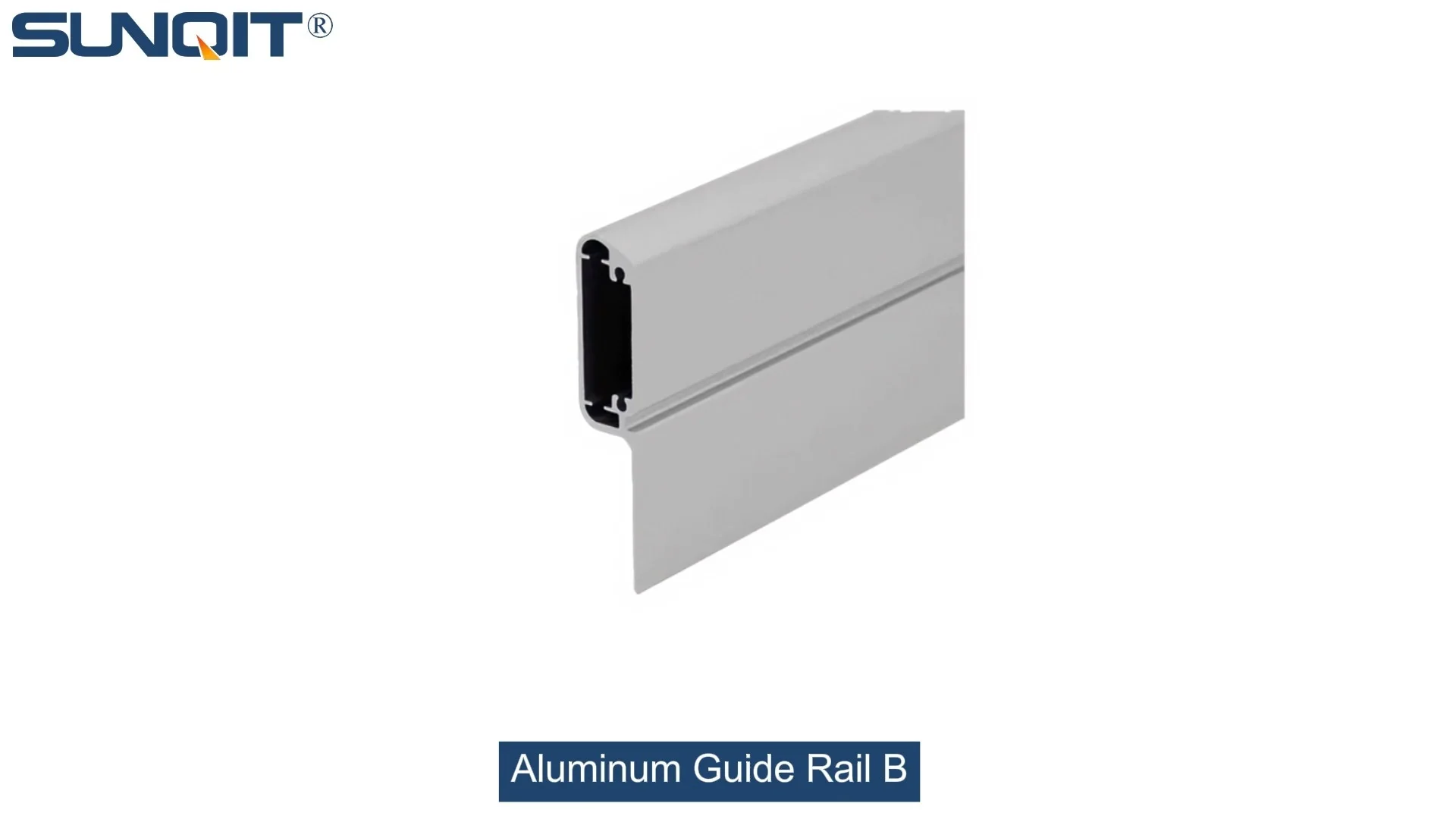
Walk into any modern automotive factory, and you'll be met with a symphony of precision: robotic arms glinting under overhead lights, workers in uniform moving with practiced efficiency, and a steady flow of components weaving through stations to become part of a car. But behind this seamless dance lies a hidden challenge—keeping every part, every process, and every person in perfect sync. In an industry where a single delayed shipment or a misaligned workstation can disrupt production schedules for days, the unsung heroes often aren't the flashy robots, but the quiet, hardworking tools that keep the assembly line moving. Today, let's shine a light on one such hero: Aluminum Guide Rail B, a humble yet powerful component that's quietly revolutionizing how automotive assembly lines operate.
The Pressure of Modern Automotive Manufacturing
Automotive production isn't what it used to be. Decades ago, factories churned out the same model for years, with assembly lines set in stone. Now? Customers demand customization—metallic paint here, a sunroof there, hybrid engines or electric motors—and manufacturers need to deliver. This shift to "high-mix, low-volume" production has turned assembly lines into dynamic ecosystems, where flexibility isn't just a nice-to-have; it's survival.
Imagine a line that builds three different car models in a single day. Each model has unique parts, different weights, and varying assembly steps. The line must switch between them quickly, without sacrificing speed or precision. And let's not forget the human element—workers need stations that adjust to their height, tools that are easy to reach, and (materials) that flow to them exactly when needed. When any of these pieces fail, frustration grows, errors happen, and deadlines slip. That's where Aluminum Guide Rail B steps in—not as a standalone solution, but as the backbone that holds these moving parts together.
What Makes Aluminum Guide Rail B Special?
At first glance, Aluminum Guide Rail B might look like just another metal bar. But pick one up, and you'll notice the difference immediately. It's lightweight—surprisingly so, considering how sturdy it feels. Run your hand along its surface, and there are no rough edges, no burrs that could catch on gloves or scratch components. Tap it gently, and it rings with a solid, confident sound, a hint of the durability beneath its smooth exterior. These aren't just random qualities; they're the result of intentional design, crafted to solve the specific headaches of automotive assembly lines.
Built for the Demands of the Line
Lightweight, Yet Tough
Made from high-grade aluminum alloy, it's 30% lighter than steel rails, making installation and adjustments a breeze for workers. But don't let the weight fool you—its tensile strength means it can handle the daily grind of heavy component bins sliding across it, shift after shift.
Corrosion Resistance
Automotive factories are messy places—oils, coolants, and cleaning agents are part of the routine. Aluminum Guide Rail B's natural resistance to rust ensures it won't degrade over time, reducing replacement costs and unexpected downtime.
Precision Engineering
Every inch of the rail is extruded to exact specifications, with consistent groove depths and smooth surfaces. This precision means (materials) glide along it without jamming, even when moving at high speeds.
But what really sets it apart is its adaptability. Unlike fixed steel rails that require welding or heavy tools to modify, Aluminum Guide Rail B works with a system of clamps and connectors—like the internal rotary aluminum joint—that let workers adjust its position in minutes. Need to raise a section by 10cm to match a new workstation height? Loosen two bolts, reposition, and tighten. Switching from a narrow bin to a wider one? Swap out the end stops, no cutting or drilling required. This flexibility isn't just convenient; it's a game-changer for lines that need to reconfigure on the fly.
Aluminum Guide Rail B in Action: How It Transforms Assembly Lines
Let's step onto the factory floor to see Aluminum Guide Rail B in action. Picture the chassis assembly line—the heart of the car, where the frame, engine, and suspension come together. This is a high-stakes area; even a small misalignment here can lead to safety issues down the line.
Chassis Assembly: Guiding Heavy Components with Care
A typical chassis station might see engine blocks weighing several hundred pounds being moved into place. In the past, workers relied on steel rails that often stuck or required constant lubrication. The result? Strained muscles from pushing stuck bins and frequent stops to fix jams. Enter Aluminum Guide Rail B. Its smooth, low-friction surface, paired with roller track systems, lets those heavy bins glide with minimal effort. Workers no longer have to lean into each push—they guide the bin with one hand, keeping the other free to align the engine precisely. And when the line switches to a smaller engine for a compact car model? The rails can be quickly repositioned with internal rotary aluminum joints to accommodate the narrower bin, all without calling in the maintenance team.
Interior Trim Installation: Precision for Delicate Parts
Move down the line to the interior trim station, where workers install dashboards, seats, and door panels—parts that are lighter but far more delicate. Scratches on a leather seat or a cracked dashboard can mean costly rework. Here, Aluminum Guide Rail B's corrosion-resistant surface shines. Unlike steel, it doesn't rust when exposed to the cleaning solutions used to wipe down workstations, so there's no risk of rust flakes transferring to the trim. Its lightweight design also means the rails can be mounted on adjustable lean pipe workbenches, raising or lowering the material flow to match each worker's height. Watch a worker here, and you'll see the difference: they reach for a dashboard panel, slide it along the rail with a soft *whoosh*, and position it without straining. The result? Fewer scratches, faster installation, and workers who go home with less fatigue.
Real Impact on the Ground
At a mid-sized automotive plant in Michigan, switching to Aluminum Guide Rail B on their interior trim line led to a 22% reduction in rework due to scratches and a 15% increase in daily output. "Our workers used to complain about how hard it was to move the panels without catching on the old rails," says Maria Gonzalez, the plant's production supervisor. "Now, they joke that the parts 'float' to them. It's not just faster—it's less stressful. And when stress goes down, focus goes up."
At a mid-sized automotive plant in Michigan, switching to Aluminum Guide Rail B on their interior trim line led to a 22% reduction in rework due to scratches and a 15% increase in daily output. "Our workers used to complain about how hard it was to move the panels without catching on the old rails," says Maria Gonzalez, the plant's production supervisor. "Now, they joke that the parts 'float' to them. It's not just faster—it's less stressful. And when stress goes down, focus goes up."
Beyond the Rails: Creating a Lean Ecosystem
Aluminum Guide Rail B doesn't work alone. Its true power comes from how it connects with other lean tools, turning individual components into a cohesive system that adapts to the line's needs. Think of it as the glue that holds a lean production ecosystem together, linking roller tracks, workstations, and even conveyor systems into a seamless flow.
Working in Tandem with Roller Tracks
Pair Aluminum Guide Rail B with roller tracks, and you've got a material handling dream team. The rails guide the roller tracks, ensuring they stay aligned even when carrying uneven loads—like a bin with a mix of small bolts and large brackets. In one plant, this combo replaced a manual conveyor system that frequently jammed, cutting downtime by 30%. Workers no longer have to stop and clear jams; instead, they focus on assembling, not troubleshooting.
Flexible Workstations with Lean Pipe Workbenches
Lean pipe workbenches are another perfect partner. These workstations, built with lightweight aluminum pipes, can be quickly reconfigured to match changing production needs. When paired with Aluminum Guide Rail B, the entire workstation becomes a flexible unit: the bench adjusts in height, the rails adjust in angle, and the material flow adjusts to the worker. It's like having a custom workstation for every model, without the custom price tag. A plant in Ohio recently used this setup to switch between SUV and sedan door panel assembly in under 10 minutes—down from 45 minutes with their old fixed benches.
The Numbers Behind the Impact
Talk to any production manager, and they'll want to see the numbers. Aluminum Guide Rail B isn't just about making workers' lives easier—it's about delivering tangible business results. Let's break down the key benefits:
| Benefit | Impact | Why It Happens |
|---|---|---|
| Reduced Downtime | Up to 30% fewer line stops | Smooth surface reduces jams; corrosion resistance lowers maintenance needs |
| Lower Labor Costs | 10-15% less time spent on material handling | Lightweight rails and easy adjustment mean fewer workers needed for reconfigurations |
| Improved Quality | 15-25% reduction in scratched/damaged parts | Smooth, rust-free surface protects delicate components during transport |
| Faster Changeovers | Changeover time cut by 50-70% | Internal rotary aluminum joints allow quick repositioning without tools |
Looking Ahead: Aluminum Guide Rail B and the Future of Car Making
The automotive industry isn't slowing down. Electric vehicles, autonomous driving features, and even more customization are on the horizon. Each of these trends will demand assembly lines that are even more flexible, more precise, and more adaptable. Aluminum Guide Rail B, with its focus on durability, flexibility, and worker-centric design, is poised to be a key player in this future.
Imagine a line where AI-powered robots and human workers collaborate seamlessly. The robots handle heavy lifting, while workers focus on intricate tasks that require a human touch. For this to work, the material flow must be invisible—components arriving exactly when and where they're needed, with no delays. Aluminum Guide Rail B, with its ability to integrate with smart conveyor systems and IoT sensors that monitor flow in real time, will be the quiet enabler of this harmony.
"In the end, it's not about the rails themselves—it's about what they let us do," says John Chen, a production engineer with over 20 years in automotive manufacturing. "When your tools work with you, not against you, you stop thinking about the process and start thinking about building the best car possible. That's the magic of Aluminum Guide Rail B. It fades into the background so the real stars—our workers and their craftsmanship—can shine."
Final Thoughts: More Than a Rail, a Partner in Progress
Aluminum Guide Rail B may not grace the cover of industry magazines or get mentioned in shareholder meetings, but for the workers on the factory floor, it's a daily reminder that someone cares about making their jobs easier. It's a tool that respects the skill and effort that goes into building a car, one component at a time. And for automotive manufacturers, it's a smart investment—not just in metal and aluminum, but in the people and processes that drive success.
So the next time you see a car roll off the lot, take a moment to appreciate the unseen heroes that helped build it. Somewhere, in that vast factory, Aluminum Guide Rail B is still hard at work, guiding, supporting, and streamlining—quietly, reliably, and with a purpose that goes far beyond its simple design. Because in automotive production, the best innovations aren't always the flashiest. Sometimes, they're the ones that just… work.