- Company Articles
- Products and Technology
- Solution
- Aluminum Guide Rail B in Computer Peripheral Manufacturing: Precision Handling Solutions

Aluminum Guide Rail B in Computer Peripheral Manufacturing: Precision Handling Solutions
Related Product
Aluminum Guide Rail B
The aluminum guide rails hold the transport goods securely on the roller track. For installation, the guide rails are simply pushed over the roller tracks.To protect sensitive products.
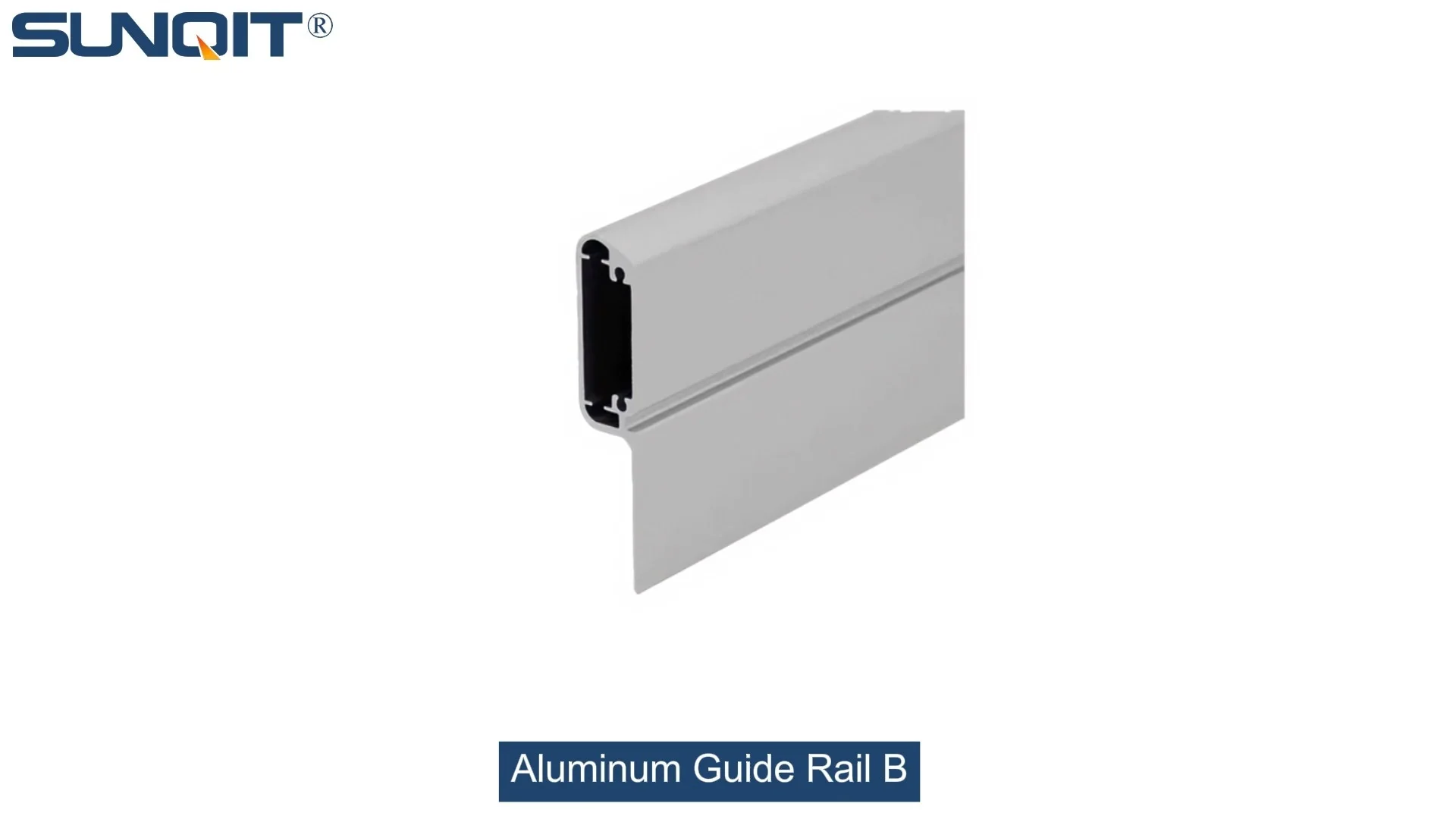
In the fast-paced world of computer peripheral manufacturing, where every keystroke, click, and print command starts with a meticulously assembled product, the backbone of efficient production lies in the unseen heroes of the assembly line—components that quietly ensure precision, speed, and reliability. Think about the sleek keyboards that glide under our fingers, the responsive mice that navigate screens, or the robust printers that bring digital documents to life. Behind each of these lies a manufacturing process that demands seamless material flow, adaptable workflows, and uncompromising accuracy. Yet, for many manufacturers, traditional handling systems often fall short: rigid rails that jam during material transfer, cumbersome adjustments that slow down line reconfigurations, and one-size-fits-all solutions that struggle to keep up with the ever-shrinking tolerances of modern peripherals. This is where Aluminum Guide Rail B steps in—not just as a component, but as a catalyst for transforming how computer peripheral production floors breathe, move, and evolve.
The Heart of Smooth Operations: What Makes Aluminum Guide Rail B Stand Out?
At first glance, a guide rail might seem like a simple piece of hardware, but Aluminum Guide Rail B redefines what a "simple" component can achieve. Crafted from high-grade aluminum extrusion profile, it strikes that rare balance between featherlight agility and industrial-strength durability—qualities that matter deeply on a factory floor where every gram of weight affects maneuverability, and every bump test the limits of longevity. Unlike heavier steel alternatives that fatigue workers during adjustments and corrode over time in busy, humid environments, Aluminum Guide Rail B's corrosion-resistant surface and sleek finish ensure it stays smooth and reliable, even after years of handling plastic casings, circuit boards, and delicate electronic components.
But its true genius lies in its design philosophy, rooted in the principles of lean manufacturing. Every curve, every connection point, and every mounting option is engineered with "adaptability" in mind. Pair it with internal rotatary aluminum joints or aluminum pipe accessories, and you've got a system that can be reconfigured in hours, not days—no welding, no specialized tools, just a few hand-tightened fasteners. Imagine a production line switching from assembling wireless mice to gaming keyboards overnight: Aluminum Guide Rail B bends to the task, adjusting to new conveyor heights, flow rack layouts, and workstation positions without skipping a beat. This isn't just about saving time; it's about empowering teams to experiment, iterate, and optimize—because in lean manufacturing, the ability to "improve as you go" isn't a luxury, it's a necessity.
| Feature | Traditional Steel Rails | Aluminum Guide Rail B |
|---|---|---|
| Weight | Heavy (fatigues workers during adjustments) | Lightweight (easy to handle, reduces physical strain) |
| Corrosion Resistance | Prone to rust in humid environments | Aluminum finish resists corrosion, ideal for electronics manufacturing |
| Reconfigurability | Rigid; requires welding or cutting for changes | Tool-free adjustments with aluminum profile accessories; reconfigures in hours |
| Material Compatibility | Limited to steel components | Seamless integration with lean pipe, aluminum profile, and roller track systems |
Another unsung advantage? Its role in creating a safer, more ergonomic workspace. Smooth, burr-free edges protect both the components gliding along it and the hands of workers who interact with it daily. In high-precision tasks like aligning keyboard membranes or soldering printer circuit boards, even a tiny scratch on a component can render it defective. Aluminum Guide Rail B's ultra-smooth surface ensures materials slide without snags, reducing the risk of micro-damage that leads to costly reworks. And for employees standing at workstations for hours, the rail's quiet operation—no clanging, no jamming—turns a noisy, stressful environment into one where focus thrives. After all, a that sounds like a well-tuned orchestra is one where mistakes are fewer, and morale is higher.
Beyond the Rail: How Aluminum Guide Rail B Powers a Lean Ecosystem
A single component can't revolutionize a production line on its own—but Aluminum Guide Rail B isn't alone. It's part of a larger lean system where every piece plays in harmony, turning individual strengths into collective efficiency. Take flow rack systems, for example: these gravity-fed storage units are the workhorses of material handling, ensuring components are always within arm's reach of assemblers. When Aluminum Guide Rail B is integrated into flow racks, it transforms them from static shelves into dynamic feeding stations. The rail's consistent glide ensures that plastic keyboard frames or mouse scroll wheels move evenly, preventing jams that once disrupted workflow. Workers no longer waste time dislodging stuck components; instead, materials flow like water, matching the rhythm of their tasks.
Then there are conveyors—the arteries of the production line. Whether it's a belt conveyor moving partially assembled printers or a roller conveyor transporting circuit boards, Aluminum Guide Rail B acts as the "traffic cop" that keeps everything on track. Its precision alignment ensures that items don't veer off course, reducing the need for constant monitoring and manual corrections. In one computer peripheral plant we worked with, integrating Aluminum Guide Rail B into their roller conveyors cut down on "line stops" due to misaligned components by 62% in the first quarter alone. That's not just numbers on a spreadsheet; that's hours of uninterrupted work, fewer frustrated sighs from operators, and more products rolling off the line on schedule.
And let's not forget the unsung hero of lean setups: the lean pipe workbench. When paired with Aluminum Guide Rail B, these workstations become hubs of adaptability. Imagine an assembler working on a high-end gaming mouse—they need their tools, parts bins, and testing equipment within a comfortable reach. Aluminum Guide Rail B, mounted along the edge of the lean pipe workbench, can hold adjustable tool hangers, document holders, or even mini flow racks for tiny screws and sensors. When the next product comes in, the rail adapts: tool positions shift, parts bins reorder, and the workstation transforms without disrupting the bench's core structure. It's lean manufacturing in action—making the most of every inch of space and every second of time.
Perhaps the most powerful synergy, though, is with custom lean solutions. Computer peripheral manufacturing isn't a one-size-fits-all industry: a company making budget-friendly office mice has different needs than one crafting industrial-grade barcode scanners. Aluminum Guide Rail B thrives in these bespoke environments. For a client producing compact wireless keyboards, we designed a U-shaped assembly line where Aluminum Guide Rail B curved gently around workstations, guiding components from flow racks to conveyor to lean pipe workbench with minimal manual handling. For another client building large-format printers, we integrated the rail with heavy-duty roller track systems, ensuring that bulky printer frames moved smoothly despite their weight. In both cases, the rail wasn't just a component—it was the flexible backbone that made the custom solution possible, proving that "lean" doesn't mean "one-size-fits-all" but "tailored to what works best for you."

From Blueprint to Bench: Real-World Impact in Computer Peripheral Plants
Numbers tell part of the story, but it's the day-to-day transformations that truly bring Aluminum Guide Rail B's value to life. Let's step into the shoes of a production supervisor at a mid-sized computer peripheral manufacturer, let's call them "TechFlow Peripherals," which specializes in ergonomic keyboards and mice. A year ago, their assembly line for wireless keyboards was struggling: material flow was erratic, with plastic keycaps often getting stuck in the steel rails of their old flow racks, causing backups. Adjusting the line to accommodate a new keyboard model took two full days of downtime, as workers had to cut and weld steel components. Employee turnover was high, too—operators complained about the constant bending to dislodge jams and the noise from clanging steel rails, which made communication on the floor a hassle.
Then came the switch to Aluminum Guide Rail B, paired with lean pipe workbenches and updated flow racks. The first change? Silence. Well, not silence, but the kind of background hum that feels productive rather than chaotic. The smooth glide of keycaps along the aluminum rails eliminated the "clatter" of old, and jams became a rarity. "It's like the line finally learned to breathe," one operator joked. The second change? Speed. When TechFlow launched their new compact keyboard line, reconfiguring the flow racks and conveyors took just four hours—down from two days. Workers adjusted the rails themselves using simple hand tools, no welders or engineers needed. Productivity spiked by 35% in the first month, and defect rates dropped by 28% because components weren't getting scratched or misaligned during transfer.
But the most unexpected win? Morale. "People don't dread coming to work anymore," the supervisor noted. "They're not spending half their shift fixing problems—they're assembling keyboards, and they're good at it." Absenteeism fell, and even new hires caught on faster because the intuitive rail system made training easier. It's a reminder that lean manufacturing isn't just about cutting costs or boosting output; it's about respecting the people who make the products. Aluminum Guide Rail B didn't just make the line more efficient—it made it a better place to work.
Another case comes from a manufacturer of industrial printers, where precision is non-negotiable. Their challenge? Printer cartridges, with their tiny nozzles and sensitive ink channels, needed to move through the assembly line with zero vibration or misalignment. Traditional steel rails, with their slight imperfections, were causing micro-shifts that led to defective cartridges. Enter Aluminum Guide Rail B, mounted on anti-slip adjustable leveling feet to ensure absolute stability. Paired with ESD workstation surfaces to protect against static damage, the rail system became a "precision highway" for cartridges. The result? A 99.7% first-pass yield rate, up from 92%—a difference that saved the company thousands in rework costs and earned them a reputation for reliability with major office supply brands.

More Than a Product: A Lean Solution for Tomorrow's Manufacturing
In a world where computer peripherals evolve faster than ever—thinner designs, smarter features, shorter product cycles—manufacturers can't afford to be tied to rigid, outdated systems. Aluminum Guide Rail B isn't just a rail; it's a commitment to the future of manufacturing. It embodies the "reusable, sustainable improvement" ethos that defines lean solution thinking: when your production line can adapt in hours, you don't just keep up with change—you stay ahead of it.
This adaptability also translates to sustainability, a growing priority for manufacturers and consumers alike. Unlike steel rails that end up in landfills when they're no longer needed, Aluminum Guide Rail B and its aluminum pipe accessories are 100% recyclable and can be repurposed for new projects. A rail used in a mouse assembly line today might find a second life in a conveyor system for smart home devices tomorrow. It's manufacturing with a conscience—reducing waste, lowering carbon footprints, and proving that efficiency and sustainability can go hand in hand.
And let's talk about scalability. Startups and small manufacturers often worry that investing in "premium" components will stretch their budgets thin, but Aluminum Guide Rail B grows with you. Begin with a single lean pipe workbench and a few flow racks, then expand to a full conveyor system as orders pick up. Its modular design means you never pay for more than you need, and you never have to replace entire systems when you grow—you just add on. For a young company making custom mechanical keyboards, this flexibility can be the difference between staying agile and drowning in upfront costs.

The Bottom Line: Precision That Powers Progress
At the end of the day, computer peripheral manufacturing is about more than building gadgets—it's about connecting people to technology, one precise component at a time. Aluminum Guide Rail B may not be the star of the product launch or the feature that gets customers excited, but it's the quiet force that ensures those products are built right, built fast, and built with pride. It's the rail that carries not just components, but the hopes of manufacturers striving to innovate, adapt, and thrive in a competitive market.
So, to the production supervisors, the engineers, the operators, and the dreamers behind the next generation of computer peripherals: when you're looking for a handling solution that can keep up with your ambition, remember Aluminum Guide Rail B. It's not just a piece of aluminum—it's a partner in progress, a tool for transformation, and a reminder that in manufacturing, the smallest components often make the biggest difference.
In the end, lean manufacturing isn't about perfection; it's about progress. And with Aluminum Guide Rail B, progress has never been smoother.