- Company Articles
- Products and Technology
- Product knowledge
- Aluminum Gusset ALP 4040 vs Steel Brackets: Weight, Corrosion, and Cost Analysis

Aluminum Gusset ALP 4040 vs Steel Brackets: Weight, Corrosion, and Cost Analysis
Related Product
Gusset ALP 4040
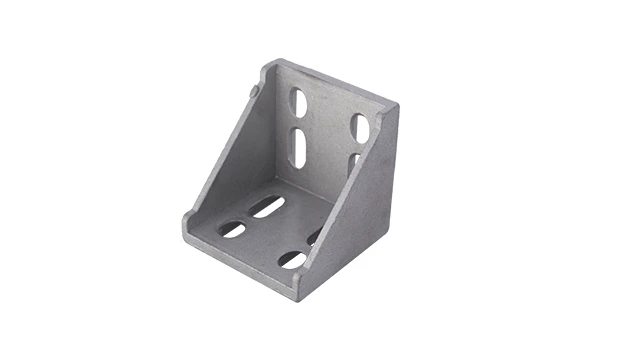
The 4040 bracket/Gusset is an external fastening method that creates a 90 degree connection. 4040 means this size is used for 40 series aluminum profile with a quick connection by bolt and nut. It is a lightweight bracket that requires no machining servic
Introduction: Why the Right Bracket Matters More Than You Think
Let's start with a scenario we've all seen (or maybe even dealt with): Imagine a busy warehouse where workers are rushing to assemble a new material rack. They're using steel brackets—heavy, clunky things that take two people to hold in place while someone else fumbles with bolts. An hour later, the rack is up, but already there are scratches on the floor from dragging those brackets around. A few months down the line, you notice rust forming at the joints, and when you need to reconfigure the rack for a new batch of products, the brackets are so stiff they might as well be welded shut. Sound familiar?
Brackets might seem like components in the grand scheme of industrial setups—workbenches, material racks, assembly lines—but they're the unsung heroes (or villains) that keep everything stable. Choose the wrong one, and you're looking at slower installation, higher maintenance costs, safety risks, or even production delays. That's why today, we're diving deep into two popular options: the aluminum gusset ALP 4040 (a star in the world of aluminum profile accessories ) and traditional steel brackets. We'll break down their weight, corrosion resistance, and cost to help you decide which one deserves a spot in your next project—whether it's a sleek workbench or a heavy-duty material rack B (3 row and 3 floor) .
This isn't just a metal vs. metal debate. It's about fit: What works for a lightweight assembly line might be a disaster for a warehouse storing steel coils, and vice versa. By the end of this article, you'll know exactly when to reach for aluminum and when steel might still be the better pick.
What Are Aluminum Gusset ALP 4040 Brackets, Anyway?
First things first: Let's demystify the name. "ALP 4040" isn't just a random code—it tells you the size. These gussets are designed to pair with 40x40mm aluminum profiles, the workhorses of modular industrial setups. Think of aluminum profiles as the "bones" of structures like workbenches or machine guards, and gussets as the "ligaments" that reinforce the joints where two profiles meet at an angle (usually 90 degrees).
Made from lightweight aluminum alloy (often 6061 or 6063, if you're into specs), these brackets are part of the broader family of aluminum profile accessories . They're typically T-slot compatible, meaning they slide into the grooves of aluminum profiles and lock in place with bolts or screws—no welding required. That's a big deal if you've ever tried to weld steel brackets in a tight space (spoiler: it's messy and time-consuming).
What makes ALP 4040 gussets stand out? They're engineered for precision. The holes are pre-drilled to align perfectly with 40x40 profiles, so you're not guessing where to drill. They're also surprisingly strong for their weight—aluminum alloys can handle significant loads when designed right. And let's not forget aesthetics: Their clean, silver finish fits right in with modern, sleek workspaces, which is why you'll often see them in tech labs or automated production lines.

Steel Brackets: The Old Reliable (But Is It Still the Best?)
Steel brackets are the veterans here. For decades, they've been the go-to for anyone building something that needs to "just hold." Made from carbon steel (and sometimes stainless steel, though that's a pricier subset), they're thick, heavy, and built to withstand brute force. If you've ever assembled a shelving unit from a hardware store, chances are you've used a basic steel angle bracket—simple L-shapes with holes for screws, no fancy T-slots or lightweight design.
Traditional steel brackets come in all shapes: angle brackets, corner braces, flat brackets, you name it. They're often coated with paint, zinc (galvanized), or powder to fight rust, but let's be real—over time, those coatings chip. And when they do, the steel underneath starts to corrode. Still, there's a reason they've stuck around: raw strength. A steel bracket of the same size as an aluminum one will almost always handle more weight. That's why you'll find them in construction, heavy machinery, or anywhere "overbuilt" is a compliment.
But here's the catch: all that strength comes with a trade-off. Steel is dense, so even small brackets feel heavy. Installation usually requires more tools—drills, maybe even a wrench for bolts that need to be cranked tight. And if you ever need to move or reconfigure a structure built with steel brackets? Good luck. They're not designed for quick adjustments, which can be a problem in dynamic environments where layouts change every few months.

Weight Analysis: Why "Lightweight" Isn't Just a Buzzword
Let's talk numbers—because when it comes to weight, the difference between aluminum and steel is night and day. Aluminum has a density of about 2.7 grams per cubic centimeter (g/cm³), while steel clocks in at a whopping 7.8 g/cm³. That means, for a bracket of the same size and shape, steel will weigh roughly 2.9 times more than aluminum. Let that sink in: a 500g steel bracket would be just 170g in aluminum.
Why does this matter? Let's break it down:
- Easier Installation: A single worker can carry a handful of aluminum gusset ALP 4040 brackets up a ladder or across the warehouse without straining their back. Steel brackets? You might need a second person, or even a dolly, just to move a small box. On a big project—say, assembling 20 workbenches—those saved minutes add up to hours of labor.
- Reduced Structural Load: Lighter brackets mean lighter overall structures. If you're building a workbench that needs to be mobile (even if it doesn't have casters, sometimes you need to shift it a few inches), aluminum brackets keep the total weight down. For material rack B (3 row and 3 floor) , which might hold hundreds of pounds of inventory, every pound saved on brackets reduces stress on the floor and the rack's frame.
- Shipping Savings: If you're ordering brackets from a supplier, aluminum's lower weight cuts down on shipping costs. A pallet of steel brackets could cost twice as much to ship as the same quantity of aluminum ones—money that could go toward other tools or upgrades.
Of course, there's a limit. If you're building a bracket to hold a 1-ton machine, aluminum might not cut it—steel's higher strength-to-weight ratio (yes, steel is stronger per pound, even if it's heavier) makes it better for extreme loads. But for most industrial applications—workbenches, light to medium-duty material racks, assembly line frames—aluminum's weight advantage is a game-changer.
Corrosion Resistance: When "Rust-Proof" Saves You Headaches
Let's get real about rust. It's not just unsightly—it's a structural threat. A rusted bracket weakens over time, putting whatever it's holding at risk of collapse. So how do aluminum gusset ALP 4040 and steel brackets stack up here?
Aluminum is a corrosion-resistant rockstar, and it's all thanks to science. When aluminum reacts with oxygen, it forms a thin, invisible layer of aluminum oxide (Al₂O₃) on its surface. This layer acts like a shield, preventing further oxidation. Even if you scratch the surface, the oxide layer reforms almost instantly. That means, in most environments—humid warehouses, factories with occasional spills, or even outdoor setups—aluminum gussets will stay shiny and strong for years with zero maintenance.
Steel, on the other hand, is a rust magnet. Uncoated steel will start rusting within days if exposed to moisture. Galvanized steel (zinc-coated) buys you time—maybe 5-10 years in dry conditions—but the zinc eventually wears off, especially if the bracket gets scratched. Powder-coated steel looks nice initially, but chips in the coating become entry points for rust. And let's not forget: even "stainless steel" (from the stainless steel pipe series ) isn't fully rust-proof—it's just more resistant, and it costs a pretty penny compared to regular steel.
Consider this scenario: You're using steel brackets on a material rack B (3 row and 3 floor) in a warehouse near the coast, where salt air is in the breeze. Within a year, you'll notice orange spots on the brackets. Within three years, you'll need to replace them. Aluminum gusset ALP 4040 brackets in the same environment? They'll look brand-new, no repainting or replacements needed. That's not just convenience—that's long-term savings.
Cost Analysis: Initial Price vs. Long-Term Value
Here's the part everyone cares about: cost. Let's start with the upfront price tag. Aluminum gusset ALP 4040 brackets are almost always more expensive per unit than basic steel brackets. Depending on the supplier and quantity, you might pay $3-5 for an aluminum gusset, versus $1-2 for a similar steel bracket. At first glance, steel looks like the budget-friendly choice.
But here's the mistake: focusing only on initial cost. Let's build a comparison table to see the full picture, assuming we're buying 100 brackets for a project (like assembling 10 workbenches and 5 material racks):
| Cost Factor | Aluminum Gusset ALP 4040 | Steel Brackets |
|---|---|---|
| Initial Bracket Cost (100 units) | $400 ($4 each) | $150 ($1.50 each) |
| Shipping Cost | $50 (lighter weight) | $150 (heavier weight) |
| Installation Labor (2 workers, 8 hours) | $640 ($40/hour x 8 hours) | $960 ($40/hour x 12 hours—slower installation) |
| Maintenance (5-year lifespan) | $0 (no rust, no repainting) | $300 (repainting every 2 years, replacement at year 5) |
| Total 5-Year Cost | $1,090 | $1,560 |
Surprised? Over five years, aluminum actually saves you $470. That's because steel's lower initial cost is eaten up by higher shipping, slower installation, and maintenance. And if your project needs brackets that last longer than five years? The gap widens even more.
Another angle: reusability. Aluminum gusset ALP 4040 brackets are easy to uninstall and reuse in new setups—their T-slot design means no bent bolts or stripped threads. Steel brackets, once you take them apart, are often bent or rusted beyond reuse. So if you're someone who likes to reconfigure your workspace (hello, lean system enthusiasts!), aluminum gives you flexibility that steel can't match.
Real-World Applications: How They Perform on the Job
Enough theory—let's look at how these brackets hold up in real scenarios. We'll focus on two common setups: a workbench and material rack B (3 row and 3 floor) .
Application 1: Workbench Assembly
Workbenches are the heart of any workshop or assembly line. They need to be sturdy enough to support tools, parts, and workers, but also lightweight enough to move if needed (even if it's just once a year). Let's say we're building a standard workbench with a 120cm x 60cm top, using 40x40 aluminum profiles for the frame.
Using aluminum gusset ALP 4040 brackets: Assembly takes two workers about 45 minutes. The brackets slide into the T-slots easily, and since they're light, there's no struggling to hold them in place while tightening bolts. The finished workbench weighs around 45kg—light enough for two people to shift across the floor. After a year of daily use, the brackets still look new, with no signs of rust or wear.
Using steel brackets: Assembly takes three workers an hour and a half. The steel brackets are heavy, so one person has to hold the bracket, another the profile, and a third the drill. The finished workbench weighs 65kg—so heavy that moving it requires a pallet jack. After a year, there's rust forming at the joints where the paint chipped off, and the bolts are starting to seize up, making it hard to adjust the shelf height.
Application 2: Material Rack B (3 Row and 3 Floor)
Material rack B is a workhorse in warehouses—three rows, three floors, designed to hold boxes, bins, or small parts. It needs to support up to 50kg per shelf, and resist corrosion from spills or humidity.
Using aluminum gusset ALP 4040 brackets: The rack is assembled in a morning by two workers. The lightweight brackets make it easy to align the shelves, and the T-slot connection means we can add extra supports later if needed. After three years in a humid warehouse, the brackets are rust-free, and the rack is still as stable as day one.
Using steel brackets: Assembly takes all day, thanks to the heavy brackets. We have to pre-drill holes in the steel profiles (aluminum profiles come pre-slotted), which adds extra time. After three years, rust has weakened some of the joints, so we're limited to 30kg per shelf to avoid collapse. We'll need to replace the brackets next year, which means taking the rack apart, losing access to inventory for a day, and spending more on labor and parts.
Conclusion: Aluminum Gusset ALP 4040 for the Future, Steel for the Short Term
So, which bracket should you choose? It depends on your priorities. If you need a quick, cheap fix for a temporary structure that won't see much moisture or movement, steel brackets might work. But for almost every other scenario—especially if you care about long-term savings, ease of installation, or a lean system that adapts to change—aluminum gusset ALP 4040 brackets are the clear winner.
They're lighter, more corrosion-resistant, and more reusable than steel. Yes, they cost more upfront, but their lower maintenance, faster installation, and longer lifespan make them the smarter investment. Whether you're building a workbench , a material rack B (3 row and 3 floor) , or any modular structure, aluminum gussets prove that sometimes, spending a little more now saves you a lot later.
At the end of the day, brackets might be small, but their impact is huge. Choose wisely—and your future self (and your budget) will thank you.