- Company Articles
- Products and Technology
- Product knowledge
- Aluminum Honeycomb Panel Structure: Understanding the Core Design & Benefits

Aluminum Honeycomb Panel Structure: Understanding the Core Design & Benefits
Related Product
Aluminum Honeycomb Panel
Aluminum honeycomb panel used as table top, side wall, it is connected one pcs by one pcs from the side slot to make a full pieces.This panel width 105mm, 55mm, 35mm are optional for slection.
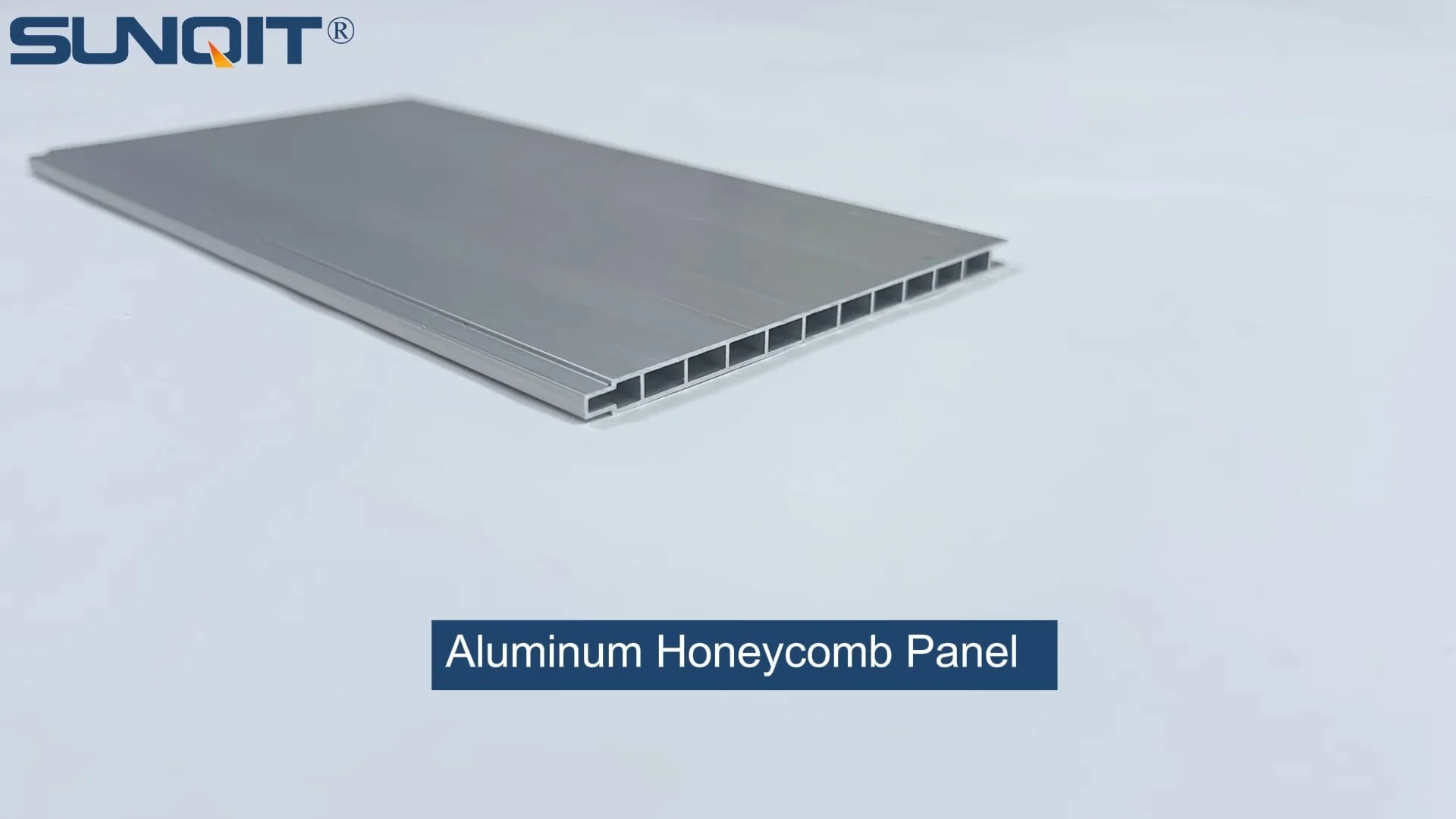
In the world of manufacturing and design, finding the perfect balance between strength, weight, and functionality is a constant challenge. Whether you're building a workbench for a busy factory floor, designing a material rack for a lean production line, or creating components for aerospace applications, the materials you choose can make or break the efficiency, durability, and cost-effectiveness of the end product. Enter aluminum honeycomb panels—a revolutionary material that has transformed industries by offering an unbeatable combination of lightness and strength. But what exactly are these panels, and what makes their design so special? Let's dive in.
What Are Aluminum Honeycomb Panels? A Closer Look
At first glance, an aluminum honeycomb panel might look like any other flat sheet of material. But beneath its smooth surface lies a structure inspired by one of nature's most efficient designs: the beehive. Just as a beehive's hexagonal cells provide maximum strength with minimal material, aluminum honeycomb panels feature a core of hexagonal cells sandwiched between two thin, rigid face sheets—typically made of aluminum. This unique structure is what gives the panels their exceptional properties, making them a favorite in industries ranging from automotive and aerospace to construction and manufacturing.
Unlike solid sheets of metal or wood, which rely on thickness alone for strength, aluminum honeycomb panels leverage the geometric efficiency of the honeycomb core to distribute weight and stress evenly across the entire panel. This means they can be much lighter than solid alternatives while still offering comparable, if not superior, strength. For example, a honeycomb panel with a 10mm thickness might weigh half as much as a solid aluminum sheet of the same thickness, yet support just as much weight—if not more. This game-changing characteristic has made them indispensable in applications where every kilogram counts, from portable workbenches to aircraft interiors.
The Core Design: How Honeycomb Structures Revolutionize Material Science
The Honeycomb Core: Nature's Blueprint, Engineered for Performance
The heart of an aluminum honeycomb panel is its core—the intricate network of hexagonal cells that gives the material its name. This core is typically made from thin strips of aluminum, which are cut, shaped, and bonded together to form the repeating hexagonal pattern. The choice of aluminum for the core is no accident: it's lightweight, corrosion-resistant, and easy to form into complex shapes, making it ideal for creating the precise, uniform cells needed for optimal performance.
But why hexagons? The answer lies in geometry. Hexagonal cells are nature's solution to packing the most strength into the least space. Each hexagon shares its sides with adjacent cells, creating a rigid lattice that can withstand compression, tension, and shear forces from multiple directions. This structure is so efficient that engineers have adopted it in everything from skyscraper designs to bicycle frames. In aluminum honeycomb panels, the hexagonal core acts as a series of tiny pillars, supporting the face sheets and preventing them from buckling or bending under load. The result is a material that's not just strong, but stiff —meaning it resists deformation even when subjected to heavy or uneven weights.
The size of the cells (measured by their side length, or "cell size") and the thickness of the aluminum strips (the "core thickness") can be adjusted to meet specific needs. For example, a panel designed for heavy-duty industrial workbenches might have smaller cells and thicker core material to maximize load capacity, while one intended for lightweight aerospace applications could use larger cells and thinner strips to reduce weight further. This versatility is one of the key advantages of aluminum honeycomb panels—they can be tailored to fit almost any requirement.
Face Sheets: The Protective Outer Layer
While the honeycomb core provides the panel's structural backbone, the face sheets are the unsung heroes that protect the core and transfer loads to it. These sheets are typically made from thin aluminum alloy sheets, chosen for their strength, durability, and ability to bond securely to the core. Depending on the application, the face sheets can be anodized, painted, or coated with specialized finishes (like ESD coatings for electronics manufacturing workbenches) to enhance their performance.
The thickness of the face sheets varies depending on the panel's intended use. Thicker sheets offer greater impact resistance and rigidity, making them suitable for high-stress applications, while thinner sheets reduce weight for applications where lightness is critical. In most cases, the face sheets are bonded to the core using high-strength adhesives that can withstand extreme temperatures, humidity, and mechanical stress. This bond is crucial: if the face sheet separates from the core, the panel's strength and stiffness plummet. Modern bonding techniques, such as autoclave curing (using heat and pressure to set the adhesive), ensure a uniform, reliable bond across the entire surface of the panel.
Bonding Technology: The Glue That Holds It All Together
The adhesive used to bond the face sheets to the honeycomb core is more than just glue—it's a critical component of the panel's performance. Early honeycomb panels often used epoxy resins, which are strong and durable but can be brittle. Today, manufacturers use advanced structural adhesives, such as modified epoxies, polyurethanes, and phenolic resins, which offer better flexibility, temperature resistance, and impact strength. These adhesives are applied in a thin, uniform layer to both the face sheets and the core, ensuring that every cell is fully bonded and no air pockets are left behind.
The bonding process itself is a operation. After the adhesive is applied, the panel is placed in a press or autoclave, where heat and pressure are applied to cure the adhesive. This curing process ensures that the bond reaches its maximum strength, creating a single, integrated structure where the face sheets and core act as one. The result is a panel that can withstand not just static loads (like the weight of tools on a workbench) but also dynamic loads (like vibrations in a moving vehicle or impacts from dropped objects).
Manufacturing Process: From Aluminum Extrusion Profile to Finished Panel
Creating an aluminum honeycomb panel is a multi-step process that combines precision engineering with advanced materials science. It all starts with the production of the honeycomb core, which often begins with aluminum extrusion profile. Extrusion is a process where aluminum alloy is forced through a die to create long, uniform shapes—like the strips used to form the honeycomb cells. These strips are then cut to length, and a series of slits are made along their edges. When the strips are pulled apart (or "expanded"), the slits open up to form the hexagonal cells, creating the honeycomb structure.
Once the core is formed, it's trimmed to the desired size and cleaned to remove any debris or oils that might interfere with bonding. The face sheets are also prepared: cut to size, cleaned, and (if needed) coated with primers or finishes. The adhesive is then applied to both the core and the face sheets, and the three layers are carefully aligned and stacked. The assembly is then placed in a press, where heat (typically between 80°C and 180°C) and pressure (up to several hundred psi) are applied for a set period to cure the adhesive. After curing, the panel is trimmed to its final dimensions, and any additional finishing (like edge sealing or surface coating) is applied.
This manufacturing process allows for a high degree of customization. Panels can be made in virtually any size or shape, from small workbench tops to large aerospace panels. They can also be combined with other materials, such as fiberglass or carbon fiber face sheets, for specialized applications. However, the use of aluminum extrusion profile for the core ensures that the panels remain lightweight, recyclable, and cost-effective—key factors in their widespread adoption.

Key Benefits of Aluminum Honeycomb Panels: Why They Stand Out
Lightweight Yet Remarkably Strong: The Strength-to-Weight Advantage
Perhaps the most celebrated benefit of aluminum honeycomb panels is their exceptional strength-to-weight ratio. This term refers to how much weight a material can support relative to its own weight, and aluminum honeycomb panels excel here. For example, a typical aluminum honeycomb panel with a core thickness of 20mm and 0.5mm face sheets might weigh around 8-10 kg/m², yet have a flexural strength (resistance to bending) of 50-80 MPa. In comparison, a solid aluminum sheet of the same thickness would weigh around 50 kg/m² but offer similar flexural strength. That's a weight reduction of nearly 80% while maintaining comparable strength—a game-changer for applications where weight is a critical factor.
This advantage translates directly to real-world benefits. In manufacturing, a lighter workbench is easier to move, reposition, or install, reducing the risk of worker injury and improving workflow flexibility. In lean systems, lightweight material racks and transport trolleys require less effort to maneuver, speeding up production and reducing fatigue. In aerospace, every kilogram saved translates to lower fuel consumption and higher payload capacity. It's no wonder that industries worldwide are turning to aluminum honeycomb panels to cut weight without compromising on performance.
Durability That Withstands the Test of Time
Aluminum is naturally resistant to corrosion, thanks to the thin layer of aluminum oxide that forms on its surface when exposed to air. This oxide layer acts as a protective barrier, preventing further oxidation and rust. When combined with the honeycomb structure, this resistance to corrosion makes aluminum honeycomb panels highly durable, even in harsh environments. Whether they're used in humid factories, outdoor construction sites, or coastal areas with saltwater exposure, these panels hold up where other materials (like steel or wood) might rust, rot, or degrade.
Additionally, the rigid structure of the honeycomb panel resists warping, twisting, and bending over time. Unlike solid wood panels, which can swell or shrink with changes in humidity, or plastic sheets that can sag under heat, aluminum honeycomb panels maintain their flatness and dimensional stability. This makes them ideal for precision applications, such as ESD workstations where a flat, stable surface is essential for assembling delicate electronics, or material racks where consistent dimensions ensure smooth material flow in a lean system.
Thermal and Acoustic Insulation: Beyond Structural Use
While aluminum is a good conductor of heat, the air pockets within the honeycomb core act as natural insulators, reducing the panel's overall thermal conductivity. This means aluminum honeycomb panels can help regulate temperature, keeping heat in (or out) more effectively than solid aluminum sheets. For example, a workbench with a honeycomb panel top might stay cooler in a hot factory or warmer in a cold warehouse, improving worker comfort and reducing the risk of heat-related damage to sensitive materials.
Similarly, the honeycomb structure is excellent at dampening sound. The air pockets in the core trap sound waves, reducing noise transmission through the panel. This acoustic insulation makes aluminum honeycomb panels a popular choice for manufacturing facilities, where reducing noise levels can improve worker productivity and safety. Imagine a busy production line where material racks and workbenches made from honeycomb panels help muffle the clatter of tools and machinery—creating a quieter, more pleasant workspace.
Flatness and Stability: Critical for Precision Applications
In industries like electronics manufacturing, aerospace, and medical device production, even the smallest deviation from flatness can lead to defects, errors, or equipment failure. Aluminum honeycomb panels excel here, thanks to their rigid structure and uniform bonding. The honeycomb core distributes weight evenly across the panel, preventing sagging or bowing, while the face sheets ensure a smooth, flat surface with minimal tolerance variation. This level of flatness is hard to achieve with other lightweight materials, making honeycomb panels the go-to choice for precision workbenches, inspection tables, and assembly surfaces.
Eco-Friendly and Sustainable: A Green Choice for Modern Industries
In an era where sustainability is increasingly important, aluminum honeycomb panels offer significant environmental benefits. Aluminum is one of the most recyclable materials on the planet, with nearly 75% of all aluminum ever produced still in use today. Honeycomb panels, which use less aluminum than solid sheets, require less energy to produce and transport, further reducing their carbon footprint. Additionally, their long lifespan (often decades) means fewer replacements, cutting down on waste.
Many manufacturers also use water-based adhesives and eco-friendly finishes in the production process, minimizing the use of harmful chemicals. For companies looking to reduce their environmental impact while still maintaining high performance, aluminum honeycomb panels are a clear choice.

Applications in Action: Where Aluminum Honeycomb Panels Shine
Workbenches: Building Sturdy, Lightweight Workspaces
One of the most common applications of aluminum honeycomb panels is in workbench construction. A workbench is the heart of any workshop or factory, and its top surface needs to be strong enough to support heavy tools, durable enough to withstand daily use, and flat enough for precision work. Aluminum honeycomb panels check all these boxes—and more. A honeycomb workbench top is lightweight, making the bench easy to move or reconfigure (especially when paired with casters), yet strong enough to support hundreds of kilograms of equipment. Its flat, stable surface is ideal for tasks like assembly, inspection, and testing, while its corrosion resistance ensures it holds up in messy or humid environments.
In electronics manufacturing, for example, ESD workstations (which prevent static electricity from damaging sensitive components) often use aluminum honeycomb panels with ESD coatings. The panel's lightweight design makes it easy to integrate with other ESD components (like grounding straps), while its rigidity ensures that delicate circuit boards are supported evenly during assembly. In automotive repair shops, honeycomb workbenches can withstand the weight of engines and transmissions, yet are light enough to be moved around the shop as needed. And in laboratories, where cleanliness and precision are paramount, the non-porous surface of aluminum honeycomb panels is easy to clean and sanitize, reducing the risk of contamination.
Lean Systems: Streamlining Production with Smart Materials
Lean manufacturing is all about eliminating waste, improving efficiency, and maximizing value. Aluminum honeycomb panels play a key role in lean systems by providing lightweight, modular, and durable components that can be easily adapted to changing production needs. Material racks, transport trolleys, and flow racks made with honeycomb panels are lighter and easier to move than those made with solid steel or wood, reducing the time and effort required to transport materials around the factory floor. This increased mobility allows workers to reconfigure the production line quickly, adapting to changes in demand or product design without major disruptions.
For example, a lean system might use honeycomb panel material racks that can be easily adjusted to hold different sizes of parts, or transport trolleys that are light enough for a single worker to push, even when fully loaded. The panels' durability ensures that these components can withstand the daily wear and tear of a busy factory, while their lightweight design reduces the risk of workplace injuries. Additionally, the modular nature of honeycomb panels (often used with aluminum profiles and accessories) makes it easy to repair or replace damaged parts, extending the lifespan of the system and reducing waste.
Transportation: Reducing Weight, Increasing Efficiency
The transportation industry has long recognized the benefits of aluminum honeycomb panels. In aerospace, every kilogram saved reduces fuel consumption and increases payload capacity, making honeycomb panels a staple in aircraft interiors (seats, floors, walls) and structural components. In automotive manufacturing, honeycomb panels are used in doors, roofs, and trunk lids to reduce weight and improve fuel efficiency, without compromising on safety. Even in marine applications, honeycomb panels are used in boat hulls and decks to reduce weight and improve buoyancy, while their corrosion resistance ensures they hold up in saltwater environments.
Construction and Architecture: Cladding and Interior Design
In construction, aluminum honeycomb panels are used for exterior cladding, interior walls, ceilings, and partitions. Their lightweight design reduces the load on the building's structure, while their durability and weather resistance make them ideal for outdoor use. The panels can be finished with a wide range of colors and textures, allowing architects to create visually striking facades. Internally, honeycomb panels are used for partitions and ceilings, where their acoustic and thermal insulation properties help create comfortable, energy-efficient spaces.
Integrating with Aluminum Profiles: A Match Made in Manufacturing Heaven
Aluminum honeycomb panels rarely work alone—they're often integrated with aluminum profiles to create complete, functional systems. Aluminum profiles (like the 4040 or 3030 series commonly used in industrial applications) are extruded aluminum shapes with T-slots that allow for easy attachment of accessories like brackets, hinges, and connectors. When paired with honeycomb panels, these profiles form the "skeleton" that supports the panels, creating strong, lightweight structures that can be customized to fit any need.
For example, a workbench might consist of aluminum profile legs connected by cross-braces, with an aluminum honeycomb panel top mounted on the frame. The T-slots in the profiles allow for easy installation of the panel (using brackets or clamps), as well as the addition of accessories like tool rails, shelves, or lighting. If the workbench needs to be reconfigured later (to add a shelf or change the height), the modular design makes it simple—just loosen the brackets, adjust the profiles, and reattach the panel. This flexibility is a cornerstone of lean manufacturing, where adaptability is key to efficiency.
Aluminum profile accessories, such as end caps, corner brackets, and hinges, further enhance this integration. End caps protect the ends of the profiles from damage and give the structure a clean, finished look. Corner brackets provide additional strength at joints, ensuring the frame can support the weight of the honeycomb panel and any loads placed on it. Hinges allow for the creation of foldable or adjustable components, like tilt-up workbench extensions or collapsible material racks. Together, aluminum honeycomb panels and aluminum profiles create a system that is greater than the sum of its parts—strong, lightweight, modular, and infinitely customizable.
How Do Aluminum Honeycomb Panels Compare to Other Materials? A Detailed Breakdown
To truly appreciate the benefits of aluminum honeycomb panels, it helps to compare them to other common materials used in similar applications. Let's take a look at how they stack up against solid aluminum sheets, plywood, and MDF (medium-density fiberboard) in key categories:
| Material | Weight (kg/m²) | Tensile Strength (MPa) | Corrosion Resistance | Thermal Conductivity (W/m·K) | Cost (Relative) |
|---|---|---|---|---|---|
| Aluminum Honeycomb Panel | 8-12 | 50-80 | Excellent | 0.3-0.8 | Moderate |
| Solid Aluminum Sheet (3mm) | 8.1 | 90-120 | Excellent | 200-230 | High |
| Plywood (18mm) | 12-18 | 30-50 | Poor (unless treated) | 0.12-0.18 | Low |
| MDF (18mm) | 16-20 | 20-30 | Very Poor | 0.15-0.20 | Low |
As the table shows, aluminum honeycomb panels offer a compelling balance of properties. While solid aluminum sheets have higher tensile strength, they are significantly heavier and have much higher thermal conductivity (making them poor insulators). Plywood and MDF are cheaper but are heavier, less strong, and prone to damage from moisture. Aluminum honeycomb panels, on the other hand, provide excellent strength-to-weight ratio, good corrosion resistance, moderate thermal conductivity (making them better insulators than solid aluminum), and a reasonable cost—making them the ideal choice for many industrial, commercial, and aerospace applications.
Conclusion: The Future of Lightweight, High-Strength Design
Aluminum honeycomb panels are more than just a material—they're a testament to how nature-inspired design and advanced engineering can come together to solve complex challenges. By mimicking the efficiency of the beehive, these panels offer an unbeatable combination of lightness, strength, durability, and versatility that has transformed industries from manufacturing to aerospace.
Whether you're building a workbench for a small workshop, designing a lean production line for a large factory, or creating components for the next generation of aircraft, aluminum honeycomb panels provide the performance, flexibility, and sustainability needed to succeed in today's fast-paced world. And when paired with aluminum profiles and accessories, they become part of a modular system that can adapt and evolve with your needs, ensuring that your investment continues to deliver value for years to come.
As technology advances, we can expect to see even more innovations in honeycomb panel design—from new core materials and cell geometries to improved bonding techniques and surface finishes. But one thing is clear: aluminum honeycomb panels have already proven themselves as a game-changing material, and their impact on the world of design and manufacturing is only just beginning.