- Company Articles
- Products and Technology
- Solution
- Aluminum Honeycomb Panels in 5G Equipment Production: Lightweight & Durable Solutions

Aluminum Honeycomb Panels in 5G Equipment Production: Lightweight & Durable Solutions
Related Product
Aluminum Honeycomb Panel
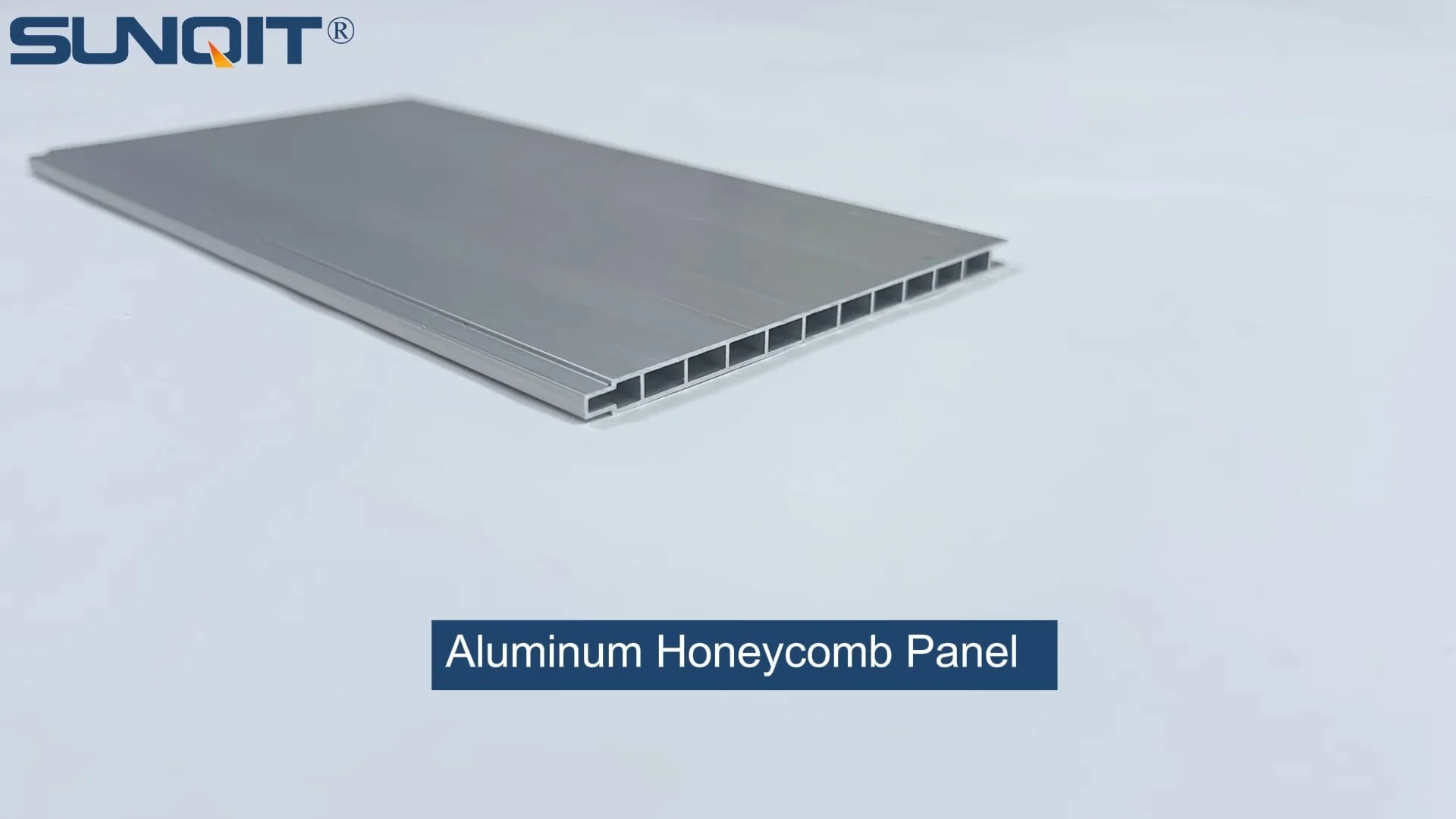
Aluminum honeycomb panel used as table top, side wall, it is connected one pcs by one pcs from the side slot to make a full pieces.This panel width 105mm, 55mm, 35mm are optional for slection.
Walk into any modern 5G equipment manufacturing facility, and you'll notice a quiet revolution unfolding on the production floor. Engineers huddle over blueprints for base stations, assemblers carefully fit components into sleek enclosures, and supervisors monitor real-time data streams to keep workflows on track. Amid this buzz, one material has emerged as a unsung hero: the aluminum honeycomb panel. It's not flashy, but ask any production manager why their lines run smoother, their products last longer, or their teams can handle heavier loads without strain, and chances are they'll point to this unassuming yet game-changing material.
5G technology isn't just about faster internet—it's about powering smart cities, autonomous vehicles, and industrial IoT. But behind the scenes, manufacturing 5G equipment comes with unique challenges. Base stations need to be lightweight enough for rooftop installations yet durable enough to withstand harsh weather. Server racks must dissipate heat efficiently while supporting dense electronics. Workbenches on the factory floor need to be stable for precision assembly, yet flexible enough to adapt as production lines evolve. This is where aluminum honeycomb panels step in, bridging the gap between conflicting demands with a blend of strength, lightness, and versatility that traditional materials simply can't match.
The 5G Production Puzzle: Why Traditional Materials Fall Short
Let's start with the basics: 5G equipment is bulky, complex, and unforgiving. A single base station enclosure, for example, might house multiple transceivers, power supplies, and cooling systems—all packed into a space that needs to be transported, lifted, and installed with minimal hassle. For years, manufacturers relied on solid steel or aluminum sheets for these enclosures. Steel is strong, but it's heavy; a small enclosure could weigh 50+ kg, making on-site installation a two-person job at best. Aluminum is lighter, but solid aluminum sheets sacrifice rigidity—bend too easily during transport, leading to costly rework.
Then there are the workbenches and material racks that form the backbone of the production line. Traditional wooden workbenches warp over time, especially in humid factory environments, throwing off assembly precision. Steel workbenches, while stable, are cold to the touch and prone to rust if not properly treated—small issues that add up to big frustrations for workers who spend 8+ hours a day at their stations. And when production needs change? Reconfiguring a steel rack or workbench often means calling in welders or cutting new parts, grinding workflows to a halt.
Even plastic composites, once hailed as a lightweight alternative, have their limits. They lack the heat resistance needed for 5G components that generate significant thermal energy, and they can't match the load-bearing capacity required for heavy server assemblies. For a industry that thrives on innovation, sticking with these materials felt like trying to build a rocket with a wrench—functional, but far from optimal.
Meet Maria, a production supervisor at a mid-sized 5G equipment manufacturer: "We used to build our test workbenches with solid steel tops. They were rock-solid, but moving them? Nightmare. If we needed to shift a line for a new product run, we'd need a forklift and two guys just to reposition one bench. And don't get me started on the weight of the enclosures—our install teams were complaining about back pain. We knew we needed something different, but we didn't want to sacrifice the stability our assemblers rely on."
Aluminum Honeycomb Panels: The "Why" Behind the Hype
Aluminum honeycomb panels aren't new—they've been used in aerospace and automotive industries for decades—but their adoption in 5G manufacturing is a testament to how well they solve the specific pain points of this sector. So, what makes them special? Let's break it down.
At first glance, an aluminum honeycomb panel looks like a sandwich: two thin aluminum sheets (the "skins") bonded to a hexagonal core (the "honeycomb"). This structure is deceptively simple, but it's engineered for maximum efficiency. The honeycomb core, typically made from aluminum foil or thin aluminum strips, distributes weight evenly across the panel, while the skins handle tension and compression. The result? A material that's up to 70% lighter than solid aluminum but just as strong—sometimes stronger, thanks to that clever core design.
For 5G equipment, this translates to immediate wins. Take base station enclosures: swapping solid steel for aluminum honeycomb panels can cut weight by 40-50%, making transport and installation a one-person job. "We recently switched our enclosure tops to honeycomb panels," says Raj, a design engineer at a telecom hardware firm. "The first time our install team lifted one, they thought we'd forgotten to add the internal components. Now, they can carry two enclosures at once instead of one—productivity doubled overnight."
But it's not just about weight. The honeycomb structure also excels at dampening vibrations, a critical feature for 5G equipment that relies on precise calibration. When a server rack is mounted on a honeycomb panel workbench, the core absorbs the subtle vibrations from nearby machinery, reducing the risk of misalignment during testing. And because the panels are made from aluminum—a material known for its thermal conductivity—they help dissipate heat from electronics, reducing the load on cooling systems. For high-density 5G servers, that means fewer overheating issues and longer component lifespans.
Durability is another standout feature. Unlike wood, aluminum honeycomb panels don't warp or rot in humid conditions. Unlike plastic, they won't crack under heavy loads or degrade when exposed to UV light. And because the aluminum skins are often anodized or coated, they resist scratches and corrosion—important for equipment that might spend years outdoors or in industrial settings. "We did a 6-month durability test with our old steel enclosures vs. the new honeycomb ones," Maria recalls. "The steel ones had rust spots; the honeycomb panels? Still looked brand new. Our warranty claims dropped by 30% in the first quarter alone."

From Raw Material to Finished Product: How Aluminum Honeycomb Panels Are Made
To truly appreciate aluminum honeycomb panels, it helps to understand how they're manufactured—especially since their quality depends heavily on precision. The process starts with the aluminum extrusion profile, a key component in shaping the honeycomb core and skins.
Aluminum extrusion is the process of forcing heated aluminum through a die to create specific shapes—think of it like squeezing toothpaste through a tube, but with metal. For honeycomb panels, the skins are often extruded as thin, flat sheets, while the core material might start as extruded aluminum strips that are later formed into hexagons. This extrusion step is critical because it ensures the aluminum is uniform in thickness and strength—no weak spots, no inconsistencies.
Once the skins and core are ready, they're bonded together using high-strength adhesives (often epoxy resins) in a process called lamination. The panels are then cured under heat and pressure to ensure a tight bond. Some manufacturers add extra layers, like ESD (electrostatic discharge) coatings for workbenches or fire-retardant films for enclosures, making the panels even more versatile.
What's impressive is how customizable this process is. Need a panel that's extra thin for a compact server rack? Adjust the skin thickness. Require a specific color to match your brand? Anodize the skins. Want to integrate cable management channels? Embed them during the extrusion phase. "We had a client who needed workbenches with built-in tool rails," says Priya, a sales engineer at an aluminum profile supplier. "We modified the honeycomb panel to include T-slot aluminum edges—now their assemblers can clip tools directly to the bench, no more fumbling for wrenches. It's the little tweaks that make the biggest difference."

Aluminum Honeycomb Panels & Lean Systems: A Match Made in Production Heaven
5G manufacturing thrives on lean principles—eliminating waste, streamlining workflows, and adapting quickly to change. Aluminum honeycomb panels fit this ethos like a glove, and when paired with lean systems, they become a force multiplier.
Lean systems are all about flexibility, and honeycomb panels deliver. Unlike fixed steel structures, honeycomb panels are lightweight and modular, making them easy to reconfigure. Take workbenches: a honeycomb-topped workbench can be disassembled, moved, and reassembled in minutes, thanks to compatible aluminum profile accessories like brackets and joints. "We run small-batch production for custom 5G routers," explains Tom, a lean coordinator at a electronics plant. "One week, we're assembling router A; the next, router B with a different layout. With our old wooden workbenches, reconfiguring took half a day. Now, with honeycomb panels and aluminum profile frames, we can switch lines in under an hour. Waste? Eliminated."
Another lean principle is "kaizen" or continuous improvement. Honeycomb panels support this by being easy to upgrade. If a production line needs to handle heavier loads, simply swap out the honeycomb core for a denser version. If ESD protection becomes a priority, add a conductive coating to the skins. "We started with basic honeycomb workbenches," says Lisa, a plant manager. "As we grew, we added LED task lights, power strips, and even small conveyors—all bolted directly to the panels. The panels didn't just keep up; they enabled us to improve without rebuilding from scratch."
And let's not forget about waste reduction. Aluminum is 100% recyclable, so old honeycomb panels can be melted down and reused, aligning with sustainability goals—a key part of modern lean systems. "We had a batch of damaged panels from a production error," notes Raj. "Instead of throwing them away, we sent them to a recycler. The aluminum came back as new extrusion stock for our honeycomb cores. Zero waste, and we saved on raw material costs. That's lean in action."
A Closer Look: Real-World Applications in 5G Production
To understand just how impactful aluminum honeycomb panels are, let's dive into three key applications in 5G manufacturing: workbenches, material racks, and enclosures. Each showcases a different benefit, but together, they paint a picture of a material that's reshaping the industry.
1. Workbenches: Stability Meets Comfort
Workbenches are the heart of any assembly line, and honeycomb-topped workbenches are redefining what's possible. The panels' low weight reduces strain on workers (no more heavy lifting to adjust height), while their rigidity ensures precision. "Our assemblers work with tiny 5G antenna components—millimeter-sized parts," says Maria. "A wobbly workbench means misaligned parts and scrap. With honeycomb panels, the surface doesn't flex, even when someone leans on it. Our defect rate dropped by 15% in the first month."
ESD workbenches, critical for handling sensitive electronics, benefit too. Honeycomb panels can be coated with ESD-safe materials, like carbon-infused paint, to dissipate static charges. "We had issues with static frying our circuit boards," Raj recalls. "After switching to ESD honeycomb workbenches, we haven't had a single static-related failure. The panels ground the charge safely, protecting both the parts and the workers."
2. Material Racks: Lightweight Yet Heavy-Duty
Material racks, used to store components like circuit boards and cables, need to be strong enough to hold inventory but light enough to move when production lines shift. Honeycomb panels shine here, too. "Our old steel racks weighed a ton—literally," says Tom. "We had to bolt them to the floor, so we couldn't rearrange the shop floor without drilling new holes. Now, we use honeycomb panel shelves on aluminum profile frames. The racks are light enough to push by hand, but they hold 30% more inventory than before. We've freed up 20% of floor space just by optimizing rack placement."
3. Enclosures: Weather-Resistant & Heat-Efficient
Outdoor 5G base stations face brutal conditions—rain, snow, extreme temperatures, and UV radiation. Honeycomb panels, with their aluminum construction and weather-resistant coatings, are built to last. "We tested our honeycomb enclosures in a climate chamber: -40°C to 85°C, 95% humidity, 1000 hours of UV exposure," says Priya. "The panels didn't crack, fade, or delaminate. The internal components stayed protected, and the thermal conductivity of the aluminum helped regulate temperature—no overheating, even in direct sunlight."
Traditional vs. Honeycomb: A Side-by-Side Comparison
Still not convinced? Let's put aluminum honeycomb panels head-to-head with traditional materials in a table that matters—for workers, for managers, and for the bottom line.
| Feature | Solid Steel | Solid Aluminum | Wood | Aluminum Honeycomb Panel |
|---|---|---|---|---|
| Weight (per sq.m) | 78 kg | 27 kg | 15 kg (pine) | 8-12 kg |
| Strength (Bending Stiffness) | High | Medium | Low | High (comparable to steel) |
| Thermal Conductivity | Low | High | Very Low | High (excellent for heat dissipation) |
| Durability (Resistance to Rust/Warping) | Low (rusts without coating) | Medium (corrodes in saltwater) | Low (warps, rots) | High (anodized/coated options) |
| Customization | Limited (hard to cut/shape) | Medium (machinable but heavy) | High (easy to cut, but weakens structure) | Very High (T-slots, coatings, integrated features) |
| Installation/Reconfiguration Time | 8+ hours (requires tools/forklift) | 4-6 hours (still heavy) | 2-3 hours (light but fragile) | 1-2 hours (light, modular, tool-free options) |
The Road Ahead: Why Aluminum Honeycomb Panels Are Here to Stay
As 5G technology evolves—with faster speeds, more connected devices, and smaller, more powerful equipment—the demand for materials that can keep up will only grow. Aluminum honeycomb panels, with their unique blend of lightness, strength, and versatility, are poised to be a cornerstone of this evolution.
Looking forward, innovations in honeycomb core design (like multi-cell structures for even better load distribution) and bonding technologies (stronger, more heat-resistant adhesives) will make these panels even more capable. And as manufacturers push for sustainability, the recyclability of aluminum will become an even bigger selling point—aligning with global goals to reduce carbon footprints.
But perhaps the biggest reason aluminum honeycomb panels will remain a staple is simple: they make life easier for the people on the production floor. Lighter loads mean fewer injuries. Faster reconfigurations mean less downtime. Durable materials mean fewer repairs. At the end of the day, manufacturing is about people, and any material that empowers workers to do their jobs better, safer, and more efficiently is a winner.
Back to Maria, the production supervisor: "A year ago, I was drowning in complaints—back pain from heavy enclosures, delays from immovable workbenches, warranty claims from rusted parts. Now? My team talks about how much easier their jobs are. One assembler even said, 'These honeycomb panels make me feel like the company cares about us.' That's the real ROI—happy, productive workers. And that's priceless."
So, the next time you see a 5G tower or a sleek server rack, take a moment to appreciate the technology inside. But also spare a thought for the unsung hero holding it all together: the aluminum honeycomb panel. Lightweight, durable, and designed for the future—it's not just a material. It's a solution that's changing the way we build the next generation of connectivity.