- Company Articles
- Products and Technology
- Product knowledge
- Aluminum Honeycomb Panels in Mechanical Engineering: Design Flexibility & Performance

Aluminum Honeycomb Panels in Mechanical Engineering: Design Flexibility & Performance
Related Product
Aluminum Honeycomb Panel
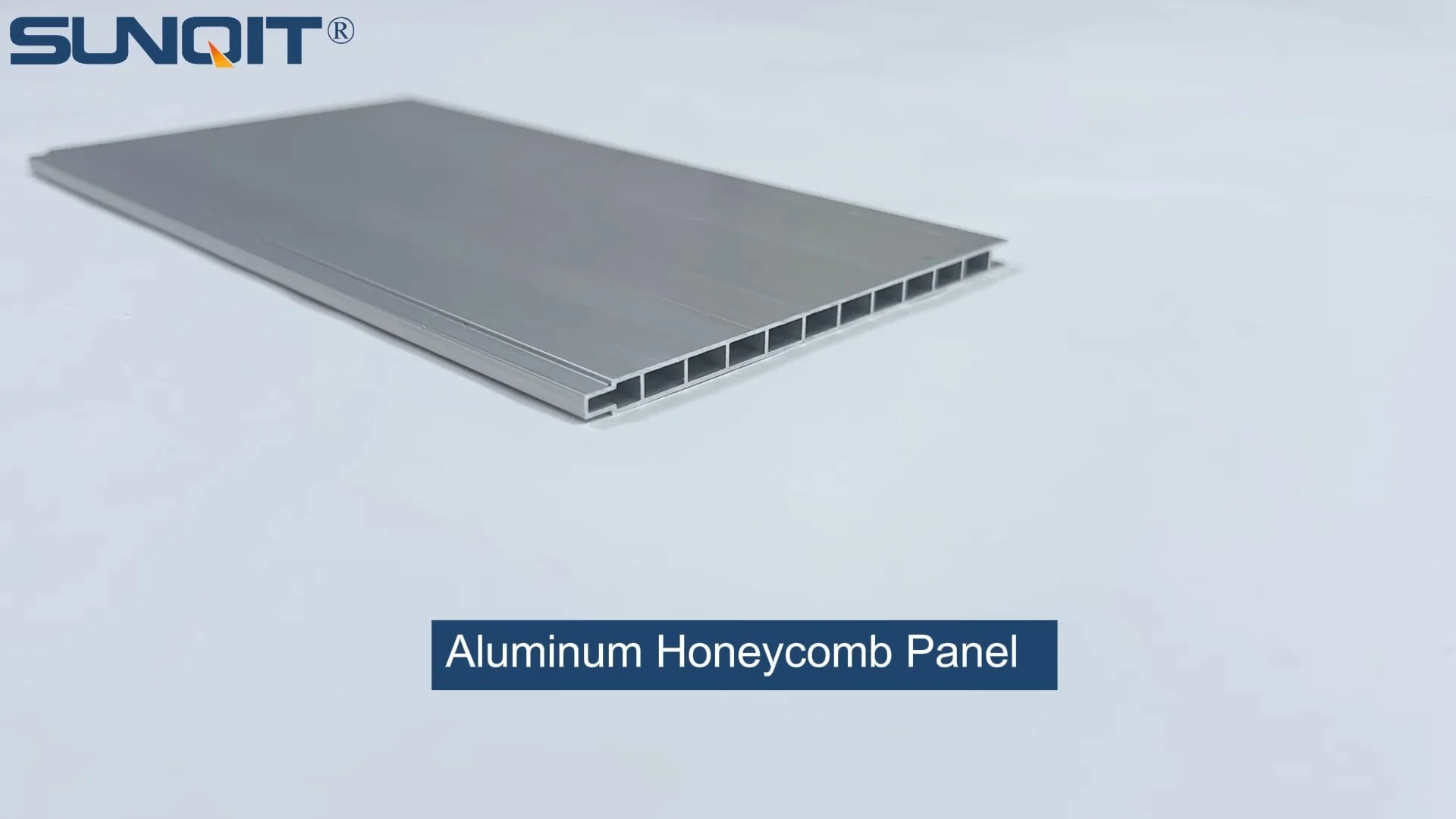
Aluminum honeycomb panel used as table top, side wall, it is connected one pcs by one pcs from the side slot to make a full pieces.This panel width 105mm, 55mm, 35mm are optional for slection.
Walk into any modern manufacturing facility, and you'll notice a silent battle being waged on the factory floor: the need to build equipment that's strong enough to withstand daily wear, light enough to keep energy costs low, and adaptable enough to keep up with shifting production demands. For mechanical engineers and plant managers, this balancing act often feels like solving a puzzle with missing pieces—until they discover aluminum honeycomb panels. These unassuming yet revolutionary components have quietly transformed how we design workbenches, material racks, conveyor systems, and even entire production lines. In this article, we'll dive into why aluminum honeycomb panels have become a cornerstone of lean system design, exploring their unique composition, unmatched design flexibility, and game-changing performance in real-world engineering scenarios.
The Science Behind the Strength: What Makes Aluminum Honeycomb Panels Tick?
At first glance, aluminum honeycomb panels might look like any other sheet material, but their magic lies in their structure. Imagine a sandwich where the "bread" is two thin, rigid face sheets, and the "filling" is a lightweight, hexagonal honeycomb core—hence the name. This isn't just a clever design; it's a feat of engineering inspired by nature. Bees have used hexagonal combs for millennia to maximize strength while minimizing material, and engineers have borrowed this logic to create panels that punch far above their weight class.
The core of these panels is typically made from thin aluminum foil formed into interconnected hexagonal cells, resembling a honeycomb. This core is then bonded between two face sheets, which are often made from aluminum extrusion profile—thin, flat sheets of aluminum that add rigidity without bulk. The result? A panel that's lightweight because the honeycomb core is mostly air, yet incredibly strong because the hexagonal structure distributes weight and stress evenly across the entire surface. It's like building a skyscraper with a steel frame but filling the floors with air—strength where it matters, lightness everywhere else.
But why aluminum? For starters, aluminum is naturally resistant to corrosion, making it ideal for factory environments where moisture, oils, or chemicals might be present. It's also malleable, allowing manufacturers to shape the honeycomb core and face sheets into custom sizes and thicknesses. And when paired with aluminum profile accessories—like brackets, hinges, or connectors—these panels become part of a modular system that can adapt to almost any need. Think of it as building with high-performance Legos, but for grown-ups solving complex engineering problems.
Design Flexibility: Tailor-Made Solutions for Every Project
One of the biggest headaches in mechanical engineering is the "one-size-fits-all" trap. A workbench that's perfect for assembling small electronics might be too flimsy for heavy machinery parts, while a solid steel table that can handle the weight would be impossible to move or reconfigure. Aluminum honeycomb panels eliminate this compromise by offering unmatched design flexibility, starting with customization.
Custom Sizes, Shapes, and Thicknesses
Unlike solid materials that come in fixed dimensions, aluminum honeycomb panels are built to order. Need a 4-foot by 8-foot panel for a workbench top? No problem. Require a curved panel to fit around a conveyor system? The honeycomb core can be formed into gentle bends without sacrificing strength. Thicknesses range from as thin as 3mm for lightweight partitions to over 50mm for heavy-duty machine enclosures. This adaptability means engineers aren't forced to design around standard material sizes—they can design first, then order the exact panel they need.
Seamless Integration with Aluminum Profiles
The true beauty of aluminum honeycomb panels shines when they're paired with aluminum profiles and aluminum profile accessories. Aluminum profiles—those T-slot extrusions you see in everything from workbenches to 3D printer frames—are already known for their modularity. When you attach a honeycomb panel to an aluminum profile frame using brackets, corner codes, or clamps, you get a system that's both rigid and lightweight. For example, a lean pipe workbench built with aluminum profiles and a honeycomb top can support hundreds of pounds of tools and parts while still being light enough for two people to move with casters. It's the engineering equivalent of having your cake and eating it too.
Take a typical production line reconfiguration: A manufacturer needs to shift from assembling smartphones to tablets, which are larger and require more workspace. With a honeycomb panel workbench, they can simply unbolt the existing top, swap in a wider panel (cut to size on-site), and reattach it using the same aluminum profile accessories. No need to weld, no need to buy a whole new bench—just a quick, tool-free adjustment. This kind of flexibility is why lean system managers swear by honeycomb panels; they turn "permanent" infrastructure into something that can evolve with the business.
Beyond Flat Surfaces: Creative Applications
Aluminum honeycomb panels aren't limited to flat workbenches or shelves. Engineers have gotten creative, using them in curved machine guards, lightweight doors for automated systems, and even as flooring in mezzanines. Because the panels can be cut with standard tools (like a circular saw or router), they're easy to modify on-site, allowing for last-minute tweaks that save projects from delays. I once worked with a team that needed to add a tool rail to a honeycomb panel workbench mid-installation—they simply drilled a few holes, attached an aluminum profile using T-slot bolts, and had the rail up in 15 minutes. No special equipment, no factory reorder—just problem-solving on the fly.

Performance That Delivers: Strength, Weight, and Durability
Design flexibility is great, but it wouldn't matter if aluminum honeycomb panels couldn't perform. The good news? They outperform traditional materials in almost every category that matters to mechanical engineers. Let's break down the key metrics:
| Material | Weight (per sq. ft, 10mm thick) | Flexural Strength (MPa) | Corrosion Resistance | Best For |
|---|---|---|---|---|
| Aluminum Honeycomb Panel | 1.2 lbs | 180-220 | Excellent (aluminum core/sheets) | Workbenches, material racks, machine guards |
| Solid Aluminum Sheet | 4.5 lbs | 190-230 | Excellent | Heavy machinery parts, heat sinks |
| Plywood | 2.8 lbs | 45-60 | Poor (needs sealing) | Temporary work surfaces, packaging |
| Steel Sheet (Mild Steel) | 5.2 lbs | 250-300 | Poor (rusts without coating) | Structural supports, heavy tool bases |
Strength-to-Weight Ratio: The Game Changer
The table above tells a clear story: aluminum honeycomb panels offer strength comparable to solid aluminum and steel but at a fraction of the weight. A 10mm thick honeycomb panel weighs just 1.2 lbs per square foot, versus 4.5 lbs for solid aluminum. This might not sound like much, but multiply it across a 20-foot conveyor system or a row of 10 workbenches, and the weight savings add up fast. Less weight means lower energy costs for moving equipment, reduced wear on casters and floors, and fewer ergonomic injuries from lifting. It's a win for the budget, the workers, and the planet.
Durability That Stands Up to Factory Life
Factory floors are tough environments: spills, impacts, constant foot traffic, and temperature swings. Aluminum honeycomb panels thrive here. The aluminum face sheets resist dents and scratches, while the honeycomb core absorbs shocks—like when a heavy tool is dropped on the workbench. Unlike plywood, they don't warp or rot if they get wet, and unlike untreated steel, they won't rust. I visited a automotive parts plant last year that had been using honeycomb panel workbenches for over a decade; the tops still looked new, with only minor scratches from years of use. The plant manager told me they'd replaced their old wooden benches every 2-3 years—now, they expect these to last 15+. That's a massive reduction in replacement costs and downtime.
Thermal and Acoustic Benefits
Bonus: Aluminum honeycomb panels aren't just strong and light—they're also good at blocking heat and sound. The air pockets in the honeycomb core act as insulators, making them ideal for enclosing noisy machinery or protecting sensitive electronics from temperature fluctuations. A conveyor system with honeycomb panel side guards, for example, can reduce noise levels by 10-15 decibels, making the factory floor a quieter, more pleasant place to work. It's a small detail, but one that adds up to happier, more productive employees.

Real-World Applications: How Lean Systems Benefit from Honeycomb Panels
Enough theory—let's talk about how aluminum honeycomb panels are transforming real-world lean systems. Lean manufacturing is all about eliminating waste: waste of time, waste of materials, waste of space. Honeycomb panels address all three, making them a favorite among lean system suppliers and managers.
Workbenches: The Heart of the Production Line
The workbench is where the action happens, and aluminum honeycomb panels make it better. A standard lean pipe workbench with a solid wood top might weigh 200 lbs, making it hard to move and expensive to ship. Swap in a honeycomb panel top, and the weight drops to 80 lbs—light enough to add casters and reposition as needed. But it's not just about weight: The flat, rigid surface is perfect for mounting tools, scales, or even ESD mats for electronics assembly. One electronics manufacturer I worked with switched to honeycomb workbenches and reported a 30% reduction in time spent moving workstations during line reconfigurations. That's hours saved every week, just from a lighter tabletop.
Material Racks: Strong, Light, and Space-Saving
Material racks—like the material rack b (3 row and 3 floor) often used in warehouses—are another area where honeycomb panels shine. Traditional racks use solid steel shelves, which are strong but heavy and take up valuable space. A honeycomb panel shelf can hold the same number of boxes while being 50% lighter, allowing the rack to be taller (since the frame doesn't have to support as much weight) and more stable. This means more storage in the same footprint—exactly what lean systems demand. Plus, if a shelf gets damaged, you can replace just the honeycomb panel instead of the entire shelf, saving on replacement parts.
Conveyor Systems: Smoother, Quieter, More Efficient
Conveyors are the arteries of a production line, and aluminum honeycomb panels are making them healthier. Conveyor side guards, covers, and even some belt supports can be made with honeycomb panels, reducing the overall weight of the system. A lighter conveyor requires less power to run, cutting energy costs. It also puts less strain on motors and bearings, extending their lifespan. One food packaging plant replaced their steel conveyor guards with honeycomb panels and saw a 12% drop in electricity bills for their conveyor system—paying for the upgrade in under a year.
Why Choose Aluminum Honeycomb Panels Over Alternatives?
You might be thinking, "Why not just use solid aluminum or plywood?" Let's break it down:
- Solid Aluminum: Strong, but heavy and expensive. A solid aluminum sheet costs 3-4 times more than a honeycomb panel of the same size and thickness, and it's harder to work with (you need special tools to cut or bend it).
- Plywood: Cheap, but weak and prone to damage. Plywood warps when wet, cracks under heavy loads, and needs frequent replacement. It's also heavier than honeycomb panels for the same strength.
- Fiberglass: Light and strong, but brittle and hard to repair. Fiberglass panels shatter on impact, and the shards can be dangerous in a factory setting.
Aluminum honeycomb panels hit the sweet spot: They're affordable, lightweight, strong, and easy to work with. They're not the cheapest option upfront, but their long lifespan and low maintenance costs make them the most cost-effective choice over time.
The Future of Aluminum Honeycomb Panels: What's Next?
As manufacturers push for more sustainable, efficient, and flexible production systems, aluminum honeycomb panels are only going to become more popular. Innovations in honeycomb core design—like using recycled aluminum for the core and face sheets—are making them even more eco-friendly. Engineers are also experimenting with hybrid panels, combining honeycomb cores with carbon fiber face sheets for even higher strength-to-weight ratios (though these are still pricey for most applications).
Another trend is integration with smart technology: Imagine a honeycomb panel workbench with built-in sensors that monitor weight distribution, temperature, or even tool usage. The panel itself could become part of the Internet of Things (IoT) network, feeding data back to managers to optimize workflows. It's early days, but the potential is exciting.
Conclusion: Building the Future, One Hexagon at a Time
Aluminum honeycomb panels are more than just a material—they're a tool for innovation. They let mechanical engineers design systems that are stronger, lighter, and more adaptable than ever before, all while reducing costs and waste. Whether you're building a lean pipe workbench, a material rack, or an entire production line, these panels offer a level of flexibility and performance that's hard to match.
So the next time you walk into a factory and see a sleek, lightweight workbench or a quiet conveyor system, take a closer look—it might just have a honeycomb heart. And if you're an engineer or plant manager looking to optimize your lean system, it's time to ask yourself: What could I build better with aluminum honeycomb panels?