- Company Articles
- Products and Technology
- Product knowledge
- Aluminum Honeycomb Panels vs. Solid Aluminum Sheets: Which Is Better for Manufacturing?

Aluminum Honeycomb Panels vs. Solid Aluminum Sheets: Which Is Better for Manufacturing?
Related Product
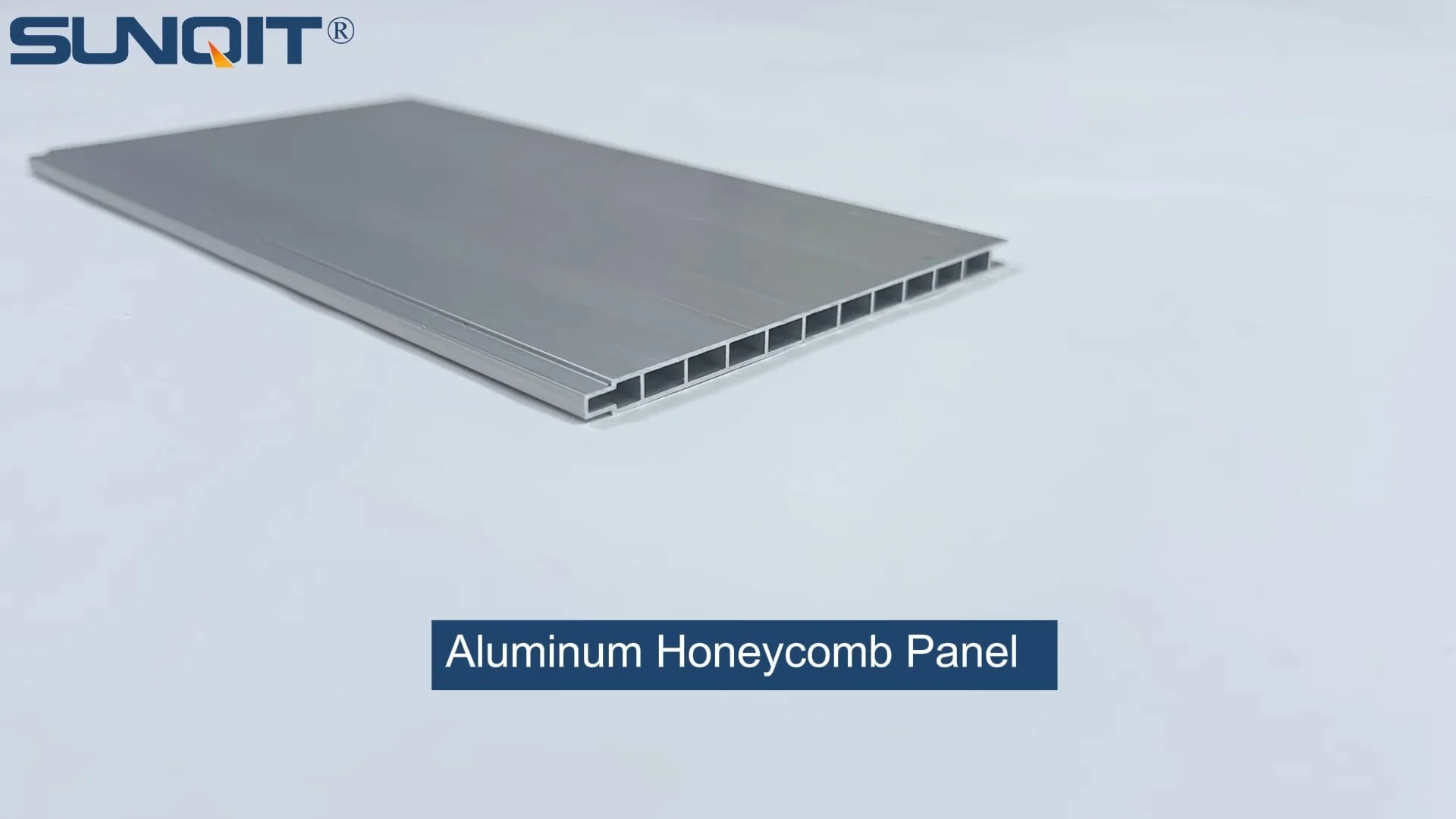
Aluminum Honeycomb Panel
Aluminum honeycomb panel used as table top, side wall, it is connected one pcs by one pcs from the side slot to make a full pieces.This panel width 105mm, 55mm, 35mm are optional for slection.
Introduction: The Material Dilemma in Modern Manufacturing
In the fast-paced world of manufacturing, every decision—from production line layout to tool selection—ripples through efficiency, cost, and final product quality. But few choices carry as much weight as the materials we build with. They shape everything from how easily workers assemble products to how much a company spends on shipping, and even how sustainable its operations are. Among the most versatile materials in this landscape is aluminum, prized for its strength, lightweight nature, and recyclability. Yet within the aluminum family, two options often stand out for structural and surface applications: aluminum honeycomb panels and solid aluminum sheets. Each brings unique strengths to the table, but choosing between them isn't just about picking "good" or "better"—it's about aligning with your specific manufacturing needs. Let's dive into what makes these materials tick, how they differ, and which might be the right fit for your next project.
What Are Aluminum Honeycomb Panels?
If you've ever marveled at how an airplane wing can be both lightweight and strong enough to carry hundreds of passengers, you've encountered the genius of honeycomb structures. Aluminum honeycomb panels borrow this design principle, consisting of a thin, hexagonal "honeycomb" core sandwiched between two aluminum face sheets. The core, often made from aluminum foil or composite materials, is bonded to the outer sheets using high-strength adhesives, creating a sandwich-like structure that punches far above its weight class.
The magic lies in the honeycomb core's geometry. Those tiny hexagonal cells distribute weight and stress evenly across the panel, making it incredibly rigid without adding excess mass. Think of it like a bridge: the supports (the honeycomb cells) work together to span gaps and resist bending, while the face sheets handle tension and compression. This design isn't just for show—aluminum honeycomb panels can achieve strength-to-weight ratios that solid materials can only dream of, making them a favorite in industries where every pound counts.
Manufacturing these panels involves precision. First, the honeycomb core is expanded from a flat block of bonded foil into its hexagonal shape. Then, it's trimmed to size and bonded to the face sheets under heat and pressure, ensuring a seamless bond that won't delaminate under stress. The result? A panel that's lightweight, rigid, and surprisingly resistant to impacts—qualities that make it ideal for everything from workbench surfaces to aerospace components.

What Are Solid Aluminum Sheets?
Solid aluminum sheets are the old reliable of the aluminum world. As the name suggests, they're exactly what they sound like: uniform sheets of aluminum with consistent thickness, ranging from thin foils to heavy-gauge plates. Unlike honeycomb panels, there's no hidden structure here—just pure, dense aluminum through and through. This simplicity is part of their appeal. For decades, manufacturers have turned to solid sheets for applications where straightforward strength and durability are non-negotiable.
Solid sheets are produced through processes like rolling, where aluminum ingots are pressed between heavy rollers to achieve the desired thickness. This method creates a material with predictable, isotropic properties—meaning it performs similarly in all directions—making it easy to machine, weld, and form into custom shapes. Whether you need a flat surface for a machine guard, a curved panel for a vehicle body, or a thick plate for a structural bracket, solid aluminum sheets deliver the consistency and versatility that have made them a staple in workshops worldwide.
But don't let their simplicity fool you. Solid aluminum sheets come in a range of alloys, each tailored to specific needs. 1100 series sheets, for example, are pure aluminum, prized for their corrosion resistance and formability, while 6061 series adds magnesium and silicon for improved strength—perfect for load-bearing parts. This flexibility has kept solid sheets relevant even as newer materials like honeycomb panels have emerged.

Key Differences: A Side-by-Side Comparison
To truly understand how these materials stack up, let's break down their most critical properties. The table below highlights the core differences, but we'll dig deeper into each category to see what they mean for real-world manufacturing.
| Property | Aluminum Honeycomb Panels | Solid Aluminum Sheets |
|---|---|---|
| Weight | Up to 70% lighter than solid sheets of equivalent rigidity | Heavier; weight increases linearly with thickness |
| Strength | Exceptional rigidity and strength-to-weight ratio; ideal for spanning gaps | Higher absolute strength but lower strength-to-weight ratio |
| Cost | Higher upfront cost due to complex manufacturing | Lower initial cost; simpler production process |
| Thermal Insulation | Excellent; honeycomb core traps air, reducing heat transfer | Poor; solid aluminum conducts heat readily |
| Sound Dampening | Good; core absorbs vibrations and reduces noise transmission | Fair; dense structure transmits sound more easily |
| Machinability | Requires specialized tools to avoid damaging the core | Easy to cut, drill, and weld with standard equipment |
| Common Applications | Workbenches, aerospace components, partition walls, transportation interiors | Structural brackets, machine guards, heavy-duty panels, heat sinks |
Weight: The Battle of the Pounds
Let's start with weight—the factor that often tips the scales (pun intended) in favor of honeycomb panels. Aluminum honeycomb panels are light . We're talking up to 70% lighter than solid aluminum sheets of the same thickness and rigidity. To put that in perspective: a 4x8-foot panel of 1-inch thick solid aluminum might weigh around 150 pounds, while a honeycomb panel with the same rigidity could weigh as little as 45 pounds. That's a game-changer for manufacturing.
Why does this matter? For starters, lighter materials are easier to handle. Imagine a team of workers assembling a production line with heavy solid aluminum workbenches—each bench might require two people to move, slowing down setup and increasing the risk of injury. Swap those out for honeycomb panels, and suddenly one worker can maneuver a bench into place single-handedly, cutting assembly time and boosting ergonomics. Then there's shipping: lighter panels mean lower freight costs, whether you're sending them across the country or just across the factory floor. Over time, those savings add up, especially for large-scale operations.
Solid aluminum sheets, on the other hand, don't skimp on heft. Their uniform density means weight increases directly with thickness—great if you need mass for stability (like a machine base that needs to resist vibrations) but a drawback when portability or reduced load is key. For example, a solid aluminum heat sink relies on its mass to dissipate heat effectively, but that same mass becomes a liability if you're building a mobile workstation that needs to be moved daily.
Strength: Rigidity vs. Raw Power
Strength is where the honeycomb design truly shines. While solid aluminum sheets have higher absolute strength (meaning they can withstand more total force before breaking), honeycomb panels offer a far better strength-to-weight ratio . In other words, for every pound of material, honeycomb panels deliver more rigidity and resistance to bending.
Take a workbench surface, for example. A solid aluminum sheet might sag slightly under the weight of heavy tools, requiring thicker gauges (and more weight) to stay flat. A honeycomb panel of the same thickness, though, stays rigid even with tools, parts, and assemblies piled on top. That's because the honeycomb core acts like a network of tiny trusses, distributing the load across the entire panel. This makes honeycomb panels ideal for applications where spanning gaps—like a workbench with no legs in the middle—or minimizing deflection is critical.
Solid sheets, however, excel in applications where raw strength is needed. If you're building a bracket that has to hold a ton of weight without flexing, a thick solid aluminum sheet will outperform a honeycomb panel of the same thickness. That's why you'll find solid aluminum in structural components like machine frames or engine parts—places where the material's density translates directly to durability.
Cost: Upfront vs. Long-Term Value
Let's talk dollars and cents. At first glance, solid aluminum sheets seem like the budget-friendly choice. They're simpler to produce—just roll, cut, and ship—so their upfront cost is lower. Honeycomb panels, with their multi-step manufacturing (expanding the core, bonding the face sheets, quality control), often come with a higher price tag per square foot. But manufacturing costs rarely stop at the initial purchase. To truly compare costs, you need to look at the bigger picture: shipping, installation, labor, and even long-term energy use.
Honeycomb panels' lightweight nature slashes shipping costs. A truckload of solid aluminum sheets might cost thousands to transport; the same volume of honeycomb panels could cost half as much. Then there's installation: lighter panels require fewer workers and less heavy machinery, cutting labor time. Over time, these savings can offset the higher upfront cost, especially for large projects like outfitting an entire factory with workbenches or partition walls.
Solid sheets, though cheaper to buy, can rack up hidden costs. Heavier materials require stronger supports—think sturdier frames for workbenches or reinforced floors in assembly areas—which adds to material and labor costs. They also guzzle more energy to transport and handle, making them less eco-friendly (and potentially more costly as energy prices rise). For small projects or one-off parts, solid sheets might still be the better deal, but for large-scale manufacturing, honeycomb panels often win the long-term cost battle.
Thermal and Acoustic Performance: Beyond Strength
Manufacturing environments aren't just about strength and weight—they're about creating comfortable, controlled spaces. Here, honeycomb panels have another trick up their sleeve: superior thermal and acoustic insulation. The air trapped in the honeycomb core acts as a natural barrier, slowing heat transfer and reducing noise transmission. This makes them ideal for settings like cleanrooms, where temperature stability is critical, or busy assembly lines, where reducing noise can boost worker focus and morale.
Solid aluminum sheets, by contrast, are excellent conductors of heat and sound. That's great if you need a heat sink to cool electronics, but not so great if you're trying to keep a workspace warm in winter or quiet in a noisy factory. For example, a solid aluminum workbench in a cold facility might feel icy to the touch, while a honeycomb panel workbench stays warmer, making it more comfortable for workers handling parts with bare hands.
Applications: Where Each Material Shines
To bring this all together, let's look at real-world applications where one material outperforms the other.
Honeycomb Panels in Action: Their lightweight rigidity makes honeycomb panels a top choice for workbenches, especially in lean manufacturing setups where flexibility and ergonomics matter. A lean pipe workbench with a honeycomb top is easy to reposition, stays flat under heavy loads, and reduces worker fatigue by being lighter to move. They're also popular in transportation—think truck bodies, train interiors, or RV walls—where weight savings translate to better fuel efficiency. And in aerospace, honeycomb panels are everywhere, from wing components to cargo liners, where every ounce saved increases range and payload.
Solid Sheets in Action: When you need durability and simplicity, solid aluminum sheets are hard to beat. Machine guards, for example, rely on solid sheets to withstand impacts from flying debris. Heat sinks for electronics use solid aluminum's conductivity to draw heat away from sensitive components. And in construction, solid sheets are used for roofing, siding, and structural brackets, where their weather resistance and raw strength are non-negotiable. Even in manufacturing, small parts like brackets, covers, and spacers often use solid sheets for their ease of machining and low cost.
Sustainability: Green Manufacturing Matters
In today's eco-conscious world, sustainability is more than a buzzword—it's a business imperative. Both aluminum honeycomb panels and solid sheets are recyclable (aluminum is one of the most recycled materials on the planet, with 95% energy savings compared to producing new aluminum), but honeycomb panels have a slight edge here too. Because they use less material overall, manufacturing them generates fewer emissions and requires less raw aluminum. Plus, their lightweight nature reduces transportation-related carbon footprints, making them a greener choice for companies looking to shrink their environmental impact.
That said, solid sheets aren't far behind. Their simplicity means less energy is spent on manufacturing compared to honeycomb panels (no core expansion or bonding steps), and they're fully recyclable at the end of their life. The key here is to consider your entire supply chain: if reducing shipping emissions is a priority, honeycomb panels may be the way to go. If minimizing manufacturing energy use matters more, solid sheets could be better.
Choosing the Right Material: A Decision Framework
So, how do you decide between aluminum honeycomb panels and solid aluminum sheets? Start by asking these questions:
- What's the primary function? Do you need rigidity (honeycomb) or raw strength (solid)?
- How important is weight? If shipping, handling, or fuel efficiency matter, honeycomb panels have the edge.
- What's your budget? Can you absorb higher upfront costs for long-term savings (honeycomb), or do you need low initial costs (solid)?
- Are thermal or acoustic properties critical? Honeycomb panels insulate better; solid sheets conduct heat and sound.
- How will you machine or install it? Solid sheets are easier to work with standard tools; honeycomb may need specialized equipment.
For most manufacturing workbenches, assembly line surfaces, or transportation components, honeycomb panels offer the best balance of weight, strength, and long-term value. For heavy structural parts, heat sinks, or low-cost brackets, solid sheets are the practical choice. And in some cases, you might even use both—honeycomb for the main surface and solid sheets for reinforcing edges or attaching hardware.
Conclusion: It's About Fit, Not Perfection
Aluminum honeycomb panels and solid aluminum sheets are both exceptional materials, but they're not interchangeable. Honeycomb panels thrive where lightweight rigidity, insulation, and long-term efficiency are key—think workbenches, transportation, and aerospace. Solid sheets excel in applications demanding raw strength, simplicity, and low upfront costs—like machine parts, brackets, and heat sinks. The "better" choice depends on your project's unique needs: how you'll use the material, what you can afford, and what matters most for your manufacturing process.
At the end of the day, the goal is to build smarter, not just stronger. By understanding the strengths of each material, you can make choices that boost efficiency, cut costs, and create products that stand the test of time. Whether you opt for the innovative design of honeycomb panels or the tried-and-true reliability of solid sheets, aluminum's versatility ensures you're starting with a material that can rise to the challenge.