- Company Articles
- Products and Technology
- Installation And Maintenance
- Aluminum Pipe Clamps for Consumer Electronics: Precision Assembly Guide

Aluminum Pipe Clamps for Consumer Electronics: Precision Assembly Guide
Related Product
Aluminum Pipe Clamp
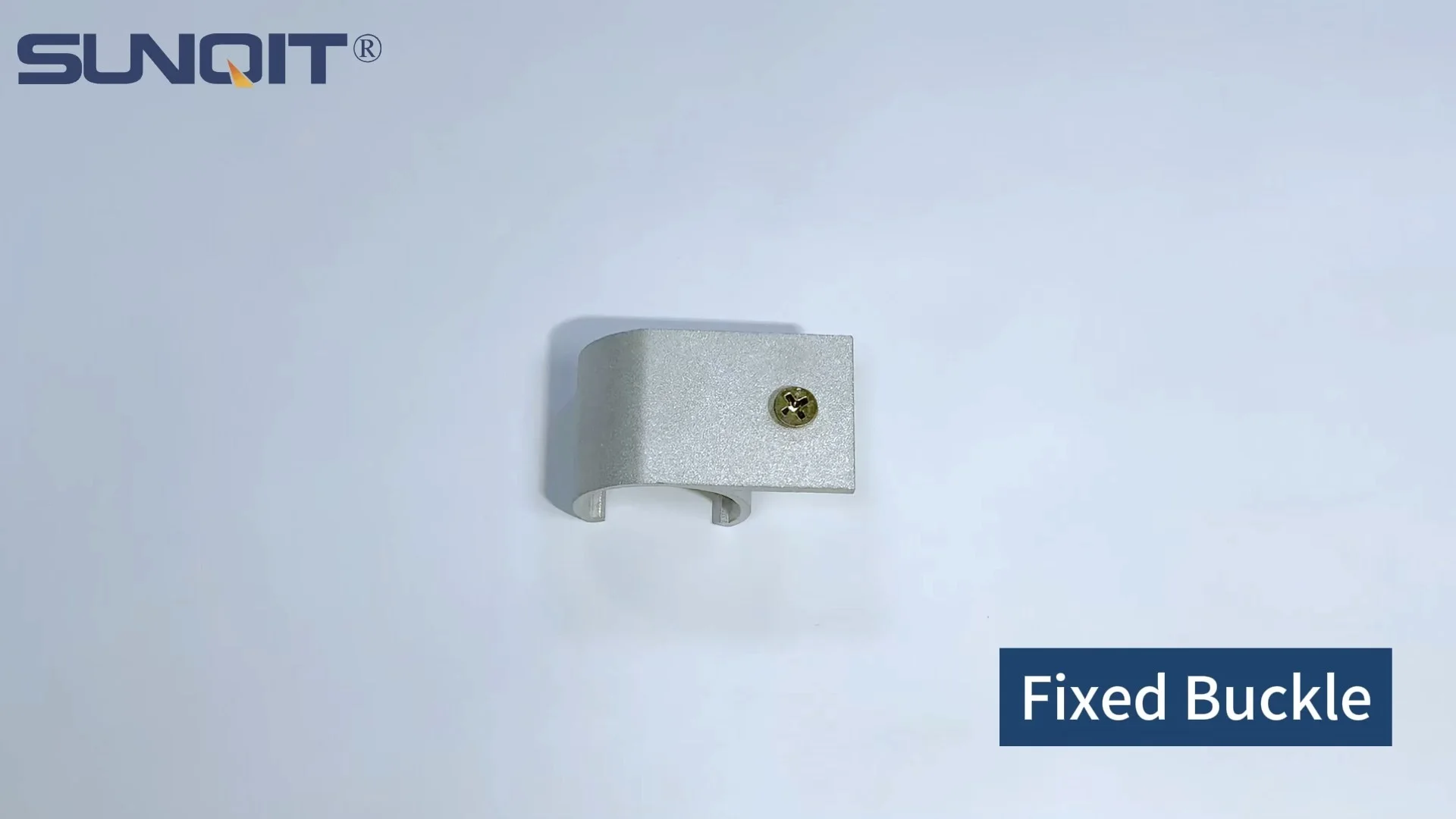
Aluminum pipe side clamp used for 28mm aluminum pipe connect with table top, or other accessories.
Aluminum Pipe Clamps for Consumer Electronics: Precision Assembly Guide
Walk into any modern consumer electronics factory, and you'll see a symphony of motion: robotic arms placing microchips smaller than a fingernail, workers carefully fitting glass screens onto phone bodies, and conveyor belts gliding with circuit boards that power the devices we can't live without. What you might not notice—at first—are the quiet heroes holding this chaos together: aluminum pipe clamps. These unassuming components secure the aluminum profiles that form workbenches, flow racks, and roller tracks, ensuring every step of the assembly line stays stable, flexible, and perfectly aligned. In an industry where a fraction of a millimeter can mean the difference between a functional laptop and a defective one, aluminum pipe clamps aren't just tools—they're the backbone of precision.
This guide dives into everything you need to know about aluminum pipe clamps in consumer electronics assembly: why they matter, how they're made, which type to choose, and how to install them to keep your production line running like clockwork. Whether you're setting up a new lean system or upgrading an existing workbench, understanding these small but mighty components will help you build assembly lines that are both efficient and reliable.
What Are Aluminum Pipe Clamps, Anyway? Breaking Down the Basics
Let's start with the fundamentals: aluminum pipe clamps are mechanical devices designed to fasten aluminum pipes, profiles, or tubes to one another or to other structures like workbench frames or flow rack supports. Think of them as the "glue" that turns individual aluminum pieces into functional systems—without the mess of actual glue, of course. Unlike rigid welding or permanent bolts, these clamps offer a sweet spot of stability and adjustability, letting you tweak your assembly line layout as product designs change (and in consumer electronics, they change fast).
Most aluminum pipe clamps are made from high-grade aluminum alloys, chosen for their lightweight strength and resistance to corrosion. They typically feature a clamping mechanism—often a screw, lever, or bolt—that tightens around the pipe, creating a secure grip without damaging the material. Some clamps are designed for specific angles (like 90-degree or 45-degree joints), while others swivel or pivot, making them ideal for curved or adjustable structures. And because they're part of the broader family of aluminum profile accessories , they play nicely with other components like hinges, end caps, and brackets, giving you endless options to customize your setup.
Why Aluminum? The Material Science Behind the Choice
You might be wondering: Why aluminum, and not steel or plastic? Let's break it down. Steel clamps are strong, sure, but they're heavy—too heavy for assembly lines that need frequent reconfiguration. Imagine moving a steel-clamped workbench across the factory floor every time you switch from assembling tablets to smartwatches: it would slow your team down and increase the risk of workplace injuries. Aluminum, by contrast, is about 30% lighter than steel, making it easy to handle even during quick line changeovers.
Then there's corrosion resistance. Consumer electronics assembly often happens in controlled environments—think cleanrooms where dust and moisture are kept to a minimum. Aluminum naturally forms a thin oxide layer that protects it from rust, so even in humid conditions or near cleaning agents, your clamps won't degrade over time. Plastic clamps, while lightweight, lack the rigidity needed for heavy-duty tasks; a plastic clamp might warp under the weight of a loaded flow rack, throwing off the alignment of delicate circuit boards. Aluminum strikes the perfect balance: strong enough to hold up under pressure, yet gentle enough to avoid scratching sensitive aluminum profiles.
Perhaps most importantly, aluminum's malleability makes it easy to machine into complex clamp designs. Whether you need a clamp with a built-in swivel joint for a roller track or a quick-release lever for fast adjustments, aluminum can be shaped to meet those needs without sacrificing durability. It's no wonder aluminum has become the go-to material for clamps in precision-driven industries like consumer electronics.
Types of Aluminum Pipe Clamps: Which One Fits Your Assembly Line?
Not all aluminum pipe clamps are created equal. Just as you wouldn't use a wrench to hammer a nail, you need the right clamp for the job. Below's a breakdown of the most common types, along with their best uses in consumer electronics assembly:
| Clamp Type | Design & Mechanism | Ideal For | Key Advantage |
|---|---|---|---|
| Fixed Aluminum Clamps | Rigid, non-adjustable design; uses a bolt or screw to lock pipes in place at a fixed angle (e.g., 90° or 180°). | Static workbench frames, permanent flow rack supports, or areas where alignment never changes. | Maximum stability—once tightened, they won't shift, making them perfect for heavy workbenches holding soldering stations or testing equipment. |
| Swivel Aluminum Clamps | Features a rotating joint that allows 360° movement; often paired with a locking lever to fix the angle once set. | Adjustable roller tracks, tiltable work surfaces (like inspection tables), or flow racks that need to feed materials to multiple stations. | Flexibility to angle pipes on the fly—great for when you need to redirect circuit boards from a main conveyor to a secondary roller track . |
| Parallel Fixation Clamps | Designed to secure two parallel pipes side-by-side; uses dual clamping points to distribute weight evenly. | Dual-rail workbenches (for extra stability), material racks with multiple levels, or conveyor supports that need to handle heavy loads. | Prevents pipes from twisting or bowing under weight—critical for racks holding stacks of phone casings or battery packs. |
| Quick-Release Clamps | Lever-operated design; no tools needed—simply flip the lever to loosen or tighten. | Assembly lines with frequent changeovers (e.g., switching from assembling 6-inch to 7-inch tablets) or temporary workstations. | Saves time during reconfigurations—what used to take 10 minutes with a wrench now takes 30 seconds with a lever pull. |
Of course, there are specialty clamps too—like heavy-duty clamps for thick-walled aluminum pipes or anti-slip clamps for oily or wet environments (though in electronics, you'll rarely need those). The key is to match the clamp to the job: prioritize stability for static setups, flexibility for adjustable ones, and speed for lines that change daily.
Aluminum Pipe Clamps and the Lean System: Building Efficiency from the Ground Up
If you've spent any time in manufacturing, you've heard of "lean systems"—the philosophy of minimizing waste (time, materials, space) while maximizing value. Aluminum pipe clamps are a lean system's best friend. Here's why: lean manufacturing thrives on adaptability. When a new smartphone model requires a narrower workbench or a redesigned flow rack, you can't afford to tear down and rebuild everything from scratch. Aluminum pipe clamps let you disassemble, reconfigure, and reassemble in hours, not days.
Take, for example, a workbench used to assemble camera modules for smartphones. Last quarter, the modules were 10mm thick; this quarter, they're 8mm, so the workbench shelves need to be adjusted to save space. With fixed steel brackets, you'd need to drill new holes or buy a new workbench. With aluminum pipe clamps? Loosen the screws, slide the shelf up, retighten, and you're done. No waste, no extra cost, just a quick tweak to keep up with demand.
Lean systems also emphasize "5S"—sort, set in order, shine, standardize, sustain. Aluminum pipe clamps help with "set in order" by keeping your workspace organized. Instead of jerry-rigging pipes with zip ties or tape (we've all seen it), clamps create clean, uniform joints that make your assembly line look professional and function smoothly. And because they're reusable, they align with the "sustain" principle too—no need to throw away old clamps when you reconfigure; just move them to the next project.
Step-by-Step: Installing Aluminum Pipe Clamps Like a Pro
Installing aluminum pipe clamps isn't rocket science, but doing it right ensures your assembly line stays stable and safe. Follow these steps to get it done:
1. Gather Your Tools and Materials
You'll need: the aluminum pipes/profiles, your chosen clamps, a hex key or screwdriver (depending on the clamp's fastener), a level (to check alignment), and a torque wrench (optional, but recommended for consistency). If you're working with aluminum profile accessories like end caps, have those handy too—you'll want to add them after clamping to prevent sharp edges.
2. Prep the Pipes
Wipe down the aluminum pipes with a clean cloth to remove dust or oil—debris can prevent the clamp from gripping properly. If the pipes have rough edges (common with new aluminum profiles), file them smooth to avoid damaging the clamp's inner surface.
3. Position the Clamp
Slide the clamp onto the pipe(s) at the desired location. For angled clamps (like 90-degree joints), use a square tool to ensure the pipes meet at a perfect angle—even a 1-degree misalignment can throw off a roller track's flow. For parallel clamps, measure the distance between pipes to ensure they're evenly spaced (a tape measure works here).
4. Tighten Gradually
Start by hand-tightening the clamp's fastener (screw, bolt, or lever) until it's snug but not fully tight. This gives you room to adjust the position if needed. Once aligned, use your tool to tighten further—but don't overdo it! Over-tightening can warp the clamp or dent the aluminum pipe, weakening both. A good rule of thumb: tighten until you feel resistance, then give it a quarter-turn more.
5. Test and Adjust
Give the clamped joint a gentle shake to check for wobble. If it moves, tighten the clamp a bit more. If it's rock-solid, you're good to go! For swivel clamps, test the rotation before locking it down—make sure it moves smoothly and locks securely at your desired angle.
Pro tip: If you're installing multiple clamps (like along a workbench), do them in stages. Tighten all clamps hand-snug first, check the entire structure for alignment with a level, then fully tighten them one by one. This prevents small misalignments from adding up into a big problem.
Troubleshooting Common Aluminum Pipe Clamp Issues
Even with careful installation, things can go wrong. Here are the most common issues and how to fix them:
Problem: Clamp Keeps Slipping
Cause: Either the clamp is under-tightened, the pipe is dirty, or the clamp's inner surface is worn (from repeated use). Solution: Clean the pipe, check for wear on the clamp (replace if the gripping surface is smooth), and tighten to the recommended torque (most manufacturers print this on the clamp packaging).
Problem: Pipe Gets Damaged When Clamping
Cause: Over-tightening or using a clamp with sharp edges. Solution: Use a torque wrench to avoid over-tightening, and opt for clamps with rubber or plastic liners (they protect the pipe surface). If damage is minor, sand the dented area smooth to prevent corrosion.
Problem: Swivel Clamp Won't Lock
Cause: Debris in the swivel joint or a worn locking mechanism. Solution: Disassemble the clamp, clean the joint with a dry brush, and apply a small amount of silicone lubricant (avoid oil-based lubes—they attract dust). If the locking lever is bent or broken, replace the clamp.
Conclusion: Small Clamps, Big Impact
At the end of the day, aluminum pipe clamps are easy to overlook. They don't have the flash of a robotic arm or the precision of a laser cutter. But without them, the consumer electronics we rely on—your smartphone, your laptop, your smartwatch—would be slower and costlier to make, if they made it to market at all. These small, unassuming components are the unsung heroes of the assembly line, turning chaos into order, flexibility into efficiency, and individual parts into systems that build the future.
So the next time you're on the factory floor, take a moment to appreciate the aluminum pipe clamps holding up that workbench or guiding that roller track. They might not get the glory, but they've earned it.