- Company Articles
- Products and Technology
- Product knowledge
- Aluminum Pipe Clamps: How They Enhance Workbench E Stability

Aluminum Pipe Clamps: How They Enhance Workbench E Stability
Related Product
Aluminum Pipe Clamp
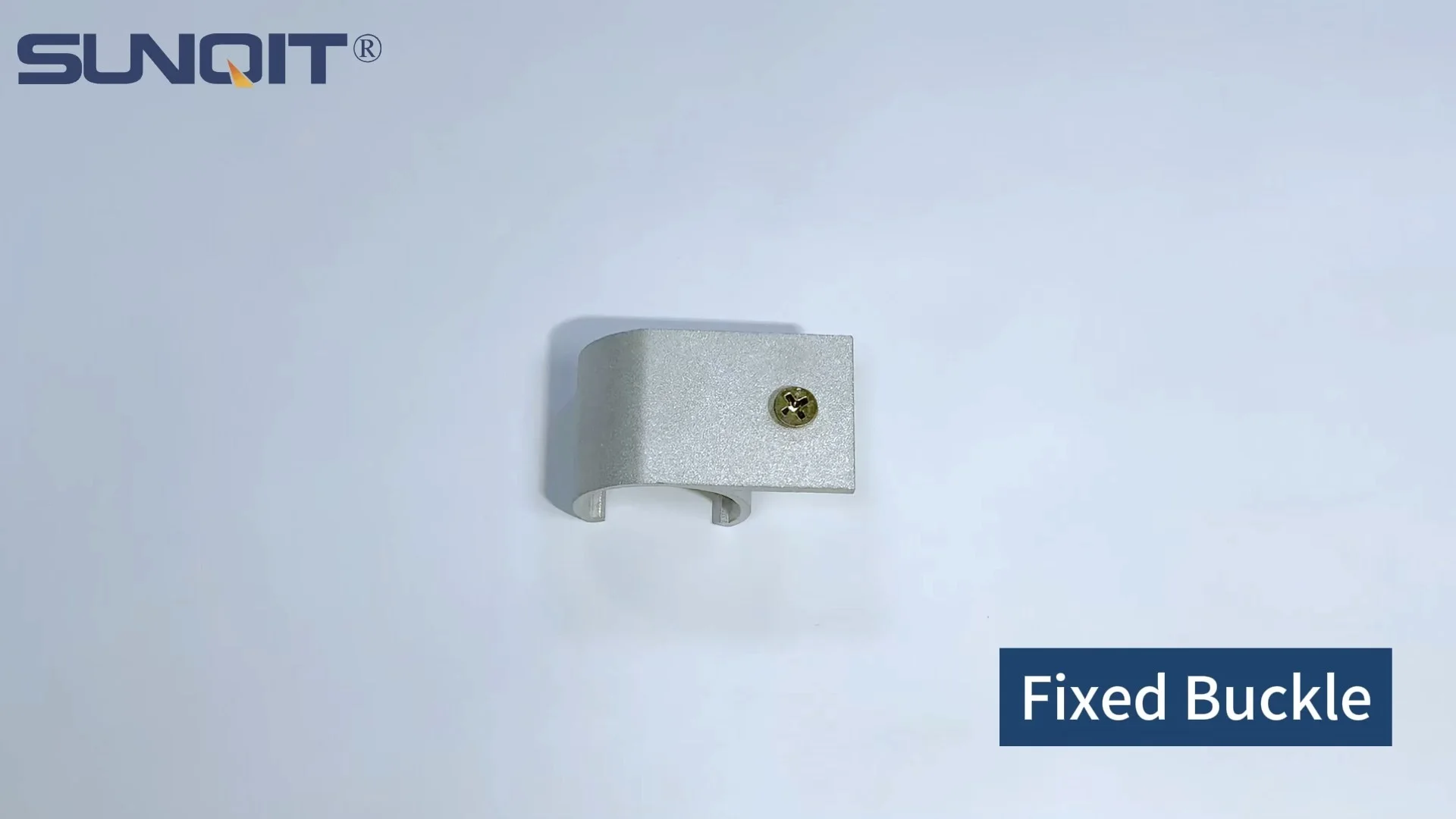
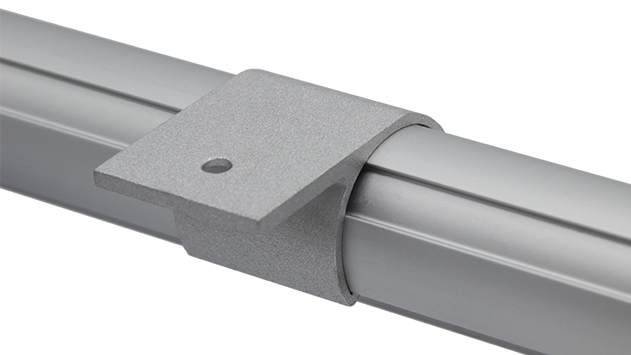
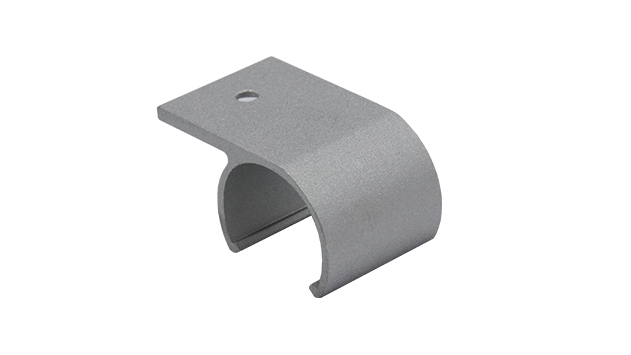
Aluminum pipe side clamp used for 28mm aluminum pipe connect with table top, or other accessories.
The Unsung Hero of the Workshop: Why Workbench Stability Matters
Walk into any manufacturing plant, assembly line, or workshop, and you'll likely spot a familiar workhorse: the workbench. It's where components are pieced together, tools are organized, and precision tasks are executed—often under tight deadlines. But here's the thing: not all workbenches are created equal. A wobbly, unstable workbench isn't just an annoyance; it's a silent productivity killer, a quality risk, and even a safety hazard. Imagine trying to solder a tiny circuit board on a surface that shifts with every movement, or assembling a delicate mechanical part where misalignment due to bench movement could render the entire product faulty. In high-stakes environments like electronics manufacturing or automotive assembly, stability isn't a luxury—it's a necessity.
This is where Workbench E (single deck-without caster) enters the picture. Designed for static, heavy-duty use, Workbench E is a staple in facilities that prioritize durability and reliability. Unlike mobile workbenches with casters, it stays firmly planted, supporting everything from raw materials to finished products. But even the sturdiest workbench frame can falter without the right hardware holding it together. That's where aluminum pipe clamps come in. These unassuming components might not grab headlines, but they're the glue that turns a basic frame into a rock-solid workstation. In this article, we'll dive into how aluminum pipe clamps enhance Workbench E stability, why they're superior to other fastening methods, and how they integrate with aluminum profiles and accessories to create a workspace that works
with
you, not against you.
What Are Aluminum Pipe Clamps, Anyway?
Let's start with the basics. Aluminum pipe clamps are mechanical fasteners designed to connect, secure, and stabilize aluminum pipes, profiles, and workbench components. Think of them as the "joints" of your workbench—they hold the structure together, ensuring that every part stays aligned and supported, even under heavy loads. But why aluminum? Unlike steel clamps, which are prone to rust in humid workshop environments, aluminum offers a winning combination of strength, lightweight design, and corrosion resistance. It's also highly malleable, allowing manufacturers to craft clamps in a variety of shapes to suit different connection needs—from straight-line joins to 90° angles and everything in between.
Aluminum pipe clamps aren't just about holding pipes together, though. They're engineered to distribute weight evenly across the workbench frame, reducing stress on individual components. This is crucial for Workbench E, which often supports uneven loads—think a stack of metal sheets on one corner and a precision tool on the other. Without proper load distribution, the frame could warp over time, leading to that dreaded wobble. Aluminum clamps, with their tight grip and rigid connection, ensure that weight is spread across the entire structure, keeping the workbench flat and stable for years.
Workbench E: A Closer Look at the Stability Challenge
To understand why aluminum pipe clamps are so vital, let's zoom in on Workbench E itself. As a single-deck, caster-free workbench, it's built for stationary use, which means its stability depends entirely on how well its frame is constructed and secured. Typically made from aluminum profiles—another star player in workshop design—Workbench E's frame consists of vertical supports, horizontal beams, and a flat work surface (often a durable material like aluminum honeycomb panel or plywood). The problem? Aluminum profiles, while strong, are hollow, and without proper fasteners, the connections between them can loosen over time, especially under repeated stress or vibration from nearby machinery.
Consider a typical scenario: A Workbench E is loaded with 200 kg of materials—heavy toolboxes on one side, a batch of unfinished parts on the other. Every time an operator leans on the bench or places a heavy item down, the frame absorbs that impact. Over weeks and months, bolts might loosen, welds (if used) could develop micro-cracks, and the once-stable structure starts to shift. This isn't just about annoyance; it's about precision. For tasks like PCB assembly or quality inspection, even a 1mm misalignment can lead to defective products. Workbench E's design assumes rigidity, but that rigidity is only as good as the clamps holding its aluminum profile frame together.
The Science of Stability: How Aluminum Pipe Clamps Work
So, what makes aluminum pipe clamps so effective at keeping Workbench E stable? It boils down to three key principles: mechanical grip, load distribution, and vibration dampening. Let's break them down.
Mechanical Grip: More Than Just Tightening a Bolt
Unlike traditional bolts or screws, which rely on threading to hold parts together, aluminum pipe clamps use a combination of friction and mechanical locking. Many clamps are designed to fit snugly around aluminum pipes or into the T-slots of aluminum profiles, creating a surface-to-surface connection that resists lateral (side-to-side) and torsional (twisting) forces. For example, a parallel fixation aluminum pipe joint wraps around two parallel pipes, using set screws or cam levers to apply uniform pressure. This creates a bond that's less likely to loosen over time compared to a single bolt, which can back out due to vibration.
Unlike traditional bolts or screws, which rely on threading to hold parts together, aluminum pipe clamps use a combination of friction and mechanical locking. Many clamps are designed to fit snugly around aluminum pipes or into the T-slots of aluminum profiles, creating a surface-to-surface connection that resists lateral (side-to-side) and torsional (twisting) forces. For example, a parallel fixation aluminum pipe joint wraps around two parallel pipes, using set screws or cam levers to apply uniform pressure. This creates a bond that's less likely to loosen over time compared to a single bolt, which can back out due to vibration.
Load Distribution: Spreading the Weight, Reducing Stress
A workbench's stability isn't just about holding up the weight—it's about how that weight is distributed. Imagine stacking a 50 kg box in the center of Workbench E: the frame should flex slightly but return to shape. Now stack that same box on the edge, unsupported by proper bracing. The stress (concentrated stress) on the corner joint could cause bending or warping. Aluminum pipe clamps excel here by acting as load distributors. A 90° aluminum crossing joint, for instance, connects a vertical support to a horizontal beam, transferring weight from the work surface down to the floor, rather than letting it pool at weak points. This ensures that even uneven loads are spread across the frame, preventing localized stress and extending the workbench's lifespan.
A workbench's stability isn't just about holding up the weight—it's about how that weight is distributed. Imagine stacking a 50 kg box in the center of Workbench E: the frame should flex slightly but return to shape. Now stack that same box on the edge, unsupported by proper bracing. The stress (concentrated stress) on the corner joint could cause bending or warping. Aluminum pipe clamps excel here by acting as load distributors. A 90° aluminum crossing joint, for instance, connects a vertical support to a horizontal beam, transferring weight from the work surface down to the floor, rather than letting it pool at weak points. This ensures that even uneven loads are spread across the frame, preventing localized stress and extending the workbench's lifespan.
Vibration Dampening: Quieting the Workshop "Noise"
Workshops are noisy places—machines hum, tools clatter, and conveyors rumble. All that vibration can wreak havoc on loose connections, causing bolts to vibrate loose or welds to fatigue. Aluminum, with its natural damping properties, helps absorb some of this vibration. When paired with rubberized or padded clamp components, aluminum pipe clamps act like shock absorbers, reducing the transfer of vibration from the workbench surface to the frame. This is especially critical for Workbench E, which, as a static workbench, is often positioned near high-vibration equipment like roller conveyors or stamping machines. By dampening these vibrations, clamps keep the workbench steady, even when the factory floor feels like it's humming to life.
Workshops are noisy places—machines hum, tools clatter, and conveyors rumble. All that vibration can wreak havoc on loose connections, causing bolts to vibrate loose or welds to fatigue. Aluminum, with its natural damping properties, helps absorb some of this vibration. When paired with rubberized or padded clamp components, aluminum pipe clamps act like shock absorbers, reducing the transfer of vibration from the workbench surface to the frame. This is especially critical for Workbench E, which, as a static workbench, is often positioned near high-vibration equipment like roller conveyors or stamping machines. By dampening these vibrations, clamps keep the workbench steady, even when the factory floor feels like it's humming to life.

Types of Aluminum Pipe Clamps: Finding the Right Fit for Workbench E
Not all aluminum pipe clamps are designed for the same job. Just as Workbench E has specific needs—static load support, rigidity, compatibility with aluminum profiles—different clamps excel in different scenarios. Below is a breakdown of common clamp types, their features, and how they contribute to Workbench E stability.
| Clamp Type | Material | Key Features | Workbench E Application | Load Capacity (Approx.) | Ease of Installation |
|---|---|---|---|---|---|
| Parallel Fixation Aluminum Pipe Joint | Aluminum Alloy (6063-T5) | Secures two parallel pipes; adjustable tension via set screws | Horizontal beam bracing; reinforcing long spans between vertical supports | Up to 150 kg per joint | High (no welding; tools: hex key) |
| 90° Aluminum Crossing Joint | Aluminum Alloy (6061-T6) | Connects perpendicular pipes at 90°; rigid, one-piece design | Vertical support-to-horizontal beam connections; corner bracing | Up to 200 kg per joint | Medium (requires precise alignment) |
| 45° Reinforce Aluminum Pipe Joint | Aluminum Alloy (6063-T5) | Angled brace for diagonal support; reduces frame flex | Diagonal bracing for large workbench surfaces; preventing side-to-side sway | Up to 120 kg per joint | Medium (angle measurement needed) |
| Aluminum Pipe Clamp with T-Slot Adapter | Aluminum + Stainless Steel Hardware | Attaches to T-slot aluminum profiles; compatible with Workbench E's frame | Mounting accessories (tool holders, material racks) to the workbench frame | Up to 80 kg per clamp | High (slides into T-slot; quick-release lever option) |
| Heavy-Duty Duplex Aluminum Pipe Joint | Aluminum Alloy (7075-T6) | Dual-pipe connection; extra-wide clamping surface for stability | Supporting heavy workbench tops (e.g., aluminum honeycomb panels) | Up to 300 kg per joint | Low (requires torque wrench for proper tension) |
For Workbench E, the stars are often the parallel fixation and 90° crossing joints. The parallel fixation clamps reinforce long horizontal beams, preventing sagging under heavy loads, while the 90° crossing joints anchor the vertical supports to the horizontal frame, ensuring the entire structure stands square and true. For workshops that need to mount accessories like material racks or tool boards, the T-slot adapter clamps are indispensable—they let you add functionality without drilling holes or weakening the frame.
Beyond Clamps: Integrating with Aluminum Profile and Accessories
Aluminum pipe clamps don't work in isolation—they're part of a larger ecosystem that includes aluminum profiles, guide rails, and other accessories. Workbench E's frame, for example, is typically built from aluminum profiles—extruded aluminum beams with T-slots running along their length. These profiles are lightweight yet strong, and their T-slots make them infinitely customizable. But without the right clamps, that customization is just potential. Aluminum pipe clamps bridge the gap, turning profiles into a cohesive, stable structure.
Take Aluminum Guide Rail A, a common accessory in workbench design. This rail mounts to the edge of Workbench E, providing a smooth surface for sliding tools or material bins. To secure it to the workbench frame, you'd use an aluminum pipe clamp with a T-slot adapter, sliding the clamp into the profile's T-slot and tightening it against the guide rail. The result? A secure, rattle-free rail that can withstand daily use without shifting—all thanks to the clamp's grip.
Another example is the integration of material racks. Workbench E often pairs with Material Rack B (3 row and 3 floor) for storing components within arm's reach. To attach the rack to the workbench, 45° reinforce aluminum pipe joints are used to brace the rack against the workbench frame, preventing tipping. The clamps ensure that the rack and workbench act as a single unit, even when loaded with heavy materials. It's this synergy between clamps, profiles, and accessories that makes Workbench E more than just a table—it's a complete, integrated workspace.
Installation Best Practices: Getting the Most Out of Your Clamps
Even the best aluminum pipe clamps can underperform if installed incorrectly. Here's a step-by-step guide to ensuring your Workbench E stays stable for years to come:
- Prep the Frame: Before installing clamps, ensure the aluminum profiles are clean and free of debris. Dust, oil, or rust (though rare with aluminum) can weaken the clamp's grip. Wipe down the profiles with a dry cloth, and use a small brush to clean out T-slots if needed.
- Measure Twice, Clamp Once: Alignment is critical. For 90° joints, use a square to ensure pipes are perpendicular; for parallel joints, a straightedge will help keep pipes evenly spaced. Misaligned joints create uneven stress, which can lead to loosening over time.
- Torque to Specification: Over-tightening clamps can strip threads or warp the aluminum profile; under-tightening leaves them loose. Check the manufacturer's torque specs (usually 20-30 Nm for most aluminum clamps) and use a torque wrench for precision.
- Use Lock Washers for Vibration-Prone Areas: In workshops with high vibration, add a stainless steel lock washer between the clamp and profile. This prevents the clamp from backing out due to shaking.
- Inspect and Retighten Regularly: Even the best installations need maintenance. Schedule monthly checks to tighten any loose clamps, especially after heavy use or near vibrating equipment.
The Bottom Line: Stability That Drives Productivity
At the end of the day, aluminum pipe clamps are more than just hardware—they're an investment in productivity, quality, and safety. A stable Workbench E reduces errors, speeds up assembly times, and minimizes downtime from repairs. It lets operators focus on their tasks, not on steadying the work surface. And when paired with aluminum profiles, guide rails, and other accessories, it creates a workspace that adapts to your needs, not the other way around.
So, the next time you walk past a Workbench E in a workshop, take a closer look. Chances are, the aluminum pipe clamps holding it together are quietly doing their job—ensuring that every component assembled, every tool organized, and every product inspected is done so on a foundation you can trust. In the world of manufacturing, where precision and reliability reign supreme, that's not just stability—that's success.