- Company Articles
- Products and Technology
- Product knowledge
- Aluminum Pipe Clamps in Consumer Electronics: Miniaturization & Precision

Aluminum Pipe Clamps in Consumer Electronics: Miniaturization & Precision
Related Product
Aluminum Pipe Clamp
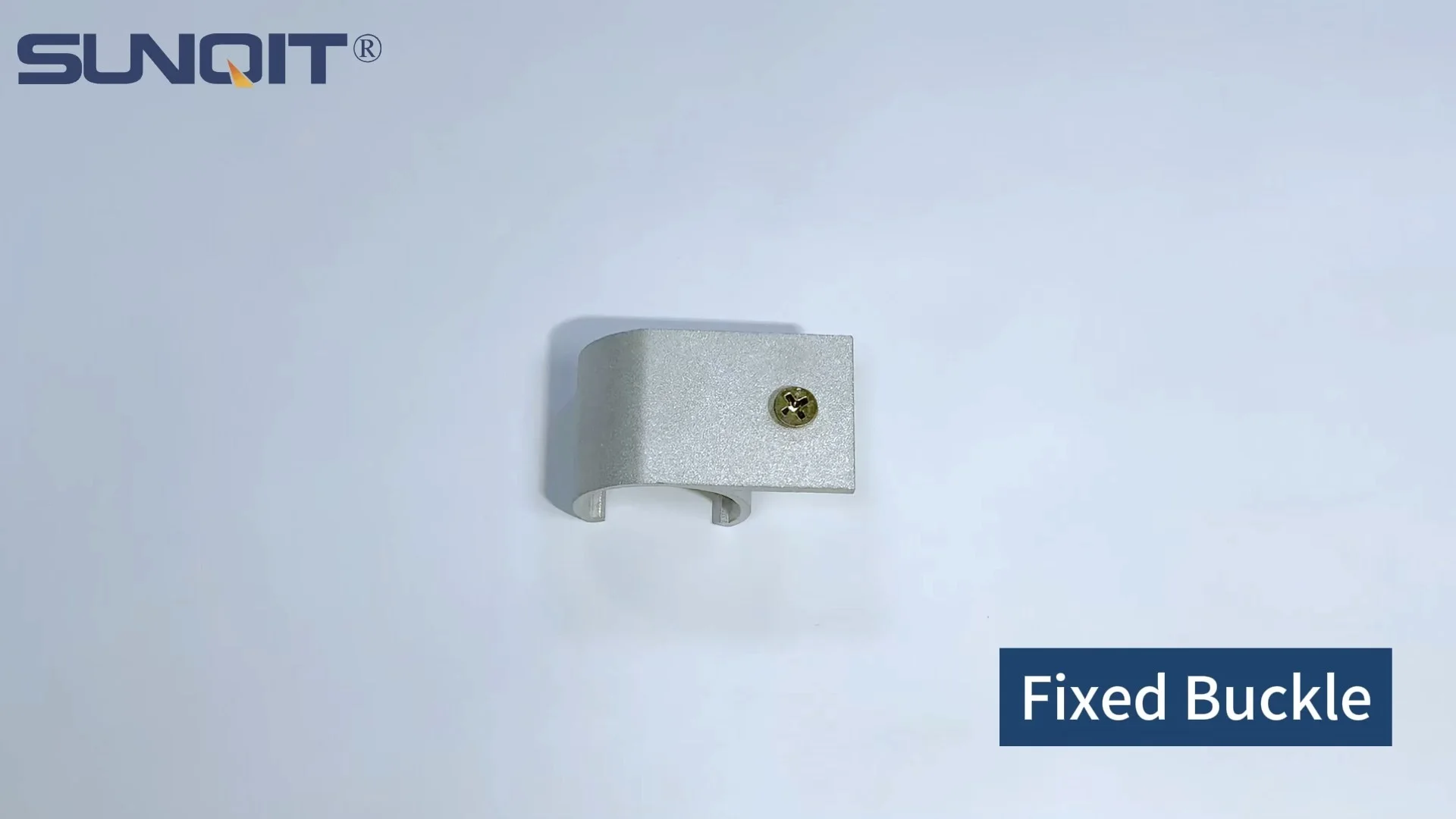
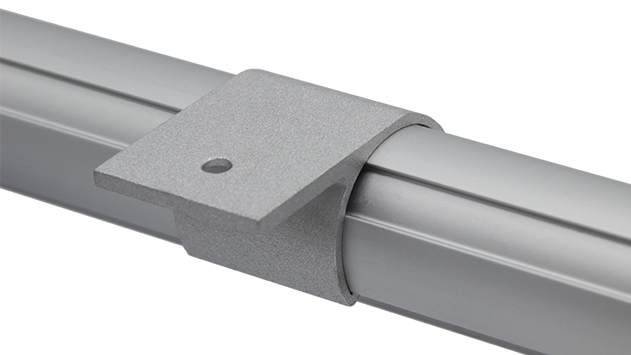
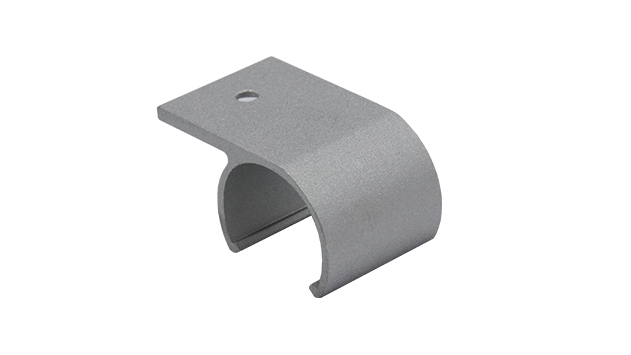
Aluminum pipe side clamp used for 28mm aluminum pipe connect with table top, or other accessories.
Walk into any electronics store today, and you'll be struck by the same trend: devices are getting smaller, sleeker, and more powerful. From the palm-sized smartphones that fit in our pockets to the ultra-thin laptops that weigh less than a hardcover book, the consumer electronics industry is in a relentless race toward miniaturization. But behind every tiny, high-performance gadget lies a complex web of manufacturing processes—processes that demand not just innovation, but
precision
. And while we often celebrate the chips, screens, and batteries that make these devices tick, there's a quieter hero working behind the scenes: the humble aluminum pipe clamp.
In the fast-paced world of electronics manufacturing, where even a fraction of a millimeter can mean the difference between a functional product and a costly failure, aluminum pipe clamps play a critical role. They secure components on assembly lines, align delicate parts during production, and ensure that the intricate dance of machinery and human hands results in devices that meet the strictest quality standards. But what makes aluminum pipe clamps so indispensable in this quest for smaller, more precise electronics? And how do they interact with other key components like aluminum profiles, extrusion profiles, and profile accessories to drive manufacturing excellence? Let's dive in.
The Miniaturization Race: Why Smaller Means Better
To understand the importance of aluminum pipe clamps, we first need to grasp why miniaturization has become the North Star of consumer electronics. It's not just about aesthetics—though a slim smartphone or lightweight tablet certainly appeals to consumers. Miniaturization is driven by functionality, user experience, and the ever-growing demand for portability.
Consider the evolution of the smartphone. The first iPhone, released in 2007, measured 115.4 x 61.9 x 11.6 mm and weighed 135 grams. Fast forward to 2023, and flagship models like the iPhone 15 Pro have shrunk to 146.6 x 70.6 x 8.25 mm while packing in more processing power, better cameras, and longer battery life. Similarly, laptops have transitioned from bulky "luggables" of the 1980s to today's 13-inch ultrabooks that weigh under 1.2 kg. Even wearables, like smartwatches and fitness trackers, have become so compact that they're barely noticeable on the wrist—yet they monitor heart rate, track activity, and even take calls.
But miniaturization isn't just about shrinking the outer shell. Inside these devices, components are getting tinier too. Microchips with billions of transistors, batteries with higher energy density, and sensors smaller than a grain of rice all contribute to a device's ability to deliver more while taking up less space. For manufacturers, this means assembling components with tolerances measured in microns (one micron is one-millionth of a meter). A misalignment of even 5 microns in a circuit board, for example, could cause a short circuit or render a device non-functional.
This push toward smaller, more precise components has transformed manufacturing lines. Traditional assembly methods, which relied on rigid, one-size-fits-all tools, are no longer sufficient. Instead, manufacturers need flexible, adaptable systems that can handle tiny parts, adjust to frequent design changes, and maintain pinpoint accuracy—even at high production volumes. This is where aluminum pipe clamps, paired with aluminum profiles and accessories, step in.
Precision: The Invisible Requirement
If miniaturization is the "what" of modern electronics manufacturing, precision is the "how." Precision ensures that every component fits exactly where it should, every time. It's the reason your smartphone's screen aligns perfectly with its body, or why your laptop's keyboard keys don't stick. But achieving this level of precision isn't easy—especially when dealing with components that are getting smaller by the day.
In electronics manufacturing, precision manifests in several ways. There's positional precision: ensuring that a component is placed at the exact coordinates on a circuit board. There's dimensional precision: guaranteeing that a part's length, width, and height match the design specifications. And there's repeatability: making sure that the same precision is maintained across thousands (or millions) of units. Failures in any of these areas can lead to product defects, increased waste, and unhappy customers.
Consider the process of soldering surface-mount devices (SMDs) onto a printed circuit board (PCB). SMDs, which include resistors, capacitors, and integrated circuits, are often no larger than a few millimeters in size. To solder them correctly, the PCB must be held perfectly flat, and the SMDs must be aligned with their respective pads to within ±0.05 mm. If the PCB warps even slightly during soldering, or if the alignment is off, the solder joints could be weak or shorted, leading to device failure.
This is where the stability of manufacturing equipment becomes critical. Workstations, conveyor belts, and jigs must remain rigid and vibration-free to prevent misalignment. They must also be adjustable to accommodate different PCB sizes and component layouts—especially as manufacturers switch between product models. Enter aluminum pipe clamps: simple, yet versatile tools that secure these systems, ensuring they stay stable, aligned, and adaptable.
Aluminum Pipe Clamps: The Unsung Heroes of Assembly Lines
At first glance, an aluminum pipe clamp might seem unremarkable. It's a small, often overlooked component that connects two pieces of aluminum pipe or secures a part to a frame. But in the context of electronics manufacturing, its role is anything but trivial. Aluminum pipe clamps are the glue that holds flexible manufacturing systems together, enabling the precision and adaptability needed for miniaturized devices.
So, what makes aluminum pipe clamps so well-suited for this task? Let's start with the material itself: aluminum. Aluminum is lightweight yet strong, with a high strength-to-weight ratio that makes it ideal for building sturdy yet portable structures. Unlike steel, it's resistant to corrosion, which is crucial in electronics manufacturing environments where dust, moisture, and chemicals (like cleaning solvents) can degrade equipment over time. Aluminum also has excellent thermal conductivity, which helps dissipate heat—important in factories where machinery can generate significant warmth during operation.
But aluminum's real advantage lies in its malleability. Aluminum pipes and profiles can be easily shaped, cut, and assembled, allowing manufacturers to create custom workstations, conveyor systems, and jigs tailored to their specific needs. And aluminum pipe clamps are the key to this flexibility. Whether you're building a workbench for assembling smartwatch components or a conveyor track for moving PCBs through a soldering station, clamps allow you to connect aluminum pipes and profiles quickly and securely.
Take, for example, a typical electronics assembly line. The line might include workstations where operators manually place components, automated machines that solder or test PCBs, and conveyor belts that move products from one station to the next. Each of these elements relies on aluminum frames and structures, held together by aluminum pipe clamps. The workstations, often built using aluminum profiles, need to be adjustable in height and width to accommodate different operators and product sizes. The conveyor belts, which use roller tracks with aluminum guide rails, require clamps to keep the rails aligned, ensuring products move smoothly without jamming. Even the jigs that hold PCBs during assembly are often mounted on aluminum pipes, secured by clamps that allow for quick repositioning when switching between PCB designs.
What sets aluminum pipe clamps apart from other fastening methods (like welding or bolts) is their modularity. Welding creates permanent structures, which are useless when a manufacturer needs to reconfigure a line for a new product. Bolts, while removable, require tools and time to adjust. Aluminum pipe clamps, by contrast, can be tightened or loosened by hand (or with a simple wrench), allowing for rapid changes. This modularity is a game-changer in an industry where product lifecycles are short and manufacturers need to pivot quickly to stay competitive.
Aluminum Profiles and Extrusion: The Foundation of Flexibility
Aluminum pipe clamps don't work in isolation—they're part of a larger ecosystem that includes aluminum profiles, extrusion profiles, and profile accessories. To truly understand their impact, we need to explore how these components work together.
Aluminum profiles are the building blocks of manufacturing systems. They're long, slender pieces of aluminum with a cross-sectional shape designed for specific purposes. Some profiles have T-slots, which allow accessories like brackets, shelves, or clamps to be attached without drilling. Others have grooves or channels for routing cables or guiding conveyor belts. The key point is that profiles are standardized, making them easy to source and assemble into custom structures.
The process of creating these profiles is called aluminum extrusion—a manufacturing method that involves forcing heated aluminum billets through a die to create long, uniform shapes. Aluminum extrusion profile production is efficient and cost-effective, allowing manufacturers to create complex cross-sections with tight tolerances. This is critical for electronics manufacturing, where even small variations in profile dimensions can affect the precision of the final assembly.
For example, a T-slot aluminum profile used in a workstation must have consistent slot widths to ensure that accessories like aluminum pipe clamps fit securely. If the slot is too narrow, the clamp won't fit; if it's too wide, the clamp will be loose, leading to instability. Aluminum extrusion ensures that these profiles meet the required tolerances, typically within ±0.1 mm for critical dimensions.
Once the profiles are extruded, they're cut to length and paired with aluminum pipe clamps and other accessories to build functional systems. Let's take a closer look at how this works in practice. Imagine a manufacturer needs to build a workbench for assembling wireless earbuds—tiny devices with components smaller than a fingernail. The workbench must be stable enough to prevent vibrations from disrupting delicate assembly work, but also adjustable to allow operators to sit or stand.
The manufacturer would start with aluminum profiles for the frame. They might choose a 40x40 mm T-slot profile for the legs and rails, as it provides a good balance of strength and flexibility. Using aluminum pipe clamps, they'd connect the profiles to form the bench's base and tabletop frame. For the tabletop itself, they might use an aluminum honeycomb panel, which is lightweight but rigid, secured to the frame with brackets (another type of aluminum profile accessory). To make the bench height-adjustable, they could add telescoping aluminum pipes to the legs, locked in place with clamps that can be loosened or tightened as needed.
But the workbench isn't complete without accessories. To hold small components like earbud batteries or microphones, the manufacturer might add shelves using smaller aluminum profiles, attached to the main frame with angle brackets (aluminum profile accessories). They might also install LED task lights, mounted on adjustable arms connected to the bench via T-slot clamps. Even the anti-fatigue mat on the floor could be secured to the bench legs with custom brackets—all made possible by the versatility of aluminum profiles and clamps.

Aluminum Profile Accessories: Enhancing Functionality
If aluminum profiles are the bones of manufacturing systems, aluminum profile accessories are the muscles and tendons—they add movement, adjustability, and specialized functionality. From brackets and hinges to end caps and cable management clips, these accessories work with aluminum pipe clamps to turn basic profiles into sophisticated tools for electronics assembly.
One of the most common accessories is the angle bracket, which allows two profiles to be joined at 90-degree angles. Angle brackets are essential for building frames, shelves, and workbench legs, and they're typically secured to profiles using T-slot nuts and bolts (or, in some cases, directly clamped with aluminum pipe clamps). Another useful accessory is the sliding bracket, which fits into a profile's T-slot and can be moved along the length of the profile, allowing for infinite adjustability. Sliding brackets are ideal for applications like positioning a camera over an assembly station or adjusting the height of a conveyor guide rail.
For conveyor systems, roller track accessories are indispensable. These include guide rails (like aluminum guide rail A or B), which keep products centered on the conveyor, and roller track connectors, which join sections of roller track together. Aluminum pipe clamps are often used to secure these guide rails to the conveyor frame, ensuring they stay aligned even as products bump against them. Similarly, caster wheels (another type of accessory) can be attached to the bottom of aluminum profile frames, turning fixed workstations into mobile carts that can be moved around the factory floor as needed.
Cable management is another area where aluminum profile accessories shine. In electronics manufacturing, assembly lines are often cluttered with wires for power, data, and pneumatic tools. Loose cables can get tangled, pose tripping hazards, or interfere with moving parts. Cable clips, which snap into T-slots, and cable channels, which mount to profile surfaces, keep wires organized and out of the way. Some accessories even combine functionality: for example, a bracket that holds a circuit board and also has integrated cable clips to manage the board's connectors.
Perhaps the most innovative aluminum profile accessories are those designed for automation. As factories adopt more robots and automated guided vehicles (AGVs), there's a need for profiles to interact with these machines. Accessories like proximity sensor mounts, which attach to profiles and hold sensors that detect the presence of products, or robot end effector brackets, which connect robotic arms to custom grippers, are becoming increasingly common. These accessories are often adjustable, thanks to aluminum pipe clamps, allowing manufacturers to fine-tune sensor positions or gripper angles for maximum efficiency.
Case Study: How Aluminum Pipe Clamps Revolutionized a Smartwatch Assembly Line
To put all this into context, let's walk through a real-world example of how aluminum pipe clamps, aluminum profiles, and accessories transformed the assembly line of a fictional (but representative) smartwatch manufacturer, "TimeTech."
TimeTech had recently launched a new smartwatch model, the "TimeSlim X," which was 30% thinner than its predecessor. The watch's main PCB, which housed the processor, battery, and sensors, was just 2 mm thick and 30 mm wide—smaller than a credit card. Assembling this PCB required placing over 100 tiny components, including a 1.5 mm-diameter heart rate sensor and a 2 mm x 3 mm accelerometer. TimeTech's existing assembly line, which used steel workbenches and fixed jigs, was struggling to handle the new PCB's size and precision requirements. Components were frequently misaligned, leading to a 5% defect rate—far above the industry average of 1-2%.
To solve this, TimeTech decided to overhaul its assembly line using aluminum profiles, aluminum pipe clamps, and accessories. The first step was to replace the steel workbenches with custom aluminum workstations. The new workstations used 40x40 mm aluminum extrusion profiles for the frame, secured with 90-degree aluminum pipe clamps. The tabletop was made of an aluminum honeycomb panel, chosen for its rigidity and lightweight properties, and mounted to the frame using adjustable brackets (aluminum profile accessories). This allowed operators to adjust the table height from 70 cm to 90 cm, reducing fatigue and improving ergonomics.
Next, TimeTech added specialized jigs to hold the PCBs during assembly. These jigs were mounted on sliding brackets that fit into the workbench's T-slots, allowing operators to position the PCB at the optimal angle for component placement. The jigs themselves were built using small-diameter aluminum pipes (10 mm) and aluminum pipe clamps, which allowed for precise adjustments to the PCB's position. To further stabilize the PCBs, TimeTech used suction cup anti-slip foot adjusters (another accessory) to hold the jigs in place, preventing any movement during assembly.
The conveyor system that moved PCBs between stations was also upgraded. The old steel rollers were replaced with aluminum roller tracks, guided by plastic roller track guide rails (yellow and grey) secured to aluminum profiles with roller track placon mount connectors. Aluminum pipe clamps were used to join sections of roller track, ensuring the track remained level and aligned. To reduce friction and prevent PCBs from sticking, TimeTech added swivel roller balls (1 inch diameter) at key points along the track.
Finally, TimeTech integrated aluminum profile accessories for quality control. Each workstation was fitted with a magnifying lamp mounted on an adjustable arm (connected to the workbench via a T-slot clamp), allowing operators to inspect components more closely. A small camera, mounted on a sliding bracket, was positioned above each workstation to capture images of assembled PCBs, which were then analyzed by software to check for misalignments.
The results were striking. Within three months of implementing the new system, TimeTech's defect rate dropped from 5% to 1.2%, and production speed increased by 20%—all while reducing the physical strain on operators. The modularity of the aluminum system also proved invaluable when TimeTech introduced a limited-edition TimeSlim X with a different PCB layout. Instead of building new workstations, the team simply reconfigured the existing aluminum profiles and clamps, saving time and money.
Challenges and Solutions in Aluminum Clamp Design
While aluminum pipe clamps offer many advantages, they're not without challenges. Manufacturers must address issues like thermal expansion, vibration, and wear to ensure these clamps maintain precision over time.
Thermal expansion is a common concern with aluminum. Like all metals, aluminum expands when heated and contracts when cooled. In a factory environment, temperatures can fluctuate by 10-15°C between day and night, causing aluminum profiles and pipes to expand or contract by several microns. This can throw off the alignment of clamps, leading to misaligned components. To mitigate this, manufacturers often use aluminum alloys with low thermal expansion coefficients, such as 6061-T6, which is commonly used in extrusion profiles. They also design systems with slight tolerances to accommodate expansion, or use rigid aluminum pipe clamps that maintain pressure even as the metal moves.
Vibration is another challenge. Assembly lines, especially those with automated machinery, generate constant vibrations that can loosen clamps over time. A loose clamp can cause a workstation or conveyor track to shift, leading to misaligned components. To combat this, many aluminum pipe clamps feature locking mechanisms, such as nylon-reinforced threads or cam levers, which prevent them from loosening under vibration. Some manufacturers also use thread-locking compounds, though these can make clamps harder to adjust—undermining their modularity.
Wear and tear are also a factor. Aluminum pipe clamps that are frequently adjusted (e.g., when reconfiguring a workstation) can experience wear on their threads or clamping surfaces, reducing their grip over time. To address this, high-quality clamps are often anodized—a process that coats the aluminum with a protective oxide layer, increasing durability and resistance to wear. Some clamps also use stainless steel components (like bolts or washers) for critical parts, combining the best of aluminum and stainless steel properties.
Finally, cost is a consideration. While aluminum is generally more affordable than stainless steel, high-precision aluminum pipe clamps and accessories can be pricey, especially when custom designs are needed. To balance cost and performance, manufacturers often opt for standard off-the-shelf clamps for non-critical applications and reserve custom clamps for high-precision tasks. They also work with aluminum pipe suppliers that offer bulk discounts, reducing the per-unit cost of clamps and profiles.
Future Trends: Smarter Clamps for Even Smaller Devices
As consumer electronics continue to shrink, aluminum pipe clamps and their associated components will need to evolve. Here are a few trends that are likely to shape their future:
Integration with IoT and Smart Manufacturing:
The rise of Industry 4.0 is bringing sensors and connectivity to factory equipment, and aluminum pipe clamps are no exception. Future clamps could include embedded sensors that monitor clamping force, temperature, or vibration, sending real-time data to a central system. If a clamp starts to loosen, the system could alert maintenance staff before a misalignment occurs. This would improve quality control and reduce downtime.
3D Printing of Accessories:
3D printing (additive manufacturing) is already being used to create custom aluminum profile accessories, and this trend is expected to grow. Manufacturers could 3D-print specialized brackets, clamps, or connectors on-demand, reducing lead times and allowing for highly customized designs. For example, a factory could print a unique clamp for a one-off prototype device, then switch to mass-produced clamps for full-scale production.
Nanocoatings for Enhanced Performance:
Nanotechnology could be used to coat aluminum pipe clamps with ultra-thin layers of materials like graphene or diamond-like carbon (DLC), improving their hardness, wear resistance, and conductivity. This would extend clamp lifespans and make them suitable for use in extreme environments (e.g., high-temperature soldering stations).
Lightweight Alloys:
Researchers are developing new aluminum alloys that are even stronger and lighter than existing ones. These alloys could allow for thinner, more compact clamps and profiles without sacrificing strength, making them ideal for use in miniaturized manufacturing systems.
Sustainability:
As environmental concerns grow, manufacturers are looking for ways to reduce waste and energy use. Aluminum is already highly recyclable (95% of the energy used to produce new aluminum can be saved by recycling), but future clamps could be designed for easier disassembly and recycling. Additionally, suppliers might use more renewable energy in the production of aluminum profiles and clamps, reducing their carbon footprint.
Conclusion: The Quiet Force Behind Our Favorite Devices
The next time you pick up your smartphone, smartwatch, or laptop, take a moment to appreciate the engineering marvels that make it possible. Beyond the sleek design and cutting-edge technology lies a world of manufacturing precision—one where even the smallest components, like aluminum pipe clamps, play a vital role.
Aluminum pipe clamps, paired with aluminum profiles, extrusion profiles, and accessories, have become the backbone of modern electronics manufacturing. They enable the flexibility, precision, and adaptability needed to produce the tiny, powerful devices we rely on daily. From securing workbenches and conveyor systems to allowing for rapid reconfiguration of assembly lines, these unassuming tools are the unsung heroes of the miniaturization revolution.
As consumer electronics continue to push the boundaries of size and performance, the demand for innovative manufacturing solutions will only grow. Aluminum pipe clamps, with their combination of strength, flexibility, and cost-effectiveness, are poised to remain at the forefront of this evolution. They may not grab headlines, but without them, the devices we love—smaller, smarter, and more connected than ever—would simply not exist.
| Feature | Traditional Steel Clamps | Aluminum Pipe Clamps |
|---|---|---|
| Weight | Heavy (increases fatigue for operators) | Lightweight (reduces strain on equipment and operators) |
| Corrosion Resistance | Poor (prone to rust in humid environments) | Excellent (resistant to moisture and chemicals) |
| Flexibility | Low (permanent welds or difficult-to-adjust bolts) | High (modular, adjustable by hand or simple tools) |
| Precision | Moderate (steel warps under heat, affecting alignment) | High (aluminum extrusion ensures tight tolerances) |
| Cost (Long-term) | Higher (requires frequent replacement due to corrosion/wear) | Lower (durable, recyclable, and adaptable to new products) |