- Company Articles
- Products and Technology
- Product knowledge
- Aluminum Pipe Clamps in Telecommunication Equipment Assembly

Aluminum Pipe Clamps in Telecommunication Equipment Assembly
Related Product
Aluminum Pipe Clamp
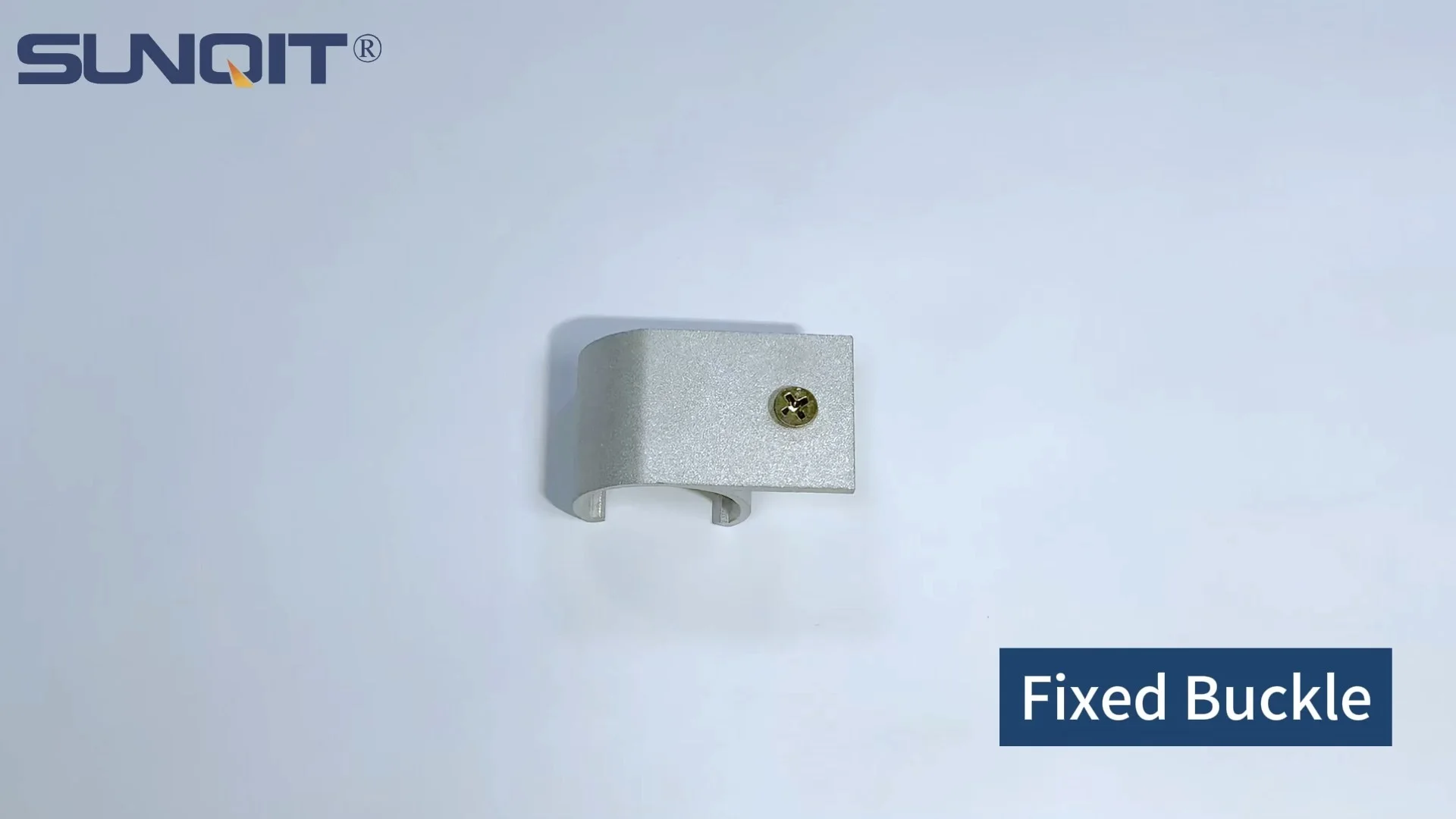
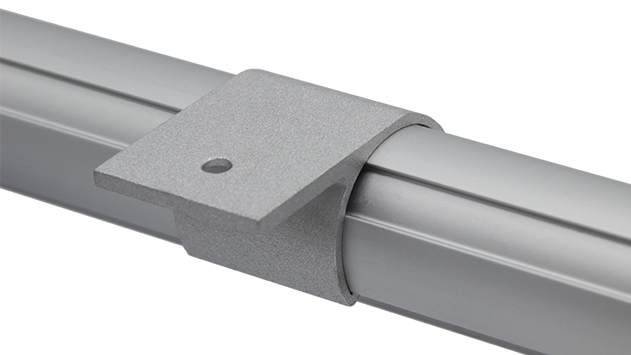
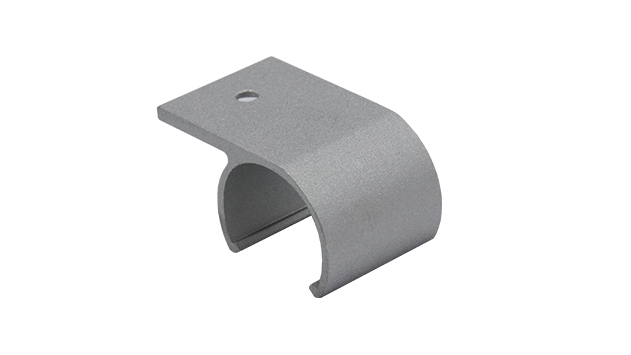
Aluminum pipe side clamp used for 28mm aluminum pipe connect with table top, or other accessories.
In the fast-paced world of telecommunication equipment assembly, where precision, speed, and adaptability can make or break a production line, there's a quiet workhorse that often goes unnoticed: the aluminum pipe clamp. These unassuming components—small, lightweight, and deceptively simple—are the backbone of modular, efficient assembly systems that power everything from smartphone circuit boards to fiber optic routers. Let's take a closer look at how aluminum pipe clamps are transforming telecom manufacturing floors, one connection at a time.
The Telecom Assembly Challenge: Why One-Size-Fits-All No Longer Works
Telecommunication equipment isn't what it used to be. Today's 5G routers, data center servers, and satellite components are more complex, more compact, and produced in shorter lifecycles than ever before. A single manufacturing line might need to switch from assembling a base station antenna to a fiber optic transceiver in a matter of days—not weeks. Traditional assembly setups, built with welded steel frames, fixed conveyor belts, and rigid workbenches, simply can't keep up. They're heavy, hard to reconfigure, and leave little room for the "lean" principles that modern factories rely on to cut waste and boost productivity.
Enter aluminum pipe clamps. These small but mighty connectors are the linchpin of modular assembly systems, designed to turn basic aluminum pipes and profiles into whatever a production line needs: a sturdy workbench for circuit board testing, a flexible conveyor for moving components between stations, or a custom material rack for organizing tiny screws and microchips. What makes them so game-changing? It starts with the material: aluminum. Unlike steel, aluminum is lightweight but surprisingly strong, resistant to corrosion, and easy to handle—no heavy lifting or specialized tools required. And when paired with the right clamps and accessories, it becomes a building block for almost any assembly challenge.
What Are Aluminum Pipe Clamps, Anyway? Breaking Down the Basics
At first glance, an aluminum pipe clamp might look like a simple piece of hardware—just a metal bracket with a few screws. But its design is deceptively clever. Most clamps feature a C-shaped or U-shaped body that wraps around two aluminum pipes, with a locking mechanism (usually a bolt or lever) that tightens to hold them firmly in place. Some are fixed at 90-degree angles for building frames, while others swivel or rotate, allowing pipes to be joined at odd angles or adjusted on the fly. There are even specialized clamps for crossing pipes, connecting to aluminum profiles, or attaching accessories like roller tracks or caster wheels.
But aluminum pipe clamps don't work alone. They're part of a broader ecosystem of aluminum profile accessories—think end caps to smooth pipe edges, joint connectors for T-shaped junctions, or brackets to mount shelves and tools. Together, these components let manufacturers build exactly what they need, without over-engineering or waste. For example, a telecom factory assembling routers might use 40mm aluminum pipes and 90-degree clamps to build a workbench, then add roller track guide rails (in yellow, for visibility) to create a mini conveyor on top, moving circuit boards from the soldering station to the testing station. If next month they need to assemble smaller modems, they can loosen the clamps, reconfigure the pipes, and add a narrower shelf—no need to buy a whole new workbench.
Aluminum Pipe Clamps and Lean Systems: A Match Made in Manufacturing Heaven
Telecom manufacturing thrives on lean principles: eliminating waste, streamlining workflows, and responding quickly to change. Aluminum pipe clamps embody these principles perfectly. Let's break down how they support lean systems in three key ways:
1. Modularity = Less Waste
Traditional assembly setups are often "one and done." A welded steel workbench, for example, is built to last decades—but if your product line changes, that bench becomes obsolete, collecting dust in a corner. Aluminum pipe clamp systems, by contrast, are designed to be taken apart and reused. When a project ends, you can disassemble the workbench, repurpose the pipes and clamps into a material rack, and save money on new equipment. This reduces waste (no more scrapping old frames) and cuts costs over time—lean wins all around.
2. Flexibility = Faster Changeovers
In telecom, product lifecycles are short. A 5G router might be updated twice a year, each time requiring new tools, different component sizes, or reorganized workstations. With aluminum pipe clamps, reconfiguring a workstation takes hours, not days. Loosen a few bolts, adjust the pipe lengths, add a new shelf or roller track, and you're ready to go. This agility lets factories pivot quickly, keeping production lines running even as products evolve.
3. Ergonomics = Happier, More Productive Teams
Lean isn't just about machines—it's about people. Aluminum pipe clamp systems are lightweight, so workers can adjust their workbenches to the right height without straining their backs. They can add caster wheels to make workstations mobile, or attach tool holders at arm level to reduce reaching and bending. Happier workers are more productive, and fewer injuries mean less downtime—a critical win in high-stakes telecom manufacturing.
Real-World Applications: How Telecom Factories Use Aluminum Pipe Clamps
To understand the impact of aluminum pipe clamps, let's look at three common telecom assembly scenarios where they shine:
1. Custom Workbenches for Precision Assembly
Assembling a fiber optic transceiver requires steady hands and a clutter-free workspace. Traditional workbenches are often too big, too small, or lack storage for tiny parts like fiber connectors and solder. With aluminum pipe clamps, factories can build workbenches tailored to the task: a 120cm-wide surface with a (ESD) top to protect sensitive electronics, a shelf underneath for toolboxes, and a side rack with hooks for cable testers. If a new transceiver model is larger, just add an extension using extra pipes and clamps—no need to replace the entire bench.
2. Conveyors and Roller Tracks for Smooth Material Flow
In a typical telecom factory, components move from station to station: circuit boards from SMT (surface-mount technology) to soldering, then to testing, and finally to packaging. Dropping or jostling these components can ruin them, so material flow needs to be gentle and consistent. Aluminum pipe clamps make it easy to build custom roller track conveyors: mount plastic roller track guide rails (grey or yellow, depending on the factory's color-coding system) onto aluminum frames using placon mount brackets, and you've got a smooth, gravity-fed track that moves components without damage. Best of all, if the production line needs to expand, just add more track sections with connector brackets—no welding or heavy machinery required.
3. Material Racks for Organized Inventory
Telecom assembly lines use thousands of small parts: screws, capacitors, resistors, and microchips. Misplacing even one can bring production to a halt. Aluminum pipe clamps solve this by letting factories build custom material racks—say, a 3-row, 3-floor rack (like "material rack B" from supplier catalogs) with adjustable shelves to fit different-sized bins. Use swivel roller balls (1 inch or 0.5 inch) on the shelves, and bins glide in and out smoothly, so workers can grab parts quickly. And if part sizes change, just move the shelves up or down—no need to buy new racks.
| Aspect | Traditional Assembly Setups (Welded Steel) | Aluminum Pipe Clamp Systems |
|---|---|---|
| Installation Time | 1-2 days (requires welding, painting, specialized labor) | 2-4 hours (no welding; basic tools and 1-2 workers) |
| Flexibility | Fixed; cannot be reconfigured without cutting/welding | Easily reconfigurable; pipes/clamps reused for new setups |
| Cost Over Time | High (replaced entirely when obsolete; maintenance for rust) | Low (reusable components; minimal maintenance) |
| Weight | Heavy (difficult to move; requires forklifts) | Lightweight (movable by hand; can add casters for mobility) |
| Corrosion Resistance | Prone to rust (needs regular painting in humid factories) | Highly resistant (aluminum naturally resists corrosion) |

The Benefits of Aluminum Pipe Clamps: More Than Just "Good Enough"
By now, it's clear that aluminum pipe clamps are versatile—but why should telecom manufacturers choose them over other options, like plastic clamps or steel brackets? Let's dive into their standout benefits:
Lightweight, But Surprisingly Strong
Aluminum is about one-third the weight of steel, which makes pipe clamp systems easy to move and adjust. But don't let the lightness fool you: when properly assembled, an aluminum frame with clamps can support hundreds of pounds—more than enough for telecom components like circuit boards, routers, or testing equipment. This strength-to-weight ratio is a game-changer for factories with limited floor space, where heavy steel setups would be impractical.
Corrosion Resistance for Longevity
Telecom factories are often humid (thanks to climate control for sensitive electronics), which can make steel rust and degrade over time. Aluminum, however, forms a natural oxide layer that resists corrosion—no painting or coating required. This means aluminum pipe clamp systems last longer, even in harsh environments, reducing the need for frequent replacements.
Cost-Effective in the Long Run
At first glance, aluminum pipe clamps might cost more than basic steel brackets. But their reusability and low maintenance make them cheaper over time. A welded steel workbench might cost $500 upfront, but if you need to replace it in two years, that's $250 per year. An aluminum pipe clamp workbench might cost $600, but you can reconfigure it five times over a decade, making its annual cost just $60. For telecom factories with frequent product changes, this ROI is hard to beat.
Installing Aluminum Pipe Clamp Systems: It's Easier Than You Think
One of the biggest myths about aluminum pipe clamps is that they require specialized skills to install. In reality, anyone with basic tools (a hex key, wrench, and level) can build a functional system in a few hours. Here's a quick overview of the process:
- Plan the design: Sketch out your setup (workbench, conveyor, etc.) and list the pipes, clamps, and accessories you'll need. Most suppliers offer design tools or templates to help.
- Cut pipes to length: Aluminum pipes are easy to cut with a hacksaw or pipe cutter—no power tools required. Measure twice, cut once!
- Assemble the frame: Slide clamps onto the pipes, align them at the desired angle, and tighten the bolts. Start with the base (e.g., four vertical pipes for a workbench), then add horizontal supports.
- Add accessories: Attach roller tracks, shelves, or caster wheels using specialized brackets. Most accessories click into place or secure with a few screws.
- Test and adjust: Shake the frame gently to check stability. If it wobbles, tighten the clamps or add diagonal supports. Adjust heights or angles as needed for ergonomics.
The best part? You don't need to be an engineer or a carpenter. Many factories train line workers to build and adjust their own setups, giving teams more ownership over their workspace and reducing reliance on maintenance crews.
Case Study: How a Telecom Manufacturer Cut Setup Time by 75% with Aluminum Pipe Clamps
Let's put this all into context with a real-world example. A mid-sized telecom manufacturer in Texas was struggling to keep up with demand for 5G routers. Their production line used welded steel workbenches and fixed conveyors, which took 3 days to reconfigure whenever a new router model launched. Setup time was eating into production hours, and workers complained about back pain from leaning over ill-fitting workstations.
The solution? They switched to aluminum pipe clamp systems. Over a weekend, the factory replaced four steel workbenches with modular aluminum ones, added a roller track conveyor between stations, and built custom material racks for components. The results were staggering:
- Setup time dropped from 3 days to 4 hours when launching new router models—meaning the line was productive 90% more of the time.
- Worker complaints about ergonomics fell by 60% after adjusting workbench heights and adding tool holders.
- Material waste decreased by 40% because components were better organized in custom racks, reducing lost or damaged parts.
The factory manager summed it up: "We used to see every product launch as a headache—now, it's just a matter of loosening a few clamps and moving some pipes. The aluminum system paid for itself in three months."
Looking Ahead: The Future of Aluminum Pipe Clamps in Telecom
As telecom technology evolves—with 6G on the horizon, smaller and more complex components, and the rise of smart factories—aluminum pipe clamps will only grow more important. Here are a few trends to watch:
Smarter Integration with Industry 4.0
Future clamps might include built-in sensors to monitor vibration (alerting teams to loose connections) or RFID tags to track components. Imagine a conveyor system that automatically adjusts roller speed based on the component size, all controlled by data from clamp-mounted sensors.
Sustainability Focus
Aluminum is 100% recyclable, making pipe clamp systems a greener alternative to steel or plastic. As factories aim for net-zero goals, we'll see more suppliers offering recycled aluminum clamps and take-back programs for old components.
Even More Customization
Suppliers are already offering 3D-printed clamp accessories for ultra-specific needs—like a custom bracket to hold a unique testing tool. As 3D printing costs fall, small-batch custom clamps will become accessible to even small telecom factories.
Final Thoughts: The Unsung Hero of Telecom Assembly
In the world of telecom manufacturing, where innovation moves at the speed of light, it's easy to overlook the small components that make it all possible. Aluminum pipe clamps might not grab headlines like the latest 5G chip or satellite technology, but they're the backbone of the efficient, flexible assembly lines that bring those innovations to life. They turn chaos into order, rigidity into adaptability, and waste into opportunity.
So the next time you pick up a smartphone or connect to Wi-Fi, take a moment to appreciate the quiet work of aluminum pipe clamps. They're not just hardware—they're the unsung heroes keeping our connected world running smoothly.